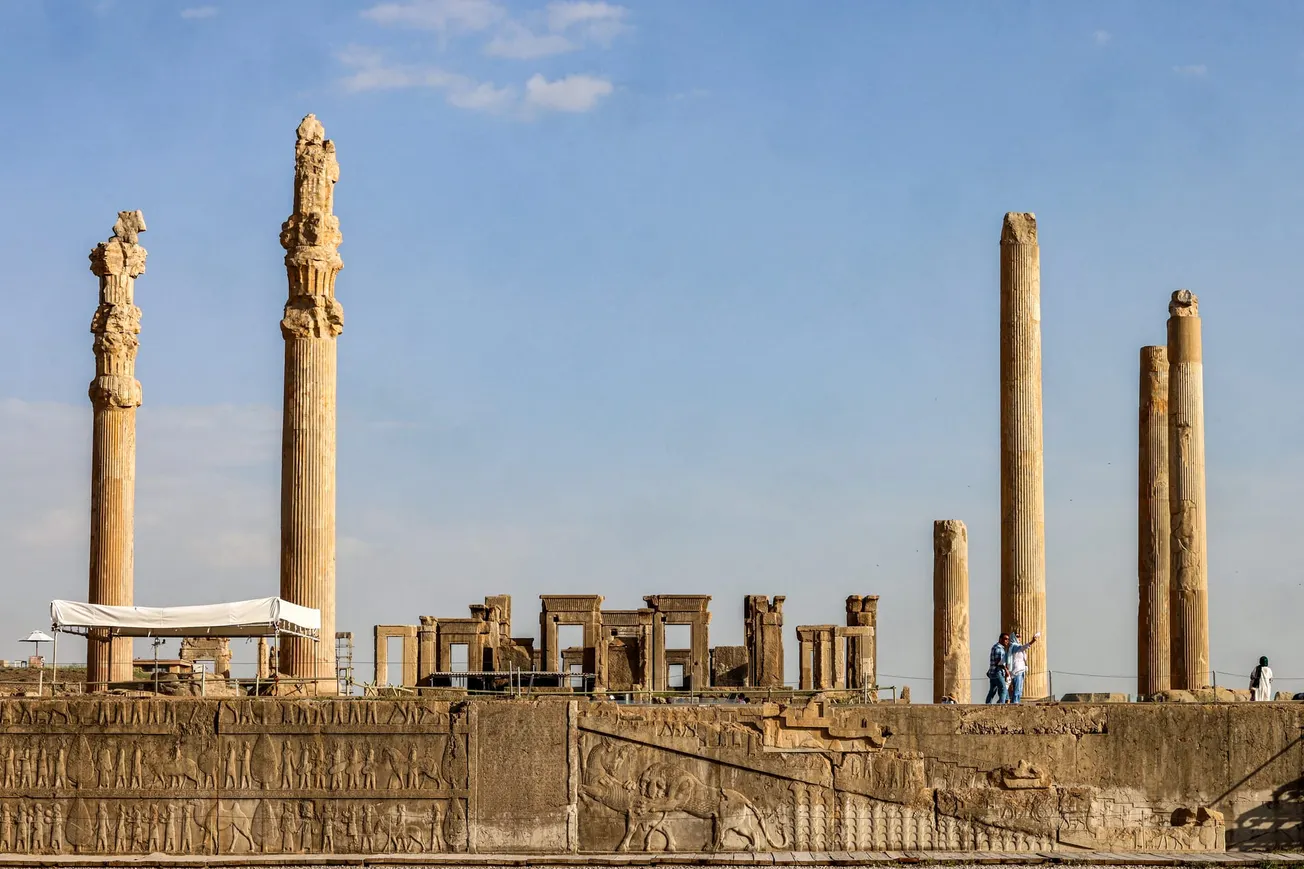
When Alexander the Great reached Persepolis in 330 B.C., he found what ancient historians called the richest city under the sun. His soldiers hauled away 2,500 tons of gold and silver. It took 20,000 mules and 5,000 camels to carry the loot. That was Persia - so wealthy it stunned even its conquerors.
Twenty-four centuries later, the land that was Persia sits on the world’s third-largest oil reserves and second-largest natural gas reserves. It has 93 million people, many of them well educated. It is a vital bridge between East and West. It has 27 UNESCO World Heritage sites, more than Greece or Egypt.
On paper, Iran should be a regional powerhouse. Instead, it has spent decades underperforming. Some countries struggle because they were born with too little. Iran cannot make that claim.
The numbers tell the story. Iran’s GDP per capita is roughly $3,400. The UAE, a country with one-eighth of Iran’s population and a fraction of its natural resources, has a GDP per capita above $50,000. That is a yawning chasm.
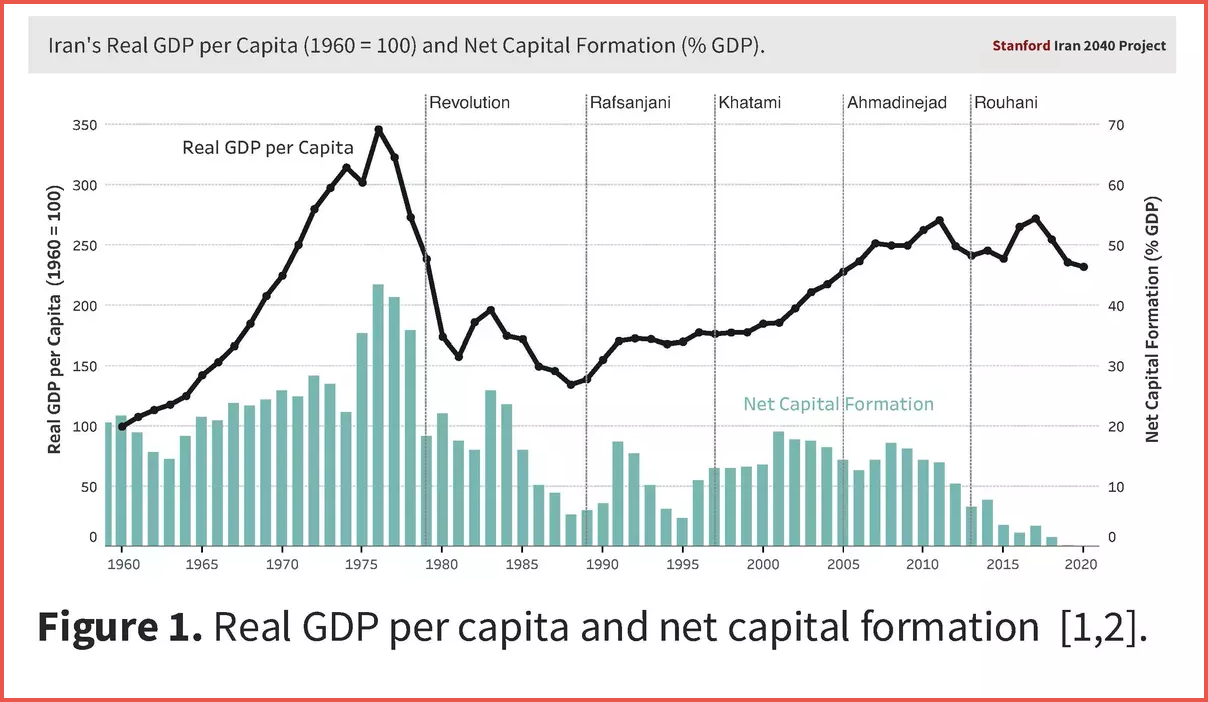
It did not happen by accident. For decades, Iran’s rulers put ideology and foreign wars ahead of bread-and-butter economics. They pursued nuclear ambitions, funded proxy militias abroad, and chose confrontation over growth. Money that could have built roads, factories, and businesses went instead to keeping the regime in power and bankrolling Hezbollah, Hamas, and the Houthis. Those same choices invited crushing international sanctions that deepened the damage.
Now the bill has come due.
The latest war has reportedly cost Iran around $270 billion in economic damage. Some internal assessments suggest recovery could take years. But even those staggering figures do not tell the full story.
The real loss is harder to count.
It is the talented engineer who emigrates because he sees no future. It is the shop owner whose savings are wiped out by inflation and currency collapse. It is the university graduate driving a taxi because the white-collar, cushy jobs never came. It is the slow draining away of hope.
The scale of this exodus is staggering. Iran ranked second worldwide for brain drain in 2019, with nearly 180,000 educated professionals leaving the country in a single year. Of 86 Iranians who won international science competitions, 82 chose to leave the country. Only 1% of emigrating professionals ever go back. Iran is not just losing people. It is gifting its best minds to other countries, permanently.
Long before the recent conflict, ordinary Iranians were already enduring chronic inflation, a collapsing rial, and shrinking living standards. At the time of the 1979 revolution, one U.S. dollar bought 70 rials. Today it buys over 1.5 million. The currency has lost 20,000 times its value over the past four decades.
Then came a self-inflicted wound: the regime shut down the internet. As of mid-April, Iran’s latest blackout has stretched past 1,100 consecutive hours, the longest nationwide internet shutdown ever recorded in any country. Iran’s own communications minister admits it costs the economy $35 million a day. Independent estimates put the number closer to $80 million. Online sales have fallen 80%.
No economy can prosper while cutting itself off from the connected world. Some 10 million of Iran’s 11 million online businesses rely on platforms like Instagram, Telegram, and WhatsApp to make sales. The regime shut them all down.
What makes Iran’s story so frustrating is that the country still has so much going for it.
Its energy wealth could fund world-class infrastructure. Its geography could make it a sought-after trade and transit hub. Its tourism potential is enormous. Its people have the education and drive to compete with anyone.
Yet the country keeps spending its resources on crises of the regime’s own making. Talent has emigrated. Capital has fled. An estimated $20 billion left the country in 2024 alone, with outflows accelerating in 2025. Citizens have spent their best years coping rather than building.
Look around the region, and the gap is obvious. The UAE and Saudi Arabia had fewer natural advantages but moved ahead by investing, diversifying, and opening up. Iran, blessed with more gifts than most Arab nations, chose another path.
Countries can change course. Nations with real strengths can bounce back fast once the obstacles are cleared and confidence returns.
Iran’s problem was never a lack of resources. It was the repeated decision to spend those resources and the people’s future on power and ideology rather than on prosperity.
Alexander burned Persepolis and later regretted it. Iran’s rulers have been burning their own fortune for 46 years. They show no regret at all.
👉 Show & Tell 🔥 The Signals
I. Iran Sits On One Of The World’s Largest Oil Fortunes
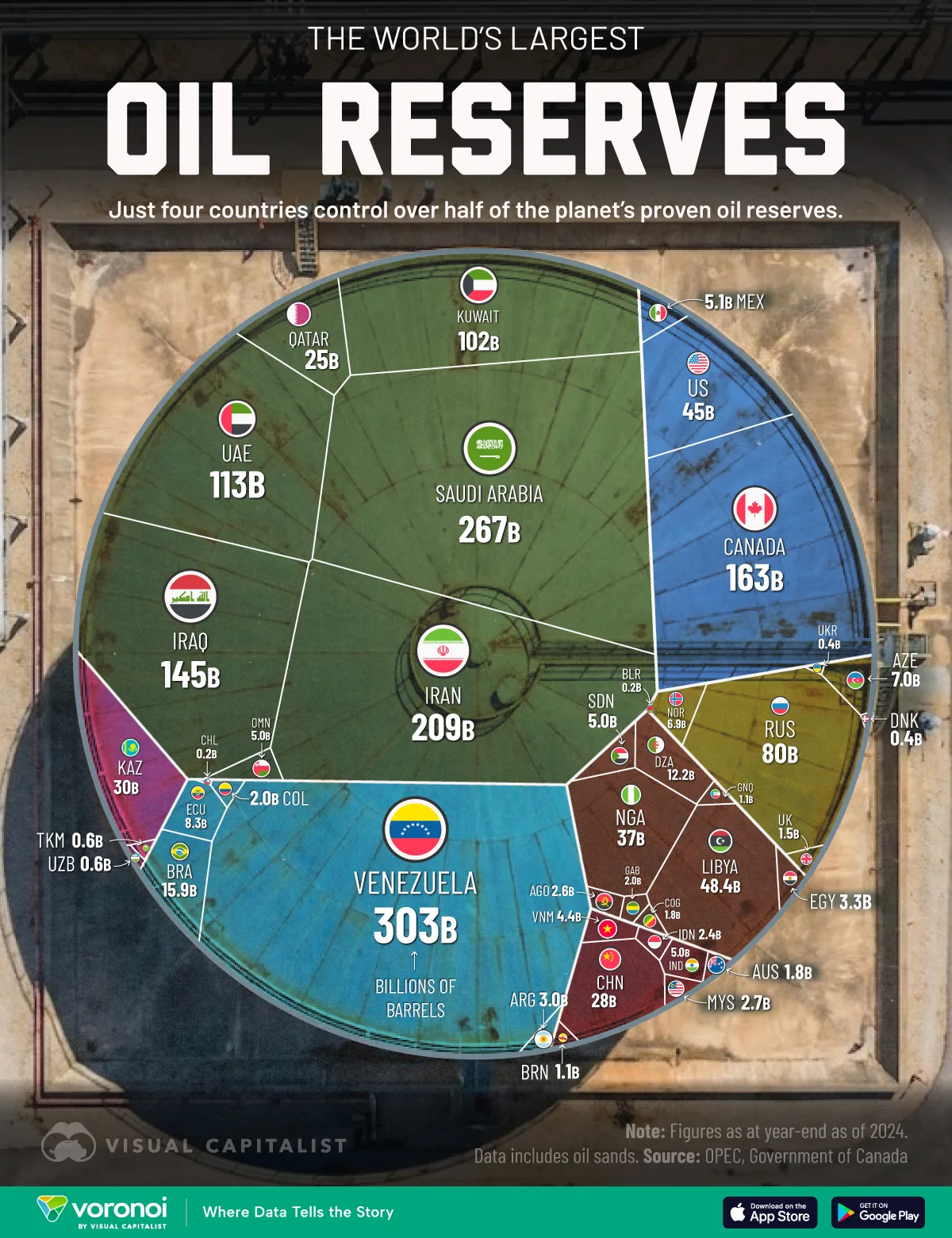
Iran holds an estimated 209 billion barrels of proven oil reserves—the third-largest in the world behind Venezuela (303B) and Saudi Arabia (267B). Just four countries control more than half of global reserves. That means even when Iran’s economy struggles, its underground wealth keeps it strategically relevant.
II. Iran’s Pre-War Economy Showed Oil Strength, Domestic Weakness
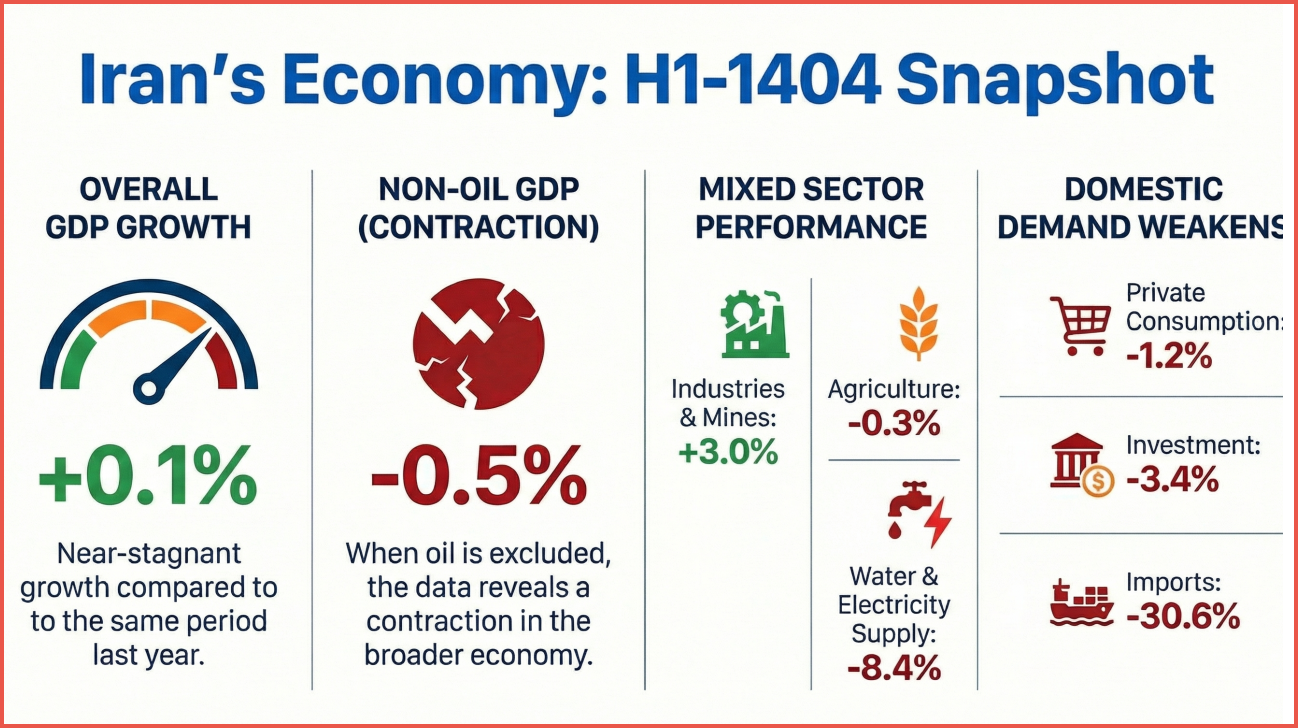
Iran’s latest pre-war economic snapshot suggested a two-speed economy. Overall GDP grew +0.1%, but non-oil GDP contracted -0.5%. Imports fell -30.6%, fixed investment dropped -8.4%, and household demand remained soft. Oil was keeping the headline afloat, while much of the broader economy was under pressure even before the conflict.
📊 Market Mood — Monday, April 20, 2026
🟩 Markets Slip as Iran Tensions Reignite
U.S. futures fell after a fresh U.S.-Iran flare-up unsettled hopes for a lasting truce.
🟧 Oil Jumps as Hormuz Uncertainty Returns
Crude surged as confusion over Strait of Hormuz access revived supply shock fears.
🟦 Peace Narrative Gives Way to Volatility Again
Weekend optimism faded quickly as tanker seizures and new threats reset sentiment.
🟨 Earnings and AI Themes Offer Counterweight
Upcoming corporate results and fresh Nvidia-linked chip news helped balance risk-off mood.
🗓️ Key Economic Events — Monday, April 20, 2026
No Events Scheduled
editor-tippinsights@technometrica.com