Looking up from my yogurt on the 13th floor of the Sheraton Grand Doha during the opening days of the war, I watched a Patriot missile intercept an Iranian drone in slow motion over the Persian Gulf. I remember wondering whether the drone would reach the American air base, roughly 20 miles away, before the interceptor arrived. It did not. Then came the silence after the intercept. The hotel moved breakfast to the ground floor the next morning.
That morning clarified something. China had benefited for more than a decade from buying discounted Iranian oil while letting somebody else manage the missiles, militias, and shipping threats that came with it. The same oil revenue funded Hamas, Hezbollah, the Houthis, and Iran’s nuclear program.
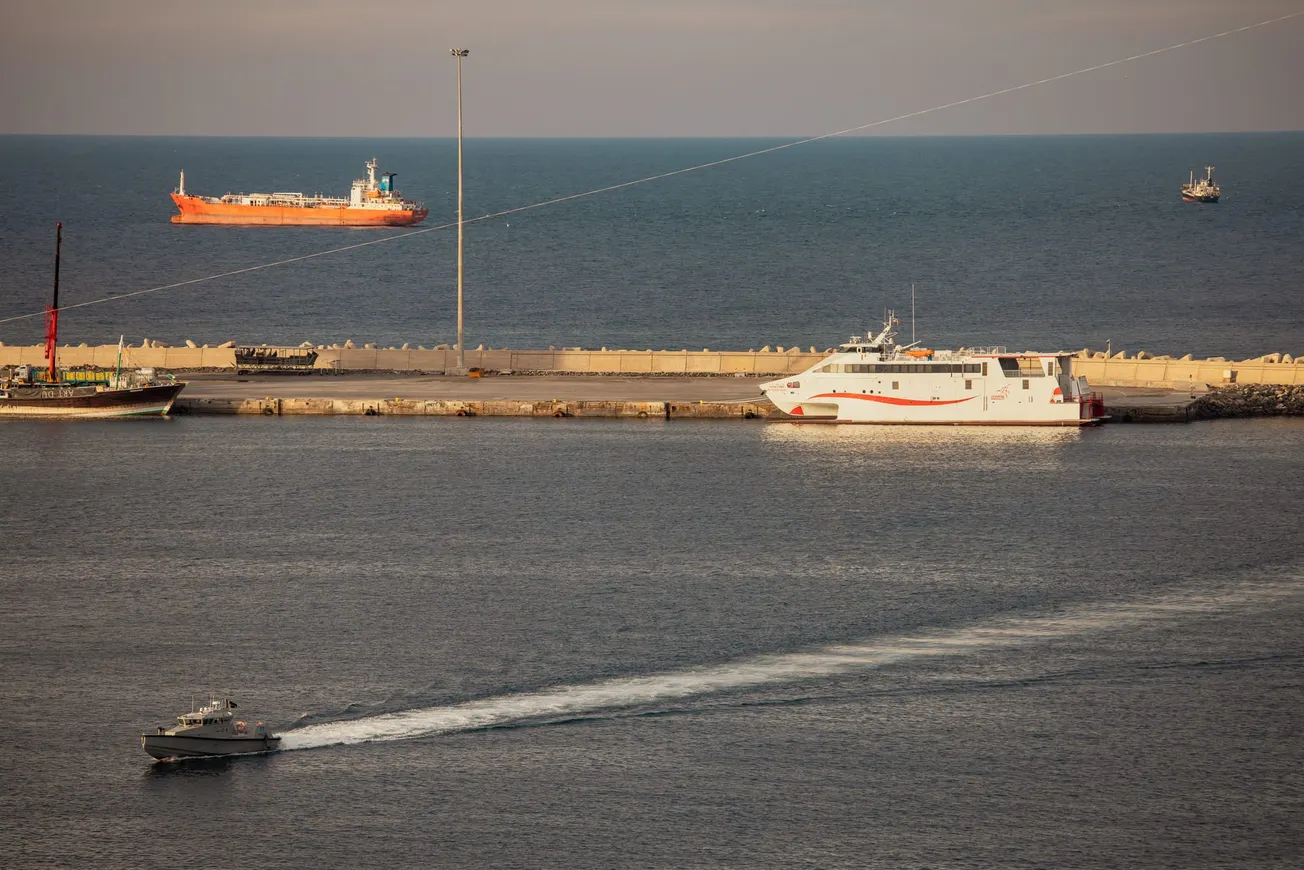
The current Hormuz crisis has put Beijing in its own chokehold. Every disruption near the Strait tightens pressure on Iran, China, and the United States at the same time. Once shipping lanes come under pressure, energy markets stop caring who bought the oil cheaply.
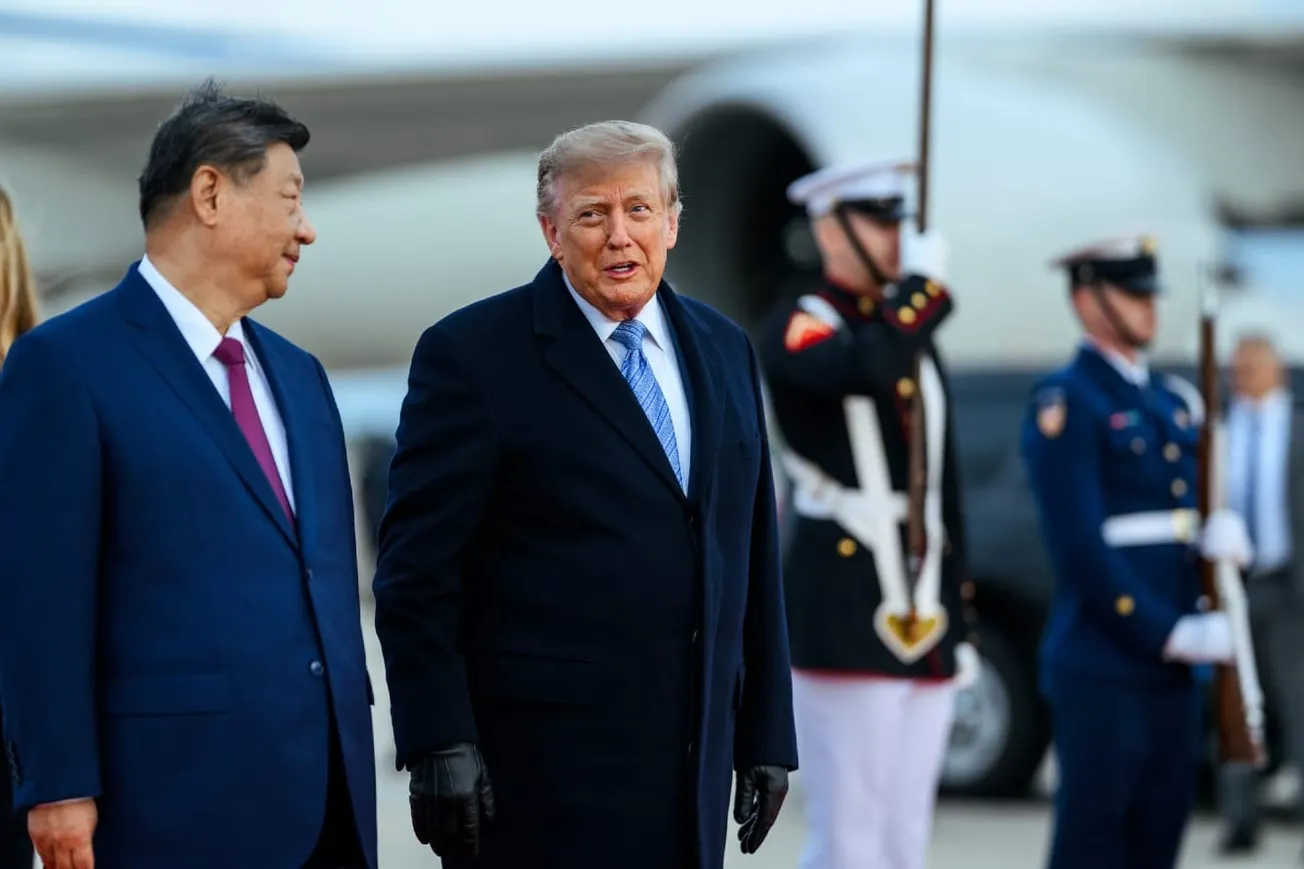
That vulnerability followed Chinese President Xi Jinping into his summit with President Trump.
Roughly one-fifth of the world’s oil and liquefied natural gas moves through the Strait of Hormuz every day, according to the U.S. Energy Information Administration. China imports roughly 11 million barrels of crude oil daily, and the Middle East remains one of Beijing’s most important external energy suppliers. According to multiple Reuters reports citing tanker-tracking firms, China buys roughly 90 percent of Iran’s exported oil, importing about 1.4 million barrels per day last year and generating tens of billions of dollars for Tehran.
Beijing spent years buying discounted Iranian oil while assuming somebody else would manage the missiles, militias, and shipping threats surrounding it. Last month, China and Russia vetoed a UN resolution protecting commercial shipping through Hormuz after Iran threatened regional energy traffic. Gulf instability now hits China directly.
Iran cannot defeat the United States conventionally, so Tehran attacks the pressure points around the conflict instead: shipping, insurance costs, energy prices, and market confidence. Markets usually move before governments do. China entered the summit already battling weak consumer demand, property instability, and export pressure. Hormuz threatened to hit all three at once.
Trump entered the summit holding a pressure point Beijing still wants badly: access to advanced American semiconductors. The administration reportedly considered allowing Nvidia to sell H200 chips to several Chinese firms, including Alibaba and Tencent. Beijing has spent years trying to close the semiconductor gap through subsidies, espionage, forced technology transfer, and massive state investment, and Chinese leaders understand that advanced chips drive AI systems, military modernization, and economic competitiveness.
Washington should not hand over strategic chip access for another carefully worded joint statement. If China wants expanded semiconductor access, Washington should demand real action: pressure on Tehran to keep Hormuz open, reduced Iranian oil purchases, and meaningful support for protecting commercial shipping lanes.
The United States entered these talks as one of the world’s largest energy producers. China entered them as the world’s largest energy importer. That dependency gave Trump real leverage in Beijing. Beijing could have pressured Tehran quietly through oil purchases, banking access, and diplomatic cover. Instead, China waited and hoped the Strait would calm itself.
Trump understood the dynamic. Asked aboard Air Force One on his return whether Xi had made firm commitments on Hormuz, the President said: “I’m not asking for any favors, because when you ask for favors, you have to do favors in return. We don’t need favors.” Chinese cooperation purchased at the cost of concessions on Taiwan or chips comes with a longer-term price.
The summit produced the optics both governments wanted. China still buys Iranian oil. Washington still controls advanced chip access. Hormuz still threatens global energy markets.
Treasury Secretary Scott Bessent said this week that China has a strong interest in keeping Hormuz open because Beijing depends heavily on the waterway remaining operational. China spent years assuming Gulf instability would stay regional, while discounted Iranian oil fueled Chinese growth.
The Strait does not care who buys the oil. It cares whether the oil moves.
Mark Pfeifle is a member of the TIPP Insights Editorial Board. He runs the crisis management firm Off the Record Strategies. He served as deputy national security adviser for strategic communications and global outreach at the White House from 2007 to 2009.
Thousands Of Alien Planets In Our Galaxy Mapped
NASA has published a dazzling new image of our Milky Way galaxy showing confirmed and candidate exoplanets, courtesy of its TESS space telescope, launched in 2018.
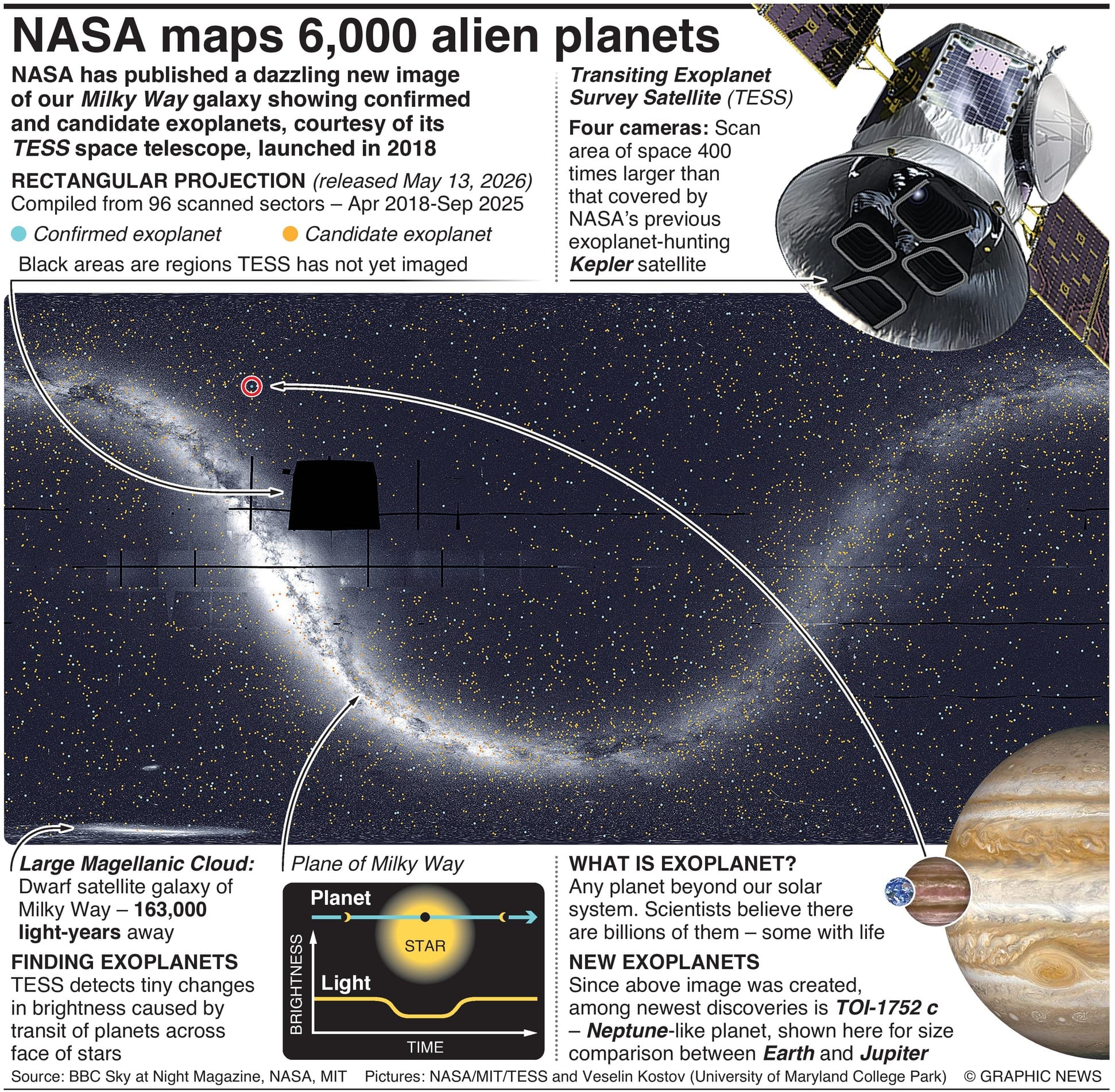
NASA has released a striking new image of the Milky Way, highlighting both confirmed and potential exoplanets, captured by its Transiting Exoplanet Survey Satellite (TESS), launched in 2018.
Although scientists had long suspected that planets exist beyond our solar system, the first exoplanets were not confirmed until the mid-1990s.
More recently, NASA has reported that missions such as TESS have helped confirm over 6,000 exoplanets, and astronomers now estimate that there is at least one planet orbiting every star we can see in the night sky.
TESS in particular is generating a wealth of discoveries, identifying planets of many sizes – from small, Mercury-like worlds to giant planets larger than Jupiter.
Some of these exoplanets lie within the habitable zones of their respective solar systems, where conditions could support liquid water – a key factor in the search for life beyond Earth.
The stories and data that matter today — selected by the TIPP Insights editorial team.
Global Affairs
Trump Wraps Up Beijing Visit Without Major Trade Breakthrough
What Did Xi Tell Trump About China’s Support For Iran
Trump To Decide On China-Iran Oil Sanctions Soon
How The Iran Conflict Is Fueling Somali Pirate Attacks
Tehran Signals Doubts Over U.S. Negotiations
UAE Expands Oil Export Network Amid Strait Of Hormuz Crisis
Why Are Chinese EV Makers Expanding Into Europe So Fast
CIA Chief John Ratcliffe Makes Rare Visit To Cuba Amid Energy Crisis
Markets & Business
Apple Reviews Reported Mac Security Vulnerability
Bond Yields Surge As Inflation Pressures Mount
Letters to the editor email: editor-tippinsights@technometrica.com
Subscribe Today And Make A Difference. Consider supporting Independent Journalism by upgrading to a paid subscription or making a donation. Your support helps tippinsights thrive as a reader-supported publication. Contact us to discuss your research or polling needs.
Reach our audience. For sponsorship and advertising opportunities, visit our Partner With Us page.