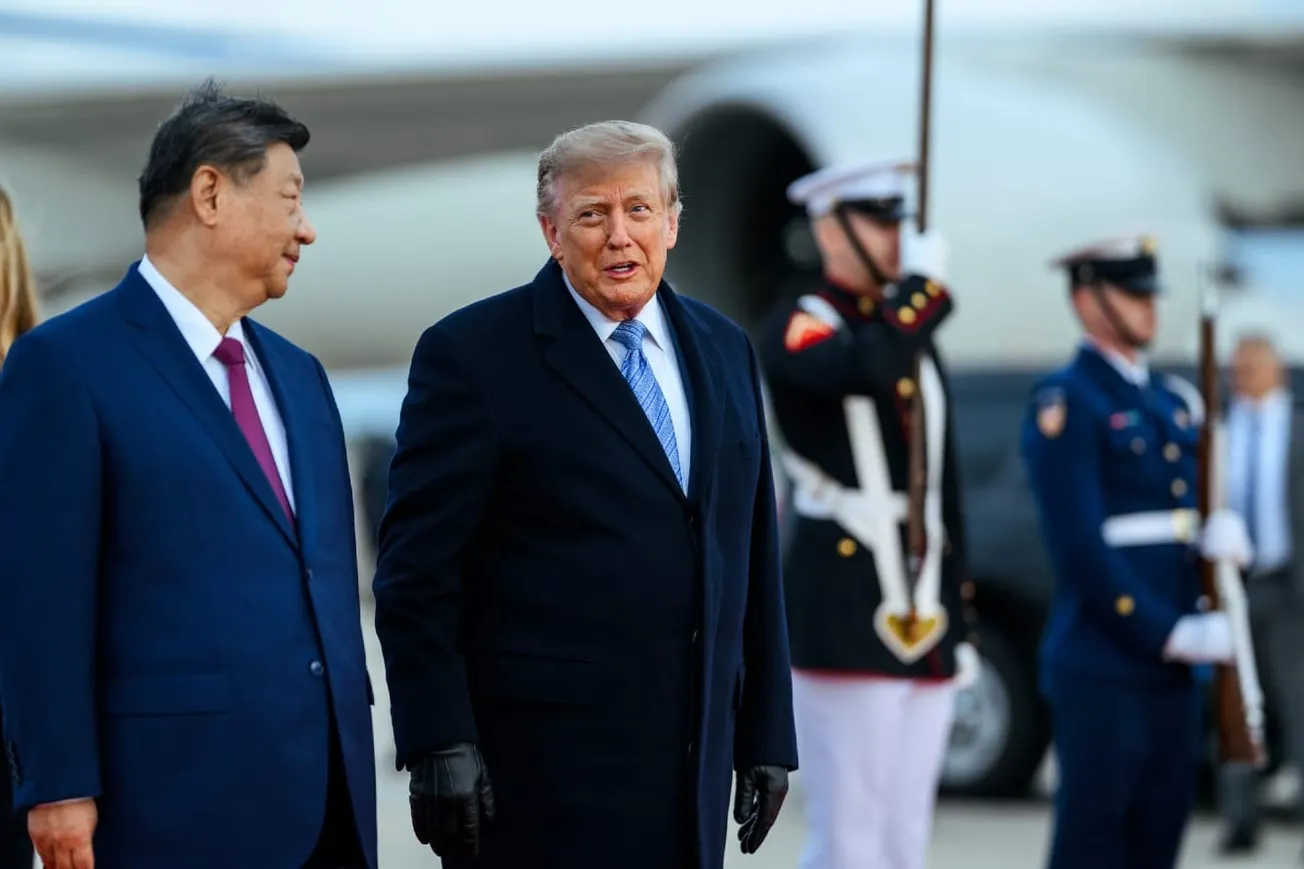
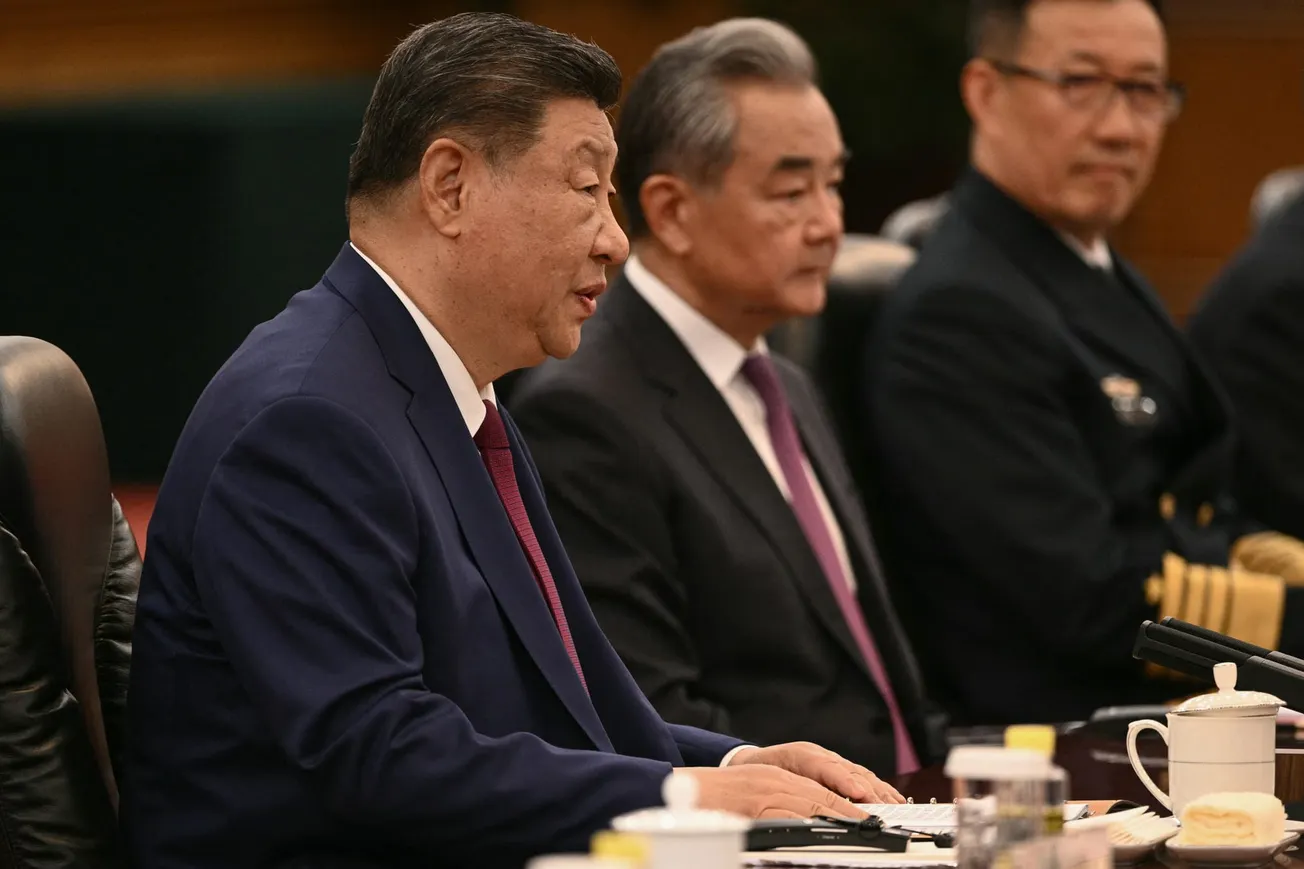
On the flight home from Beijing, President Trump told reporters that President Xi had asked him directly whether the United States would defend Taiwan. Trump declined to answer him. “There’s only one person that knows that,” he said. “You know who it is? Me. I’m the only person.”
The exchange happened in the closed-door bilateral at the Great Hall of the People on Thursday morning. Trump volunteered it on Air Force One the next day. The American readout did not mention Taiwan. The Chinese readout led with it.
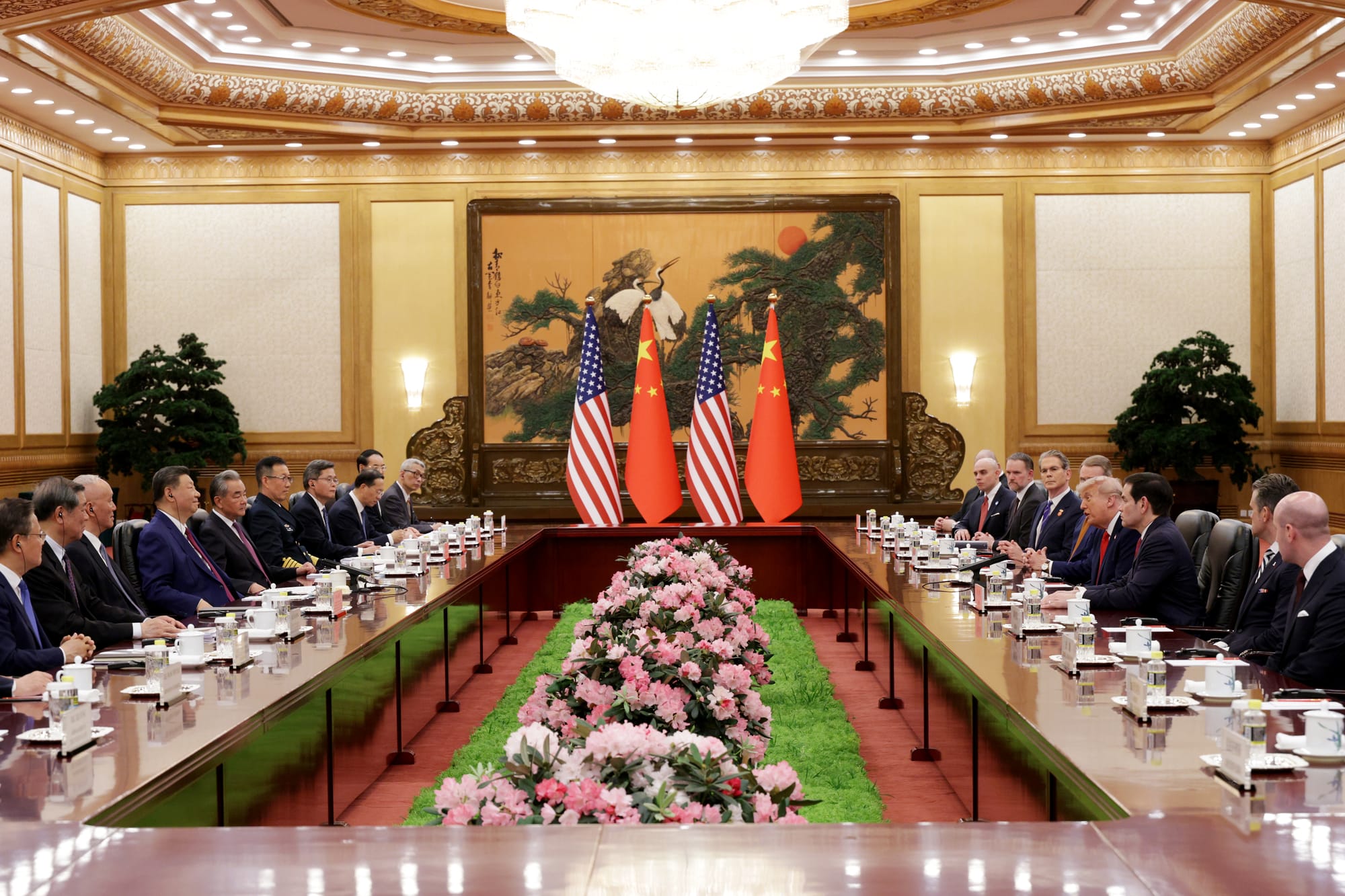
Each side described a different summit.
Xi staged the visit as a meeting between civilizational peers. The afternoon tour took Trump to the Temple of Heaven, where Ming emperors prayed for good harvests under an architecture built around an ancient Chinese cosmology of round heaven and square earth. Cai Qi, a member of the Politburo Standing Committee and one of Xi’s closest aides, personally inspected the site the day before. The last American president received there was Gerald Ford, in 1975. Mao was still alive. The Taiwan Relations Act did not yet exist. The doctrine Xi would test in the bilateral was younger than the staging around it.
Beijing’s account, published by the Foreign Ministry and circulated by Xinhua, placed Taiwan first. Xi told Trump the issue is “the most important issue in China-U.S. relations.” He warned that mishandling it would put the entire bilateral relationship “in great jeopardy” and could push the two countries into “clashes and even conflicts.” He called “Taiwan independence” and cross-strait peace “as irreconcilable as fire and water.” Iran, the war that has consumed American attention for ten weeks, was mentioned only in passing, as part of a list of “international and regional issues.” The Chinese readout did not name it.
The American readout flipped the order. The White House described an extensive Iran discussion, with Xi pledging that Iran cannot have a nuclear weapon, opposing the militarization of the Strait of Hormuz, and refusing to send arms to Tehran. Taiwan did not appear. The meeting was described as “good.”
The Air Force One gaggle confirmed the asymmetry. Iran kept coming back. Trump returned to “nuclear dust,” walked reporters through Iran’s negotiating position, and explained his own. When the subject turned to Taiwan, he said he had “heard him out.” He said he had “made no commitment either way.” He said the $14 billion arms package Congress approved in January is now “a determination” he will make “over the next very short period.”
A reporter pressed him on the Reagan administration’s 1982 assurances, which committed the United States never to consult Beijing on arms sales to Taiwan. Trump’s answer: “1980 is a long way. It was. That’s a big, big distance.”
The doctrine Xi was probing is older than the Reagan assurances. The 1979 Taiwan Relations Act commits the United States to arm Taiwan defensively and to keep American forces ready to resist any use of force or coercion against the island. It does not commit the United States to defend Taiwan in the event of a Chinese attack. That deliberate gap is strategic ambiguity. It has held for forty-seven years across nine administrations. The point of the gap is to keep Beijing afraid that America might defend Taiwan, and to keep Taipei afraid that America might not. Both fears hold the status quo in place.
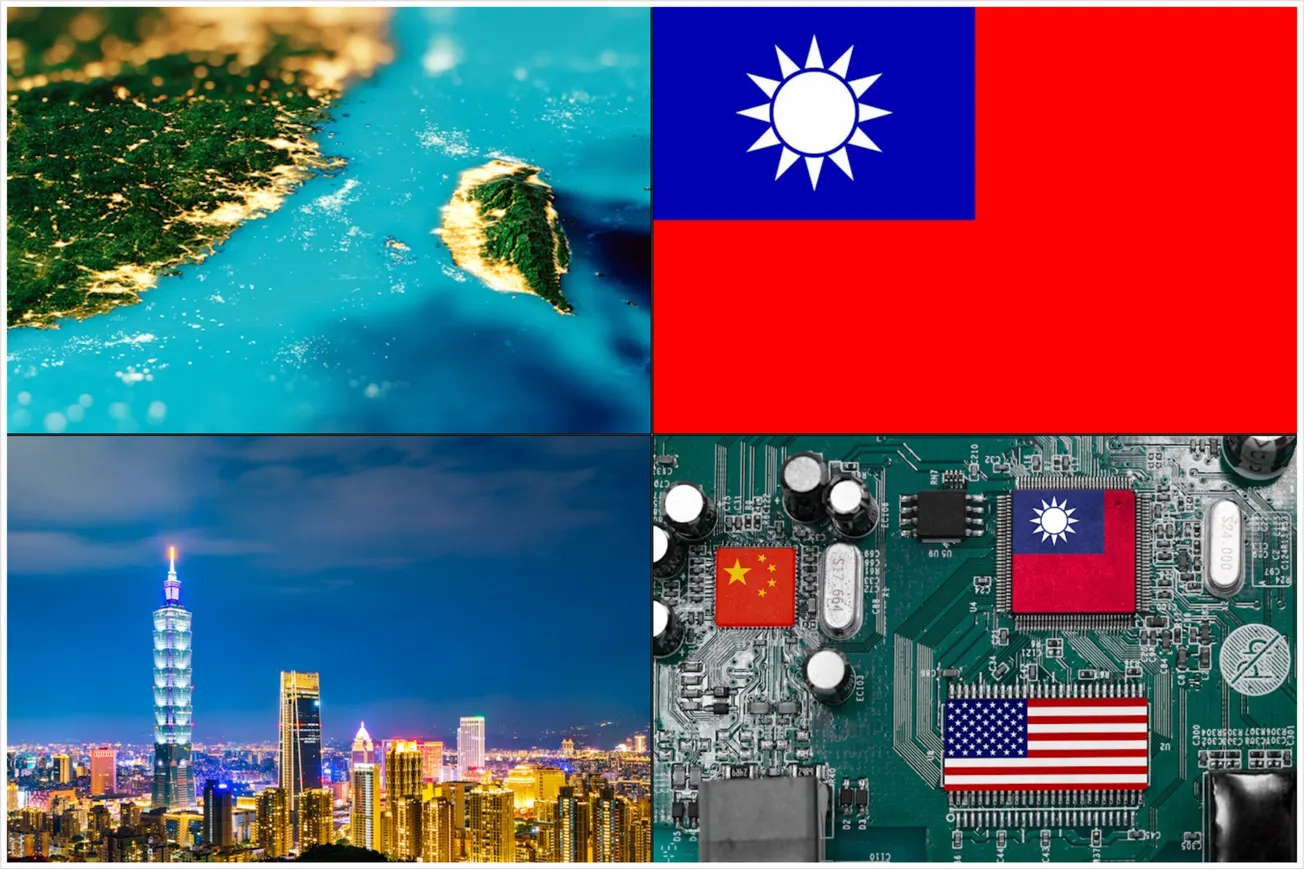
Strategic ambiguity works because Beijing has to assume the United States might. The doctrine asks an autocrat to govern his calculations by what he cannot know. Xi spent the closed-door portion of the summit asking the American President to tell him what he cannot know. Trump did not tell him. Analysts had predicted he would give it away. But he did not.
The question was not only directed at Washington. Every careful answer the American President gives about Taiwan reaches Taipei within minutes. The doctrine holds two audiences at once and breaks when either side becomes confident about what America will or will not do. Xi has set his deadline for “national rejuvenation” at 2049, when he would be 96. The strategy is coercion over time, not war next year. The question he asked Trump is one move in that campaign.
Outside the room, the picture was different. Trump volunteered the exchange to reporters on the plane. He recounted Xi’s argument sympathetically. Taiwan, Xi claimed, had been Chinese “for thousands of years” before it “left.” Xi opposes a “movement for independence.” The last thing America needs, Trump added, is “a war that’s 9,500 miles away.” Trump said he had made no commitment, and then said he would make a determination on the arms.
Trump wanted to talk about Iran. Xi was content to let him, while pressing Taiwan throughout.
Xi asked the question Beijing has wanted answered for forty-seven years. The answer is still officially the same. Xi asked Trump directly, and that is what matters.
To be continued, in a different theater.
TIPP Takes
Geopolitics, Geoeconomics, And More
Global Affairs
What Are The Current US And Iranian Strategies In The War?—Victor Davis Hanson, The Daily Signal
Beijing’s Chokepoint— Mark Pfeifle, TIPP Insights
To Be Continued — Editorial Board, TIPP Insights
Tehran's Blackmail — Editorial Board, TIPP Insights
The Handshake In Beijing — Editorial Board, TIPP Insights
The Death Sentence — Editorial Board, TIPP Insights
SPY WARS: Former CIA Covert Operations Officer Explains How Intelligence Is Influencing The Iran War—Bradley Devlin, The Daily Signal
Payback: Russia Uses Iran As A Proxy Against The United States—Ted Galen Carpenter, Ron Paul Institute for Peace and Prosperity
‘Ways Of War’ Are In Metamorphosis: Lessons From The Iran War—Alastair Crooke, Ron Paul Institute for Peace and Prosperity
Xi Tells Trump That Mishandling Of Taiwan Could Spark Conflict—Trevor Hunnicutt & Mei Mei Chu, The Daily Signal
Rape Dogs Claim Lands NYT In Defamation Lawsuit—Pedro Rodriguez, The Daily Signal
National Affairs
Victor Davis Hanson: ‘It’s All According To Plan’ As Protesters Target Jewish Area In Mamdani’s NYC—Victor Davis Hanson, The Daily Signal
Tensions Between CIA And Congress Flare—George Caldwell, The Daily Signal
Lewd Anti-ICE Protester Says She Wants To Prevent Children From Coming To St Paul Church—Tyler O’Neil, The Daily Signal
Voters Overwhelmingly Support White House Draft Executive Order To Protect Americans From Cyber Threats—Elizabeth Troutman Mitchell, The Daily Signal
Trial Lawyer PACs Pour Money Into Democrats’ Redistricting Power Grab—Fred Lucas, The Daily Signal
Letters to the editor email: editor-tippinsights@technometrica.com
Subscribe Today And Make A Difference. Consider supporting Independent Journalism by upgrading to a paid subscription or making a donation. Your support helps tippinsights thrive as a reader-supported publication. Contact us to discuss your research or polling needs.
Reach our audience. For sponsorship and advertising opportunities, visit our Partner With Us page.