By Djavad Salehi-Isfahani, Project Syndicate
The protests now gripping Iran reflect, above all, economic grievances, which planned reforms are likely to exacerbate in the short term. Cash transfers and promises of lower inflation down the line are unlikely to be enough to appease a population battered by years of economic instability.
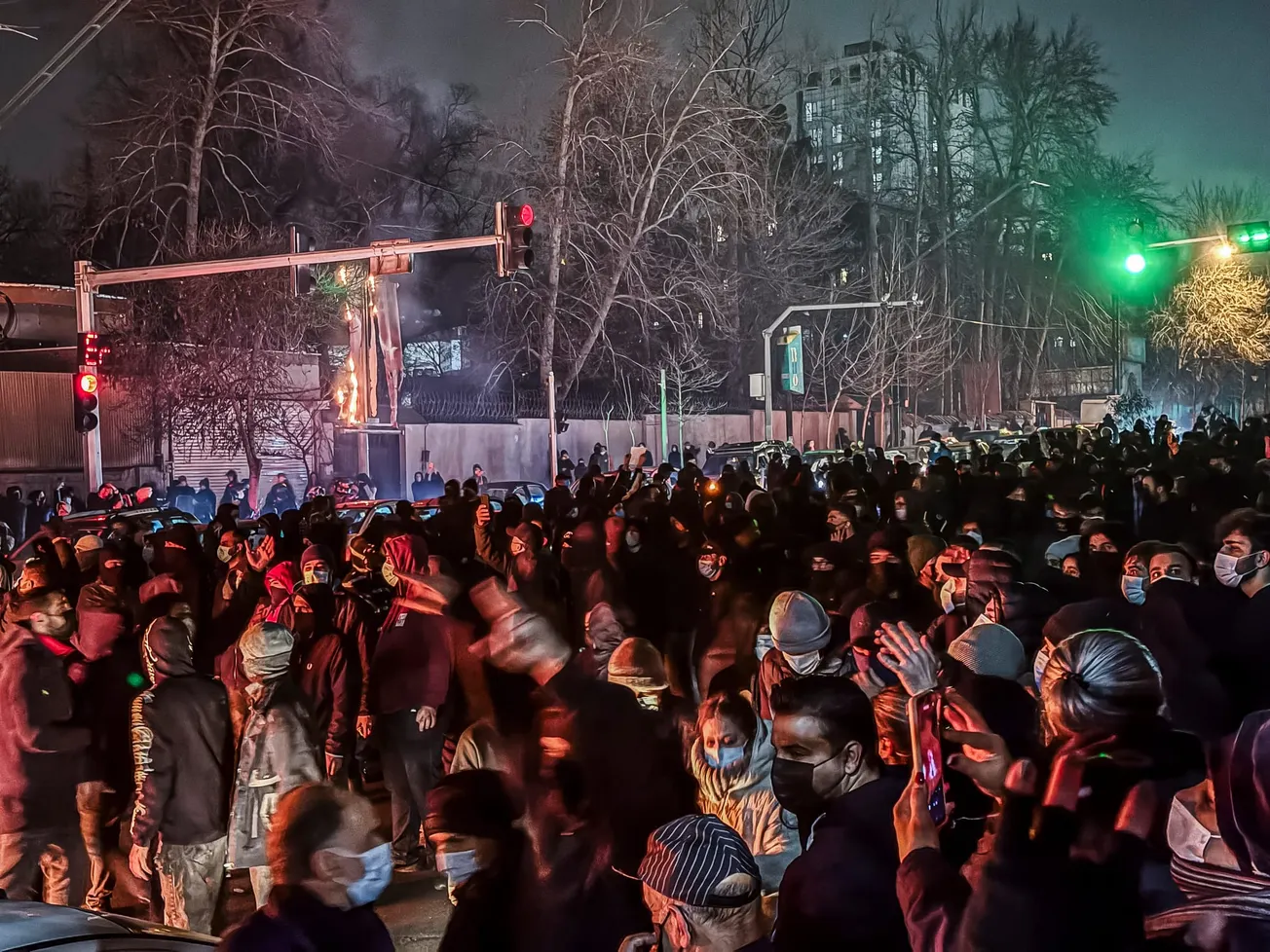
BLACKSBURG, VIRGINIA – The protests that erupted in Tehran on December 28 and quickly spread across Iran were triggered by a specific grievance: the collapse of the country’s currency, the rial. Currency devaluation in Iran is never merely a technical matter; it quickly drives up prices and reduces purchasing power, especially given that many wages are set annually. In December, as the rial’s value fell by 16% – for a total decline of roughly 84% over the past year – food inflation reached an annual rate of 72%, nearly double its recent average.
These developments follow decades of economic isolation. Starting in 2011, sanctions on Iranian oil sharply reduced the country’s foreign-exchange earnings and slowed GDP growth from a respectable 5-9% annually in the early 2000s to less than 3% thereafter. The loss of oil revenues created chronic budget deficits that the government has financed through monetary expansion, fueling inflation.
Iran’s economic situation deteriorated further last year, when sanctions gave way to open confrontation. While the 12-day war with Israel and the United States in June 2025 caused limited physical damage, it exposed Iran’s vulnerability to sudden escalation, belying the regime’s claims to have things under control and raising the country’s risk premium. Investment, already too low to compensate for rial depreciation, fell further, owing to fears of additional attacks by Israel and the US.
Iranian President Masoud Pezeshkian’s attempt to impose long-delayed economic reforms has compounded the pressure. His proposed budget for the new Iranian year (starting on March 20, 2026), submitted to parliament in November, was more contractionary than expected. Taxes were scheduled to rise from 42% to 57% of government revenues, reflecting the anticipated drop in oil income.
At the same time, public-sector wages were set to increase by less than half of the government’s projected inflation rate of 46% for the next year. Although parliament later softened the blow, cutting the proposed value-added tax from 12% to 10% and doubling the wage increase, the message of austerity had already been sent.
While austerity is a hard sell under any circumstances, it becomes politically combustible in a society that views official corruption as pervasive and constantly confronts ostentatious displays of wealth. Perceptions of rampant inequality have been reinforced by the Iranian economy’s distortionary system of multiple exchange rates.
As oil exports fell from more than two million barrels per day before 2011 to as little as 300,000 barrels in 2019, the government allocated a portion of its scarce foreign exchange at highly subsidized rates in order to shield Iranians from the impact of sanctions. But the system ended up facilitating rent-seeking and capital flight, with many recipients spending the money not on imports of essential goods, but rather on luxury items or overseas travel, or reselling the foreign exchange at market rates.
Iran’s government later introduced managed foreign-exchange markets, which enabled licensed exporters to sell their foreign-currency earnings to importers under government supervision, at rates that are between subsidized and market prices. But it remained reluctant to eliminate the multiple exchange-rate system, fearing backlash from influential traders with privileged access.
Pezeshkian, however, was willing to take this step. But his move to eliminate one of Iran’s most visible sources of corruption undoubtedly angered entrenched interests, possibly contributing to the initial strike among merchants in Tehran’s Grand Bazaar, which triggered the broader protests. While that strike might have been politically motivated – reformers have often accused their conservative rivals of using their institutional power to resist change – the protests quickly spiraled into a crisis so acute that both factions are now looking for a way out.
The challenge is economic as much as it is political. The government’s efforts to increase revenues, narrow the budget deficit, and reduce its reliance on money creation could eventually lower inflation. But, in the short term, the reforms will carry economic costs. Eliminating foreign-exchange subsidies immediately raises prices for certain goods, potentially fueling broader inflation and putting downward pressure on the rial.
To compensate households, the government has introduced monthly transfers of ten million rials per person (about $7, or $40 in purchasing-power-parity terms). It has already deposited payments for roughly 80 million beneficiaries, excluding only the wealthiest decile. But whether this will be enough to tame the protests is far from clear.
The objectives of Iran’s last nationwide uprising – the “Women, Life, Freedom” movement of September 2022 – were more straightforward. Sparked by the killing of 22-year-old Mahsa Amini by the country’s morality police, the protests were met with a brutal crackdown. Nonetheless, they are widely considered to have achieved at least one of their goals: to stop the enforcement of the hijab law. A growing number of Iranian women and girls now choose not to wear the hijab in public.
By contrast, the benefits of Pezeshkian’s reforms are uncertain, likely to materialize only in the longer term, and difficult to communicate to a population battered by years of economic volatility. Iran’s government cannot credibly promise to stabilize exchange rates or tame inflation any time soon. The one move that could offer relatively quick economic relief – and to which the government could credibly commit – is a cessation of hostilities with Israel and the US. But this might prove far more difficult for Iran’s leadership than compromising on hijab enforcement.
In any case, ordinary Iranians are wary of any promises from Israel, especially after its devastation of Gaza, occupation of Syria, and intense bombing of Iran last year, which reportedly killed more than a thousand people. The same goes for the US, which has proven under President Donald Trump that it cannot be trusted even by its closest allies.
Iran’s protests reflect not only economic despair, but also the tension between mistrust of internal reform and fear of external pressure. As such, they may not be easily subdued.
Djavad Salehi-Isfahani, Professor of Economics at Virginia Tech, is a research fellow at the Economic Research Forum in Cairo.
Copyright Project Syndicate
👉 Quick Reads
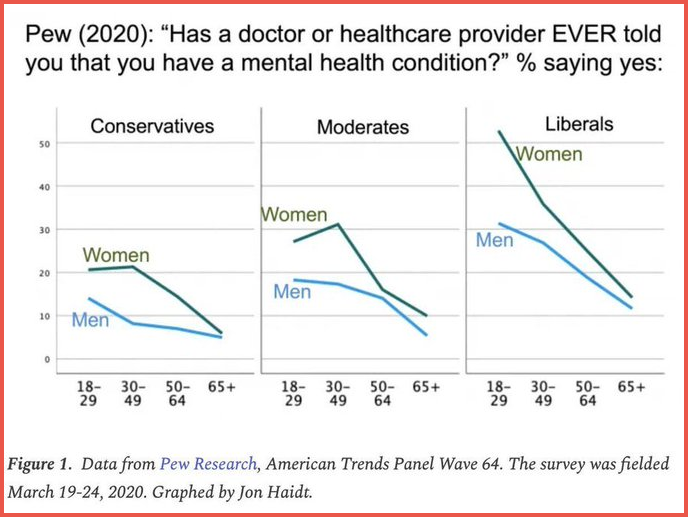
I. Young Liberal Women And Mental Health
Pew Research data show that a majority of women aged 18 to 29 who identify as liberal say a doctor or healthcare provider has told them they have a mental health condition, a rate far higher than among men, older Americans, or those with moderate or conservative views.
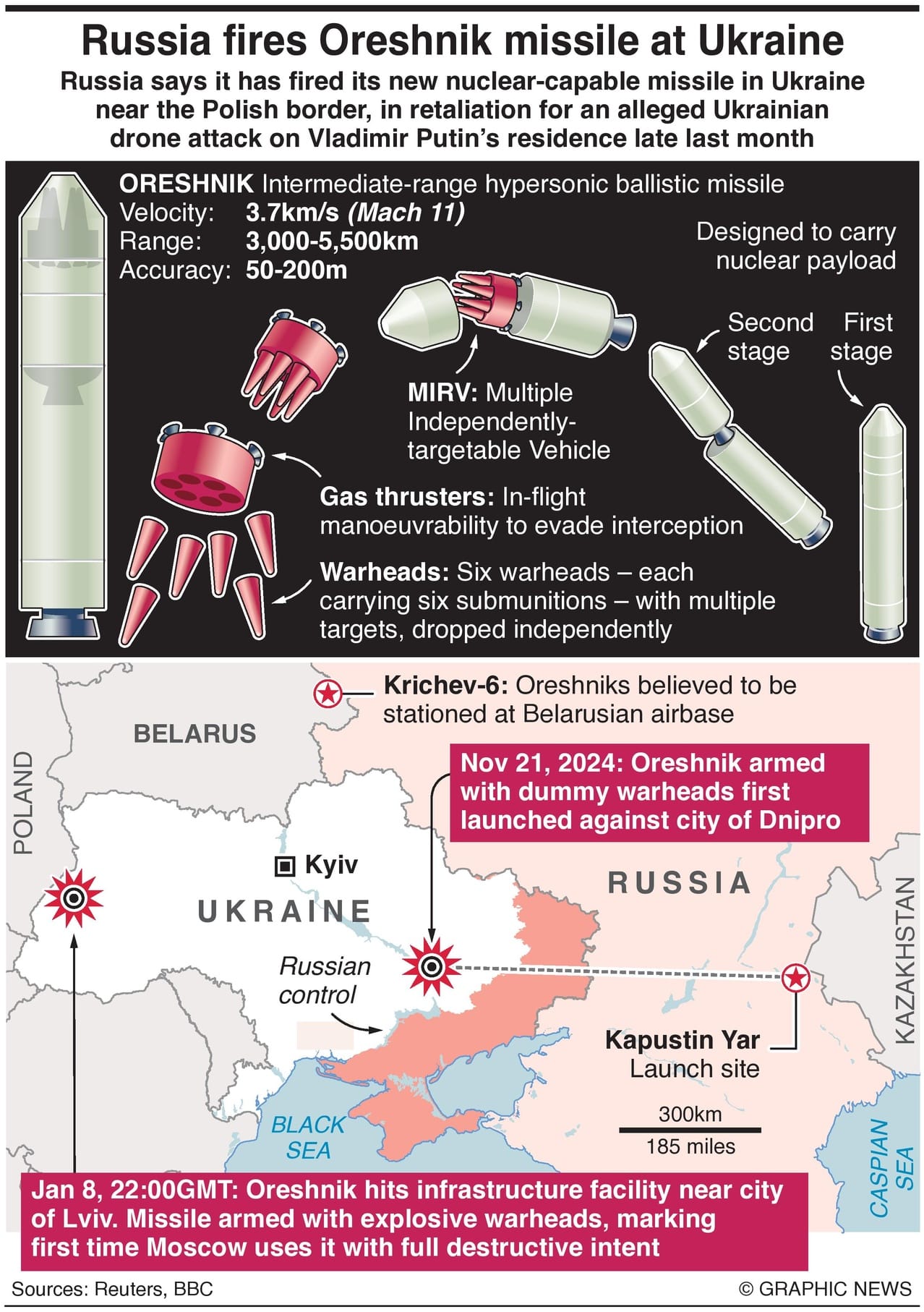
II. Russia Fires Nuclear-Capable Missile Near Polish Border
Russia says it has fired its new nuclear-capable missile in Ukraine near the Polish border, in retaliation for an alleged Ukrainian drone attack on Vladimir Putin’s residence late last month.
The TIPP Stack
Handpicked articles from TIPP Insights & beyond
1. Jan. 6, 5 Years Later—Were We Played?—Victor Davis Hanson, The Daily Signal
2. Victor Davis Hanson: The Danger Of Dumbing Down American Students— Victor Davis Hanson, The Daily Signal
3. Donald Trump, And Most Americans, Do Not Understand The Monroe Doctrine—Larry C. Johnson, Ron Paul Institute for Peace and Prosperity
4. From Industrial Power To Military Keynesianism: Germany’s Engineered Collapse—Gerry Nolan, Ron Paul Institute for Peace and Prosperity
5. Venezuelans Celebrate The Demise Of Collectivism While New Yorkers Embrace Its ‘Warmth’—Editorial Board, Issues & Insights
6. A Lawless Presidency—Andrew P. Napolitano, Ron Paul Institute for Peace and Prosperity
7. Maduro Gets His Just Desert—Terence Jeffrey, The Daily Signal
8. The Deadly Consequences Of Democrats’ War On ICE Enforcement—Jarrett Stepman, The Daily Signal
9. Vance Announces New Plan To Combat Nationwide Welfare Fraud—Elizabeth Troutman Mitchell, The Daily Signal
10. Trump Says US Oversight Of Venezuela Could Last Years—Peter Graff, The Daily Signal
11. Will Japan Be the World’s Next AI Leader?—Hiroshi Mikitani, Project Syndicate
12. The UK Is In Economic And Social Freefall—Lipton Matthews, Mises Wire
13. What One State Found When Probing Voter Rolls For Noncitizens—Fred Lucas, The Daily Signal
14. Liberals Learn To Fear Big Government — But For All The Wrong Reasons— Editorial Board, Issues & Insights
15. Yes, Supreme Court, Please ‘Destroy The Structure Of Government’—Editorial Board, Issues & Insights
16. Stop Recycling Plastic—Editorial Board, Issues & Insights
17. Trump’s Nuclear Power ‘Renaissance’—Editorial Board, Issues & Insights
18. For Today’s Democrats, Fraud Is A Feature, Not A Bug—Editorial Board, Issues & Insights
19. The Eco-Zealots Were Wrong Again—Editorial Board, Issues & Insights
20. Yes, Democrats, Trump Does Own This Economy—Editorial Board, Issues & Insights
21. California’s ‘Get Out Now’ Tax—Editorial Board, Issues & Insights
22. Want To Eliminate Fraud? Cut The Federal Government By Two-Thirds—Editorial Board, Issues & Insights
23. Does California Want To Be Part Of The Nuclear Renaissance?—Kerry Jackson, Issues & Insights
24. Security, Fear, And Power: The Impossible Rest Of States—Ulrich Fromy, Mises Wire
25. Three Monetary Riddles For The New Year—Brendan Brown, Mises Wire
26. Why The Monroe Doctrine Cannot Be Reestablished—Patrick Frise, Mises Wire
27. Time To End Biden’s Medicare Part D-estruction—Jackson Hammond, Issues & Insights
28. Recall Mamdani—Editorial Board, Issues & Insights
29. “The Warmth Of Collectivism”: Beginning The Mamdani Era—William L. Anderson, Mises Wire
30. Mamdani’s Socialist Crybullies Want To Dodge Accountability— Jarrett Stepman, The Daily Signal
31. GOP Lawmaker Reveals Playbook For Banning Investors From Buying Single-Family Homes—Elizabeth Troutman Mitchell, The Daily Signal
32. CBS Battles With ‘Gender Expansive Language’—Tim Graham, The Daily Signal
33. Doctors Press Trump Admin To Review Abortion Pill Safety—Virginia Allen, The Daily Signal
34. ‘IRREPARABLE HARM’: California Teachers Ask Supreme Court To Block Gender Secrecy Policy—Tyler O'Neil, The Daily Signal
35. Here’s How Many Republicans Sided With Hakeem Jeffries’ Obamacare Gambit—George Caldwell, The Daily Signal
36. The New Food Pyramid Is Exactly What We’ve Needed For Years—Jennifer Galardi, The Daily Signal
37. These Policies Could Reverse US Declining Marriage, Birth Rates—Fred Lucas, The Daily Signal
38. Qatar Sent Billions To Top US Universities, According To Ed Department—Virginia Allen, The Daily Signal
39. GOOD NEWS: Mississippi Looks To Reform, Establish Education Freedom—Jason Bedrick, The Daily Signal
40. The Ugly Cold War Racket Against Cuba Rears Its Ugly Head Again—Jacob G. Hornberger, Ron Paul Institute for Peace and Prosperity
41. Vance Warns Democrats Will Seek To Arrest Law Enforcement—Elizabeth Troutman Mitchell, The Daily Signal
42. How Trump Finally Buried The Iraq Syndrome—Ben Shapiro, The Daily Signal
43. There Are No Good Outcomes In Trump’s Latest Attempt At Regime Change In Venezuela—Connor O'Keeffe, Mises Wire
editor-tippinsights@technometrica.com