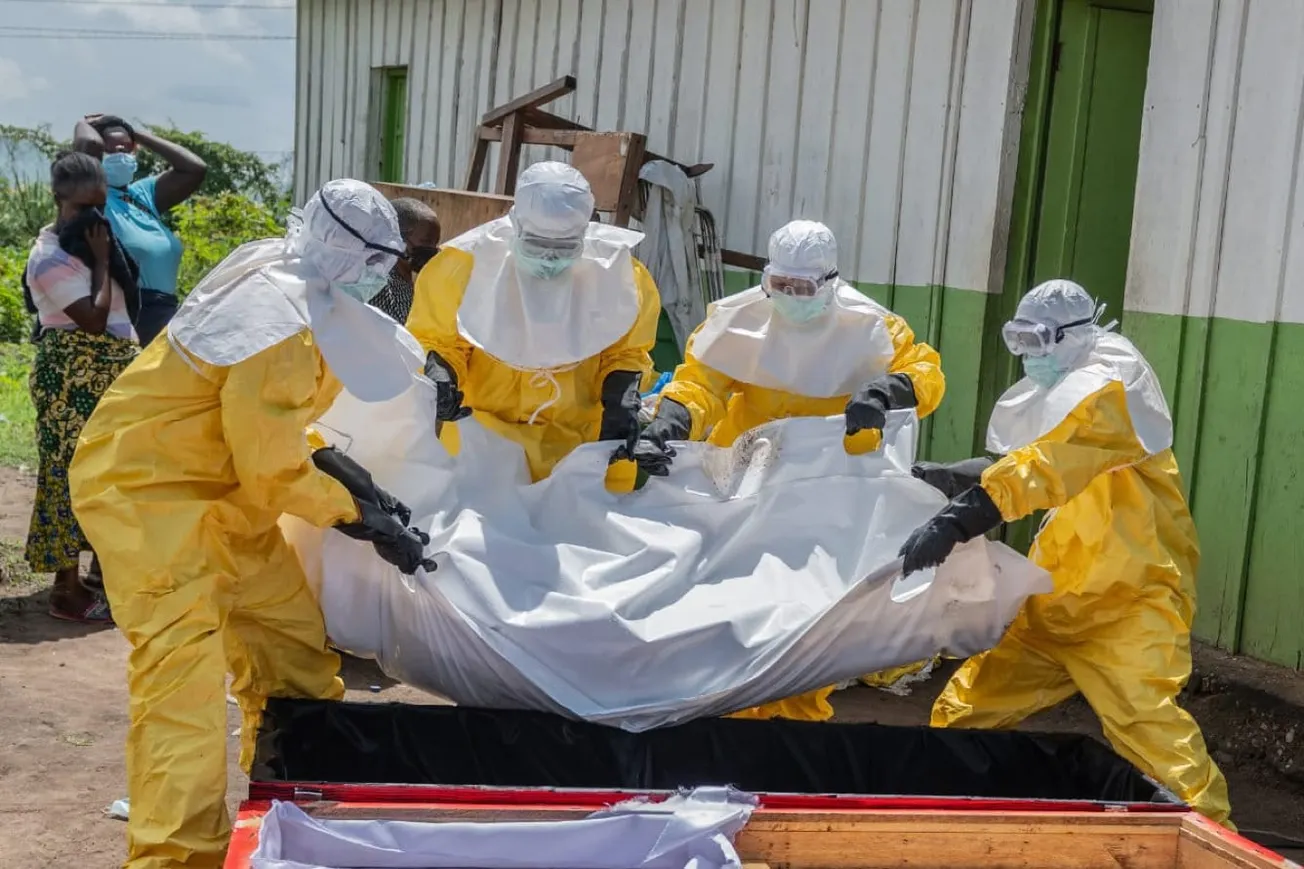
A deadly Ebola outbreak in the Democratic Republic of Congo has killed more than 100 people and triggered growing international concern as health officials struggle to contain the rare Bundibugyo strain of the virus, according to CNN and the World Health Organization.
The report said the outbreak has been fueled by bushmeat consumption, traditional burial practices and widespread misinformation in rural communities.
Scientists believe Ebola spreads from infected wild animals such as bats and monkeys before passing between humans through bodily fluids and contaminated surfaces.
WHO’s Anne Ancia tells Al Jazeera the Bundibugyo-strain Ebola outbreak in eastern DR Congo spread “silently” for weeks and has no approved vaccine.
— Al Jazeera English (@AJEnglish) May 18, 2026
Cases have reached North Kivu, Goma and borders with Rwanda and Uganda, as conflict and funding gaps hamper the response. pic.twitter.com/NFuGbgcVON
Health officials warned that the Bundibugyo strain currently has no approved vaccine or treatment. WHO reported that most infections are concentrated in eastern Congo, particularly in Bunia and nearby mining towns, while neighboring Uganda has also confirmed cases.
Community workers told CNN that rumors, superstition and resistance to medical intervention are complicating containment efforts. Traditional funeral rituals involving physical contact with the deceased are also believed to be contributing to new infections.
According to WHO, at least 139 deaths and nearly 600 suspected cases have been recorded so far.
Also Read:
 TIPP Staff