
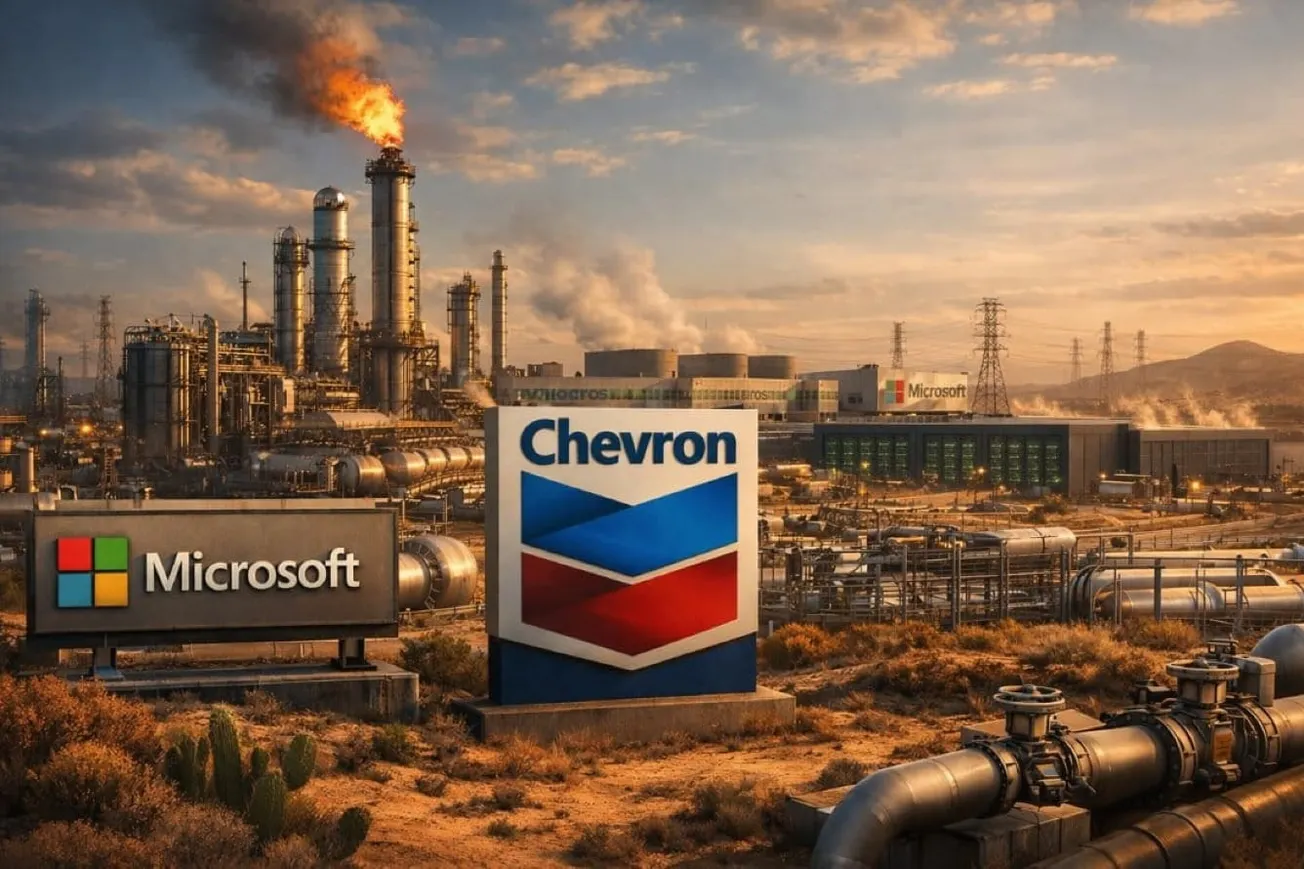
Chevron announced a 20-year agreement to supply natural gas for Microsoft’s planned Project Kilby data center in West Texas, highlighting the growing energy demands of artificial intelligence infrastructure.
According to the company, the facility is expected to consume nearly 2.7 gigawatts of electricity, an amount comparable to the power needs of roughly 2 million homes.
The report said construction has not yet begun in Reeves County, Texas. Chevron expects to make a final investment decision later this year, with power delivery targeted for 2028.
The agreement comes as Microsoft sharply increases spending on data center expansion. The company plans to invest $190 billion in capital expenditures this year, a 61% increase from 2025.
While Microsoft has heavily backed renewable and nuclear energy projects, the Chevron partnership signals a willingness to use natural gas to meet rising electricity demand from AI-driven operations.
Related Tweet:
Chevron to fuel massive Microsoft data center in Texas with natural gas https://t.co/GvCy0XyRBn
— The Right News, Right Now. (@BradPorcellato) June 22, 2026
Also Read:
 Issues & Insights Editorial Board