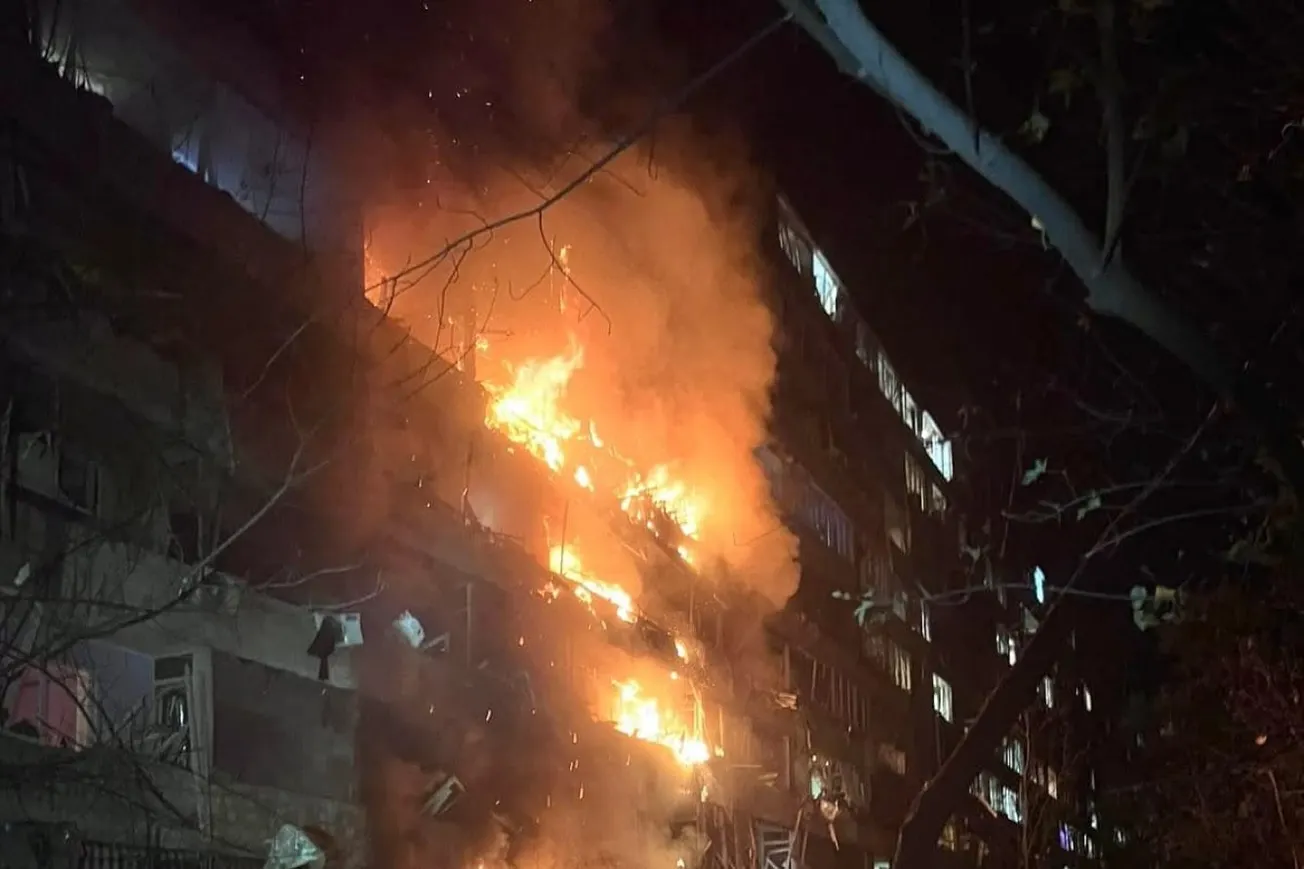
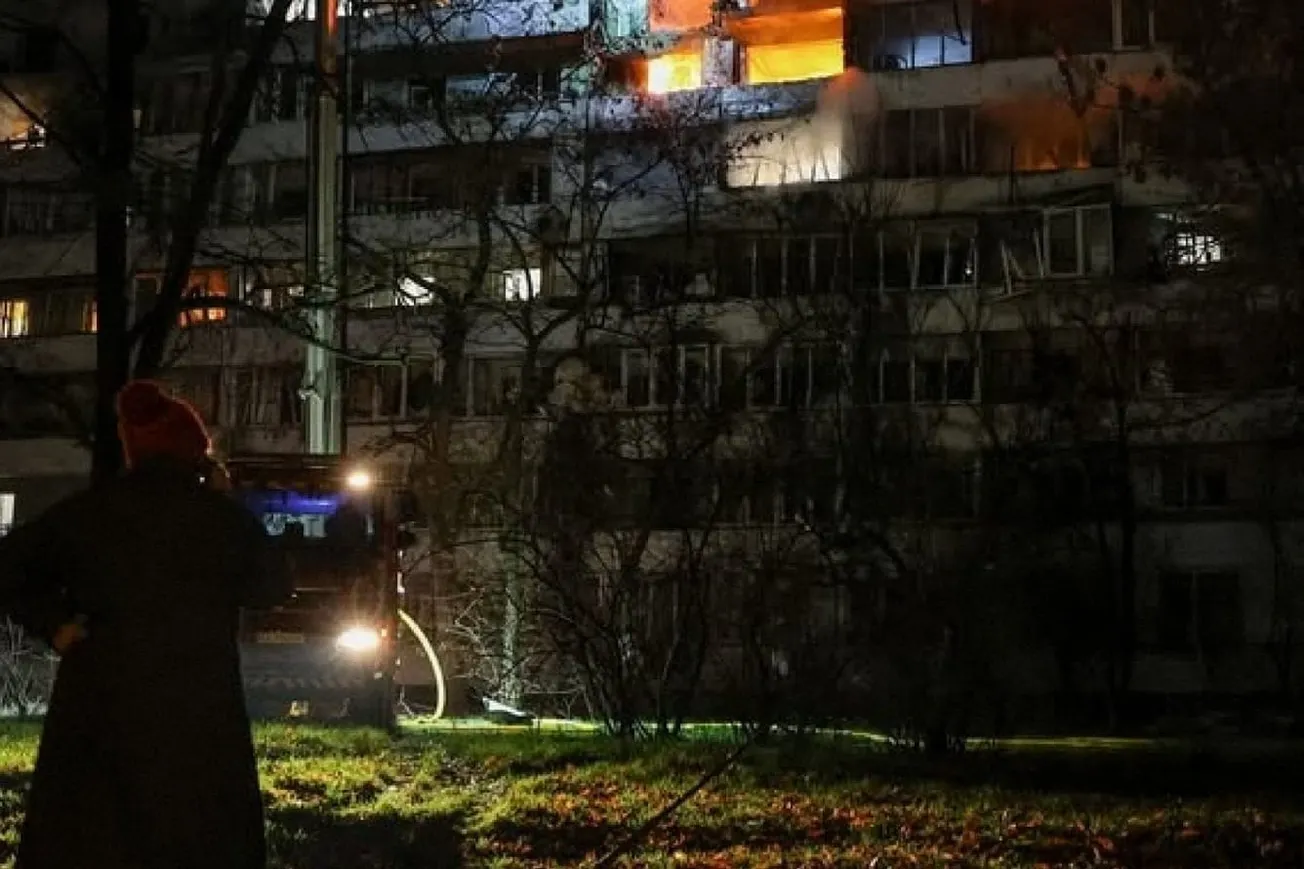
Russia launched a sweeping overnight assault on Kyiv and multiple Ukrainian regions on Nov. 25, killing at least seven people and injuring 20, according to Kyiv Mayor Vitali Klitschko.
The attack used Shahed drones and Kinzhal ballistic missiles, striking residential neighborhoods and key energy facilities across Kyiv, Odesa, Chernihiv, Dnipropetrovsk, and Kharkiv.
💔 Kyiv residents took to metro stations and bomb shelters as Russia launched a massive drone and missile attack against the capital overnight. pic.twitter.com/S0wKPCvMGS
— UNITED24 Media (@United24media) November 25, 2025
Thousands were left without power as emergency crews battled fires and searched collapsed buildings for survivors.
In Kyiv’s Dniprovskyi and Pecherskyi districts, multistory apartment blocks burned, and several residents were trapped under rubble.
Additional morning missile launches triggered new nationwide alerts, with more casualties reported in the Sviatoshynskyi and Desnyanskyi districts.
Russia attacked Ukraine again with missiles and drones.
— MFA of Ukraine 🇺🇦 (@MFA_Ukraine) November 25, 2025
In Kyiv, residential buildings and civilian infrastructure were damaged. Russia killed six people and injured at least 13.
Odesa and the region were also under attack. Six people were injured, including two children. Fires… pic.twitter.com/USwrZbOjGH
The attack also destroyed homes in Kyiv Oblast and likely sent a drone into Romanian territory.
Moscow’s escalating strikes come as the U.S. pressures Ukraine to consider a controversial peace plan. President Volodymyr Zelensky warned that Russia is using winter attacks to gain leverage at the negotiating table.
Also read:
 TIPP Staff