At a Davos panel in January 2013, an American policy analyst named Michele Wucker introduced a phrase. She called it the gray rhino, the large and visible danger that gets ignored anyway. The gray rhino is not the black swan that nobody saw coming. It is the two‑ton animal pawing the ground in plain view. Four years later, the People’s Daily ran a front‑page editorial warning of gray rhinos in China’s financial system. The term entered the working vocabulary of Chinese officialdom. In his 2018 New Year’s video address, Xi Jinping had a copy of Wucker’s book on the shelf behind him. This week, Chinese economists are using the phrase again. The rhino they have in mind is the Strait of Hormuz.
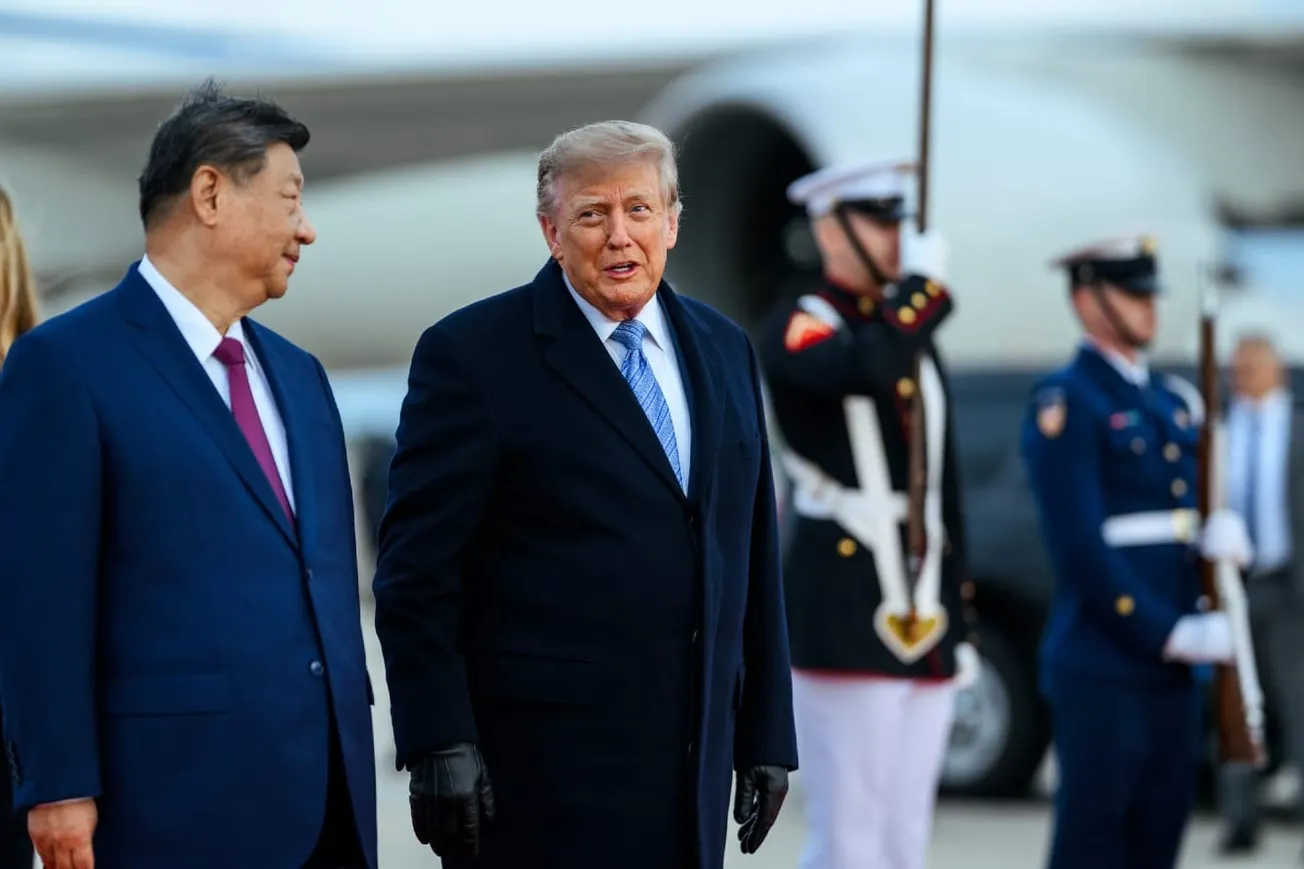
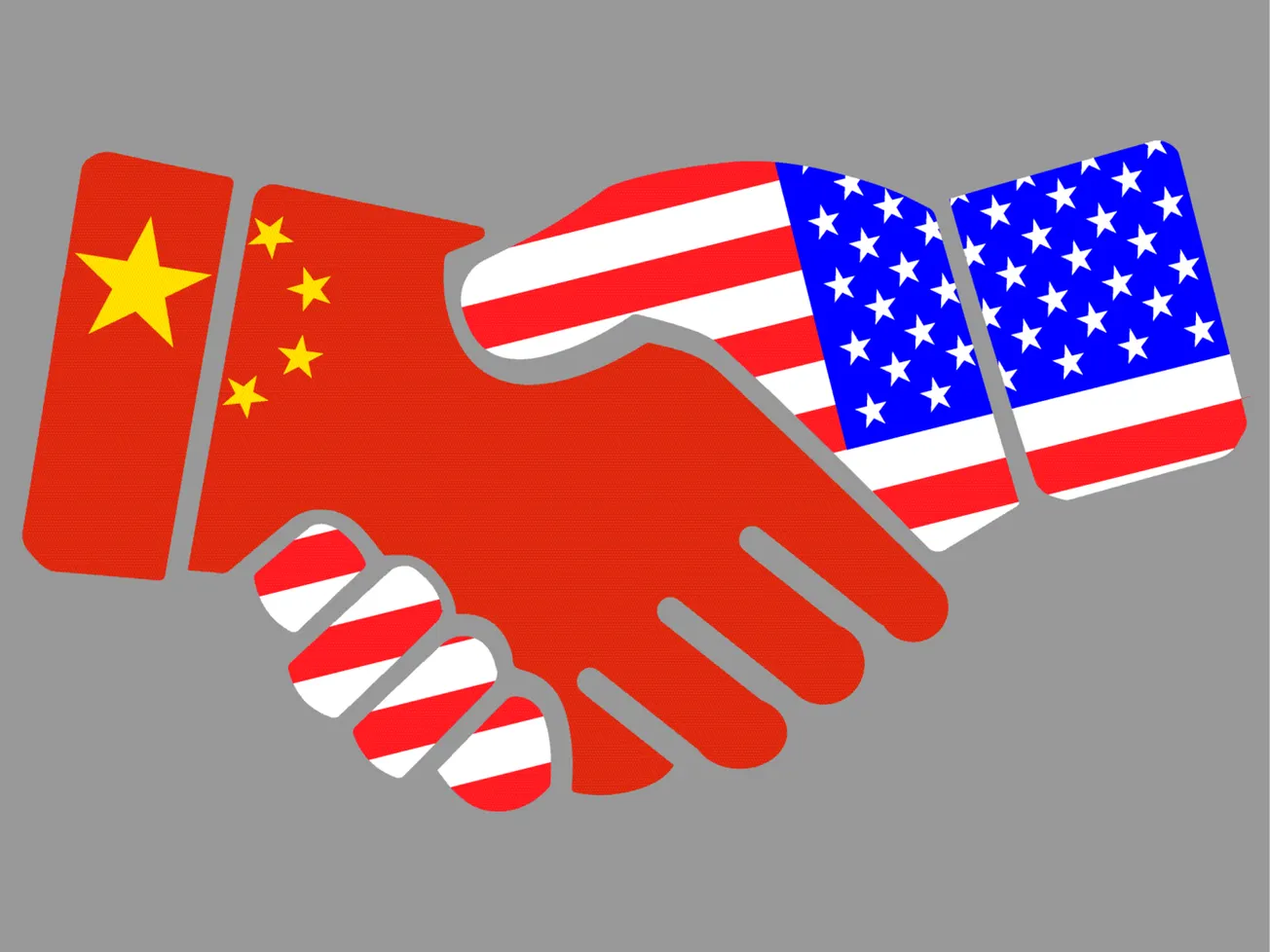
On Thursday morning, President Trump will land in Beijing for a two‑day summit with Xi Jinping. The Beast is already on the tarmac at Beijing Capital International. The delegation invited by the President includes Elon Musk of Tesla, Tim Cook of Apple, Larry Fink of BlackRock, Kelly Ortberg of Boeing, Jane Fraser of Citigroup, David Solomon of Goldman Sachs, Stephen Schwarzman of Blackstone, and the chief executives of Mastercard, Visa, Qualcomm, Micron, GE Aerospace, Cargill, Illumina, Coherent, and Meta. The President will shake Xi’s hand in the Great Hall of the People, and the photograph will travel around the world within the hour.
Nearly half of the crude oil that keeps Chinese factories running passes through the Strait of Hormuz. The Strait has been closed for ten weeks. The American blockade of Iranian ports has redirected sixty‑two commercial ships and disabled four. Chinese refiners have continued to buy Iranian crude through a network of front companies in Hong Kong, the United Arab Emirates, and Oman, and the Treasury sanctioned three individuals and nine such companies on Monday.
Xi Jinping in April made his first public call for “normal passage” through the Strait, in a phone conversation with the Saudi crown prince that was reported by Xinhua. The phrase was carefully chosen. It is the closest a Chinese leader has come to publicly asking the United States to lift a blockade that is squeezing his economy. The rhino is pawing the ground.
The leverage on the table in Beijing did not arrive by accident. The President spent ten months building it. American forces took Nicolas Maduro into custody in January. Strikes on Iran followed in February. The blockade of Iranian ports came in April, and the Iranian economy has been contracting since. Xi Jinping watched two of Beijing’s three energy and influence partners fall in ninety days and has not been able to publicly criticize the President by name. Beijing has financed the regime through ten months of war. The patron has the standing, and the obligation, to discipline the client.
The leverage is real but perishable. A summit that produces aircraft orders and a joint statement on trade, while leaving the Iran file for a later meeting, squanders leverage at a discount. The question on Thursday is not whether the President should shake Xi’s hand. It is what Xi must give before the handshake is worth taking.
The audience that matters most on Thursday is not in Beijing. It is in Tehran. Iran’s foreign minister, Abbas Araghchi, traveled to Beijing on May 6 to meet his counterpart Wang Yi, the first such visit since the war began, seeking Chinese diplomatic cover, continued oil purchases, and a clear sense of what Beijing intends to say to the President about Iran. Iran’s parliament speaker said Monday that the United States has no alternative but to accept Tehran’s fourteen‑point proposal. A spokesman for the parliament’s national security committee said Iran could enrich uranium to ninety percent purity, the weapons‑grade threshold, if attacked again. The Supreme Leader’s international affairs adviser warned the President directly not to enter Beijing claiming victory.
Tehran’s bet is that once the President shakes Xi’s hand, resumed strikes become politically harder. The regime is reading the handshake as cover. The President’s task in Beijing is to ensure the message Tehran receives is the opposite one.
The yardstick on Friday is not the aircraft order. It is what Xi gives on Iran. A joint statement naming the Strait of Hormuz and calling for its reopening would be a deliverable worth the trip. Pressure from Beijing on Tehran to accept American terms, including dropping the reparations demand, would be another. A pause in Chinese refiners’ purchases of Iranian crude, which Treasury Secretary Scott Bessent predicted in April and has yet to occur, would be a third. Without movement on at least one of these, the summit is a photograph. With movement on all three, the trip is a turning point in the war.
If Xi declines to move, the President’s path is clear. Tehran has spent the ceasefire threatening ninety percent enrichment, parking military aircraft on Pakistani airfields, and rejecting American terms while demanding reparations.
Vice President Vance and envoy Steve Witkoff met with the President on Monday to discuss next steps. The President said the ceasefire was on one percent life support. Israel’s Channel 12 reported that American officials now expect a resumption of strikes.
The leverage in Beijing exists because the willingness to use force in the Gulf is credible. If Beijing will not help end the war on American terms, the war will end on American terms anyway.
The handshake in Beijing is the easy part. What comes after it is the test. The President carries leverage into the Great Hall that no American president has carried into that room in a generation. He earned it with the Maduro operation in January and the strikes on Iran in February. The blockade has tightened the screws every week since.
Xi Jinping knows the rhino is in the room. The President’s task is to make sure Xi moves first.
📊 Market Mood — Tuesday, May 12, 2026
🟩 Markets Pull Back as Iran Talks Stall Again
U.S. futures slipped as hopes for a quick breakthrough in the Middle East faded.
🟧 Oil Climbs Above $105 on Renewed War Risks
Crude surged as fears grew that the Hormuz blockade could drag on longer.
🟦 AI Momentum Keeps Tech Leadership Intact
Chip stocks stayed strong even as analysts warned enthusiasm may be getting overheated.
🟨 Inflation Report Becomes Critical Market Test
Investors turned focus to CPI data for signs the energy shock is spreading beyond gasoline.
🗓️ Key Economic Events — Tuesday, May 12, 2026
🟧 08:30 ET — CPI Inflation Data (Apr)
- CPI (MoM): expected at +0.6% (vs. +0.9% prior)
- CPI (YoY): expected at +3.7% (vs. +3.3% prior)
- Core CPI (MoM): expected at +0.3% (vs. +0.2% prior)
A crucial inflation report as markets watch for spillover effects from higher energy prices.
🟧 13:00 ET — 10-Year Note Auction
The Treasury auction will be closely watched for demand and bond market reaction amid rising inflation concerns.
Letters to the editor email: editor-tippinsights@technometrica.com
Subscribe Today And Make A Difference. Consider supporting Independent Journalism by upgrading to a paid subscription or making a donation. Your support helps tippinsights thrive as a reader-supported publication. Contact us to discuss your research or polling needs.
Reach our audience. For sponsorship and advertising opportunities, visit our Partner With Us page.