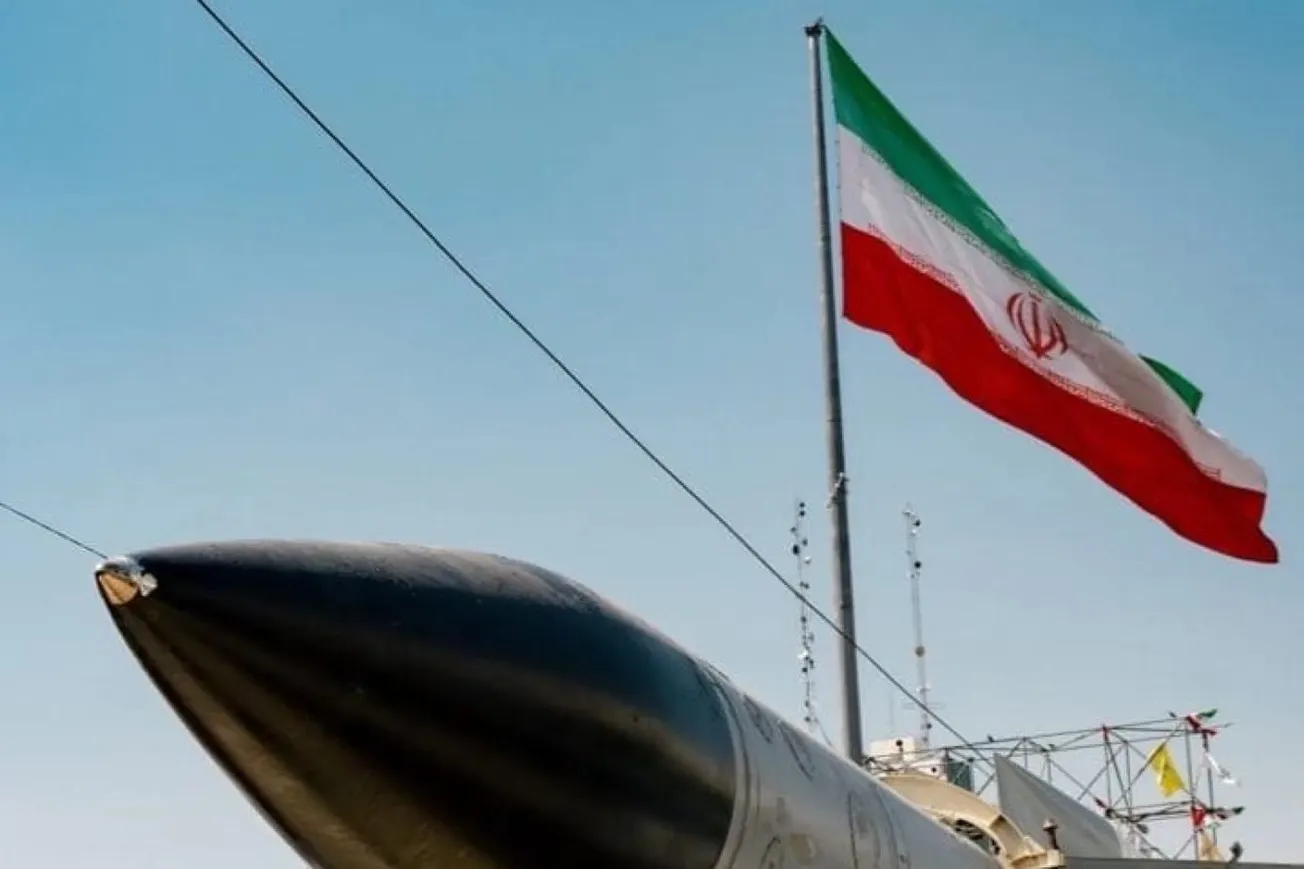

For four editorials, this board has argued from the outside looking in: that Iran squandered a fortune built over 2,400 years, that the regime can no longer pay the forces that keep it in power, that the walk-out from talks was theater, and that the fractures inside Tehran have broken into public view.
Now comes confirmation from the inside looking out.
A confidential letter, reportedly signed by parliament speaker Mohammad Bagher Ghalibaf, President Masoud Pezeshkian, Foreign Minister Abbas Araghchi, and other senior officials, has been sent to Supreme Leader Mojtaba Khamenei. Its message is as stark as it is unavoidable: the economy is in grave condition, the current path cannot continue, and serious negotiations with the United States are no longer optional.
It is an admission from the managers of the state, the people who sign the budgets, run the negotiations, and face the parliament. They have looked at the books and reached a conclusion the ideologues cannot ignore: the numbers no longer work.
But the letter was never meant to become public. It was addressed to Khamenei alone, not to the parliament, the press, or the public. It leaked because Ali Bagheri Kani, Iran’s former chief nuclear negotiator, refused to sign it, then showed it to hardliners outside the circle to prove his loyalty. From there, it spread through Tehran’s political class like a lit fuse.
The leak exposes the real struggle inside Tehran. Forget the Western label of moderates versus hardliners. The fight inside Tehran is simpler and uglier: can the regime survive without a deal, or will ideology drive it off a cliff? Officials who have looked at the numbers want a deal. The forces around Khamenei would rather let the system collapse than compromise.
The backlash was immediate. Nour News, linked to Iran’s Supreme National Security Council, published a video warning that a “dangerous current” was trying to portray Ghalibaf and Araghchi as figures pushing “surrender and compromise” against the Supreme Leader’s wishes. The signatories were no longer just advising Khamenei. They were being accused of betraying him.
Then came the coordinated denial. Pezeshkian and Ghalibaf issued near-identical statements: “In Iran there are no hardliners or moderates. We are all Iranians and revolutionaries.” The copy-paste unity was the tell. Men who had just told their Supreme Leader the country was broke were now telling the world they stood united behind him.
And the timing makes it worse. Mojtaba Khamenei has not appeared in public since the February 28 strikes that killed his father. He communicates through handwritten notes, sealed in envelopes, passed by trusted couriers who travel by car and motorcycle along highways and back roads until they reach his hiding place. His instructions return the same way. The system is struggling to function. Decisions are slow, authority is scattered, and nobody outside his inner circle knows who is really in charge.
The letter reads less like advice and more like a plea.
History has delivered this moment before.
In 1988, during the final phase of the Iran–Iraq War, senior officials and military commanders confronted Ruhollah Khomeini with the same reality. The war could not be sustained. The costs had become unbearable. The IRGC’s own commander-in-chief, Mohsen Rezaee, delivered what officials later described as a “shocking” assessment of Iran’s military position. The country’s economic advisors presented Khomeini with a list of problems showing the nation could not afford to continue.
Khomeini accepted a ceasefire. He told the Iranian people that the decision was “more deadly than drinking from a poisoned chalice.” Then he added: “Happy are those who have departed through martyrdom. Unhappy am I that I still survive.”
He drank it.
Iran now faces a moment that echoes that decision. The letter to Mojtaba Khamenei carries the same weight, the same desperation, and the same message: the path of resistance has run out of money.
Its leaders, or at least many of them, already understand the stakes. They have put it in writing. They have told their Supreme Leader, in confidence, what this editorial board has been telling its readers all week: the fortune is gone, the bills cannot be paid, the bluff has been called, and the fracture is real.
Reality is no longer in dispute. The only question is whether Mojtaba Khamenei, wounded, isolated, communicating by courier, will act on it. Or whether the hardliners who leaked the letter, who published the warning videos, who accused the signatories of surrender, will make sure that choice is never made.
Regimes collapse because they refuse to act on reality. Or because they are prevented from doing so.
And sometimes, because they never drink the poison.
Letters to the editor email: editor-tippinsights@technometrica.com
Subscribe Today And Make A Difference. Consider supporting Independent Journalism by upgrading to a paid subscription or making a donation. Your support helps tippinsights thrive as a reader-supported publication. Contact us to discuss your research or polling needs.
Reach our audience. For sponsorship and advertising opportunities, visit our Partner With Us page.