In 1978, Iran’s Shah had the fifth-largest military in the world, a feared secret police force, and more oil money than he knew how to spend. Then the oil workers went on strike. The walkout cost his government $60 million a day. Within weeks, soldiers began refusing orders. Within months, the Shah fled to Egypt. The mightiest security state in the Middle East fell - not to an invading army, but to an empty treasury.
The men who replaced him should remember how they came to power.
A security state must pay its guards, reward its insiders, and keep food prices low enough to prevent revolt. Ideology may inspire a movement. Cash keeps a regime in business.
Iran’s rulers must understand a basic truth of politics: power is not sustained by slogans. It is sustained by money. That is why the real battle for Iran is no longer in the skies or at sea. It is in the payroll ledgers and bread lines.
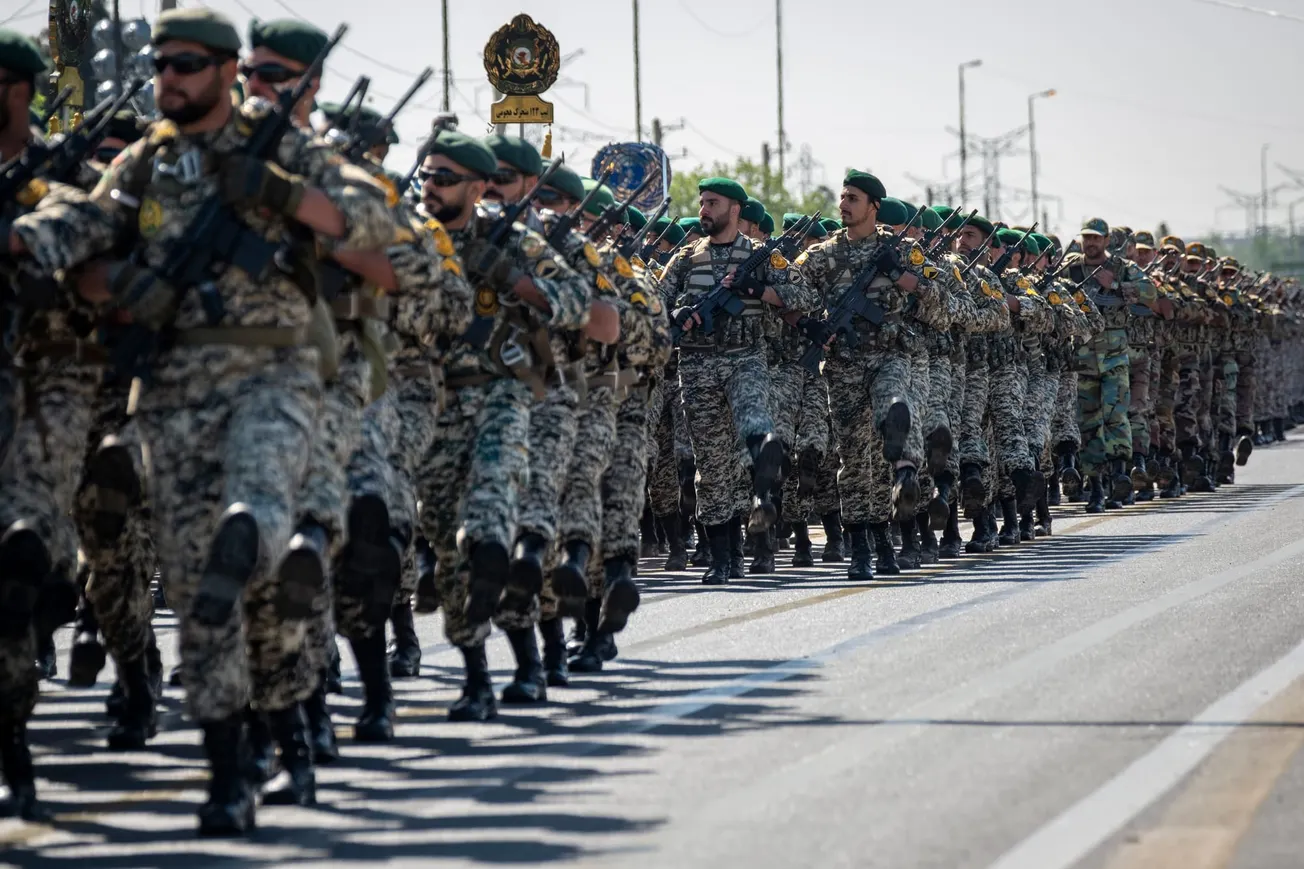
At the center of that system stands the Islamic Revolutionary Guard Corps, better known as the IRGC. The Guards are more than a military force. They run businesses. Over the years, they have expanded into construction, energy, telecommunications, finance, and smuggling. By some estimates, the IRGC controls roughly a third of Iran’s economy, with annual economic turnover between $30 billion and $50 billion. In the 2025-2026 budget, the armed forces received 51% of all oil and gas export revenue. The IRGC is not just defending the regime; it is the regime.
That model works as long as the money holds out. But Iran now faces severe economic strain. The latest war has reportedly cost around $270 billion, roughly $3,000 for every Iranian, in a matter of weeks. Recovery could take years.
Long before the latest conflict, ordinary Iranians were already dealing with chronic inflation, a weak currency, and declining living standards. Families already rationing essentials now face rising prices and shortages. Inflation hit 42% last year. Meat has become a luxury. Seven million Iranians have gone hungry. Iran’s own president told parliament in December:
When people are struggling with livelihoods, you cannot govern. They say increase wages; someone tell me where I should bring the money from?
Then came another costly blow: the regime shut down the internet. In a modern economy, killing the internet kills commerce. But for the IRGC, controlling information matters more than the economic cost. The regime’s own communications minister admits the shutdown costs $35 million a day. Independent estimates put it closer to $80 million. Online sales have fallen 80%. The shutdown has now exceeded 1,100 consecutive hours, the longest in any country’s history.
All of this matters politically because repression is expensive. Security forces must be paid. Patronage networks must be fed. Subsidies must be maintained at a level sufficient to prevent widespread desperation. When the economy contracts, every one of those obligations becomes harder to meet. Iran’s budget deficit is projected at $5.8 billion. The government is printing money to cover the gap, which only worsens inflation.
When the money runs short, every choice gets harder.
Does the state preserve benefits for insiders while cutting essentials for the public? Does it print money and fuel more inflation? Does it tighten repression because it can no longer purchase consent?
None of those choices will enable the regime for long.
To be clear, economic pain does not automatically bring regime change. Plenty of regimes have survived hardship for years. Citizens adapt. Fear works. Nationalism can rally support in moments of conflict.
Scarcity can even strengthen the Guards in the short term. As private businesses go under, IRGC-linked firms swallow what’s left.
However, the long run plays out differently.
When living standards keep falling, and younger generations see no path forward, loyalty erodes. When merchants, workers, and students are all angry about the same issues, the protests stop being isolated. When the state can no longer reliably distribute benefits, elite fractures often follow.
That is when regimes discover that force has limits.
Until then, the central question is not whether Iran can survive another round of international economic and military pressure. It is whether the economy can continue to finance the machinery of control. A regime can suppress dissent for a time. But when the rial has lost 20,000 times its value, the treasury is bleeding $80 million a day, and the president is asking parliament where the money will come from, the math does the talking.
1. Trump Escalates Threats As Ceasefire Nears End
2. Iran's President Urges Diplomacy As U.S.-Iran Ceasefire Nears Expiration
3. Hormuz Crisis: Xi Urges Strait To Stay Open In Call With Saudi Crown Prince
4. Why Did The U.S. Seize An Iran-Linked Ship
5. Markets Stay Resilient Amid Iran Conflict Concerns
6. Zelensky Pushes For Homegrown Air Defense Shield
7. What Happened In The Kyiv Supermarket Shooting
8. Japan Orders Mass Evacuations After 7.5 Earthquake
9. Epstein Links Spark Fresh Crisis For U.K. Prime Minister Starmer
10. Pope Leo Dismisses Media Narrative Of Rift With Trump
11. Eli Lilly To Acquire Kelonia In $7 Billion Deal
12. FBI Director Files $250 Million Defamation Suit Against The Atlantic
editor-tippinsights@technometrica.com