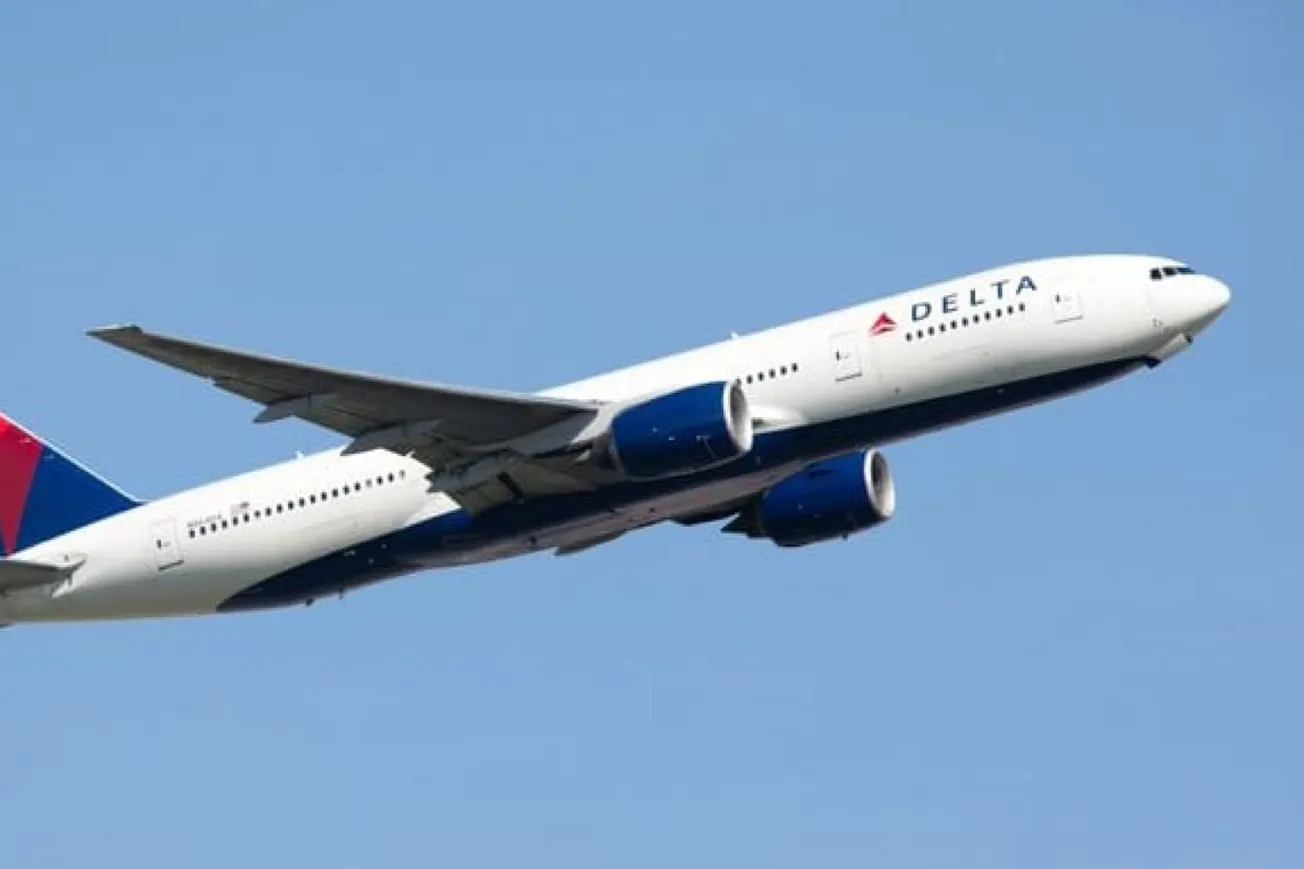

Spirit Airlines, the operator of those unmistakable bright yellow planes that crisscrossed the country promising bargain fares, is finally shutting down for good.
The troubled carrier had been attempting to emerge from its second bankruptcy in short succession, while simultaneously negotiating a deal with the Trump administration to secure $500 million in government investment in exchange for a 90 percent ownership stake. Other Spirit investors balked at the terms, the deal collapsed, and with it, any remaining hope for the airline’s survival. Few Americans will mourn the loss.
This country believes in free markets and broadly supports every entrepreneur who enters a marketplace with a new idea. But genuine innovation means an improved experience for the customer, something that is faster, better, or more affordable than what came before.
Spirit’s fatal flaw was that it was cheaper on paper. But it was dramatically worse in practice than every airline with which it competed.
The American Customer Satisfaction Index for 2024-25 gave Spirit an overall customer satisfaction score of 69 out of 100, with only Frontier faring worse at 65.
Spirit’s TripAdvisor rating of 2.5 left it second-to-last among major carriers, again trailing only Frontier at 2.0.
On AirlineRatings.com, Spirit scored 2.1 out of 5 for customer service and a dismal 1.3 for baggage handling.
Only 16.2 percent of reviewers said they would recommend the airline to anyone.
That figure alone was a warning to every traveler who booked a Spirit flight purely on the strength of a low headline fare. And that headline fare was the central deception.
Spirit was cheaper only if you examined the face value of the ticket and nothing else. The airline charged for nearly everything else essential to getting from one city to another.
Booking online, through the app, by phone, or at an international airport counter triggered a Passenger Usage Charge ranging from $8.99 to $27.99 per segment. The only way to avoid it was to book in person at a domestic U.S. airport ticket counter, a workaround that Spirit made deliberately inconvenient by limiting counter hours. Booking by phone through the reservation center added another $35 per booking on top of that.
Printing a boarding pass at an airport kiosk cost $2. Having it printed by an agent at the check-in counter cost $10. Online check-in and printing at home were free, but only for passengers who knew to prepare in advance.
Spirit operated Airbus aircraft with the lowest average seat pitch of any U.S. airline, a claustrophobic 28 inches according to WalletHub, achieved by packing more rows into the cabin than any competitor. The base fare covered a seat in that compressed space and one small personal item, meaning something that fit entirely under the seat in front of you.
A standard carry-on bag for the overhead bin cost $41 to $65 each way when purchased in advance, rising to $65 to $99 if you waited until the gate. A checked bag ran $35 to $65 each way at booking, or $75 to $99 at the airport.
Seat selection cost up to $50 each way. Without paying for a seat, Spirit randomly assigned one at check-in with no guarantee that traveling companions would sit together.
Nothing was complimentary once airborne. Coffee cost $2, sodas and juices $3, beer and wine $8, and snacks started at $3 for a bag of Pringles or a pack of Oreos. Each of these fees applies per segment, not per round trip, so a connecting itinerary doubles the toll. A family of four traveling on a connecting flight could spend more avoiding the Passenger Usage Charge alone than many airlines charge for a checked bag.
By the time a typical traveler added a carry-on bag, a checked bag, a seat assignment, and a single drink, the total frequently exceeded what a legacy carrier would have charged from the outset, with none of the service to show for it.
The airline deserves its fate. What does not deserve celebration is the legacy it leaves behind. Spirit did not die before infecting the rest of the industry with its philosophy.
Today, most major airlines have adopted stripped-down basic economy fares that charge separately for carry-on bags, checked bags, and seat selection.
On Delta, basic fare passengers cannot even pay to choose their seats in advance. Those seats are assigned at the gate, and basic fare customers are the last to board. Frequent flier points are withheld entirely on basic fares across virtually every legacy carrier.
Spirit pioneered a race to the bottom in American air travel and then lost that race. The tragedy is that the rest of the industry is still thriving by running that very race.
Rajkamal Rao has been a TIPP Insights columnist and member of the Editorial Board for over four years. He also publishes on Substack, with all of his work available for free. Readers may subscribe to get new articles sent straight to their inbox.
World Agenda May 2026
Events this month include a deadline for President Trump over U.S. military involvement against Iran, the replacement of Federal Reserve Chair Jerome Powell, and presidential elections in Colombia. Japan releases national oil reserves, Meta cuts 10% of its workforce, while the Cannes Film Festival, Eurovision Song Contest, and Miles Davis centenary get underway.
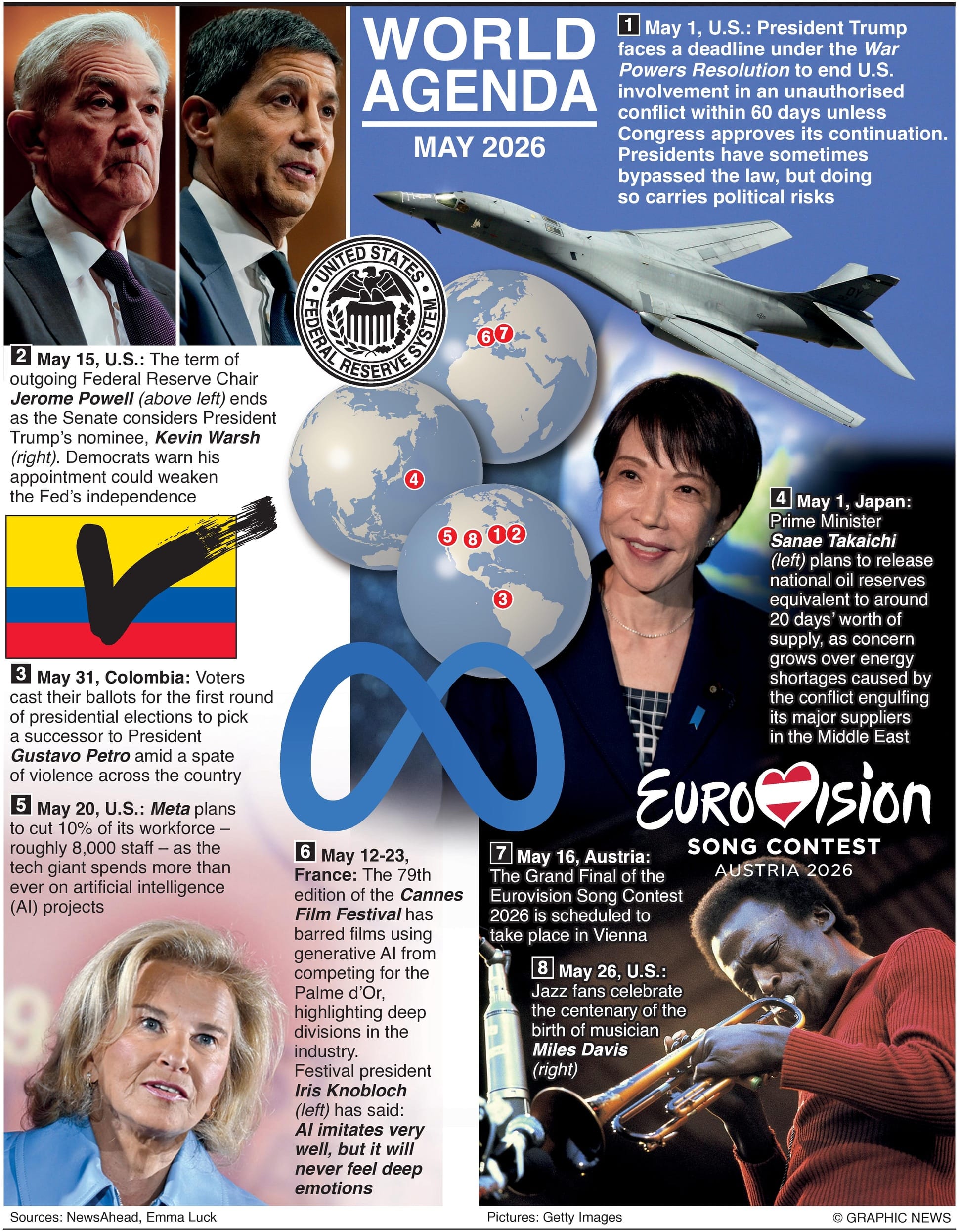
May 1, U.S.: President Trump faces a deadline under the War Powers Resolution to end U.S. involvement in an unauthorized conflict within 60 days unless Congress approves its continuation. Presidents have sometimes bypassed the law, but doing so carries political risks.
May 1, Japan: Prime Minister Sanae Takaichi plans to release national oil reserves equivalent to about 20 days’ worth of supply, amid concern over energy shortages caused by the conflict engulfing major suppliers in the Middle East.
May 12-23, France: The 79th Cannes Film Festival has barred films using generative AI from competing for the Palme d’Or, highlighting deep divisions in the industry. Festival president Iris Knobloch has said: AI imitates very well, but it will never feel deep emotions.
May 15, U.S.: The term of outgoing Federal Reserve Chair Jerome Powell ends as the Senate considers President Trump’s nominee, Kevin Warsh. Democrats warn his appointment could weaken the Fed’s independence.
May 16, Austria: The Grand Final of the Eurovision Song Contest 2026 is scheduled to take place in Vienna.
May 20, U.S.: Meta plans to cut 10% of its workforce – roughly 8,000 staff – as the tech giant spends
more than ever on artificial intelligence (AI) projects.
May 26, U.S.: Jazz fans celebrate the centenary of the birth of musician Miles Davis.
May 31, Colombia: Voters cast their ballots for the first round of presidential elections to pick a successor to President Gustavo Petro amid a spate of violence across the country.
The stories and data that matter today — selected by the TIPP Insights editorial team.
Trump Pressures Iran Over Nuclear Deal Standoff
What Does Iran’s New Proposal To Revive Peace Talks Say
How Iran’s Internet Ban Is Impacting Businesses Nationwide
New Strikes Escalate Tensions Between Israel And Hezbollah
U.S. Removes Whisky Duties In Boost To UK Trade
Why Trump Is Imposing 25% Tariffs On EU Autos
Why Exxon And Chevron Profits Fell Despite Rising Oil Prices
Pentagon Keeps Anthropic Blacklisted Over Security Risks
Why Chip Stocks Are Surging After AI Spending Fears
Pentagon Signs AI Deals With Big Tech, Excludes Anthropic
Treasury Yields Hold Steady Amid Economic Data Review
Musk’s Tesla Pay Package Hits $158 Billion On Paper
Bitcoin Gains May Not Hold, Analysts Warn
Visa Delays Threaten Hundreds Of U.S. Doctors
Letters to the editor email: editor-tippinsights@technometrica.com
Subscribe Today And Make A Difference. Consider supporting Independent Journalism by upgrading to a paid subscription or making a donation. Your support helps tippinsights thrive as a reader-supported publication. Contact us to discuss your research or polling needs.
Reach our audience. For sponsorship and advertising opportunities, visit our Partner With Us page.