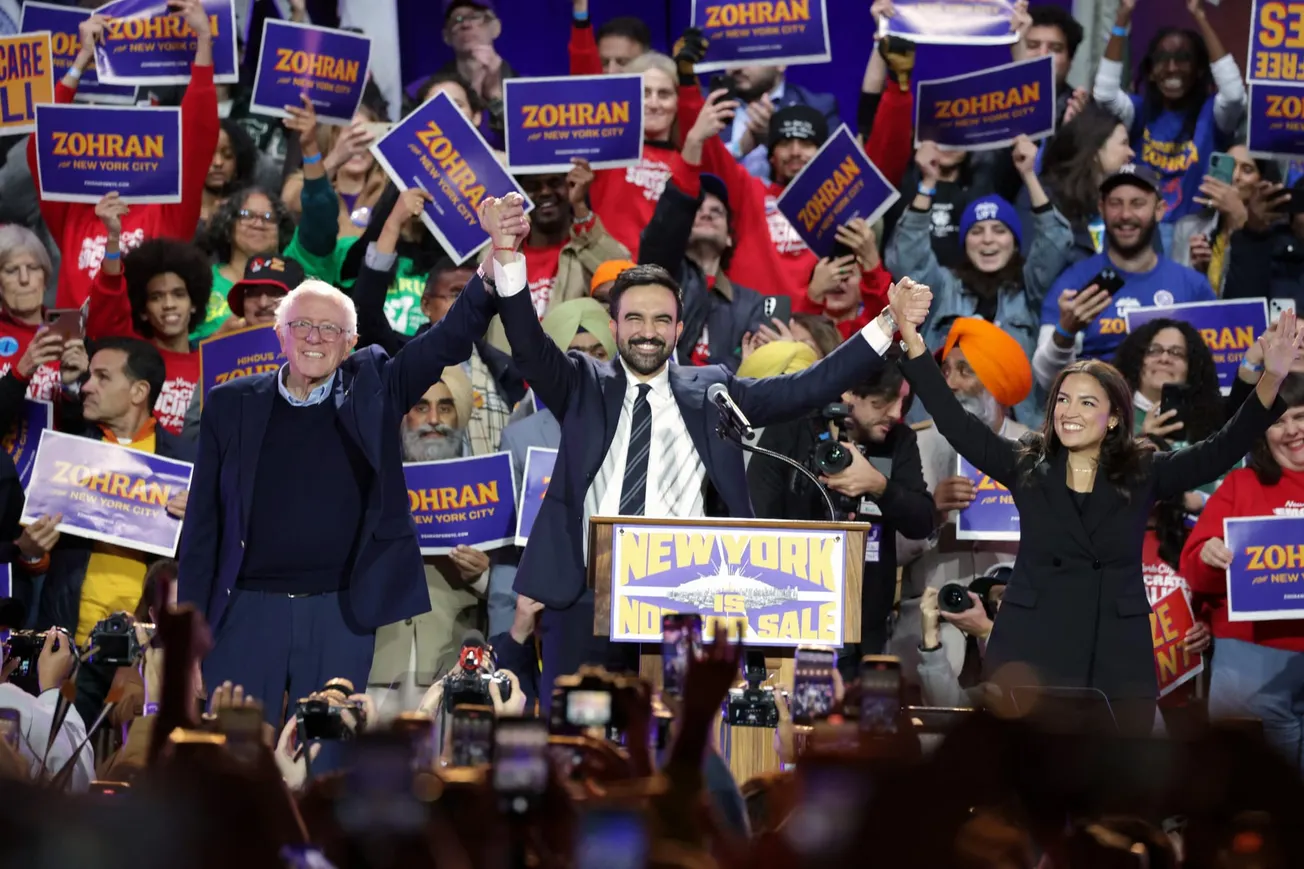
Five months into the Mamdani era, three deals have come due: a Long Island Rail Road strike that shut the system for three days, a hotel contract pushing housekeeper wages above $61 an hour by 2034, and World Cup train fares eight times the normal rate. The people paying are commuters, travelers, and the unorganized working poor. Those entrenched in union power or government payrolls are doing fine, thank you.
The Mamdani administration is the New York chapter of a longer project. Vermont’s Independent senator, Bernie Sanders, has treated the city as a testing ground for democratic socialism for years. Congresswoman Alexandria Ocasio-Cortez rose under his tutelage. Mamdani, for whom Bernie actively campaigned last year, now carries that torch from City Hall.
The LIRR strike was among the most disruptive in recent memory. Railroad workers who are already among the highest-paid in the industry had their unions demand more still. Commuters on Monday faced complete chaos while striking workers stood by and watched. The New York Times offered sympathetic profiles of strikers eager to return to work and help the riding public. That sympathy is hard to square with the decision to walk off the job in the first place.
The Metropolitan Transportation Authority, the state agency that owns the LIRR, ultimately agreed to a four-year contract with annual raises of 3%, 3%, 3.5%, and 4.5%, plus a $3,000 lump sum, capitulating to union pressure at the direct expense of the commuters it serves.
Holding a gun to someone’s head and demanding payment is a crime. Achieving the same result through collective bargaining is celebrated by the Sanders wing of the party.
More than 80 unions represent workers across the MTA. Six have now secured costly new contracts, with 74 still to negotiate. Under the previous agreement, a railroad engineer could earn more than $200,000 annually, including overtime. Union officials and their members compare notes. Every remaining contract will be benchmarked against the deals already won.
The justification offered is affordability. New York City is expensive, and so workers deserve more. But what about the thousands who are not organized: the gig workers, street vendors, and unaffiliated? The MTA has assured riders that fare increases are not imminent. When they do arrive, these residents will absorb costs they had no part in negotiating. The philosophy at work here is a reversal of Robin Hood: rob the poor to subsidize the comparatively comfortable.
Close on the heels of the MTA settlement came another. The hotel industry agreed to a contract that will bring the wages of a typical hotel housekeeper to more than $61 per hour by 2034, up from roughly $40 per hour today. New York City may soon be the only city in the world where a business traveler earns less than the person who cleans their room.
The hotel industry had already been struggling before it agreed to these terms. It had even mounted a public campaign to draw attention to the precarious state of New York City’s hospitality sector. The unions, well aware of this, chose their moment carefully, threatening a strike precisely when the world’s attention would be fixed on New York City for the FIFA World Cup. A weakened industry facing maximum public pressure had little leverage to push back.
The cost falls on the traveler. Hotel rates in New York City, already among the highest in the world, will climb further. NJ Transit, after public backlash, reduced its round-trip rail fare to the New Jersey stadium from $150 to $105, still more than eight times the typical $12.90 fare for the same trip.
Out in the heartland, people will be left watching, and wondering what happened to the America where opportunity did not depend on a union card, and where someone priced out of one city could move to another and start again.
This is what democratic socialism looks like in practice. If it spreads from New York to other major cities, Scandinavia will not just have arrived in Manhattan, it will have taken up residence across the country.
The TIPP Off
What you should be reading right now
Global Affairs
Russia's Grind, Iran's Clock—Mark Pfeifle, TIPP Insights
China-Linked Group’s Socialist ‘Liberation Centers’ Coming To A Town Near You—Hudson Crozier, Daily Caller News Foundation
More Wars And Rumors Of Wars— Philip Giraldi, Ron Paul Institute for Peace and Prosperity
National Issues
‘How Many Times Were We Lied To?’ Fauci & Top Officials Under Fire Over COVID Claims—Victor Davis Hanson, The Daily Signal
AIPAC Favorite Ed Gallrein Wants To Bring Back The Draft—Kurt Nimmo, Ron Paul Institute for Peace and Prosperity
DOGE Panel Turns Up Heat On Planned Parenthood Abortion, Gender Treatments— Fred Lucas, The Daily Signal
GOP Rededicates America As One Nation Under God As The Left Attempts To ‘Erase History’—Virginia Grace McKinnon, The Daily Signal
Kevin Warsh’s Impossible Mission—Ron Paul, Ron Paul Institute for Peace and Prosperity
Causes Of Uncontrollable US Public Spending And Debt— Patrick Barron, Mises Wire
Is Deflation Bad For The Economy?—Frank Shostak, Mises Wire
Since When Have Democrats Ever Been ‘High-Minded’?—Editorial Board, Issues & Insights
Kevin Roberts Comments On Southern Poverty Law Center Scam—Francesca Cella, The Daily Signal
Democrats Just Can’t Help But Signal How They Plan To Lock In Permanent Power—Jarrett Stepman, The Daily Signal
Study Examines Whether Advanced Degrees Are Worth Costs—Bruce Bialosky, The Daily Signal
Massie Loses Primary To Trump-Backed Challenger Gallrein—George Caldwell, The Daily Signal
The End May Be Nigh For Automakers’ Monopoly On Car Repair Data—EJ Antoni, The Daily Signal
The Lines We Thought Machines Wouldn’t Cross—George Ford Smith, Mises Wire
📊 Market Mood — Thursday, May 21, 2026
🟩 Markets rebounded Thursday as blockbuster Nvidia earnings revived enthusiasm around the AI boom and helped shift attention away from inflation fears and rising bond yields.
🟧 Nvidia reported another explosive quarter, with revenue surging 85% year over year as demand for AI infrastructure and “agentic AI” systems continued accelerating.
🟦 The AI race intensified further after SpaceX filed for what could become the largest IPO ever and reports emerged that OpenAI may also pursue a public offering soon.
🟨 Investors also watched for signs of a U.S.-Iran peace deal after President Donald Trump said negotiations were in the “final stages,” helping push oil prices modestly lower.
🗓️ Key Economic Events — Thursday, May 21, 2026
🟧 8:30 a.m. ET — Philadelphia Fed Manufacturing Index (May)
Forecast: 17.6 vs. 26.7 previous. Investors will watch whether manufacturing activity is slowing as higher energy costs and tighter financial conditions weigh on business sentiment.
🟧 8:30 a.m. ET — Initial Jobless Claims
Forecast: 210K vs. 211K previous. Labor market resilience remains a key focus as markets assess recession risks and Fed policy expectations.
🟧 9:45 a.m. ET — S&P Global Manufacturing PMI (May, Preliminary)
Forecast: 53.8 vs. 54.5 previous. A softer reading could signal moderating industrial momentum amid inflation and supply concerns.
🟧 9:45 a.m. ET — S&P Global Services PMI (May, Preliminary)
Forecast: 51.1 vs. 51.0 previous. Markets will look for signs that consumer-facing sectors remain stable despite rising geopolitical and inflation pressures.
Letters to the editor email: editor-tippinsights@technometrica.com
Subscribe Today And Make A Difference. Consider supporting Independent Journalism by upgrading to a paid subscription or making a donation. Your support helps tippinsights thrive as a reader-supported publication. Contact us to discuss your research or polling needs.
Reach our audience. For sponsorship and advertising opportunities, visit our Partner With Us page.