On January 3, 2026, U.S. Delta Force operators boarded helicopters in international airspace, flew low through the mountains north of Caracas, captured Nicolás Maduro inside a Venezuelan military compound, and flew him to a federal courthouse in Manhattan. The Western Hemisphere has not seen an American operation like it since Manuel Noriega left Panama in handcuffs in 1990.
For 30 years, I have worked inside political, military, economic, and public pressure, where events move faster than the systems built to contain them. Governments usually crack long before they collapse on paper. Each week, this column tracks where pressure is rising, where systems are holding, and where pressure is starting to break governments, economies, and political movements in real time.
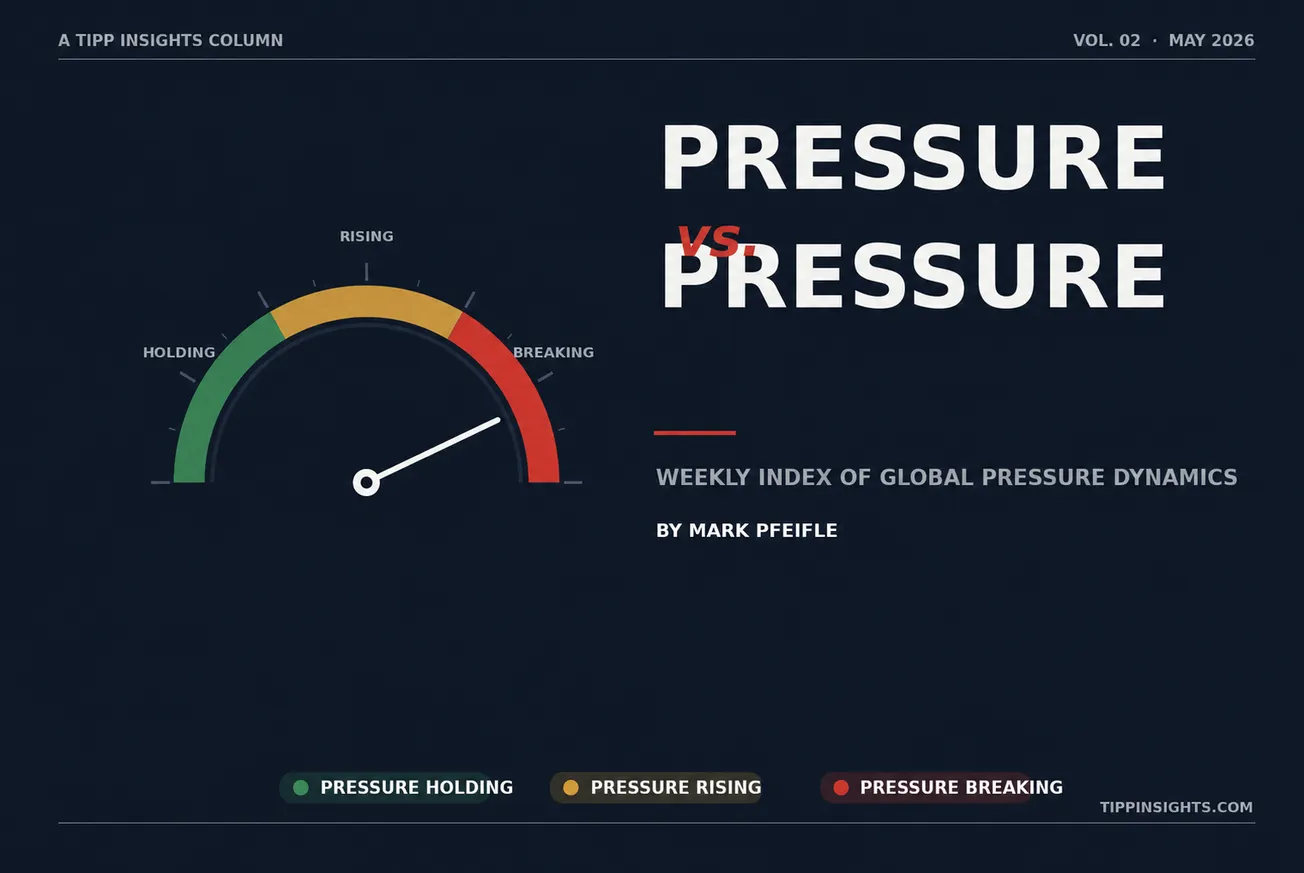
Pressure Rising means instability is intensifying and becoming harder to absorb. Pressure Steady means governments, institutions, or markets remain under stress but continue to hold. Pressure Breaking means political, economic, or strategic fractures are emerging in real time.
This week’s Pressure vs. Pressure focuses on President Donald Trump and the return of hard Western Hemisphere politics.
Trump has put a new label on an old American instinct. He calls it the “Donroe Doctrine” and says American dominance in the Western Hemisphere will never be questioned again. He is pressuring the hemisphere from every direction at once: oil sanctions on Cuba and Venezuela, tariffs on Canada, migration crackdowns, criminal indictments against former Cuban leadership, and intelligence pressure tied to Chinese and Russian activity in the region.
Beijing studies Cuba and Venezuela while Xi Jinping calculates Taiwan.
Canada: Pressure Steady
Trump took one of America’s most stable relationships and put it under political pressure almost overnight. When former Prime Minister Justin Trudeau left office, Canada’s Liberals looked exhausted and headed toward defeat. Then Trump escalated tariffs and repeatedly joked about Canada becoming the 51st state.
New Prime Minister Mark Carney rode the backlash to victory. The Liberals won 43.8% of the vote, their strongest performance since 1980. Anti-American politics became politically profitable again in Canada.
Friends in North Dakota tell me Canadian plates are disappearing from Grand Forks parking lots. Some Canadians are boycotting U.S. products and travel. Tourism agencies in Minot reported Canadian visits down roughly 20 percent in 2025, with U.S. Customs and Border Protection data showing 62,000 fewer travelers crossing from Saskatchewan into the United States last fiscal year. The backlash is now hitting border towns directly.
Canada still sends roughly three-quarters of its domestic exports to the United States and remains America’s largest foreign supplier of crude oil. That is why Canada is steady, not breaking. The U.S.-Canada economy is too integrated to unwind quickly. But pressure can damage trust long before it damages trade flows.
Cuba: Pressure Rising
Cuba faces a more dangerous pressure environment because the pressure is political, economic, legal, and energy-driven at the same time.
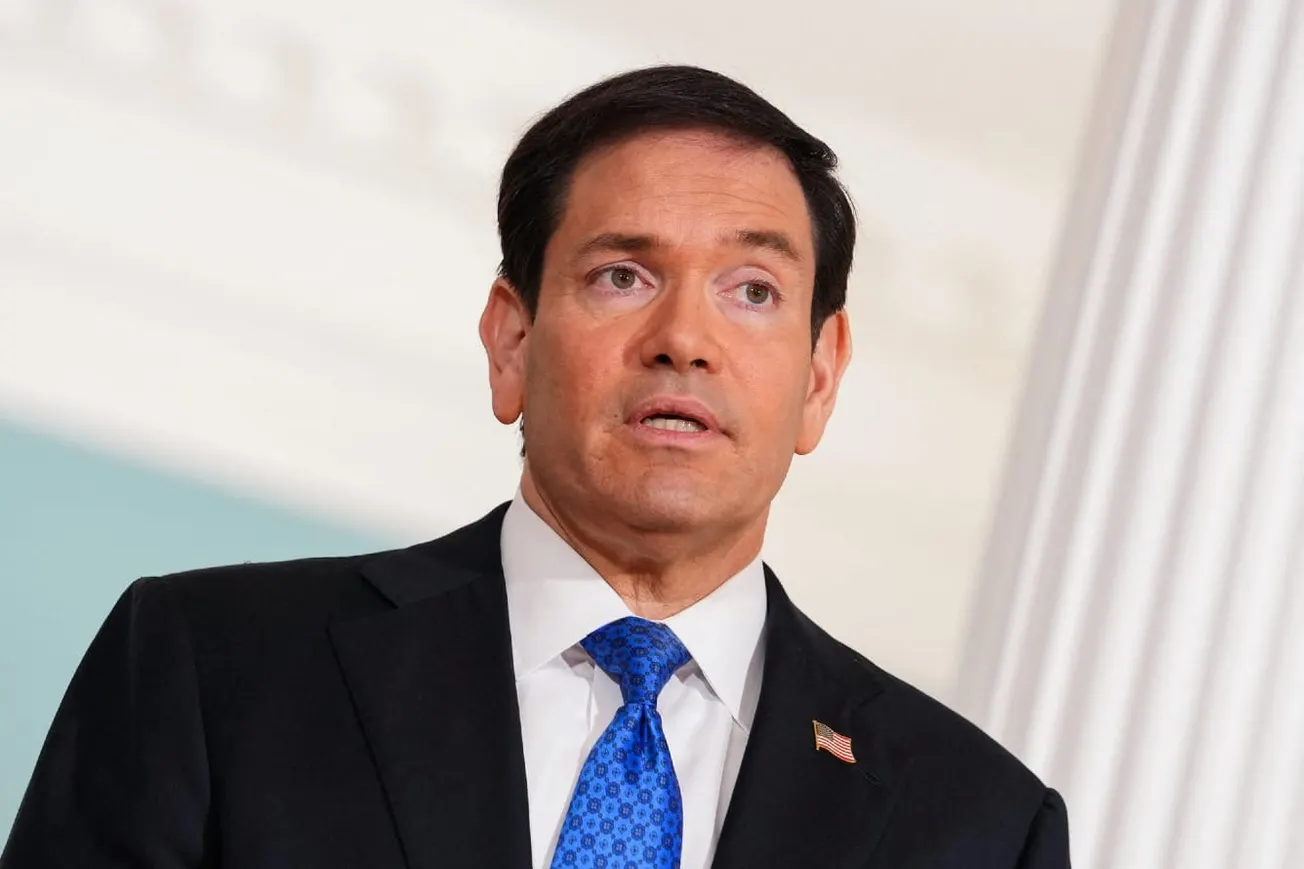
Secretary of State Marco Rubio has spent his political career trying to squeeze the Cuban regime harder than any administration since the Cold War. For Rubio, Cuba policy is personal, ideological, and deeply connected to decades of Cuban-American politics in Miami.
From 2007 to 2009, when I served at the NSC, we conducted multiple tabletop exercises on a possible collapse of the Cuban government. Commerce Secretary Carlos Gutierrez pushed hard for serious planning for Cuba. His heart was in the right place as a Cuban American who understood the regime and its human cost. But Washington wanted change in Cuba without fully confronting what collapse could unleash 90 miles from Florida.
The Obama administration tried engagement instead. My successor at the NSC, Ben Rhodes, helped broker the Cuba reset between Washington and Havana. American celebrities, including Beyoncé and Conan O’Brien, visited Cuba and projected a vibrant image of Havana back into the United States: music, restaurants, tourism, and culture, while many ordinary Cubans still lived with scarcity, failing infrastructure, and state control. The reset improved Cuba’s image abroad. It never repaired the system underneath it.
During the past several years, Cuba has become a more valuable operating platform for America’s adversaries. U.S. officials publicly confirmed Chinese intelligence operations tied to Cuba and reported upgrades to Chinese surveillance facilities on the island. Russian warships and even a nuclear-powered submarine entered Havana harbor during military exercises tied to the Ukraine war. Iran and Venezuela helped keep fuel and energy flowing into Cuba while Washington watched Beijing, Moscow, and Tehran expand influence only 90 miles from Florida.
The United States recently indicted former Cuban leader Raúl Castro and others connected to the 1996 Brothers to the Rescue shootdown that killed four people, including three U.S. citizens. Cuba also faces severe fuel shortages, rolling blackouts, and declining oil support from Venezuela.
Cuba’s grid collapsed three times in March 2026, leaving more than 10 million people without electricity and forcing the government to postpone tens of thousands of surgeries. Havana residents now describe going nearly 22 hours a day without power, sleeping lightly so they can charge phones, cook rice and beans, or reconnect to the internet during the brief windows when the grid returns. When families wake up at midnight to charge phones and cook rice before the power dies again, pressure stops being foreign policy.
ICYMI: Pfeifle's last week column—Russia's Grind, Iran's Clock
Venezuela: Pressure Breaking
U.S. special operations forces crossed into Venezuela, captured Nicolás Maduro in a nighttime operation, and flew him to New York to face charges. That is the Donroe Doctrine in practice.
More than three decades after President George H. W. Bush removed Manuel Noriega from Panama, the United States again used military force to remove a Latin American dictator from power. Operation Absolute Resolve sent more than 150 U.S. aircraft against targets including Fuerte Tiuna and La Carlota. U.S. forces then captured Maduro inside Caracas before flying him to New York. More than 100 people were reportedly killed, including Cuban personnel operating alongside the regime. After the operation, Trump said the United States was prepared to run the country during the transition.
Doctrines have a ledger. Operation Absolute Resolve removed Maduro, opened Caracas, and put 17 percent of global oil reserves back inside the American sphere. It also produced more than 100 dead, 32 of them Cuban personnel, and a presidential statement that the United States would run another country during a political transition. Every government in the region is now calculating what the Donroe Doctrine means for its own border, its own opposition, and its own bargain with Washington.
Before a 2007 trip to Latin America, President George W. Bush described Hugo Chávez as a dictator who didn’t have a fastball. The strategy then was containment: sanctions, isolation, and eventual collapse. Nearly two decades later, Washington abandoned containment entirely and sent American forces to remove Chávez’s successor.
The United States now views Venezuela through energy, migration, and China.
Venezuela controls roughly 303 billion barrels of proven oil reserves, about 17% of global reserves, yet production remains below one million barrels per day after years of mismanagement, sanctions, and underinvestment. The U.S. sees 300 billion barrels of oil and a strategic opening against China at the same time. For years, China benefited from discounted Venezuelan crude while the United States isolated Caracas. Now Washington wants the oil, the leverage, and less Chinese influence inside the hemisphere.
After Maduro’s removal, Venezuela’s Supreme Court ordered Vice President Delcy Rodríguez to assume interim authority. But Rodríguez is not a clean break from the old system. She served inside Maduro’s power structure for years and remains tied to the same political machinery. That is why Venezuela earns the Pressure Breaking rating, not the Pressure Resolved rating.
Washington still references reform and elections publicly. But oil, migration pressure, and China are moving faster than democratic reform. María Corina Machado remains internationally respected and still symbolizes democratic opposition inside Venezuela, but the pressure system has shifted away from immediate regime change and toward strategic stability.
Canada pushed back politically. Cuba is absorbing economic and energy pressures that now reach into ordinary homes. Venezuela is moving back toward negotiation because oil, migration, and China now matter more than permanent isolation.
The Western Hemisphere is learning that modern conflicts are no longer won only by military advances. They’re won by which system breaks politically, economically or psychologically first.
Mark Pfeifle is a member of the TIPP Insights Editorial Board. He runs the crisis management firm Off the Record Strategies. He served as deputy national security adviser for strategic communications and global outreach at the White House from 2007 to 2009.
The stories and data that matter today — selected by the TIPP Insights editorial team.
Global Affairs
U.S.-Iran Reached Draft 60-Day Peace Memo, Awaiting Final Trump Approval
IRGC Launches Retaliatory Strike On U.S. Base Following Bandar Abbas Operation
U.S. Forces Strike Iranian Control Station After Drone Attack On Commercial Ship
Feds Reimpose Global Sanctions On U.N. Rapporteur Francesca Albanese
Pentagon Confirms Foreign Adversaries Using Phone Location Data to Target U.S. Troops
National Affairs
Federal Judge Declines To Block Trump Mail-In Voting Rules
California Democrats Show Signs Of Apathy Ahead Of Crowded Primary
Experimental Drug Offers 'Functional Cure' For Chronic Hepatitis B
Former CIA Official Arrested For Stealing $40M In Gold Bars
Feds Charge Google Insider With Rigging $1.2 Million In Polymarket Crypto Bets
Markets & Business
CNN Sues Perplexity AI Over Copyright
Pentagon Weighs Direct Equity Stakes In U.S. Drone Startups
SpaceX To Launch Biggest Ever IPO
Letters to the editor email: editor-tippinsights@technometrica.com
Subscribe Today And Make A Difference. Consider supporting Independent Journalism by upgrading to a paid subscription or making a donation. Your support helps tippinsights thrive as a reader-supported publication. Contact us to discuss your research or polling needs.
Reach our audience. For sponsorship and advertising opportunities, visit our Partner With Us page.