Editor’s Note:
This essay looks at how thinking about the economy is changing in the United States, and where leaders on the left and right are finding common ground. It offers useful context for readers trying to understand today’s economic debates.
By Dani Rodrik, Project Syndicate | Dec 16, 2025
The best that can be said of Trump’s approach to the economy is that it is an experimental phase in the post-neoliberal transition. The good news is that future policymakers will not have to look far for new guiding principles.
CAMBRIDGE – The post-neoliberal consensus is here, but don’t look for it in US President Donald Trump’s policies.
After a decade of backlash, it is time to accept not only that neoliberalism is dead but also that a new consensus is taking its place. Remarkably, significant segments of the left and the right in the United States have come to agree on the broad outlines of economic policy. Discussions in universities and think tanks are driven today by a common understanding that departs significantly from the neoliberal orthodoxy of the last 50 years.
The first element of the new consensus is a recognition that the concentration of economic power has become excessive. The concern is expressed in different forms by different groups. Some complain directly about inequality in income and wealth and its corrosive effects on politics. Others worry about market power and the adverse implications for competition. For yet others, the key problem is financialization and the distortion of economic and social priorities that it produces.
The remedies on offer also vary, from wealth taxes to vigorous antitrust enforcement to campaign-finance reform. But the desire to curb the economic and political power of corporate, financial, and tech elites is widespread, uniting progressive supporters of US Senator Bernie Sanders with populists like the podcast host and former Trump adviser Steve Bannon.
The second element of the new consensus is the importance of restoring dignity to people and regions that neoliberalism left behind. Goods jobs are essential to this agenda. Jobs are not just a means of providing income. They are also a source of identity and social recognition. Good jobs are what underpin a robust middle class, which is the foundation of social cohesion and a sustainable democracy.
Dislocation is inevitable in a world of economic change. Until the 1990s, plenty of safeguards – job protections, trade restrictions, price controls, and regulations that kept finance in check – limited the impact on workers and communities. For neoliberals, these safeguards were inefficiencies that had to be removed. They overlooked the economic and social distress that job losses arising from technological change, globalization, or economic liberalization would produce.
The third component of the emerging consensus is that government has an active role to play in shaping the economic transformation that is needed. Markets on their own cannot be trusted to produce economic resilience, national security, innovation for advanced technologies, clean energy, or good jobs in distressed regions. Government must prod, twist arms, and subsidize. Industrial policy has moved from the disreputable fringe of economic discussion to its very center.
Taken together, these three tenets provide a new understanding of the goals and instruments of economic policy that is both novel and, on the whole, laudable. But the devil is always in the details. Actual outcomes will be determined by specific policies that are chosen and implemented.
Consider the good-jobs objective. Here the left and the right seem to have reached a consensus on the desirability of reshoring and reinvigorating manufacturing. Historically, the industrial labor force played a pivotal role in producing equitable, middle-class societies. But automation and other technological forces have turned manufacturing into a labor-shedding sector. Even China has been losing manufacturing employment by the millions in recent years. So, even if manufacturing investment and output is revived in the US and Europe, the impact on employment is likely to be minuscule.
Whether we like it or not, the future of employment lies in services – care, retail, hospitality, logistics, the gig economy, and so on. Any approach to good jobs that does not focus on organizational and technological innovations in these services will necessarily disappoint.
There are of course other important reasons for supporting manufacturing. Advanced manufacturing, along with the digital economy, plays an outsize role in innovation and national security. It makes sense to deploy industrial policies that focus on these economic activities, in addition to policies that focus on labor-absorbing services. But here, too, the “how” matters as much as the “what.”
Caveats apply to industrial policies as well. These can go badly wrong when they foster corruption or serve narrow corporate interests. Unfortunately, Trump’s approach provides little comfort on this score. His trade policies and dealings with tech companies have been erratic, transactional, and devoid of a coherent long-term strategy that would serve the public interest. Even worse, they are part of an agenda of deepening authoritarianism and disregard for the rule of law.
The post-neoliberal tenets of economic policy provide us with a broad checklist for evaluating actual agendas – and Trump’s fails miserably. It pays lip service to good jobs and industrial policy in the service of economic transformation, while fostering even greater concentration of wealth and power. A model of crony state capitalism that tries to resuscitate a long-dead industrial economy is hardly an antidote to neoliberalism.
The best that can be said of Trump’s approach to the economy is that it is an experimental phase in the post-neoliberal transition. The good news is that future policymakers will not have to look far for new guiding principles. The new consensus is already here.
Dani Rodrik, Professor of International Political Economy at Harvard Kennedy School, is Past President of the International Economic Association and the author of Shared Prosperity in a Fractured World: A New Economics for the Middle Class, the Global Poor, and Our Climate (Princeton University Press, 2025).
Copyright Project Syndicate
👉 Quick Reads
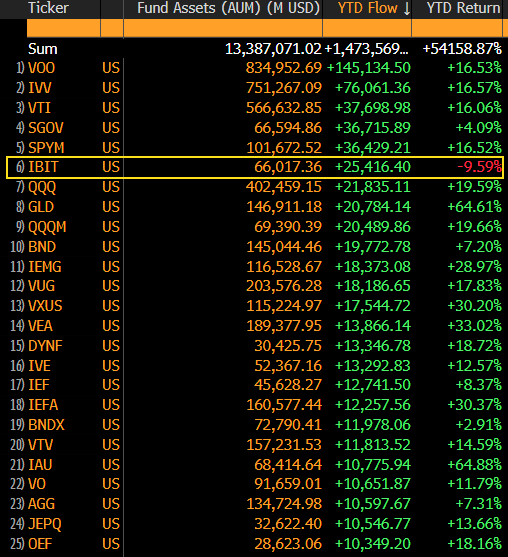
I. Bitcoin ETF Beats Gold in Inflows Even in a Down Year
IBIT ranks sixth in global ETF inflows despite negative returns, a sign of continued long-term investor conviction in Bitcoin.
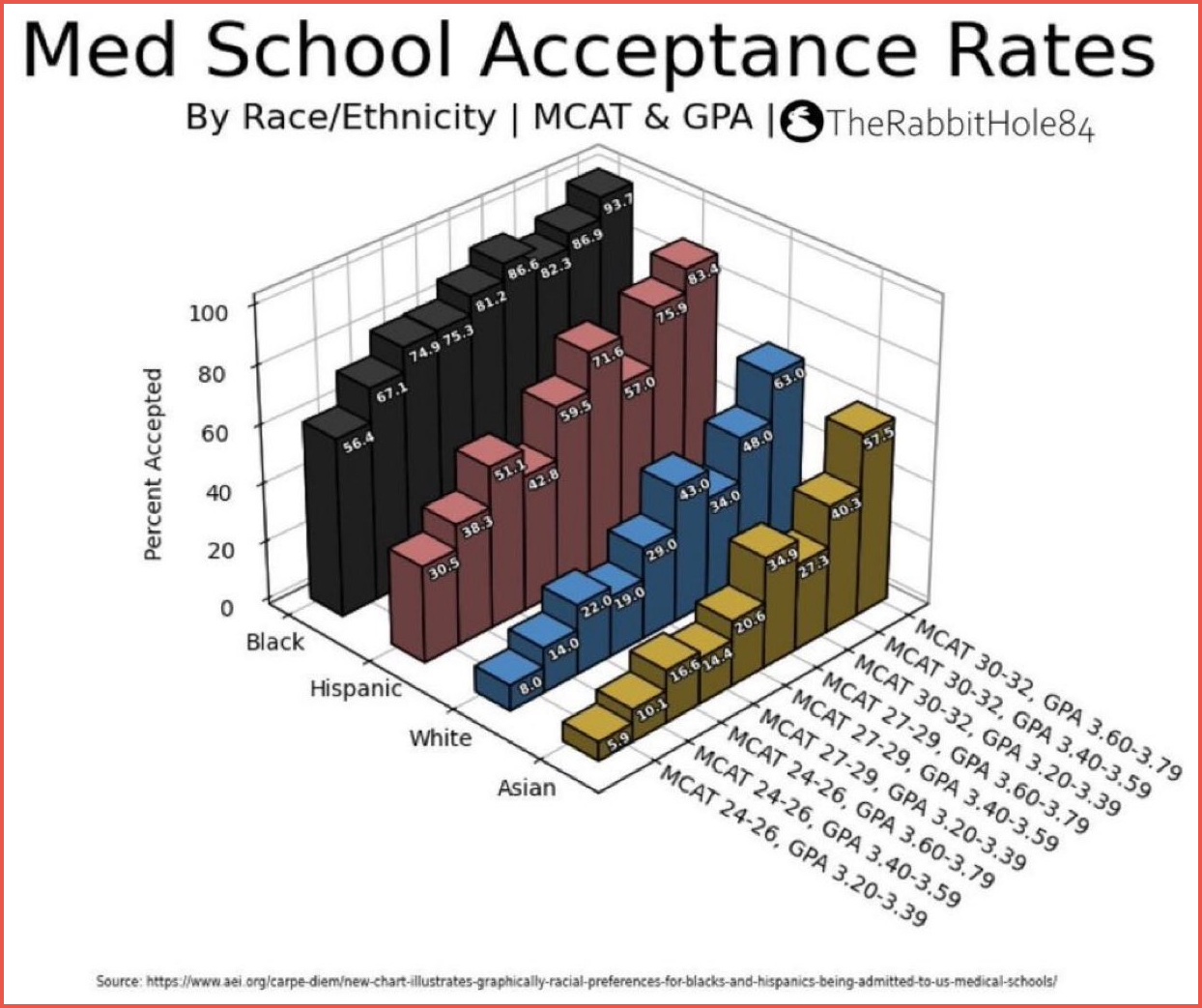
II. Medical School Acceptance Rates Vary Widely by Race and Academic Profile
Chart shows acceptance rates by race and ethnicity across MCAT score and GPA ranges.
The TIPP Stack
Handpicked articles from TIPP Insights & beyond
1. Kamala Harris Goes To Bat For Biden Administration Over Not Releasing Epstein Files—Nicole Silverio, Daily Caller News Foundation
2. ICE Agents Are Becoming Burned Out As Trump Administration Pushes For More Deportations—Virginia Allen, The Daily Signal
3. ‘MALPRACTICE’: Robert F. Kennedy Jr. Announces 6 Moves To Crack Down On ‘Sex-Rejecting Procedures’—Tyler O'Neil, The Daily Signal
4. When Republicans Do Long Interviews With Liberal Journalists—Tim Graham, The Daily Signal
5. Christmas Cheer Persists Despite Cost Pressures—Editorial Board, TIPP Insights
6. Ford’s Felonious Failure—Editorial Board, Issues & Insights
7. December’s Dishonorable Conduct Award Winner: Judge Indira Talwani—Thomas Jipping & Hans von Spakovsky, The Daily Signal
8. Maduro’s Narco-Terrorism Plot Against America Unraveled By Defectors—Mike Gonzalez, The Daily Signal
9. Trump’s Executive Order On AI Might Be A Bridge Too Far—Thomas Jipping & John G. Malcolm, The Daily Signal
10. ‘Uninformed Posturing’: Ohio Swing District Race Heats Up As Kaptur Responds To Challenger—Rebecca Downs, The Daily Signal
11. DHS Expands ‘Worst Of The Worst’ Searchable Website—Virginia Allen, The Daily Signal
12. Trump Announces How America Will Celebrate 250th Birthday—Elizabeth Troutman Mitchell, The Daily Signal
13. Trump Makes Blunt Remarks On Conservative Opposition To Weed—Elizabeth Troutman Mitchell, The Daily Signal
14. EEOC Urges White Males To Report Discrimination—And Promptly—Fred Lucas, The Daily Signal
15. The Orwellian Excuse The Congressional Black Caucus Gave For Trying To Block My Congressional Testimony—Tyler O'Neil, The Daily Signal
From TIPP Insights News Editor
16. Putin Blames Kyiv For Stalled Peace As Ukraine Strikes Russian Oil Tanker
17. US Raises Alarm Over Chinese Role In Micronesia Airstrip Project
18. China Finds Asia’s Largest Undersea Gold Deposit Off Shandong Coast
19. China Slams US Defense Law, Says It Exaggerates Threat
20. TikTok Secures US Deal But China Tensions Linger Over Algorithm
21. Japan Reaffirms Non-Nuclear Policy After Adviser’s Remarks
22. Supreme Court Allows Immigration Judges’ Free Speech Lawsuit To Proceed
23. Trump Administration Suspends Green Card Lottery After Campus Shootings
24. Brown Shooting Suspect Found Dead, Linked To MIT Professor Killing
25. Shapiro, Carlson Clash Over MAGA’s Future At Turning Point Conference
26. American Airlines Ends Miles And Rewards For Basic Economy Tickets
27. US Battery Imports Fall Despite Surging Energy Storage Demand
28. DOJ Begins Partial Epstein File Release Under New Transparency Law
29. November Home Sales Tick Up, But Higher Prices Still Weigh On Buyers
editor-tippinsights@technometrica.com