
By Pegah Banihashemi, Project Syndicate | July 23, 2026
Embedded in the Islamic Republic’s foundations is a doctrine that allows for total repression of the population and mobilization of all state resources to preserve the system. This helps to explain why the US and Israel were wrong to expect the regime to change its behavior, let alone be brought down by the Iranian people.
CHICAGO—As the funeral of Supreme Leader Ayatollah Ali Khamenei, killed in the opening wave of US-Israeli airstrikes in February, drew to a close, thunderous sounds of bombardment rose from Iran’s south. But through the funeral rites and renewed airstrikes alike, one state institution never broke its stride: the gallows. Protesters recently seized in the streets and political prisoners held for years are being executed at a rapid rate.
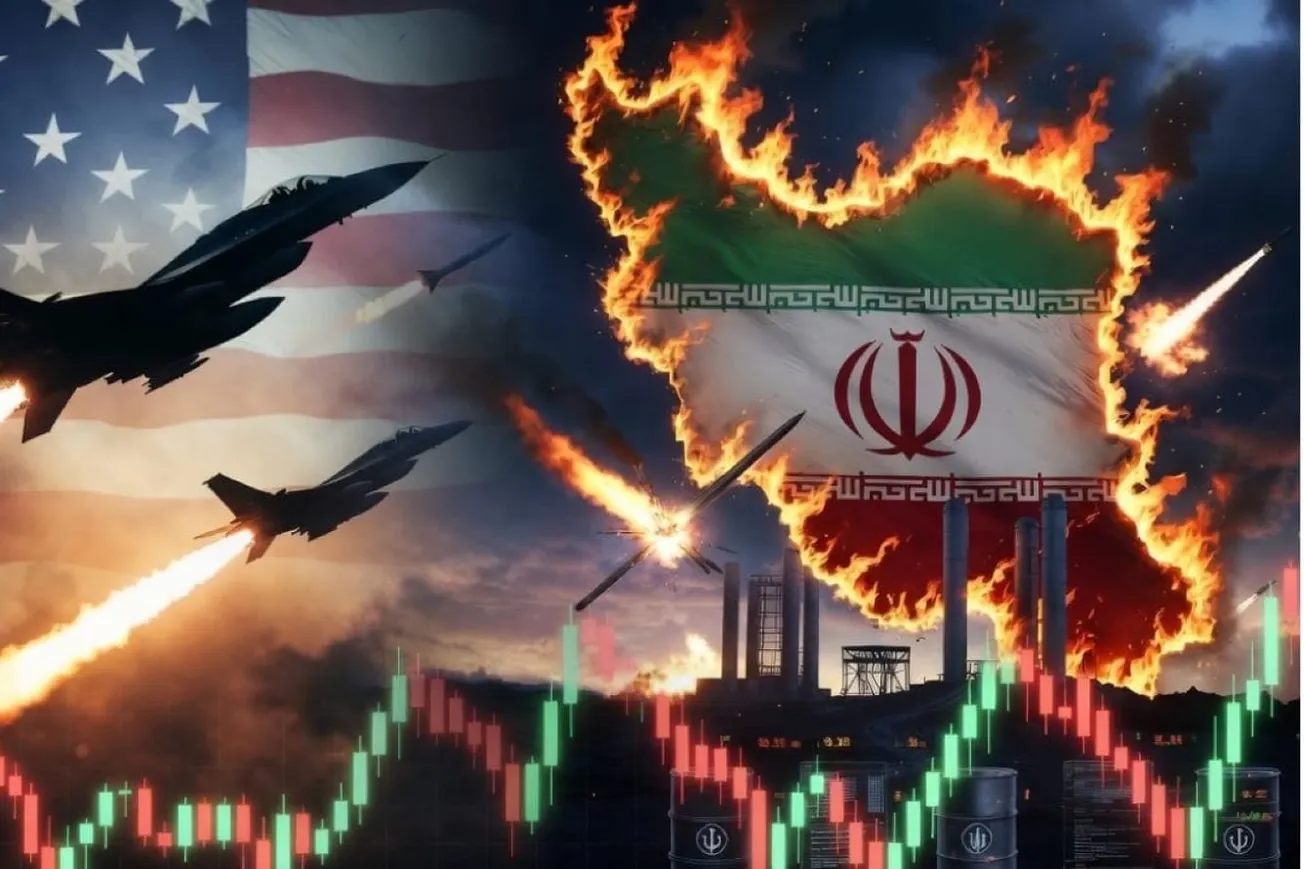
The United States and Israel’s strategy in Iran seems to have assumed that a war of attrition, together with US President Donald Trump’s dramatic threats, would change how the Islamic Republic treats its people or the world, or drive a critical mass of Iranians into the streets to topple the regime. The months since February have revealed the flaws in this assessment.
The Islamic Republic’s first supreme leader, Ayatollah Ruhollah Khomeini, built the entire system on a simple, brutal, and unassailable doctrine: Any action against the regime or state apparatus must be met with the harshest possible punishment—no leniency allowed. Officials are permitted to do whatever it takes to preserve the system, even if it means trampling the regime’s foundational religious principles.
Khomeini preached clerical guardianship over the state (velayat-e faqih) for years before the 1979 Iranian Revolution. But it was after he became Supreme Leader that the doctrine’s true breadth was revealed. In January 1988, in a letter to then-President Khamenei, he declared that the interests of the Islamic state took precedence over all “secondary” tenets of Islam, including prayer, fasting, and pilgrimage to Mecca. This expanded version of the theory became known as the “absolute guardianship of the jurist” (velayat-e motlaqeh-ye faqih).
In other words, embedded in the Islamic Republic’s foundations is a doctrine that allows for total repression of the population and total mobilization of state resources in the name of preserving the system. Regardless of which ayatollah holds power or who forms his inner circle, the doctrine remains the same.
That is why the newly empowered third generation of leadership does and will behave no differently than its predecessors. This includes using the Revolutionary Courts—originally intended to handle only specific matters, such as espionage charges—as a tribunal issuing death sentences to anyone expressing the slightest objection to the status quo. While defendants face severe charges, they are tried without so much as an independent defense attorney.
Iran was ramping up executions well before the war began. Amnesty International recorded at least 2,159 executions in 2025, more than double the number from the previous year. The war did not deter the Iranian authorities from this campaign. Pausing for neither bombardments nor the Persian New Year, Iran’s apparatus of repression has carried out at least 40 executions on politically motivated charges since February 2026.
Following the March 27 ceasefire, moreover, Iran Human Rights documented a sharp rise in executions from the previous month, with at least 101 executions taking place in June. Despite the war, Iran has carried out at least 413 executions this year—and it has no plans of changing course. As it stands, more than 70 protesters are known to be on death row in a single prison in Isfahan, with at least 26 having already been transferred to solitary confinement ahead of imminent execution. As the director of Iran Human Rights observed, “The true number of death sentences issued nationwide is far higher than previously estimated.”
This brings us to the US-Israeli assumption that Iran’s people will rise up against the regime. While extreme repression discourages dissent, it can also galvanize resistance, especially when combined with prolonged economic hardship and intense social pressure. In Iran, even those who have longed for meaningful change within the regime, rather than its replacement, have been repeatedly disappointed.
Popular frustration appeared to be coming to a head before the US-Israeli strikes began, when tens of thousands of Iranians took to the streets. True to Khomeini’s doctrine, they were met with a massacre. Iran’s government has acknowledged 3,117 protester deaths. HRANA, a press association founded by Iranian human-rights advocates, puts the confirmed death toll above 6,000, though some estimate that it is much higher: 17,000 or even 36,500.
Soon after Iranians endured this brutal crackdown, US and Israeli bombs began to fall. Trump apparently hoped that this would transform protest into revolution, but after all that bloodshed, Iranian society stayed home. The propaganda-enhanced specter of Iran’s territorial fragmentation provoked such alarm that fervor for regime change gave way, practically overnight, to deep societal rifts and disagreements among Iranians, inside and outside the country. The resulting sense of uncertainty and estrangement caused many to grow more attached to the system they had previously wanted gone.
This fear of fragmentation should be understood not as a psychological weakness, but as a rational response to a choice between bad and worse. This dilemma underpins the efficacy of the Islamic Republic’s foundational doctrine. The costs of the status quo are high, but Iranians have concluded that the costs of collapse and fragmentation would be even higher.
It should be clear by now that a war of attrition is not simply insufficient to bring down the Islamic Republic; it is actually bolstering the regime’s prospects for survival. Far from forcing Iran’s leaders to dismantle the cruelest mechanisms of repression, every new round of attacks produces fresh fodder for them: new arrests, new sentences, and new executions.
Pegah Banihashemi is a constitutional law scholar at the University of Chicago Law School and a human rights law instructor whose work focuses on power structures and political change in the Middle East.
Loved it, hated it, or somewhere in between — tell us. Grade this article here and help shape what lands in your inbox next.
Copyright Project Syndicate
🧭 Power & Capital · July 24, 2026
Where state power meets the boardroom.
🔷 Trump Imposes New Tariffs On Imports From 60 Trading Partners
🔷 Bipartisan Bill Seeks Mandatory Kill Switches For Advanced AI
🔷 White House Expands Data Center Power Cost Pledge
🔷 ‘Cannot Go to Terrorists’: House Ends Taxpayer-Funded Aid To Nigeria Over Christian Genocide
🌍 Global Affairs
The world's flashpoints, in motion.
🟥 Trump Announces Xi Jinping's US Visit For September 24 – TIPP News
🟥 Laura Loomer Meets Zelenskyy After Reversing Ukraine War Stance – TIPP News
🟥 US Imports First Iraqi Fuel Oil Cargoes Via Syria – TIPP News
🟥 Orcas Found Smashing Giant Sunfish Into Pieces To Feed – TIPP News
🏛️ National Affairs
The fights shaping America right now.
🟫 Why Are Dems Dodging Questions About The DSA’s Radical Platform? – Editorial Board, Issues & Insights
🟫 Democratic Socialist Policy Ideas Resonate Only With A Minority Of U.S. Voters: I&I/TIPP Poll – Terry Jones, TIPP Insights
🟫 Nearly 150,000 Mail Ballots Rejected In California Primary – TIPP News
🟫 Trump Administration USPS Wins Key Court Fight Over Mail-In Ballot Oversight – Fred Lucas, The Daily Signal
🟫 ‘I’m In’: South Carolina Race Grows Crowded As Trump-Endorsed Sister Of Lindsey Graham Announces Candidacy – Pedro Rodriguez, The Daily Signal
🟫 ‘QUITE IRONIC’: Suspect With Anti-ICE Sign Who Set Off Fireworks at Federal Building Only Injured One Person – Tyler O’Neil, The Daily Signal
🟫 Major Teachers Union That Funds Democrats Endorses ‘Gender-Affirming Care’ Amid Backlash To Transgender ‘Medicine’ – Tyler O’Neil, The Daily Signal
🟫 Gwen Graham, Possible Fl. Lt. Gov, Oversaw Transgender Bathroom, Pronouns and School Choice Policy – Pedro Rodriguez, The Daily Signal
🟫 Talarico’s Texas House Record Reveals Long History of Voting Against Gun Rights – Emily Medeiros, The Daily Signal
📈 Economy
Prices, policy, and the pressure on your wallet.
🟩 US 30-Year Mortgage Rate Climbs To Highest Level In Nearly A Year – TIPP News
🟩 Alan Greenspan’s Deceitful Legacy – George Ford Smith, Mises Wire
🟩 The Evolution Of Politics: From Civic Virtue To Realpolitik – Mark Thornton, Mises Wire
💼 Markets & Business
The deals and tickers making moves.
🟧 Oracle Layoffs 21,000 Jobs Amid Costly AI Expansion – TIPP News
📊 Market Mood · July 24, 2026
How the trading day is setting up.
🟩 Markets are trying to stabilize after Thursday's sharp selloff, with investors balancing strong corporate earnings against a fresh surge in geopolitical risk.
🟧 Oil remains the market's biggest concern after attacks on Saudi oil tankers pushed Brent crude above $100 a barrel, reigniting fears of higher inflation and tighter monetary policy.
🟦 AI enthusiasm is giving way to greater scrutiny as investors question whether soaring capital spending by technology companies will generate sufficient returns, despite solid earnings.
🟨 Today's business activity surveys and housing data will offer fresh clues on whether the U.S. economy is weathering higher energy prices and elevated interest rates.
🗓️ Key Economic Events
On today's U.S. data calendar.
🟧 9:45 a.m. ET — S&P Global Flash PMI (July)
Manufacturing: Forecast: 54.5 | Previous: 53.9
Services: Forecast: 51.5 | Previous: 51.2
The first major reading on July business activity will provide an early look at the health of the manufacturing and services sectors.
🟧 10:00 a.m. ET — New Home Sales (June)
Forecast: 610,000 | Previous: 580,000
A closely watched measure of housing demand that offers insight into how higher mortgage rates are affecting the residential real estate market.
Letters to the editor email: editor-tippinsights@technometrica.com
Subscribe Today And Make A Difference. Consider supporting Independent Journalism by upgrading to a paid subscription or making a donation. Your support helps tippinsights thrive as a reader-supported publication. Contact us to discuss your research or polling needs.
Reach our audience. For sponsorship and advertising opportunities, visit our Partner With Us page.