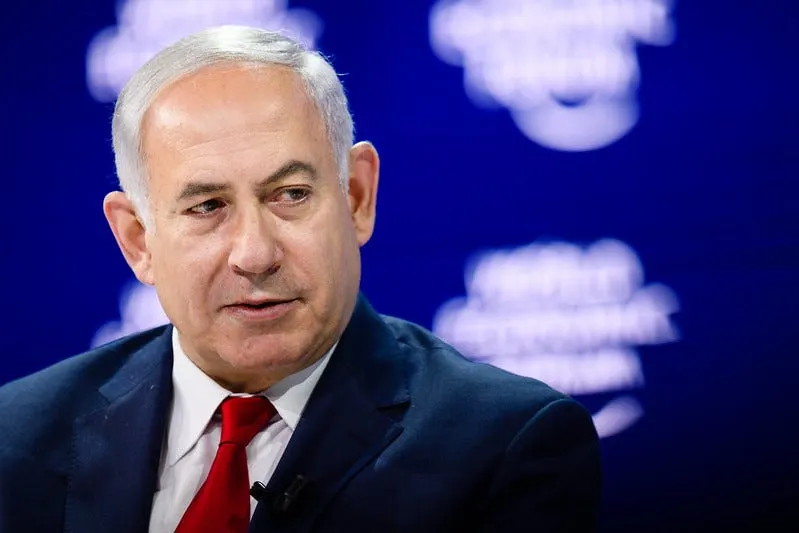
A dramatic report in Israel’s HaAretz newspaper last week claims Israeli Prime Minister Benjamin Netanyahu ignored a critical warning from the UAE days before the October 7 massacre.
Is this a groundbreaking scandal of unforgivable betrayal? A tasteless book promotion? Or just old-fashioned electioneering?
Here’s what you need to know:
- The report itself is highly unreliable;
- The warning (even if true) is not professionally significant from an intelligence perspective, and
- Israelis simply (and wisely) don’t seem to care.
Let’s get into it.
The source: HaAretz
Once the flagship of the Israeli intelligentsia, HaAretz is now one of Israel’s least read and least respected publications, with a circulation of less than 5% of the Israeli public.
The owner, Israeli oligarch Amos Schoken, calls Israel a “cruel apartheid regime,” refers to Palestinian terrorists as “freedom fighters,” and advocates for international sanctions against his own country. The character of HaAretz, its writing, and much of its staff, also reflect Schoken’s views.
None of this is lost on the Israeli public.

The “news” story
The article, by Shlomi Eldar and Ruth Yuval, is basically an advertisement for their new book, released strategically just before Israel’s elections. Though the authors are generally well respected in Israeli journalism, their work in this case is so full of holes that it can barely be called “journalism” at all.
Just one example —
The authors claim that (then) U.S. Secretary of State Antony Blinken conveyed an offer from Hamas to immediately return all civilian hostages at no cost to Israel, which Netanyahu rejected. If true, Israelis would see this as an unforgivable betrayal by their Prime Minister.
So … is it true?
The former Secretary of State, who is by no means a fan of Netanyahu, responded with eight simple words:
“For the record, this is false. Complete fiction.”
Blinken’s blunt denial underscores an even more damning journalistic failure: the authors apparently didn’t even reach out for confirmation.
This is journalism 101:
You must reach out to every key source or subject — if they don’t reply, then you write, “Blinken could not be reached for comment.” The HaAretz article contains no such statement — which is simply astonishing.
Another, even more crucial example —
United Arab Emirates President Mohamed bin Zayed, (“MBZ”) supposedly called Netanyahu to convey a warning from Hamas leader Yahya Sinwar: that Israel would face an “earthquake” and “the mother of all surprises.”
That makes no logical sense.
HaAretz relies on anonymous sources — already a bad start. Netanyahu vigorously denies that the call took place at all, as does former Minister of Strategic Affairs Ron Dermer. The UAE refuses to comment.
So who’s telling the truth? And why doesn’t this make sense?
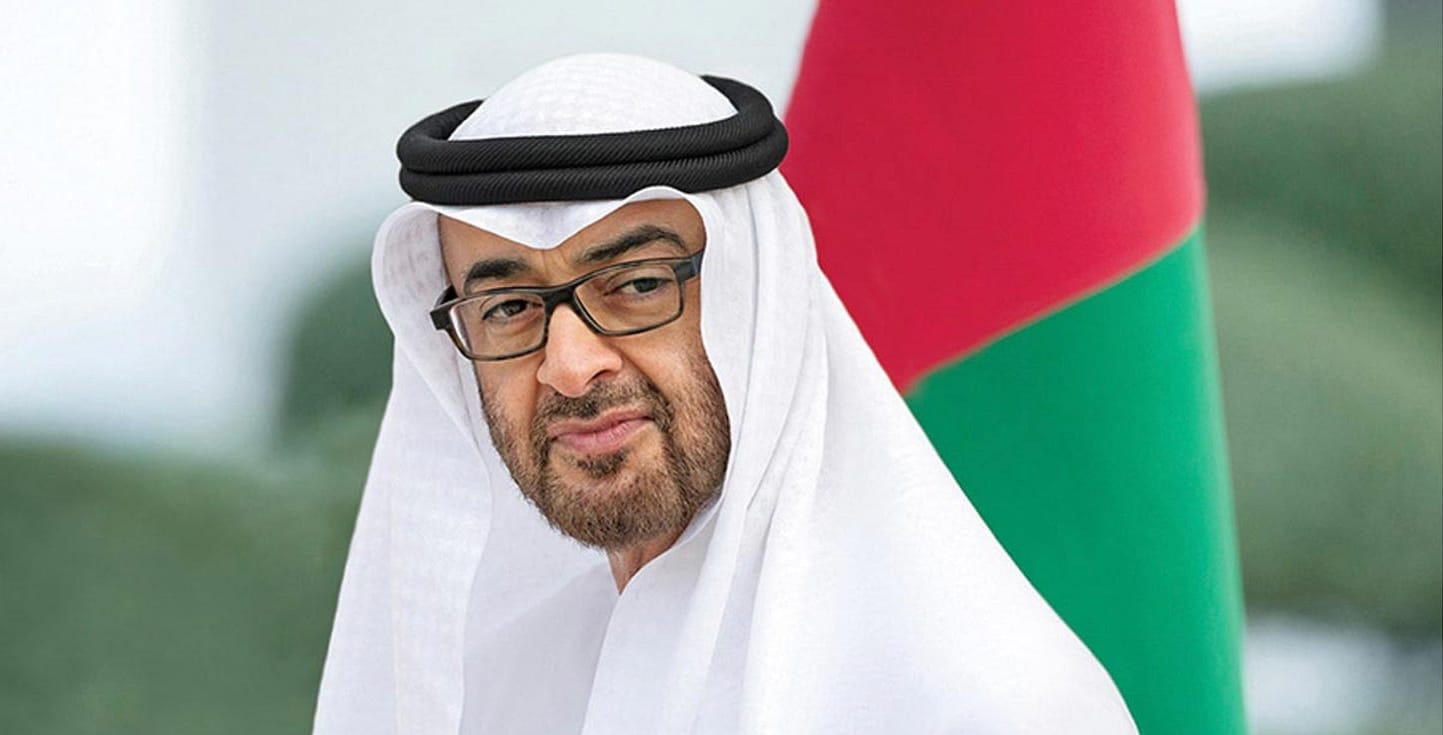
Prime ministers don’t casually chat with foreign leaders: calls are prepared in advance, observed, recorded, logged, and poured over by teams of analysts. Netanyahu could potentially lie about the meaning of a call, but not whether it took place. It would be like lying about whether you played in the Super Bowl — it’s far too easy to check.
Anonymous sources, however, can say anything at all without consequence.
Furthermore, it is bizarre that after years of secrecy, Sinwar would intentionally tell his intended target about a plan that relies so heavily on surprise.
How intelligence actually works
The hardest part about intelligence isn’t gathering information, it’s filtering.
Agencies review mountains of data: most irrelevant, some intentional disinformation, and what’s left requires specificity and confirmation, which is not always easy.
Before the 2003 Iraq war, for example, the U.S. acted on improperly filtered intelligence about “weapons of mass destruction,” which turned out to be incorrect. Sometimes acting can be as dangerous as not acting.
The supposed “revelation” in this case is that Yahya Sinwar had made a threat — something he already did constantly. For context, Iran made about half a dozen threats against Israel just last week. Sinwar’s rantings, and other clues, were already well known to Israel, even without MBZ.
But didn’t Israel do anything? Yes.
In the early hours of October 7, the IDF responded to intelligence by sending a “tequila” team to the Gaza border: a small special forces group capable of handling several dozen terrorists, which at the time Israel considered “large” for Hamas. The unit didn’t know it would face thousands.
But what about the “tatzpitaniot”? Didn’t they know?
Tatzpitaniot are specialized (usually female) IDF surveillance soldiers. One such unit warned for months of preparations for a large scale Hamas attack, but their commanders ignored them. Israelis are understandably outraged by this story, yet at the time, Hamas had already been holding similar exercises for years without launching an invasion.

And this wasn’t the first time.
In April, 2023, the IDF increased its alert status in response to intelligence, but no attack took place, and Israel (tragically) concluded it had been a false alarm. In truth, Hamas had planned to attack on Passover, noted Israel’s preparations, and then chose to try another day.
In other words, the real problem wasn’t the intelligence itself, which was widely available, but Israel’s flawed assumptions: that Hamas was deterred and contained, that its attacks were small and that security was adequate.
Israelis call this “conceptsia,” a mistaken conception of reality. Israel held a similarly flawed conceptsia before the Yom Kippur War of 1973, and throughout the Oslo process.
At least three Israeli prime ministers (all of whom are running in this election!) helped perpetuate Israel’s conceptsia for years prior to October 7: it was deeply ingrained in the intelligence agencies, in the IDF, and even in the Israeli public which, at the time, would not have understood, or tolerated, a full scale multi-year war — which in retrospect was the only response capable of preventing (and not merely delaying) this tragedy.
Conceptsia is not a uniquely Israeli mistake.
Today, roughly half of Americans don’t understand the crucial importance of defeating Iran — due to the mistaken conceptsia that the United States is immune from the world, the very same conceptsia Americans held before Pearl Harbor and 9/11.
What the Israeli public thinks
The Israeli public generally considers Netanyahu to be primarily (though not exclusively) responsible for the failures of October 7, but also gives him primary credit for Israel’s many successes since then. Other recipients of both credit and blame include the ShinBet, the Mossad, and the IDF.
The HaAretz story has not changed that.
Channel 12 election polls, which tend to lean left, show essentially no change from just before to just after the HaAretz story. Polls from i24 News, which tend to lean right, show the same.
This isn’t surprising.
Some Israelis hate Netanyahu with a fiery passion, while others consider the entire Israeli left to be “traitors.” HaAretz has given plenty of rage-bait and confirmation bias to both. Yet most Israelis realize that conceptsia was never that simple, and that there’s plenty of blame to go around.
In short: a newspaper that Israelis widely consider to be disreputable, violated basic journalistic standards in order to spread dramatic assertions that ranged from the bizarrely illogical to the provably false. While this is a low point for professional journalism, it is encouraging to see that the Israeli public is not so easily fooled.
Daniel Pomerantz is the CEO of RealityCheck, a non-profit charitable organization dedicated to restoring public trust in information. An expert on the Middle East and international law, Daniel also serves as an adjunct professor at Israel’s Reichman University (the “IDC” in Herzliya). Daniel and RealityCheck can be found at www.realitycheckresearch.org or at contact@realitycheckresearch.org.
🧭 Power & Capital · September 16, 2026
Where state power meets the boardroom.
🔷 Trump Administration Plans $2.8 Billion Bomb Sale To Israel – Power & Capital Desk, TIPP Insights
🔷 ‘ANTI-DEMOCRATIC’: Nonprofits That Received Tax Dollars Unite To Oppose Rules Cracking Down On Waste, Fraud, And Abuse – Tyler O’Neil, The Daily Signal
🏛️ National Affairs
The fights shaping America right now.
🟫 Utopia Yesterday, Apocalypse Today – Editorial Board, TIPP Insights
🟫 AI Firms’ Self-Serving Warnings – Brian Judge, Project Syndicate
🟫 House Votes 220-204 To Limit Trump's Military Authority In Iran – TIPP News
🟫 Trump-Appointed Judge Blocks USPS Mail-Ballot Rule In Major Election Case – Fred Lucas, The Daily Signal
🟫 DOJ To Investigate AI-Related Crimes, Attorney General Blanche Says – TIPP News
🟫 Helicopter Crash In Los Angeles Kills At Least Three – TIPP News
🟫 Pentagon Report Puts Iran War Cost At $33.4 Billion – TIPP News
🟫 Karen Bass Won’t Testify On Alleged Fraud In LA’s Billion-Dollar Homelessness System – Angelina Delfin, The Daily Signal
🟫 Charlie Kirk’s TPUSA Sponsored By Israeli Govt-aligned Outfit, Leaked Contract Shows – Max Blumenthal, Ron Paul Institute for Peace and Prosperity
🟫 ‘GENIUS’: Russ Vought Weighs In On $5,000 Trump Dividend – Virginia Grace McKinnon, The Daily Signal
🟫 Jeffries Says Democrats Will Win Because Of National Nightmare – Pedro Rodriguez, The Daily Signal
🟫 Senate Blocks Clarity Act, Delaying U.S. Crypto Regulation – TIPP News
🟫 Rep. Beyer Seeks September Hearings About AI Regulation – Rich Tucker, The Daily Signal
🟫 How Texas’ Fight Against Islamism Is Shaping The Future Of The GOP – Emily Medeiros, The Daily Signal
🟫 US Muslims Gaining Political Power – Joshua Arnold, The Daily Signal
🟫 Abbott Campaign Targets Hinojosa Over Property Tax Record – Emily Medeiros, The Daily Signal
🟫 Project Zero: The Plan To Reduce Property Taxes For Georgia’s Effingham County Residents – Rebecca Buis, The Daily Signal
🟫 A Rare Move By A Virginia Bishop Ahead Of Election Day – Robert B. Bluey, The Daily Signal
🟫 Tom Tiffany Says God’s Grace Spared Him And Pilot From Plane Crash Catastrophe – Pedro Rodriguez, The Daily Signal
🟫 Kennedy Center Board Votes To Close Venue For Renovations – TIPP News
🟫 Bear Attacks 20-Year-Old Archery Hunter In Montana – TIPP News
📈 Economy
Prices, policy, and the pressure on your wallet.
🟩 American Household Income Reaches Highest Level On Record – TIPP News
📊 Market Mood · September 16, 2026
How the trading day is setting up.
🟩 Markets are attempting a modest rebound ahead of the Fed. U.S. stock futures are higher after two days of losses, helped by a pullback in oil prices and some easing in Treasury yields.
🟧 A Fed rate hike is widely expected today. Markets are pricing roughly a 93% chance of a quarter-point increase, which would take the federal funds target range to 3.75%–4.00%.
🟦 Oil and bonds remain the pressure points. Crude has retreated after a surprise increase in U.S. inventories, while the 10-year Treasury yield has slipped back below 5%, offering markets some breathing room.
🟨 Warsh's message may matter more than the hike itself. Investors will scrutinize the new Fed projections and his press conference for clues on whether today's expected move is a one-off response to inflation or the beginning of further tightening.
🗓️ Key Economic Events
On today's U.S. data calendar.
🟧 8:30 a.m. ET — Retail Sales (August)
Forecast: +0.8% m/m | Previous: -0.6%
A rebound is expected after July's decline, providing an important read on the strength of consumer spending.
🟧 9:15 a.m. ET — Industrial Production (August)
A key gauge of factory, mining and utility output, particularly relevant after recent signs of softer manufacturing activity.
🟧 2:00 p.m. ET — Federal Reserve Interest Rate Decision
Expected: +25 bps to 3.75%–4.00%
The Fed will also release updated economic projections and the closely watched dot plot.
🟧 2:30 p.m. ET — Fed Chair Kevin Warsh Press Conference
Markets will be listening for signals on inflation, oil prices and whether additional rate increases could follow.
Letters to the editor email: editor-tippinsights@technometrica.com
Subscribe Today And Make A Difference. Consider supporting Independent Journalism by upgrading to a paid subscription or making a donation. Your support helps tippinsights thrive as a reader-supported publication. Contact us to discuss your research or polling needs.
Reach our audience. For sponsorship and advertising opportunities, visit our Partner With Us page.