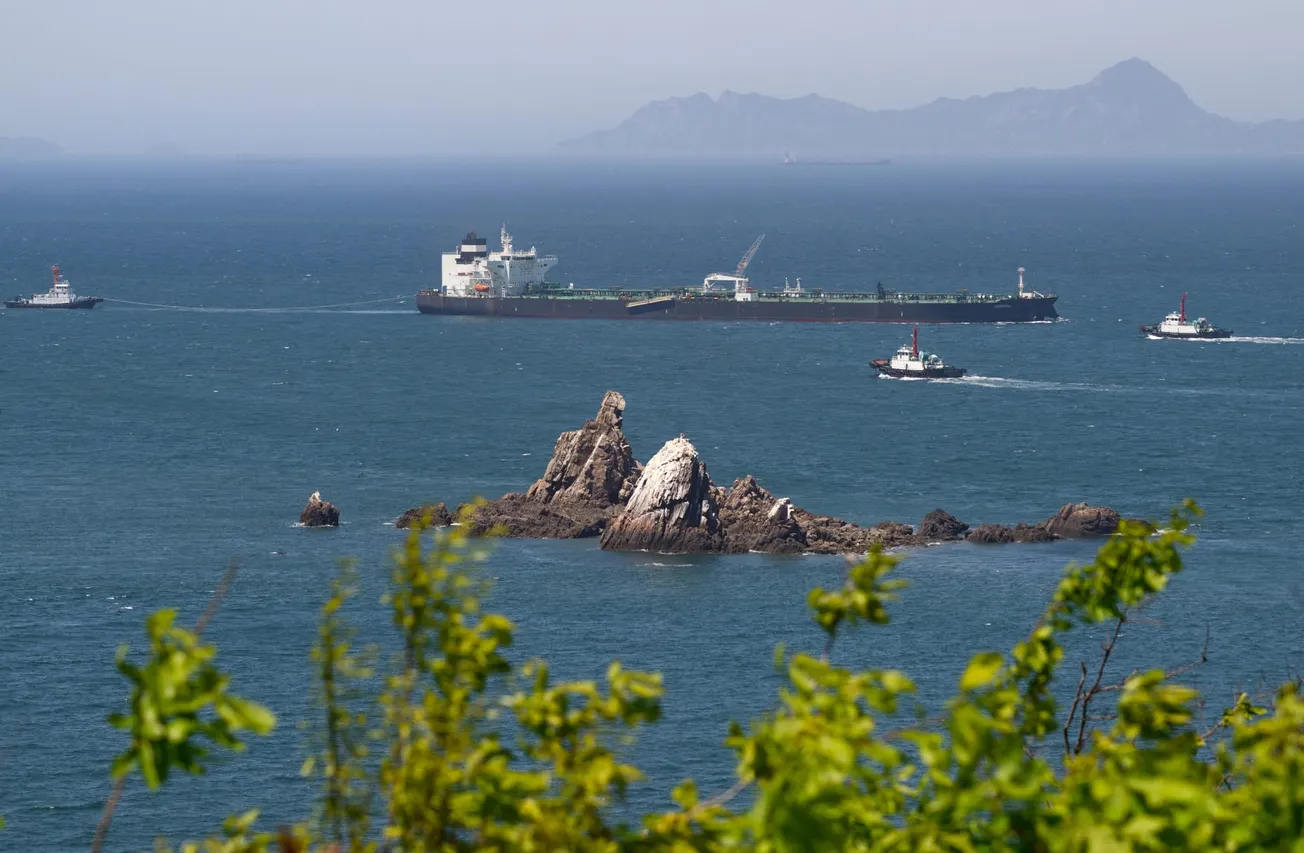
On Tuesday in Doha, Qatar’s prime minister, Sheikh Mohammed bin Abdulrahman bin Jassim Al Thani, said Tehran should not use the Strait of Hormuz “as a means of oppression or blackmail toward Gulf countries.” Standing next to Turkey’s foreign minister, the Qatari and Turkish governments jointly backed Pakistan’s mediation and jointly called for the strait to reopen.
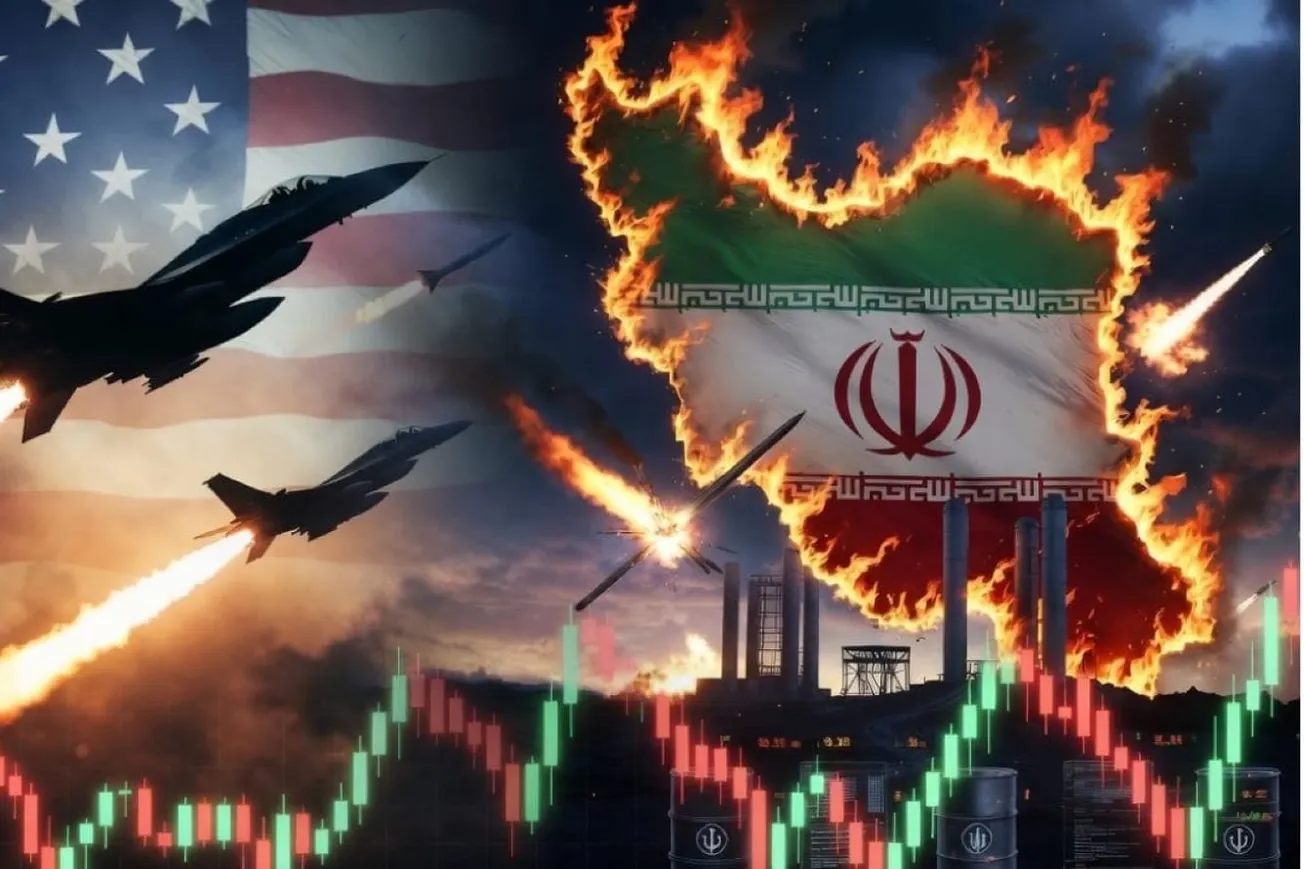
Iran closed the strait on February 28, the day American and Israeli forces struck Iranian nuclear and military sites. It has stayed closed since. Transit traffic is running at five percent of pre-war levels. Crude is trading at one hundred five dollars a barrel, more than thirty above the pre-war price.
On May 9, a senior Iranian official, Hossein Akraminia, told state media that a new legal and security system was in force in the strait. Any vessel wishing to pass would coordinate with Tehran. On May 10, Iran’s parliamentary committee chairman Ebrahim Azizi warned governments “including microstates like Bahrain” that backing the United States resolution would bring “severe consequences.”
The claim hardened this week. On May 13, Azizi told state media that a formal “Plan for the Security and Development of the Persian Gulf and the Strait of Hormuz” had been finalized and sent to parliament. He described the strait as a “power-building lever.” The same day, Iran’s first vice president Mohammad Reza Aref said Tehran’s right to the strait was “established, and the matter is closed.” This week, Foreign Minister Abbas Araghchi made full Iranian sovereignty over the Strait of Hormuz a condition of any peace deal with the United States.
On Wednesday, Bahrain, the United Arab Emirates, Saudi Arabia, Qatar, Kuwait, and Jordan jointly rejected Iran’s “management” claim as unacceptable. These are the same neighbors Iran has been shelling. Tehran has fired more than five hundred ballistic missiles, more than two thousand drones, and dozens of cruise missiles at the UAE alone, hitting resorts, ports, hotels, and civilian neighborhoods. On May 4, an Iranian drone struck a tanker affiliated with Abu Dhabi National Oil Company in the strait.
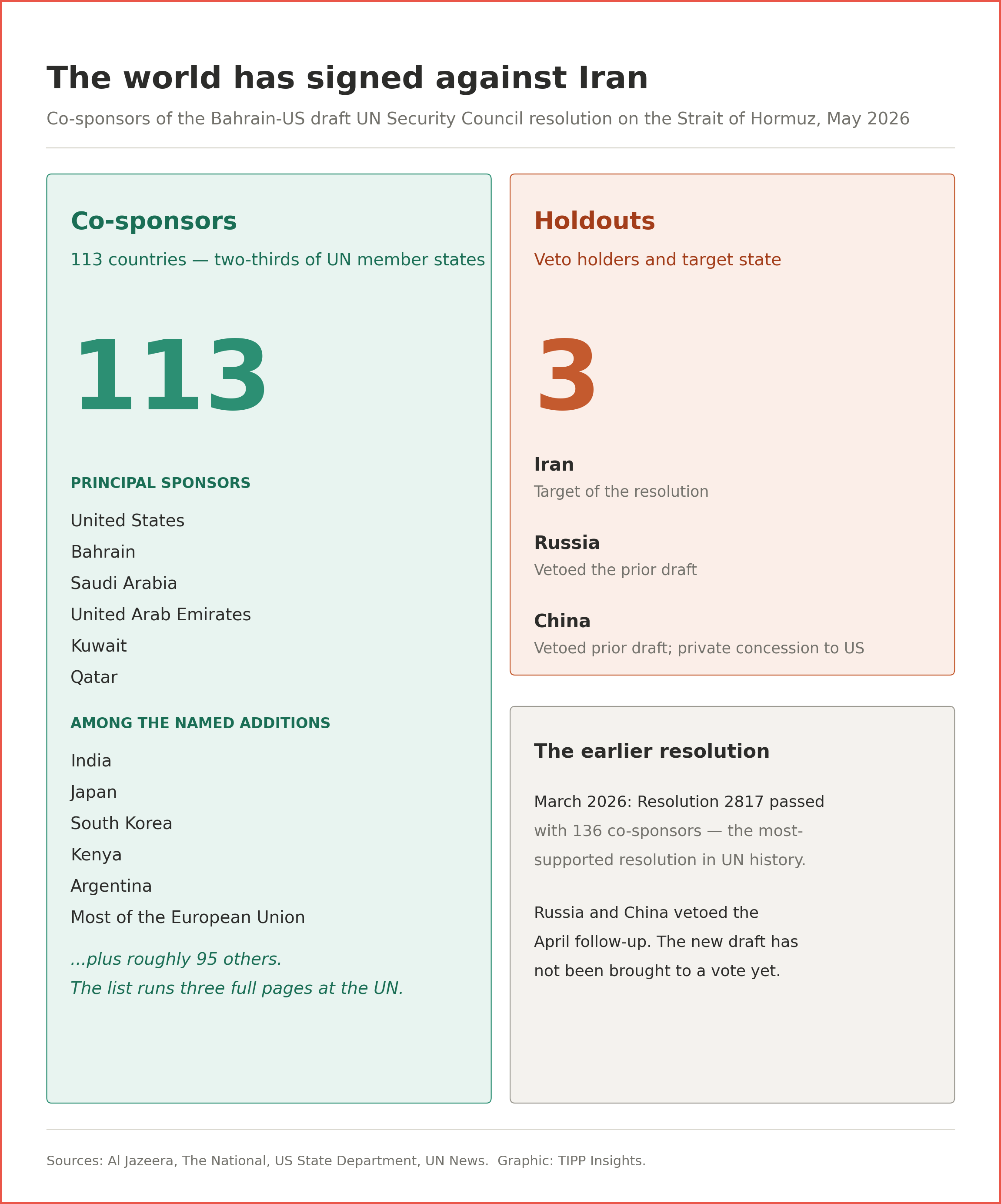
The Bahrain-United States draft resolution at the Security Council now has 113 co-sponsors. The list takes three full pages at the UN. India, Japan, and South Korea are on it. So are Kenya, Argentina, and most of the European Union. India, Japan, and South Korea are the customers Iran’s toll scheme was designed to coerce.
Turkey, which usually hedges with Tehran, sent its foreign minister to Doha this week to say the strait must not be weaponized. Pakistan is mediating on terms that include reopening the strait. Forty-seven years ago, the Iranian regime began its life by taking American hostages. It is now trying to take the world’s economy hostage and has united the world against the attempt.
Even Beijing has conceded the principle in private. The State Department disclosed on Tuesday that Secretary of State Marco Rubio and Chinese Foreign Minister Wang Yi agreed in an April 30 phone call that no country or organization can be allowed to charge tolls in international waterways like the Strait of Hormuz. The Chinese embassy did not dispute the readout.
On Monday, Britain announced its Type-45 destroyer HMS Dragon was sailing for the Gulf. On Tuesday, the United Kingdom and France hosted a virtual summit of defense ministers from more than forty countries on the multinational mission to secure the strait. London committed Typhoon jets, mine-hunting drones, and £115 million in new funding. France has moved the Charles de Gaulle carrier group toward the region. The countries Iran is trying to coerce are organizing to clear its mines.
President Trump landed in Beijing on Wednesday evening for two days of talks with President Xi. Iran spent ten weeks trying to coerce the world through a chokepoint and produced a coalition against itself instead. The Gulf states it shells, the customers it sought to coerce, the mediator it counted on, and even Beijing have said no. Tehran’s blackmail is failing.
The TIPP Off
What you should be reading right now
Global Affairs
What Are The Current US And Iranian Strategies In The War?—Victor Davis Hanson, The Daily Signal
The Handshake In Beijing — Editorial Board, TIPP Insights
Who Is Going To China With President Trump?—Pedro Rodriguez, The Daily Signal
How Russia Lost Friends And Global Influence — By Nina L. Khrushcheva, Project Syndicate
Gold’s Grim Message — Barry Eichengreen, Project Syndicate
Voters Lukewarm On U.S.-Iran War, As Majority Oppose Use Of Ground Troops In Iran: I&I/TIPP Poll — Terry Jones, TIPP Insights
The Death Sentence — Editorial Board, TIPP Insights
More Complications Arise In The Trump Universe—Philip Giraldi, Ron Paul Institute for Peace and Prosperity
National Affairs
California Mayor Worked For Chinese Government, Exposing China’s Deep Influence In America—Angelina Delfin, The Daily Signal
A $1.5 Trillion Military Budget Is A Gift To The Grifters— Ron Paul, Ron Paul Institute for Peace and Prosperity
Kelly Blasted By Hegseth For Talking About ‘Shocking’ Stockpile Depletion—George Caldwell, The Daily Signal
House Oversight Committee Asks Ethics Committee To Probe Ilhan Omar—Pedro Rodriguez, The Daily Signal
Agitators Track Kash Patel To Portland Funeral, Descend On Hotel—Fred Lucas, The Daily Signal
Defense In Trump Assassination Case Has ‘No Evidence—Only Distraction’—Daily Signal Staff, The Daily Signal
New Wisconsin Polling Shows That Michael Alfonso Could Be Part of the New Generation of ‘America First’— Steve Cortes, The Daily Signal
Emmer Lights The Capitol, Vows GOP Will ‘Always Back The Blue’—Virginia Grace McKinnon, The Daily Signal
Makary Resigns As FDA Commissioner—Elizabeth Troutman Mitchell, The Daily Signal
Don Lemon Teases Presidential Run—Al Perrotta, The Daily Signal
State Department Rejects Invitation To Pro-Migration Conference—Elizabeth Troutman Mitchell, The Daily Signal
Economy
Living Under The Weight Of Keynes’s Shadow Wealth—Matt Hisrich, Mises Wire
How Money Acquires Its Value—Frank Shostak, Mises Wire
Today’s AIs Show The Marginal Revolution’s Unfinished Business—Joakim Book, Mises Wire
The Inconsistencies Of John Stuart Mill— Wanjiru Njoya, Mises Wire
📊 Market Mood — Thursday, May 14, 2026
🟩 AI optimism pushed futures higher as investors cheered reports that Nvidia chip sales to China may restart following talks between President Donald Trump and Xi Jinping.
🟧 Markets remain focused on the Trump-Xi summit, with investors watching closely for signs of progress on trade and possible diplomatic movement around the Iran war.
🟦 Oil stayed above $105 a barrel as the Strait of Hormuz disruption continued fueling fears of persistent inflation and slower global growth.
🟨 Cisco surged after unveiling a major AI-focused restructuring plan that includes workforce cuts, signaling how aggressively companies are repositioning around the AI boom.
🗓️ Key Economic Events — Thursday, May 14, 2026
🟧 8:30 a.m. ET — Retail Sales (April)
Forecast: +0.5% vs. +1.7% previous. Investors will watch whether higher energy costs and inflation pressures are beginning to slow consumer spending.
🟧 8:30 a.m. ET — Core Retail Sales (April)
Forecast: +0.7% vs. +1.9% previous. This measure strips out volatile categories and offers a cleaner read on underlying consumer demand.
🟧 8:30 a.m. ET — Initial Jobless Claims
Forecast: 205K vs. 200K previous. Markets will monitor whether layoffs remain contained as businesses navigate rising costs and economic uncertainty.
Letters to the editor email: editor-tippinsights@technometrica.com
Subscribe Today And Make A Difference. Consider supporting Independent Journalism by upgrading to a paid subscription or making a donation. Your support helps tippinsights thrive as a reader-supported publication. Contact us to discuss your research or polling needs.
Reach our audience. For sponsorship and advertising opportunities, visit our Partner With Us page.