Far from restoring Russia’s great-power status, the Ukraine war has left Russia stretched so thin that it has repeatedly failed to fulfill its commitments to partners and allies. With even Russia's closest friends hedging their bets, the Kremlin's ability to project power and shape world affairs has been severely weakened.
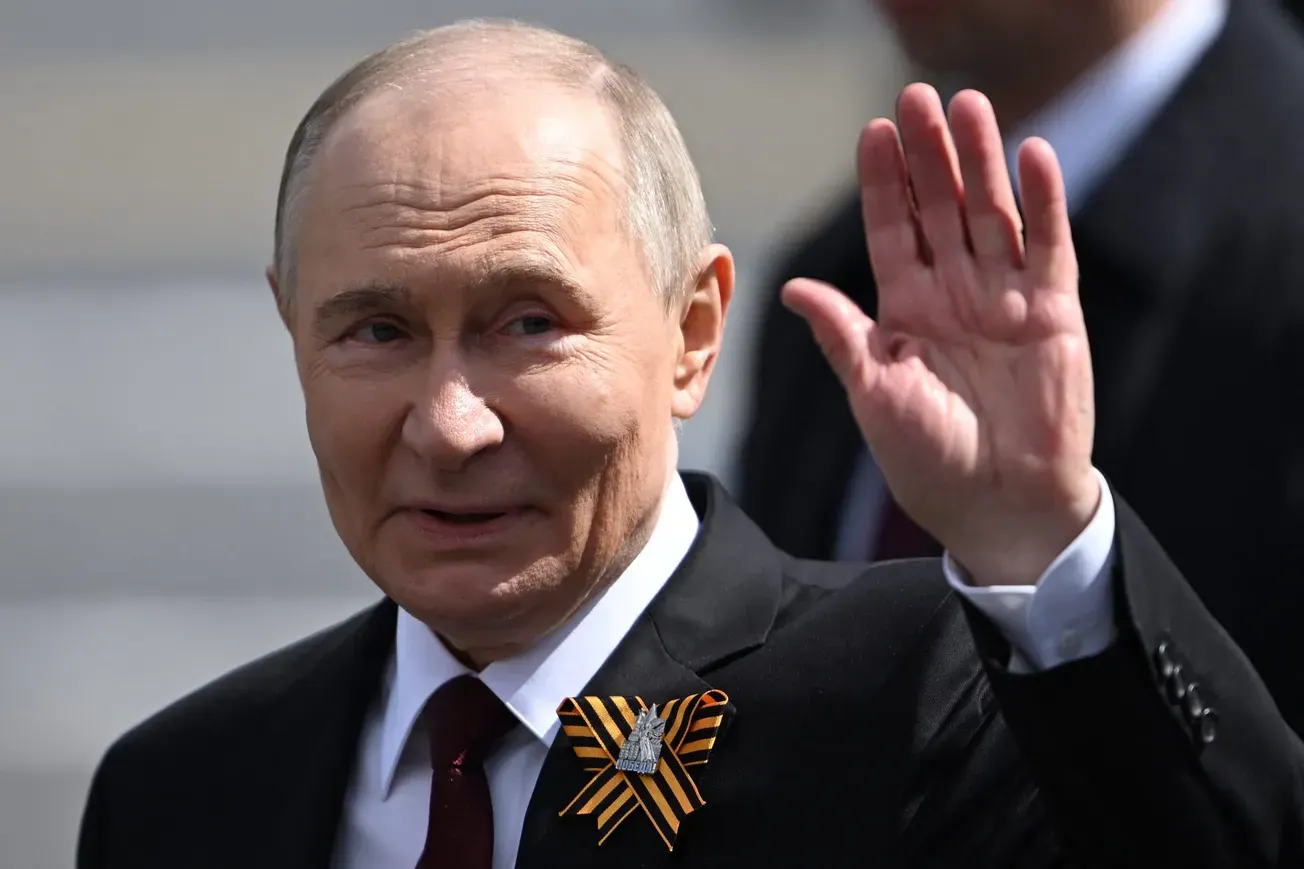
NEW YORK—Since launching his full-scale invasion of Ukraine more than four years ago, Russian President Vladimir Putin has not only failed to achieve the military victory he craved. He has also undermined a slew of other relationships he spent decades building, leaving Russia more isolated than it has been since the earliest days of the Bolshevik Revolution.
The invasion of Ukraine alone was enough to drive a wedge between Russia and its ally Kazakhstan. After all, Putin has a history of diminishing Kazakhstan’s grounds for independent statehood and suggesting that its people desire closer ties with Russia—claims that echo those Putin makes about Ukraine.
So, after the 2022 invasion, Kazakh President Kassym-Jomart Tokayev rejected the Kremlin’s requests for assistance, and later told Putin that Kazakhstan would not recognize Russia-backed separatist regions in Ukraine. He also signed a military cooperation deal with Turkey, becoming the first member of the Russia-led Collective Security Treaty Organization (CSTO) to establish such an arrangement with a NATO member. While Putin’s relationship with Tokayev has since improved, this likely reflects the fact that both sides still need each other.
Then there is Armenia. When Azerbaijan launched a military operation in September 2023 to take control of Nagorno-Karabakh, the ethnic Armenian enclave within its territory, Russian peacekeepers stationed there did nothing, and the enclave’s entire population—around 100,000 people—was forced to flee. Within a year, Armenia had announced plans to withdraw from the CSTO and was purchasing arms from France and India. Russia withdrew its peacekeepers from the region ahead of schedule.
The Kremlin also managed to upend its relationship with Azerbaijan, which benefited from its betrayal of Armenia. In December 2024, a Russian surface-to-air missile struck an Azerbaijan Airlines passenger jet, killing 38 people. Azerbaijani President Ilham Aliyev demanded compensation and accountability from the Kremlin, but Putin refused to admit fault for nearly a year. In the meantime, Aliyev snubbed Putin by skipping Russia’s annual World War II Victory Day parade in May 2025; Russian special forces conducted a deadly raid targeting ethnic Azeris in Yekaterinburg; and Azerbaijan raided the Baku office of Russian state media outlet Sputnik, arresting its staff.
But Azerbaijan serves as a crucial trade corridor to Iran, which, until the United States and Israel launched their war in February, was supplying Russia with drones and ballistic missiles for its war in Ukraine. (Russia also effectively abandoned Iran when it came under fire.) To keep the corridor open, the Kremlin was forced to swallow the insult from Azerbaijan, and in October 2025, Putin finally admitted that Russian air-defense systems had brought down the jet and made a vague offer of compensation.
While this pro-forma apology opened the way for the restoration of ties, the episode amounted to a major foreign-policy blunder for Russia. From the czars to the Soviets, Kremlin leaders had for centuries skillfully navigated tensions between Armenia and Azerbaijan. Yet, since starting his war in Ukraine, Putin has managed to strain relations with both.
In Syria, Russia spent nearly a decade propping up Bashar al-Assad’s regime, carrying out airstrikes and deploying ground forces against rebel forces, while providing Assad with diplomatic cover at the United Nations Security Council. In exchange, Russia maintained control over the Tartus naval base and Hmeimim air base.
But in November 2024, Syrian rebel forces launched a surprise offensive, to which the Russian military—stretched thin by the war in Ukraine—was unable to respond at scale. Within days, Aleppo and Damascus fell, and Assad fled to Moscow. All that investment, and Russia ended up with nothing.
The story of Russian overreach in Africa is equally embarrassing. Before the Ukraine war, Wagner Group mercenaries were extending Russian influence across the continent, trading security contracts for political loyalty and mining rights. In Mali, for example, they positioned themselves as crucial support for the military junta in its fight against jihadist forces.
But in 2024, Tuareg rebels ambushed a Malian-Wagner convoy near Tinzaouaten, killing dozens of Russian mercenaries. Jihadists subsequently attacked the airport and the national gendarmerie academy in Bamako. The narrative that Wagner was making Mali safer had become untenable. While some forces, rebranded as the “Africa Corps,” stayed behind after Wagner officially left Mali last June, they, too, have now withdrawn.
Things are no better for Putin in Europe. Hungary’s Russian-toady prime minister, Viktor Orbán, was recently voted out after 16 years in power. Serbian President Aleksandar Vučić, for his part, has been quietly hedging his bets: though Serbia initially appeared to support Russia’s invasion of Ukraine, Vučić has since met with Ukrainian President Volodymyr Zelensky multiple times and exported at least $908 million worth of ammunition to Ukraine via third countries (Bulgaria, the Czech Republic, and Poland).
Vučić has also canceled military contracts with Russian arms suppliers, instead signing a €2.7 billion ($3.2 billion) deal with France for 12 Rafale fighter jets. But Putin has so far chosen not to respond. The last thing he needs is to cement the loss of one of his last apparent allies in Europe.
Meanwhile, Putin’s longtime client, Belarusian President Alexander Lukashenko, has released political prisoners in an effort to improve relations with the West—and has even had contact with US President Donald Trump. While “Europe’s last dictator” is not breaking with the Kremlin, he is preparing an escape route—and raising the stakes further.
Then there is China. Before the Ukraine war, Russia and China presented themselves as two great powers resisting Western dominance and touted their “no-limits partnership” just prior to the invasion. But the relationship today looks more like a lopsided marriage of convenience than an alliance of powerful equals. China supplies dual-use goods like microelectronics and machine tools—not weapons—to Russia, which sells China oil and gas at discounted prices.
Perhaps Russia’s most loyal friend nowadays is North Korea, which deployed more than 10,000 soldiers to fight alongside Russian forces in the Kursk region following Ukraine’s incursion into Russia in August 2024. But even this relationship is fundamentally transactional, based on shared insecurity and hostility toward the West.
Putin believed that invading Ukraine would restore Russia’s great-power status, erode Western influence, and accelerate the shift toward a multipolar international order. Instead, it has destroyed the Kremlin’s credibility as a partner and ally. Russia still has nuclear weapons, a permanent seat on the UN Security Council, and vast energy reserves, but the Ukraine war has left it severely weakened and unable to project power and shape world affairs in any way short of threatening war.
Nina L. Khrushcheva, Professor of International Affairs at The New School, is the co-author (with Jeffrey Tayler), most recently, of In Putin’s Footsteps: Searching for the Soul of an Empire Across Russia’s Eleven Time Zones (St. Martin's Press, 2019).
Copyright Project Syndicate
The stories and data that matter today — selected by the TIPP Insights editorial team.
Global Affairs
Trump And Xi Open High-Stakes Beijing Summit
Why Pete Hegseth’s China Trip Matters For U.S.-China Ties
Why Jensen Huang Joined Trump’s China Visit At The Last Minute
Trump-Xi Talks Begin Amid Pentagon Missile Supply Concerns
Israel Launches New Strikes South Of Beirut
Taiwan Stages Military Exercise Near China Coast
Why China Is Carefully Managing Trump’s Beijing Visit
Who Could Replace Keir Starmer As Britain’s Prime Minister?—TIPP Infographics
Putin Expands World’s Largest Drone Factory—TIPP Infographics
What Is Russia’s ‘Satan II’ Nuclear-Capable Missile
EU To Debate Future Of Ukrainian Refugee Protections
1,700 Cruise Passengers Held Over Illness Outbreak
National Affairs
What Is Driving Higher Food Prices Beyond Gas Costs
Homebuyers Push Ahead Despite Rising Mortgage Costs
Kash Patel Agrees To Alcohol Test During Intense Senate Hearing
What Led The Court To Order A New Murdaugh Trial
Letters to the editor email: editor-tippinsights@technometrica.com
Subscribe Today And Make A Difference. Consider supporting Independent Journalism by upgrading to a paid subscription or making a donation. Your support helps tippinsights thrive as a reader-supported publication. Contact us to discuss your research or polling needs.
Reach our audience. For sponsorship and advertising opportunities, visit our Partner With Us page.