DOHA, QATAR—When I can sneak out between TV hits, I walk from my hotel to City Center Mall in the heart of West Bay.
It is an enormous five-story mall filled with familiar Western names, including two Pizza Huts, two Starbucks and my favorite, Shake Shack, with the same calorie-busting burgers, except the bacon is veal instead of pork, of course.
I try to get my steps in, partly so the belt holding my earpiece pack at Al Jazeera still fits.
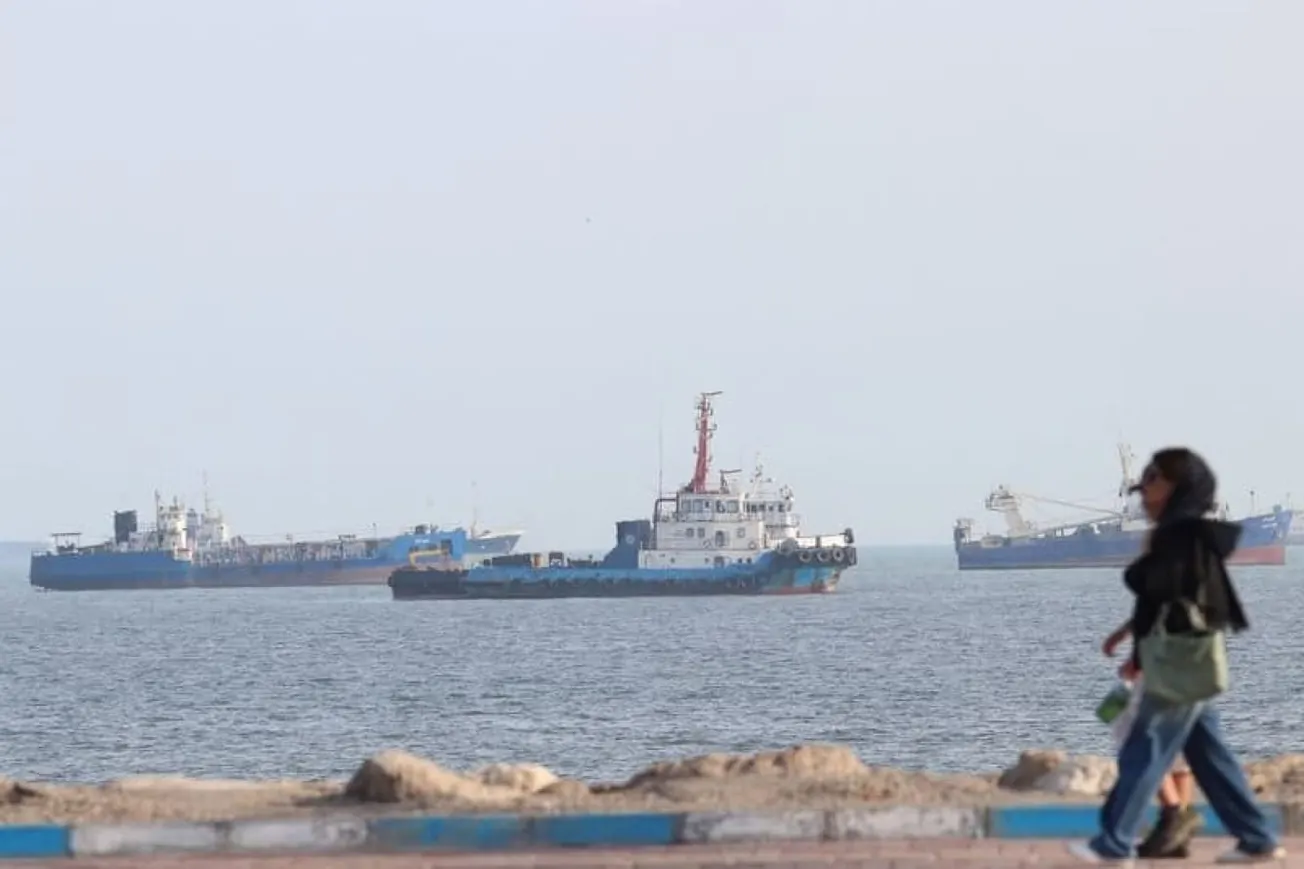
Qataris and visitors fill the mall buying jewelry, clothes and household goods. You would never know that shipping through Hormuz remains largely shut, or that another round of American strikes can be a Truth Social post away.
This week, a Houthi attack killed four sailors and two rescuers in Bab el-Mandeb. U.S. forces disabled a ship bound for Iran. On Tuesday, Kpler counted only eight vessels through Hormuz. Oil rose again.
Washington organizes the Iran conflict by bureaucracy. Tehran organizes it by leverage.
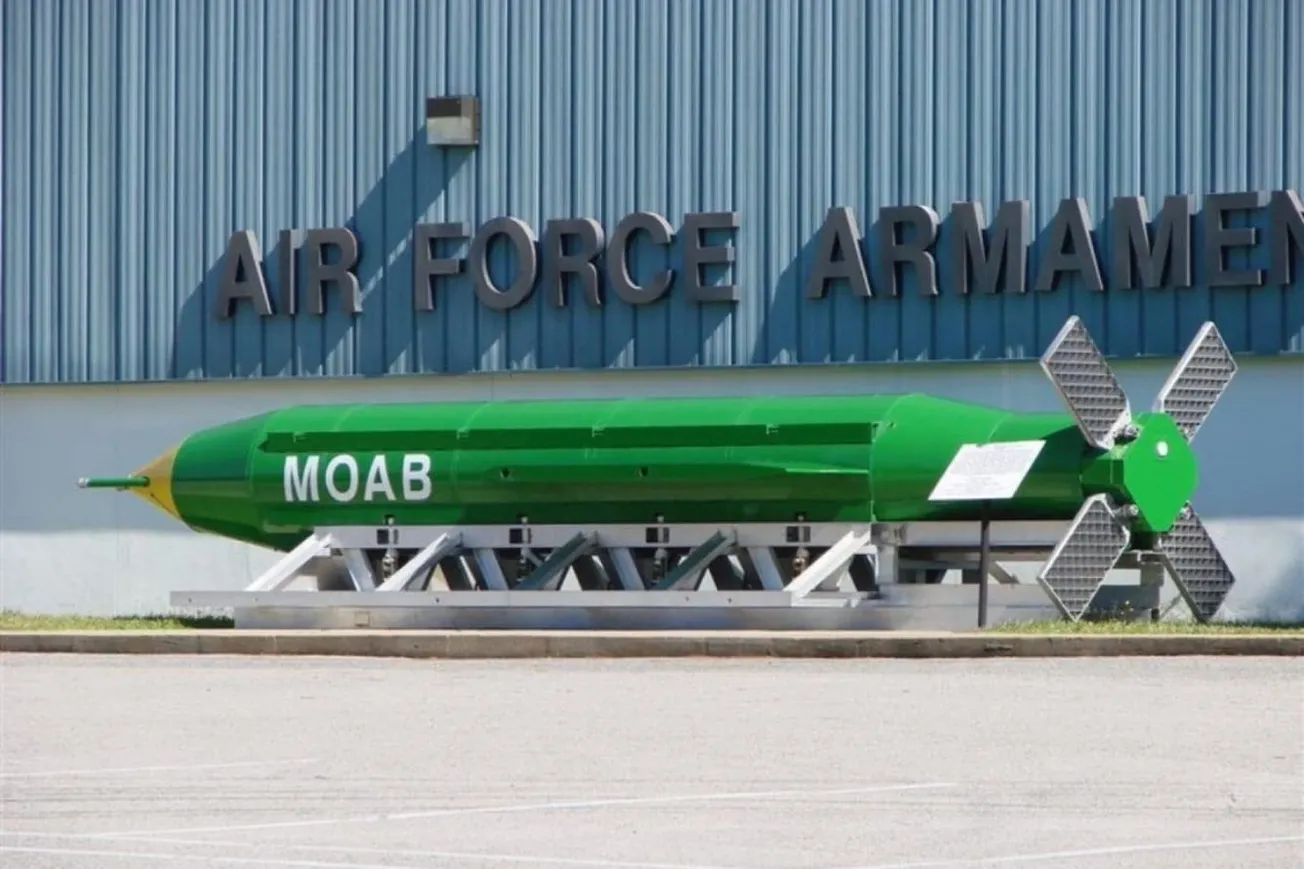
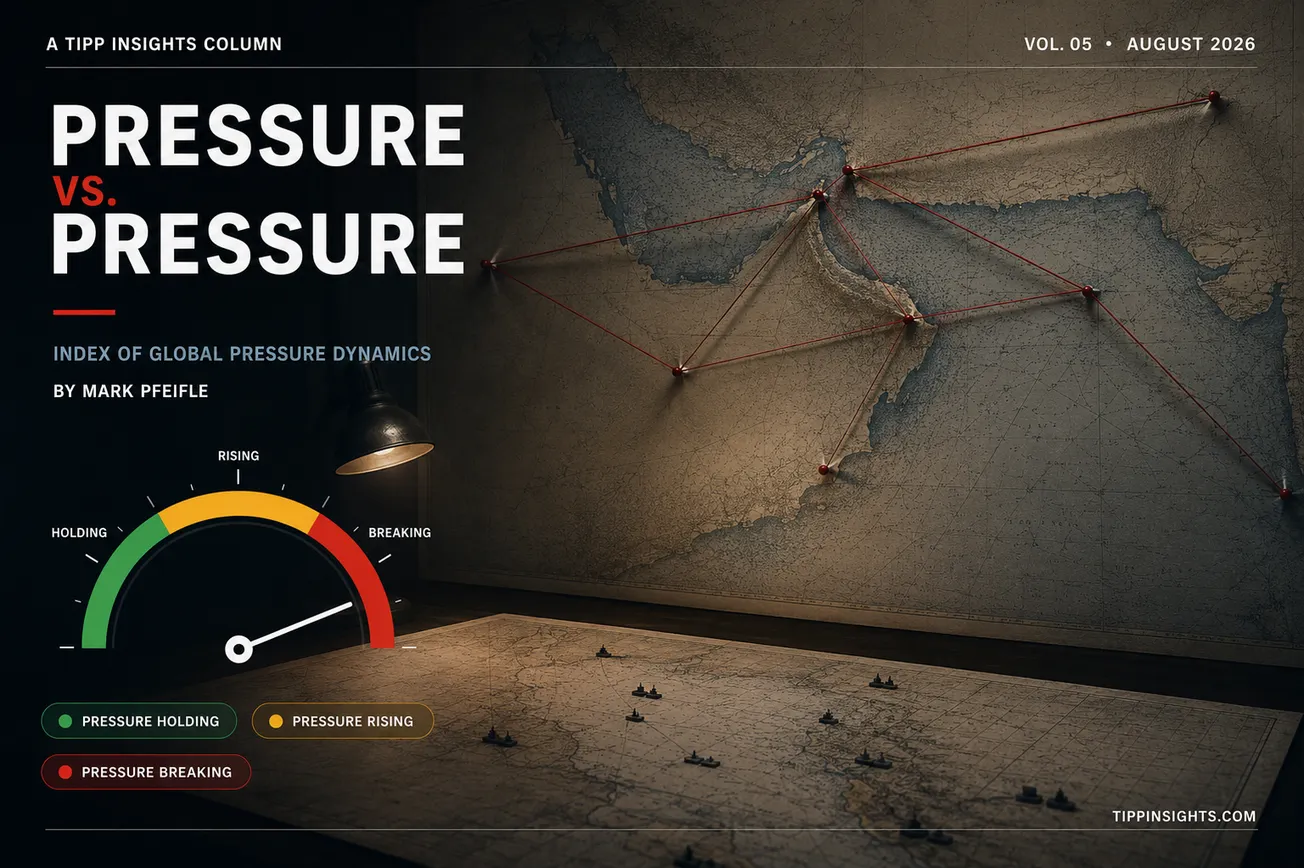
Nearly six months into the war, Washington still measures the conflict by bombs dropped, negotiating rounds and statements issued. It needs a daily pressure map showing where pressure starts, who absorbs the cost, where it moves next, and how an adversary sends it back.
In short, the US is using an old way of thinking, believing that power will win this war. The Iranians have realized that they don’t need to be as powerful to inflict severe pressure on the Americans, and in the end, it may well be a winning strategy.
United States — Pressure Rising
It remains true that the US is overwhelmingly more powerful than Iran, both militarily and economically. But simply being the stronger force doesn’t mean that the war isn’t taking a toll on America.
President Trump says the United States is “low-keying” the conflict while economic pressure weakens Iran. On Tuesday, he put the choice more starkly: let Tehran fail economically or “hit them really hard.”
Washington is also enforcing the blockade with force. U.S. forces fired two Hellfire missiles at the Vela Nova, a Panama-flagged container ship heading toward an Iranian port after the ship ignored orders to stop. U.S. forces have now struck 12 vessels since the blockade began.
Trump has demanded that Iran compensate victims of attacks and conflicts he blames on Tehran. Iran wants compensation of its own, sanctions relief and an end to U.S. military threats. Oil jumped 5 percent Monday as hopes for a Hormuz agreement faded.
Nothing about these talks suggests peace. Rather, they signify more escalation of pressure on both sides.
Iran — Pressure Steady To Rising
Tehran pushes economic pain onto Iranian families, spills military risk into shipping lanes and evades sanctions through proxies, shadow fleets, front companies and illicit finance.
Iran’s economy keeps deteriorating. The IMF now projects a 5.4 percent contraction this year and average consumer-price inflation of 68.9 percent.
Trump is betting Iran runs out of money before America runs out of patience, while Iran is betting it can export enough of the pain to change that calculation.
Iranians familiar with the regime’s thinking tell me bluntly that Tehran’s real goal is simpler than its list of demands: end the war and get sanctions relief.
The other demands matter, but many are bargaining chips. They keep returning to the June MOU because they believe its language gives them leverage toward sanctions relief.
Washington reads the same agreement differently. The MOU put sanctions relief on the table, but it also left the fate of Iran’s highly enriched uranium to the negotiations that followed. U.S. officials said from the beginning that sequencing would determine whether the preliminary agreement held.
Trump is not prepared to give Iran the full sanctions relief it wants until the uranium is secure.
That is where the negotiations are likely to stall again unless both sides sequence the two: secure the uranium as sanctions relief begins in stages. Each gets a small victory and lives to fight another day.
Inside Tehran, the Institute for the Study of War and AEI’s Critical Threats Project assess that Major General Ahmad Vahidi and his allies are playing an outsized role in decision-making. Pezeshkian, Araghchi and others favor negotiations and economic relief; Vahidi’s camp supports talks but opposes an agreement that gives up Iranian control over Hormuz.
The regime is tightening its grip at home as well. The United Nations says Iran has executed at least 56 people on national-security charges since March 19. More than 100 others face charges carrying the death penalty.
The Hormuz talks still leave Iran’s nuclear leverage unresolved. The IAEA’s last estimate put Iran’s stockpile of 60-percent enriched uranium at 440.9 kilograms, and inspectors still lack a complete accounting.
Hormuz — Pressure Rising
Iran and Oman have made progress on shipping routes, but they still have not reopened Hormuz.
Iran says it will keep the Strait closed until Washington changes its behavior and meets Iranian conditions, including ending the war and unfreezing Iranian assets.
On Tuesday, Kpler tracked only eight vessels through Hormuz, compared with roughly 130 to 140 a day before the war. Only one of the eight was leaving the Gulf.
Diplomats can reopen Hormuz on paper. Ship captains still have to reopen it at sea.
A deal matters only if ships move regularly, insurers cover them, and captains believe they can transit without paying Iran for permission.
A Lloyd’s Market Association clause terminates war-risk coverage for a vessel that pays a Hormuz toll, while U.S. sanctions create a separate risk for anyone paying an Iranian authority.
A captain who refuses Iran risks the ship; one who pays risks insurance or sanctions.
The U.S. Energy Information Administration estimates that Middle East producers shut in an average of 5.5 million barrels a day in July. It expects Hormuz shipments to remain severely constrained through August and says production and trade patterns will not generally return to prewar levels until early 2027.
Any government can state that the strait is free for trade, but the real test is whether the global economy will believe them.
Qatar — Pressure Rising
In Qatar, the cost shows up on the balance sheet.
Qatar Energy bought 33 U.S. LNG cargoes worth roughly $1 billion after the war halted Qatari gas exports through Hormuz. Twenty-eight replacement cargoes had reached customers by the end of July.
Qatar has stayed afloat through these replacement packages, but they’re paying heavily in return.
Gulf States — Pressure Rising
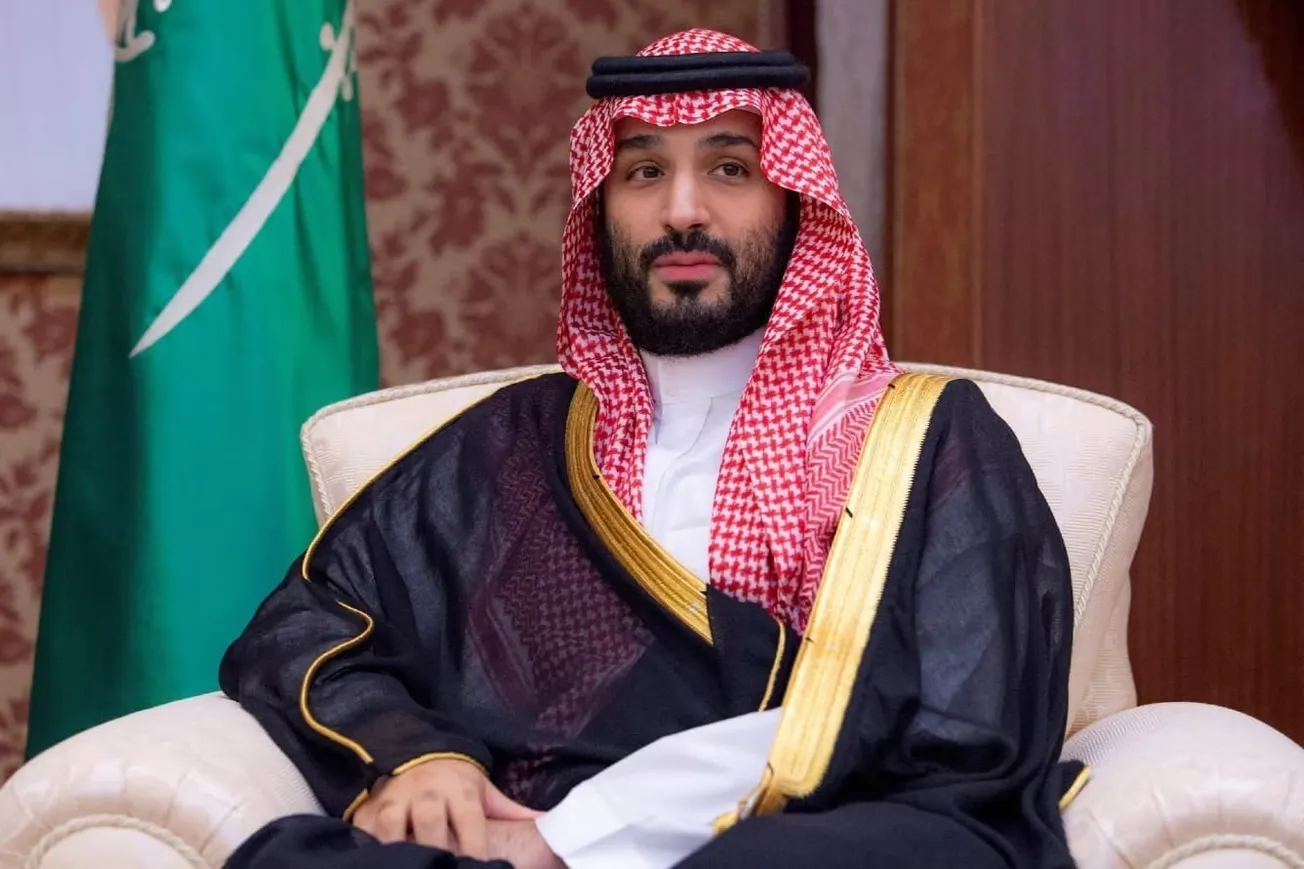
Saudi Arabia, Pakistan and Turkey signed the Mecca Joint Defense Agreement on Friday. The pact treats an armed attack against one as an attack against all three.
Two days later, the Houthis attacked Saudi Aramco’s Jazan refinery with a drone. The strike caused a fire but no casualties. The Houthis also attacked the Yemeni port of Mocha near Bab el-Mandeb.
The pact got its first gray-zone test almost immediately.
Then on Tuesday, the Houthis attacked the Egyptian-owned Tihamah in Bab el-Mandeb, killing four crew members. A second strike killed two rescuers.
Iran does not need to hit Riyadh to pressure Riyadh. It can use the Houthis, Iraqi militias, cyber attacks, maritime harassment or strikes against energy infrastructure.
The pact makes a direct attack all the more punishing, but the Houthis continue to push the line to see what the nations will tolerate.
Israel — Pressure Rising
In Gaza, the argument is increasingly about who moves first.
President Trump’s framework links Hamas disarmament to phased Israeli withdrawal. Hamas has accepted the roadmap with conditions. Netanyahu says Israel will not withdraw from the territory it controls until Hamas fully disarms.
Reminiscent of a textbook game theory problem, neither side benefits from moving first. Waiting is key, leading to an awkward but also aggressive standoff between the two sides.
If Israel wants Hamas disarmed, it needs to accept a verified withdrawal process. If Hamas wants Israeli withdrawal, its disarmament has to be verifiable and irreversible.
Any peace framework needs a verifiable enforcement mechanism to have any real effect. Without that, any statement is just a press release.
The Map
The Pentagon tracks missiles and interceptors. Treasury follows sanctions and financial networks. State handles negotiations. Energy watches oil and LNG. Intelligence follows the IRGC. Political advisers watch polls.
Iran combines those instruments into one campaign.
A Houthi drone hits a Saudi refinery days after three countries sign a collective-defense pact. A Hormuz restriction changes an insurance contract in London. A Qatari LNG disruption becomes an American LNG sale. A proxy attack forces Saudi Arabia, Pakistan and Turkey to decide what collective defense means when the attacker is not Iran itself.
None of these are side effects of the war. It’s time we recognize that this is the main body of the conflict.
Missiles tell Washington where the war was.
Ships, insurance, oil prices, proxy attacks, and phone calls tell Washington where it is going.
Washington needs the second map.
Mark Pfeifle, a member of the TIPP Insights Editorial Board, served as deputy national security adviser for strategic communications and global outreach at the White House from 2007 to 2009. He runs the crisis management firm Off the Record Strategies.
Loved it, hated it, or somewhere in between — tell us. Grade this article here and help shape what lands in your inbox next.
Ukraine Might Be About To Destroy “Putin’s Palace”
Speculation is mounting that Ukraine is building up to destroy Vladimir Putin's $1.4bn Black Sea palace, following recent attacks which blew up its air defense systems.
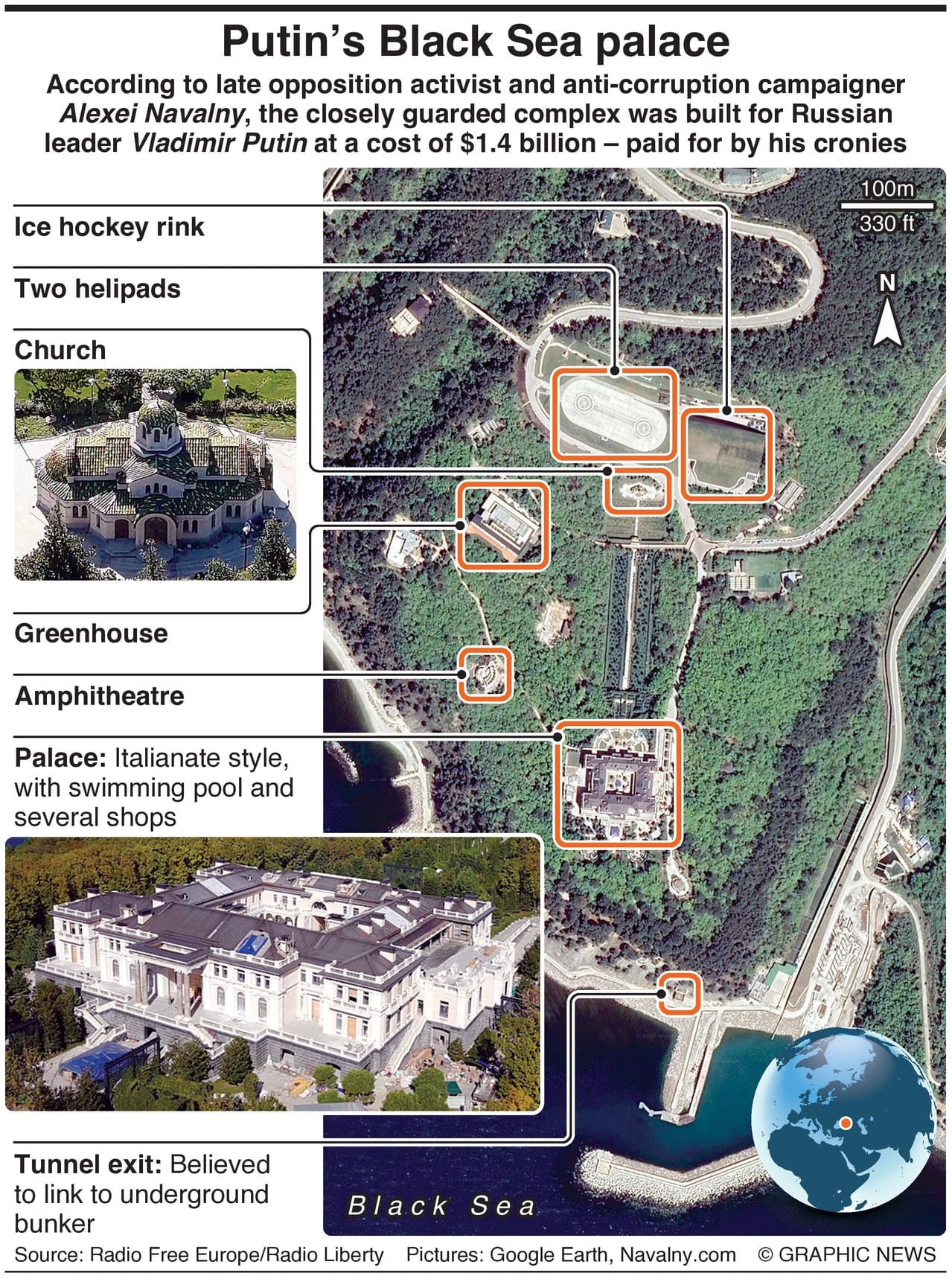
According to late opposition activist and anti-corruption campaigner Alexei Navalny, the closely guarded complex was built for Russian leader Vladimir Putin at a cost of $1.4 billion – paid for by his cronies.
🧭 Power & Capital · August 12, 2026
Where state power meets the boardroom.
🔷 Teachers Unions Have Become The Democratic Party’s ‘Money Laundering Scheme,’ Moms For Liberty CEO Says – Pedro Rodriguez, The Daily Signal
🌍 Global Affairs
The world's flashpoints, in motion.
🟥 How Is The Iran War Changing US Diplomatic Operations – TIPP News
🟥 Who Was Zhu Rongji, China’s ‘Economic Czar’ Who Died At 97 – TIPP News
🟥 Watch: Colombian Woman Rescued After 36 Hours Under Rubble – TIPP Video
🏛️ National Affairs
The fights shaping America right now.
🟫 Americans Remain Sharply Divided Over Military Action Against Iran: I&I/TIPP Poll – Terry Jones, TIPP Insights
🟫 ICE Could Equip Agents With $20 Million In Shock Gloves – TIPP News
🟫 Is ‘Communist’ No Longer A Slur? – Victor Davis Hanson, The Daily Signal
🟫 Don’t Let Socialists Fool You: They Still Want To Abolish Police, And Prisons Too – Jarrett Stepman, The Daily Signal
🟫 What Should The Smithsonian Do? – Brenda Hafera, The Daily Signal
🟫 A Win In Philadelphia For America’s Founders – Jeffrey H. Anderson, The Daily Signal
🟫 What Conservative Columnist Could Freely Write For The New York Times? – Tim Graham, The Daily Signal
🟫 Family Should Never Become A Political Battleground – Armstrong Williams, The Daily Signal
🟫 Midwest Storms Kill Two, Knock Out Power Across Four States – TIPP News
🟫 16 Inmates Hospitalized After Apparent Lightning Strike At Ohio Prison – TIPP News
📈 Economy
Prices, policy, and the pressure on your wallet.
🟩 US Consumer Prices Rise 0.1% In July, Matching Forecast – TIPP News
🟩 Gov. Kemp Discusses Impact Of New Siemens Facility On Georgia’s Job Growth – Rebecca Buis, The Daily Signal
💼 Markets & Business
The deals and tickers making moves.
🟧 Google Gemini Surpasses 1 Billion Monthly Active Users – TIPP News
Letters to the editor email: editor-tippinsights@technometrica.com
Subscribe Today And Make A Difference. Consider supporting Independent Journalism by upgrading to a paid subscription or making a donation. Your support helps tippinsights thrive as a reader-supported publication. Contact us to discuss your research or polling needs.
Reach our audience. For sponsorship and advertising opportunities, visit our Partner With Us page.