
The shift to the right in Colombia’s presidential election places the country at the forefront of a trend that has gathered pace across much of Latin America, driven in large part by concerns about security.
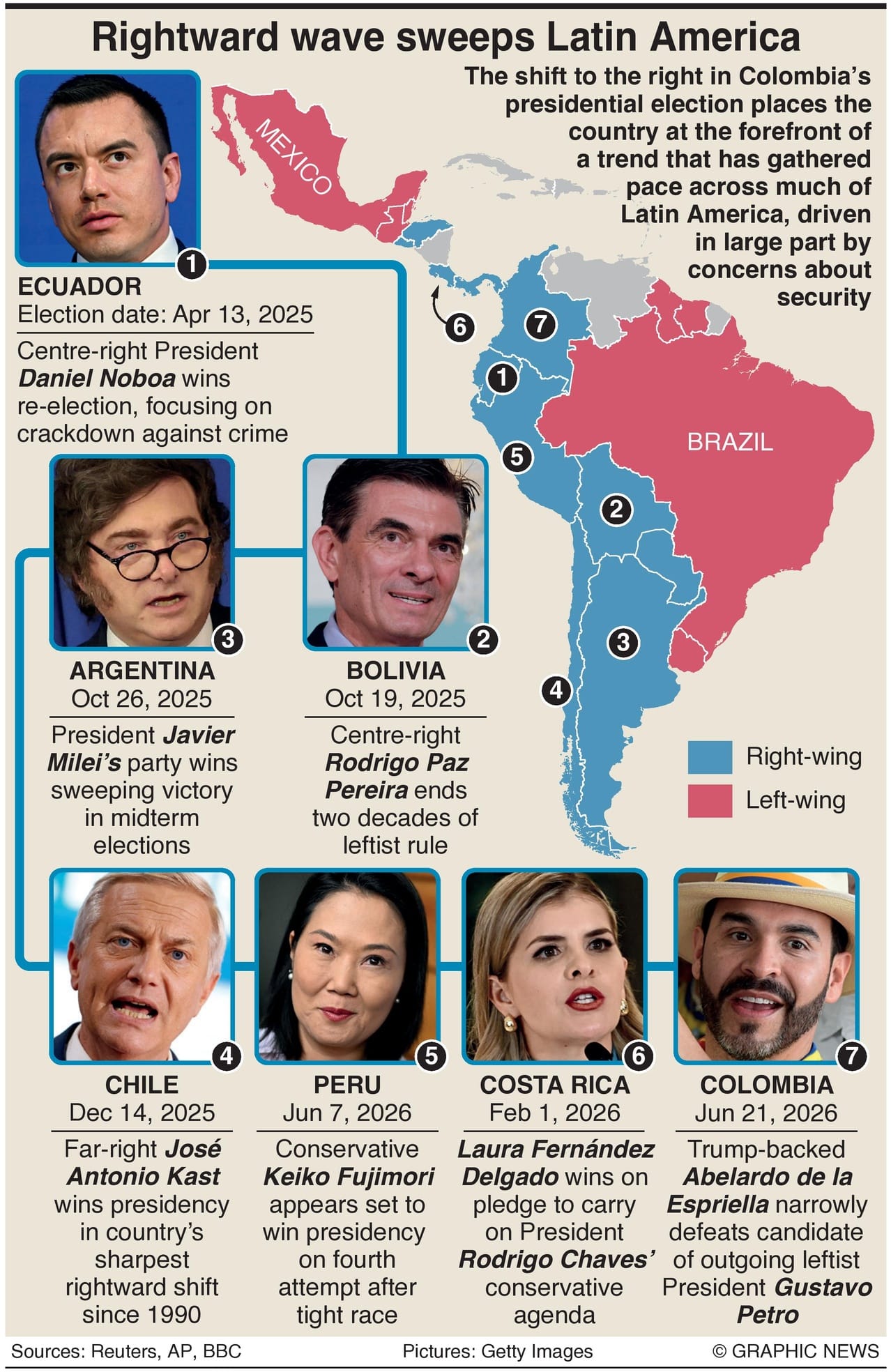
Abelardo de la Espriella, a populist candidate known as "The Tiger", reportedly won the second round of the presidential election on 21 June.
His victory follows recent right-wing electoral successes in Argentina, Chile, Costa Rica, Bolivia, and Ecuador. Analysts say concerns about security have been a major factor driving support for conservative candidates across the region.
Many of these leaders have campaigned on promises of lower taxes, smaller government, and fewer restrictions on mining and fossil fuel industries. However, several have also faced economic challenges, including budget deficits and public protests over spending cuts.
The shift comes as U.S. President Donald Trump seeks to expand U.S. influence in the region through tougher anti-drug policies and new security initiatives with allied governments.
Russian Troop Build-Up Threatens Kostiantynivka
Russian troops have infiltrated the eastern Ukrainian city of Kostiantynivka, a strategically important location seen as a gateway to the rest of the Donbas region.
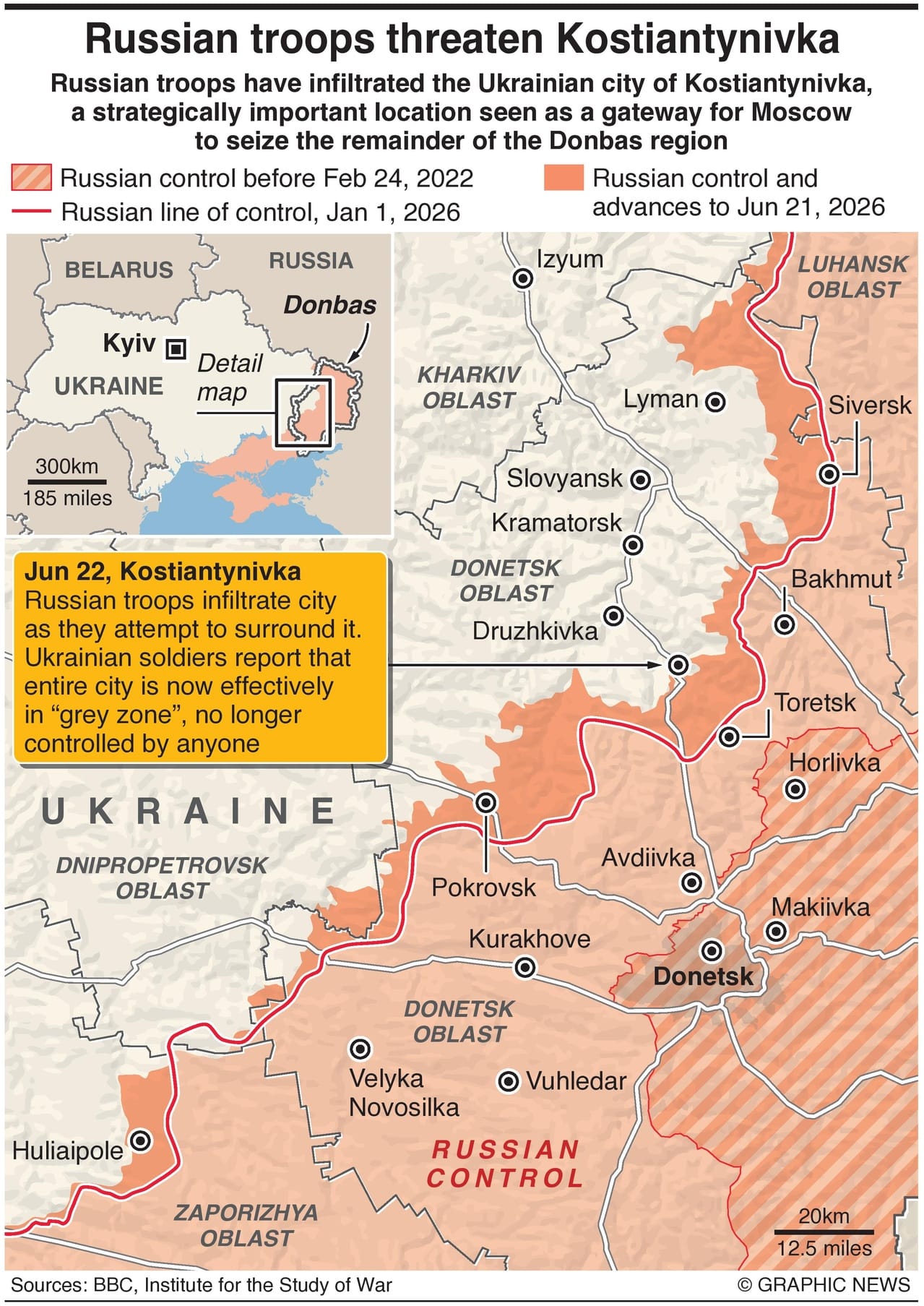
The entire city is now effectively in a “grey zone”, no longer controlled by anyone, Ukrainian soldiers have told the BBC.
If Kostiantynivka falls, Russian forces would be able push towards Ukraine’s last remaining strongholds in the east, the cities of Kramatorsk and Sloviansk, and move closer to seizing Donbas completely, one of the Kremlin’s key objectives in this war.
Messi Breaks FIFA World Cup Goal Record
The FIFA World Cup takes place across the United States, Mexico, and Canada, marking a new era for the global showpiece and FIFA’s vision for the game. Argentina talisman Lionel Messi surpasses Germany’s Miroslav Klose to become the all-time leading goal scorer in World Cup history with 18 goals, while Kylian Mbappe of France (16 goals) closes in.
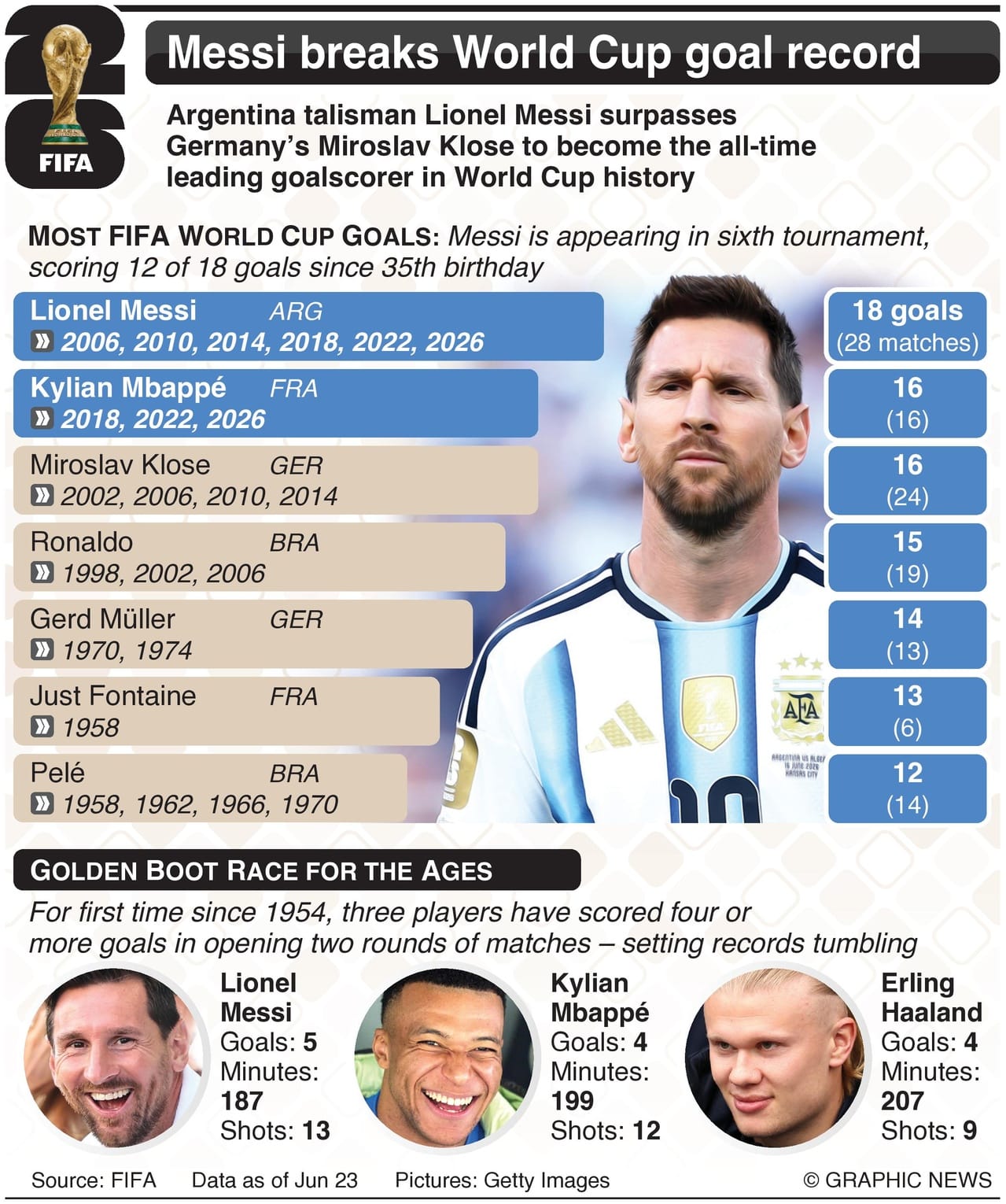
Other high-flyers over the years include Ronaldo of Brazil, with 15 goals in three World Cups (1998, 2002, 2006), Gerd Müller of Germany with 14 (1970, 1974), and Just Fontaine of France, who netted a remarkable 13 times in 1958 alone.
Following these comes legendary Brazilian star Pele, who notched up 12 goals in four tournaments between 1958 and 1970. Sandor Kocsis of Hungary (1954) and Germany’s Jurgen Klinsman (1990, 1994, 1998) each have 11 goals to their name.
This year, England forward Harry Kane aims to add to his tally of eight goals after a record-breaking season with Bayern Munich.
A total of 2,720 goals scored in 964 matches across 22 editions.
🌍 Global Affairs
The world's flashpoints, in motion.
🟦 Iran Oil Exports Set For Boost After Sweeping US Sanctions Relief – TIPP News
🟦 Rescued US Pilot’s Account Raises Questions Over Iran’s Drone Capabilities – TIPP News
🟦 Vance: Iran Deal Has ‘Successful Foundation’ – George Caldwell, The Daily Signal
🟦 What Could Starmer’s Exit Mean For The UK Economy – TIPP News
🏛️ National Affairs
The fights shaping America right now.
🟥 Tucker Carlson Signals Political Split From Republicans – TIPP News
🟥 Radical Islam Infiltrating The Democratic Party, GOP Reps Say – Pedro Rodriguez, The Daily Signal
🟥 Supreme Court Backs Exxon In Cuba Property Dispute – TIPP News
🟥 Court Halts Trump-Era SNAP Restrictions On Sugary Foods – TIPP News
🟥 Former Inmate Loses Religious Rights Damages Case At Supreme Court – TIPP News
📈 Economy
Prices, policy, and the pressure on your wallet.
🟩 Alan Greenspan’s Enduring Legacy – Editor, TIPP Insights
🟩 How Could The New Housing Bill Lower Home Prices – TIPP News
🟩 Energy Department Moves To Accelerate Nuclear Power Expansion – TIPP News
💼 Markets & Business
The deals and tickers making moves.
🟧 Tech Stocks Tumble Worldwide, Dragging Markets Lower – TIPP News
🟧 Meta Bets On Affordable AI Wearables With New Smart Glasses – TIPP News
🟧 Oracle Shrinks Workforce As Tech Giants Double Down On AI – TIPP News
🟧 What Is Driving Investor Concern Around Alphabet’s AI Strategy – TIPP News
Letters to the editor email: editor-tippinsights@technometrica.com
Subscribe Today And Make A Difference. Consider supporting Independent Journalism by upgrading to a paid subscription or making a donation. Your support helps tippinsights thrive as a reader-supported publication. Contact us to discuss your research or polling needs.
Reach our audience. For sponsorship and advertising opportunities, visit our Partner With Us page.