By Zaki Laïdi, Project Syndicate
The current migration crisis is eating away at the solidarity on which the European Union depends, fueling the rise of the far right and pushing leaders to adopt increasingly hardline policies. But the Ceuta debacle shows why such measures cannot address the deeper forces driving migration.
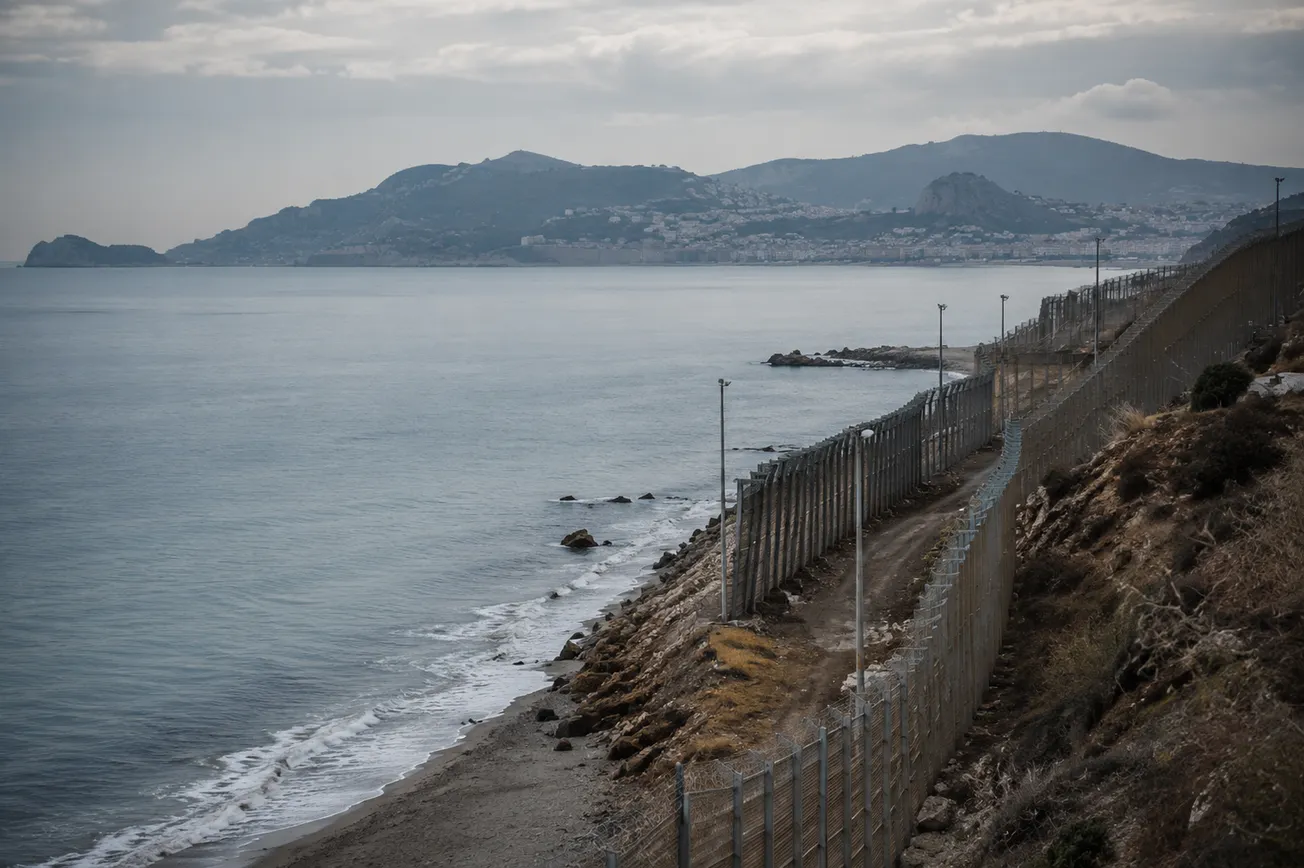
PARIS—Soon after it became clear that more than 70,000 Moroccans were attempting to cross into the Spanish enclave of Ceuta—many by swimming across the narrow stretch of water separating it from Morocco—22 European Union member states called on European Commission President Ursula von der Leyen to convene an emergency meeting of the bloc’s interior ministers. But before the meeting could even take place, Italy announced that it was temporarily suspending visa-free travel from Spain and reintroducing border controls.
The irrationality of this reaction reveals the extent to which the migration crisis is eroding European unity. Over the past decade, it has fueled the rise of far-right movements that have learned to exploit anti-immigrant sentiment for political gain, while also undermining trust among European governments whenever one of them comes under pressure.
Italian Prime Minister Giorgia Meloni, increasingly worried about her diminishing electoral prospects, has led the charge against Spain, imposing border controls rather than showing solidarity with a fellow European government. More dispiriting still was the public backing she received from Danish Prime Minister Mette Frederiksen, given Spain’s support for Denmark in the face of US President Donald Trump’s threats to take over Greenland.
The contrast with 2021, when 8,000 people attempted to cross the same border, is striking. Back then, the EU responded quickly and decisively, affirming that the problem concerned the bloc as a whole. In recent weeks, by contrast, several European governments have come close to blaming Spain for a crisis it did not create. Meanwhile, von der Leyen has avoided taking a clear position, preferring to stay out of the line of fire.
The question, then, is not how so many migrants managed to converge on the border at the same time, but what caused the crisis in the first place. As in most crises, the answer lies in three overlapping sets of immediate, contingent, and structural factors.
The most immediate cause was a recent ruling by Spain’s Supreme Court involving a migrant who had attempted to reach Ceuta by swimming, only to be returned to Morocco after being intercepted by Spanish police. The Court held that crossing a border by sea was not legally equivalent to crossing it by land, which entails a deliberate act of overcoming a physical barrier.
One could endlessly debate the merits of this legal distinction. But the crucial point is that the Court did not rule that migrants attempting to reach Ceuta by swimming were entitled to enter Spanish territory. It simply held that a person arriving by sea could not be sent back immediately and automatically.
The View from Morocco: The Ceuta Crisis Is About More Than Migration – Moha Ennaji, Project Syndicate
Prospective migrants, of course, did not dwell on such legal nuances. Word spread quickly on social media that crossing by sea would no longer lead to immediate expulsion. That small legal opening was enough to encourage many desperate people to try their luck. At the same time, Europe’s far-right parties seized on the ruling to renew their attacks on the rule of law and demand draconian measures unconstrained by legal safeguards.
One can hardly blame migrants for failing to grasp the finer points of Spanish law when European leaders appear even more confused. Ceuta and Melilla are within the Schengen (visa-free-travel) area, but only for Europeans. In other words, entering either enclave does not give a Moroccan the right to travel elsewhere in Europe. Yet that did not stop Italy from announcing its temporary border restrictions.
Then there are the contingent factors, beginning with the initial passivity of authorities on both sides. In 2024, a social-media campaign encouraging a mass crossing circulated on TikTok, with one video alone receiving more than 500,000 views.Moroccan authorities reacted swiftly, removing more than 4,500 people from the border.
This time, despite the far larger number of migrants involved, Moroccan authorities failed to prevent tens of thousands from crossing. Whether that was the result of negligence, security forces being preoccupied with Morocco’s Throne Day celebrations, or a hybrid attack can only be determined by an investigation. Morocco had a lot to lose in masterminding such an operation, but some Spanish commentators have their doubts about its innocence.
To be sure, the failure was not Morocco’s alone. Spain’s security services have considerable experience monitoring attempted border crossings at Ceuta and Melilla. How did they not anticipate such a large mobilization and alert officials in Madrid?
The possibility of political sabotage cannot be dismissed. Prime Minister Pedro Sánchez is under pressure on three fronts: in Spain, where the right has every incentive to weaken his government; in Europe, where the right is using this crisis to undermine one of the continent’s few remaining left-leaning governments; and in the US, where President Donald Trump wants both to weaken Sánchez, whose policies he dislikes, and show that public anger over migration is a serious issue that Europeans are incapable of resolving. Whatever happened on the Spanish side, and whoever bears responsibility, there is little doubt that the principal beneficiary of the crisis is the anti-immigration Vox party.
The third factor is structural. Too many young Moroccans see few opportunities at home, causing them to look abroad for a better future. Nearly 1.5 million Moroccans between the ages of 14 and 24 are not in school, training, or employment. In a country of more than 38 million people, only about 2.2 million workers are covered by the social-security system.
Compounding the frustration, educational attainment has risen markedly, but job creation has failed to keep pace. Educated young Moroccans naturally expect jobs that match their qualifications and greater access to economic opportunities. GDP per capita in Ceuta, despite being the second-lowest in Spain, is more than five times that of Morocco. Only sustained cross-border development can change this bleak picture.
For Europe, the Ceuta crisis is particularly alarming because it reveals how quickly European solidarity collapses when migration pressures collide with leaders’ short-term electoral interests. With elections looming in France, Italy, and Spain, the temptation to counter the far right by adopting increasingly hardline positions on immigration will only grow, pushing governments toward security-driven responses to a problem that cannot be reduced to border control alone. For now, at least, Europe’s far right has every reason to be pleased.
Zaki Laïdi is a professor at Sciences Po and the co-author (with Yves Tiberghien) of The Hedgers: How The Global South Navigates the Sino-American Competition (Cambridge University Press, 2026).
Loved it, hated it, or somewhere in between — tell us. Grade this article here and help shape what lands in your inbox next.
Copyright Project Syndicate
🧭 Power & Capital · August 14, 2026
Where state power meets the boardroom.
🔷 Why Is Washington Demanding EU Deliver On Trade Commitments – Power & Capital Desk, TIPP Insights
🌍 Global Affairs
The world's flashpoints, in motion.
🟥 Polish Authorities Arrest Suspect In Alleged Russian Killing Plot – TIPP News
🟥 France Court Says Under-15 Social Media Ban Violates Free Speech – TIPP News
🟥 What Is Driving The Oil Spill Spreading Off Oman – TIPP News
🟥 Watch: Heavy Flooding In Japan Kills Four – TIPP Video
🟥 Watch: France Evacuates Hundreds Due To Wildfires – TIPP Video
🟥 Watch: Mt Etna's Eruption Disrupts Air Travel Over Sicily – TIPP Video
🏛️ National Affairs
The fights shaping America right now.
🟫 Luigi Mangione Faces Life Sentence After Federal Guilty Plea – TIPP News
🟫 Trump Seeks Supreme Court Approval To Continue Ballroom Construction – TIPP News
🟫 Who Could Replace Karoline Leavitt As Trump’s Press Secretary – TIPP News
🟫 Spanberger Fiddles While Virginia Burns – Joe Thomas, The Daily Signal
🟫 AOC Laughs Off The ‘Woke 1’ Era. The Damage Was No Joke. – Jarrett Stepman, The Daily Signal
🟫 The WNBA’s Obsession With ‘White Privilege’ – Victor Davis Hanson, The Daily Signal
🟫 Arizona Schools Build Fields Of Taxpayer Nightmares, But There Is A Solution – Matthew Ladner, The Daily Signal
🟫 Are Nonprofit Hospitals Betraying Their Mission? – Trent England, The Daily Signal
🟫 The Real Reason Women Freeze Their Eggs – Katrina Trinko, The Daily Signal
📈 Economy
Prices, policy, and the pressure on your wallet.
🟩 US Retail Sales Post Biggest Monthly Decline Since May 2025 – TIPP News
🟩 U.S. Threats Against Iran Push Treasury Yields Higher – TIPP News
🟩 AI Investment Boom Comes With Rising Borrowing And Leverage – TIPP News
🟩 The American Engine Revs – Lawrence Kudlow, Fox Business
Letters to the editor email: editor-tippinsights@technometrica.com
Subscribe Today And Make A Difference. Consider supporting Independent Journalism by upgrading to a paid subscription or making a donation. Your support helps tippinsights thrive as a reader-supported publication. Contact us to discuss your research or polling needs.
Reach our audience. For sponsorship and advertising opportunities, visit our Partner With Us page.