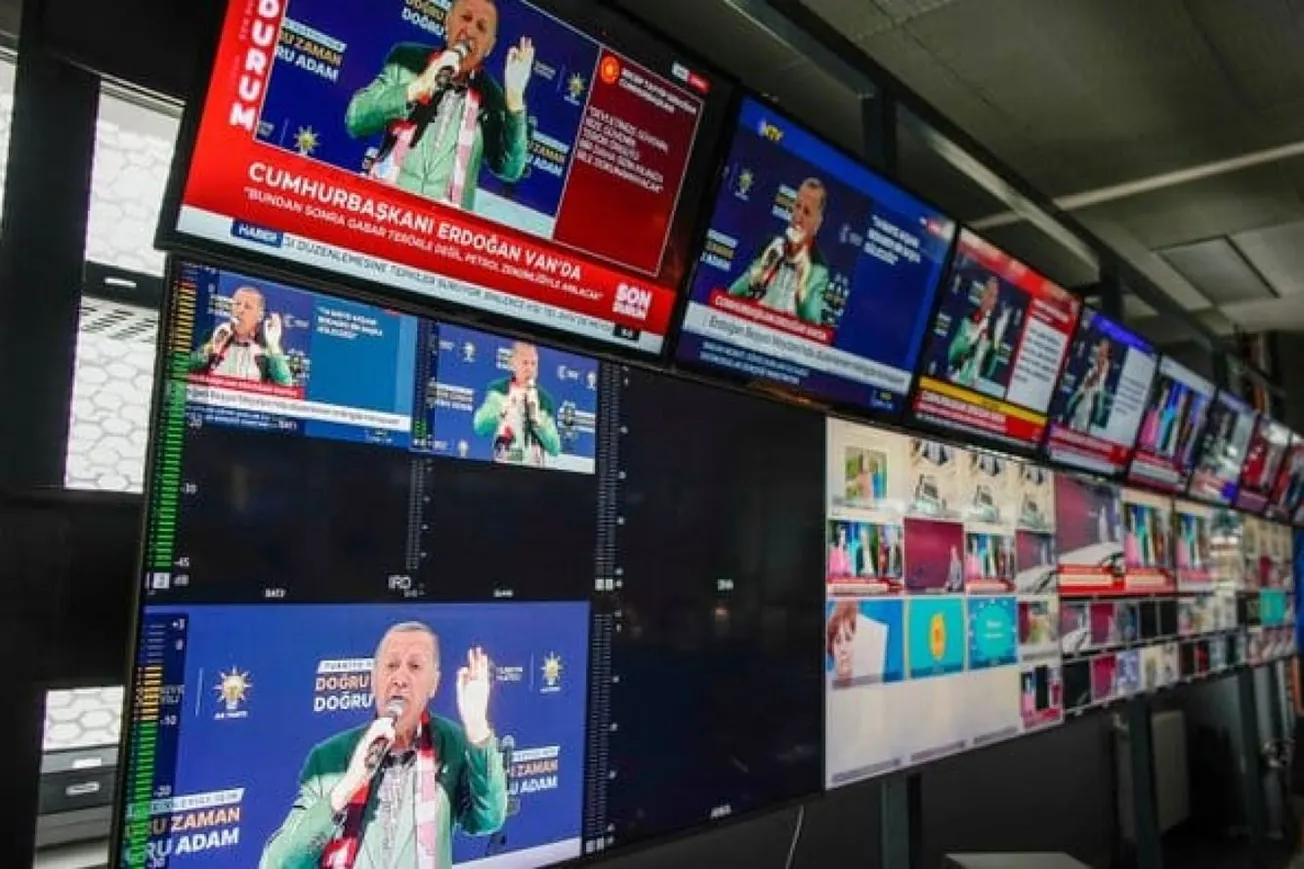
Early this morning, a federal judge in Washington, D.C., ruled against President Trump and issued a temporary restraining order that should immediately restore press credentials to employees of three previously banned outlets: CNN, MS NOW, and Politico.
CNN, MS NOW, and Politico had brought the case against the White House. Minutes after the decision, the leftist media took a victory lap, gloating that they are for the First Amendment. In their telling, Trump, the authoritarian president and foe of the free press who wants to control media coverage to be in his favor, lost.
We look at the whole case a little differently.
The fact that the story dominated media coverage for nearly a week, without the ban being put on hold as soon as it took effect, was notable. Even after the three outlets filed suit on Monday, the judge did not rule right away, although he appeared skeptical of the White House position at Wednesday's hearing. He took his time, then ruled against the administration shortly after midnight. So maybe the federal judiciary has become a little more mindful about being overturned by an appeals court, because the administration had cited national security in court to defend the ban.
On a fundamental level, even reporters at the most liberal of news organizations have conceded that Trump is more accessible to the press than his predecessor. This truth conflicts with the narrative that Trump is somehow an enemy of the media. Trump's coverage has been almost universally negative for the 11 years he has been known to the world as a politician.
The negative criticism hasn't stopped Trump from interacting with a hostile media. He speaks to reporters at every turn: on the White House lawn before boarding Marine One, then at Joint Base Andrews before boarding Air Force One, on Air Force One, and when he lands at his destination on the tarmac. This cycle repeats during his return trip as well, if any reporter has the energy to keep up.
Trump will fight with a media personality publicly and then pick up the phone soon afterward to offer an exclusive. This has happened with Jonathan Karl of ABC News and Kristen Welker of NBC News this year alone.
"One of the fakest things in the world is Donald Trump's attack on fake news," Karl told The Hill in April 2020, during Trump's first term. "Donald Trump actually does a lot to court reporters. … [Trump] is certainly a consumer of news beyond any president that I've ever witnessed. He uses his DVR to watch all of the networks, to watch the cable networks, even those he professes to hate and to not watch."
The contrast with the previous occupant, Joe Biden, or even, for a few months, Vice President Kamala Harris, when she was the Democratic Party nominee, cannot be clearer. Both of those leaders would appear before the media only in staged settings and depend on handlers to whisk away any reporter who began to trouble them.
For one long week, Trump tested a couple of important theories. He often brags that the leftist news media would evaporate once he exits the scene, because there would be nothing for them to talk about. And so it happened: many news organizations, which had collectively announced that they would stop providing pool coverage of Trump, still covered him when Trump attended the United Nations General Assembly earlier this week. When Trump arrived at the UN, he pointedly looked at Kaitlan Collins of CNN and teased her that she ought not be covering him, but she was anyway.
They covered the Trump-Mamdani press conference, proving his point that the media could not walk away from a juicy story where two political heavyweights appear at the microphone. In fact, if Mamdani feels flattered by this extraordinary press conference, he would be well advised to know he may have been a pawn in Trump's thinking.
The second theory, which he probably had in mind and which will play out during the next weeks before the midterms, is one of reach. Trump knows the November results depend on the independent vote, which, according to political polls, is fading from Trump's column. Unless these independents follow Trump's fake-news critiques at his campaign rallies, any wavering independents may not be fully caught up on his latest complaints about media bias.
And there is significant media bias. We have run multiple columns in the last couple of weeks showing that while there are problems with the economy, the fundamentals are relatively strong. The August CPI, which forced the Federal Reserve to increase short-term interest rates, was only 0.4 percentage points higher than when Trump took office, at 3.4%. Under Biden, the CPI peaked at 9.1% less than five months before the November 2022 midterms. Not one media outlet will report this valuable truth to provide context.
If you follow the three media outlets at the center of the case, you would conclude that America is truly on the edge of economic and geopolitical collapse. However, the markets have ignored all their back-to-back negative stories and kept climbing. The tech-heavy Nasdaq reached a record this week. Despite AI-related job losses and the cataclysmic doomsday scenarios raised by many tech leaders, investors are pouring money into AI companies. Unemployment, at about 4.1%, indicates a relatively healthy economy.
The joint handshake between Trump and the prime ministers of Greenland and Denmark on the sidelines of the UN General Assembly showed how Trump used his out-of-the-box tricks to get what he wanted: an agreement without an end date, where America can pretty much do whatever it wants to do in Greenland, which was his goal from the beginning. But the left pounded him on how Trump did not achieve what he said he wanted, which is a complete takeover of Greenland.
Even if Trump convinced 20% of the independents who have broken away from him this season to pause and evaluate his actions, that would be a huge political victory. Trump could never have appealed to the wavering vote by any other means. He drummed up enough coverage about media bias to get his point across.
So did Trump lose in court?
Of course he did. This outcome was entirely expected. No judge can resist the temptation to rule in favor of the press. Besides, Trump had lost to Jim Acosta of CNN in 2018 in a similar battle. The same federal judge, Timothy Kelly, then issued a temporary restraining order against the White House. Trump let the matter drop and did not appeal. Expect the same reaction from the White House this time too.
But Trump did win in the court of public opinion, which was his goal all along.
Loved it, hated it, or somewhere in between — tell us. Grade this article here and help shape what lands in your inbox next.
🧭 Power & Capital · September 24, 2026
Where state power meets the boardroom.
🔷 China Signals Trade Truce Extension After First AI Talks With US – Power & Capital Desk, TIPP Insights
🔷 Mystery Shipment Raises Questions Over F-35 Components In Hong Kong – Power & Capital Desk, TIPP Insights
🌍 Global Affairs
The world's flashpoints, in motion.
🟥 Trump Gives Xi Red-Carpet Welcome Ahead Of High-Stakes Talks – TIPP News
🟥 Xi Announces Panda Gift And Youth Exchange During US Visit – TIPP News
🟥 Watch: UK-Bound Migrants Attempt English Channel Crossing From Northern France – TIPP Video
🟥 Watch: Colombia Orders Security Crackdown, Troop Deployment In Santa Marta – TIPP Video
🟥 Watch: New Regulations Restrict Junk Food In Indian Schools Amid Obesity Concerns – TIPP Video
🏛️ National Affairs
The fights shaping America right now.
🟫 Judge Orders White House To Restore Media Access For CNN, MS NOW And Politico – TIPP News
🟫 Feds Report 160 Election Fraud Arrests As Thousands Of New Leads Pour In – Fred Lucas, The Daily Signal
🟫 Jack Smith Deputy Reveals New Details On Seizure Of Rep. Scott Perry’s Phone – Fred Lucas, The Daily Signal
🟫 Vance Wants Senate To Pass Anti-Fraud Legislation, He Tells Daily Signal – Elizabeth Troutman Mitchell, The Daily Signal
🟫 Select China Committee Begs Trump To Pressure Xi Jinping To Release Religious Worshippers – Pedro Rodriguez, The Daily Signal
🟫 China Panel Chair Plans Call With Rubio To Urge Release Of Christian Worshippers And American Citizens – Pedro Rodriguez, The Daily Signal
🟫 FDA Nominee Defends Vaccine Safety During Senate Hearing – TIPP News
🟫 Meat Sold With False USDA Inspection Mark Recalled Across US – TIPP News
🟫 Putting Law Schools Back On Track – Jonathan Butcher & Madison Marino Doan, The Daily Signal
📈 Economy
Prices, policy, and the pressure on your wallet.
🟩 Is Trump Getting The George H.W. Bush Treatment On The Economy? – Editorial Board, Issues & Insights
🟩 Global Bond Rout Raises Borrowing Costs For Governments And Consumers – TIPP News
🟩 What Does A 7% Mortgage Rate Mean For US Homebuyers – TIPP News
🟩 Federal Reserve Chair Treats Inflation With Quack ‘Cure’ – Deroy Murdock, The Daily Signal
🟩 The Climate Emergency And The Problem Of Economic Knowledge – Luc Lelièvre, Mises Wire
🟩 The Politics Of Faking Success – Connor O’Keeffe, Mises Wire
💼 Markets & Business
The deals and tickers making moves.
🟧 Watch: OpenAI Chief Warns UN Of AI's Potential For Major Disruption Or Progress – TIPP Video
🟧 Meta Expands Muse AI Across Glasses, Computers And Smart Devices – TIPP News
Letters to the editor email: editor-tippinsights@technometrica.com
Subscribe Today And Make A Difference. Consider supporting Independent Journalism by upgrading to a paid subscription or making a donation. Your support helps tippinsights thrive as a reader-supported publication. Contact us to discuss your research or polling needs.
Reach our audience. For sponsorship and advertising opportunities, visit our Partner With Us page.