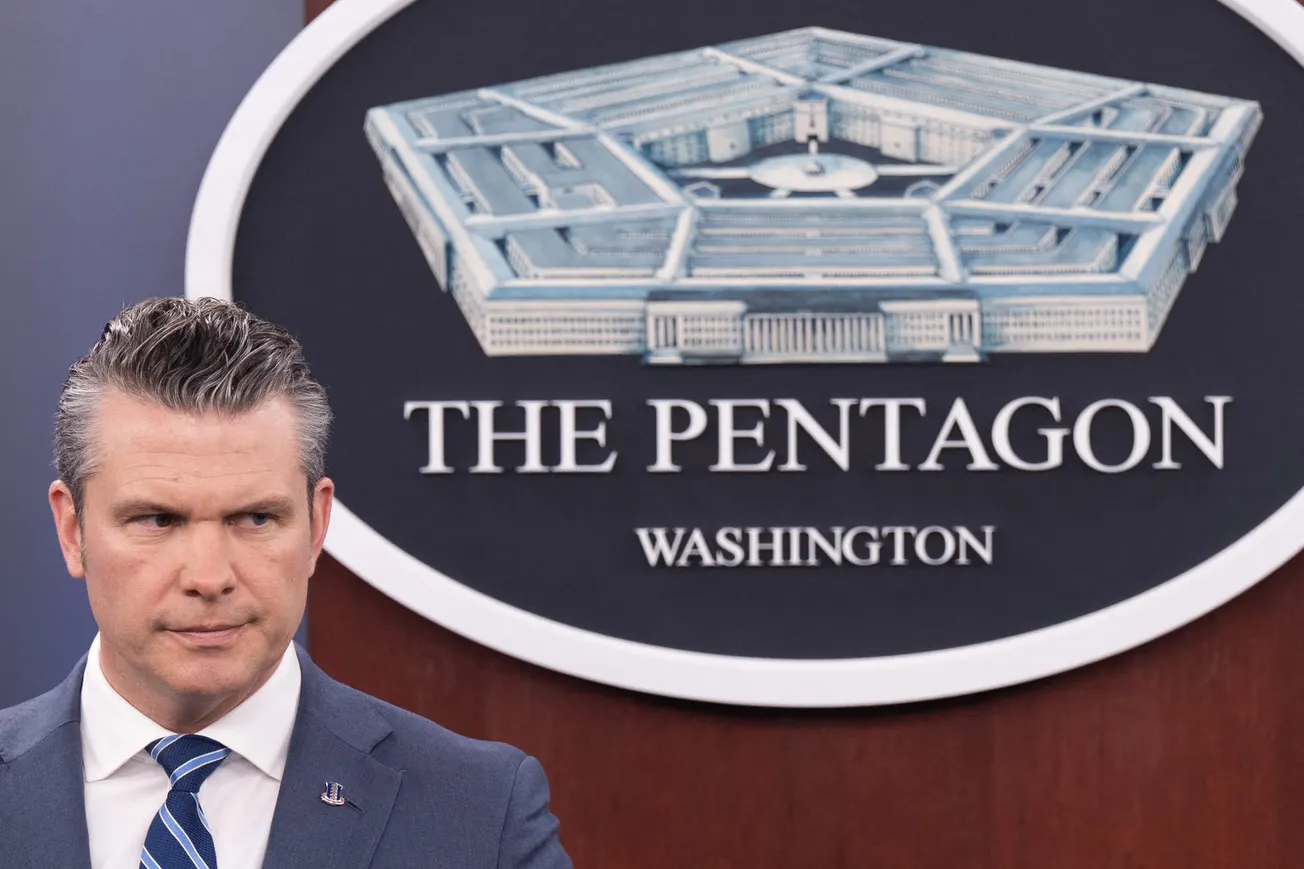
When President Trump nominated Pete Hegseth as the Secretary of Defense, we concluded that his unconventional choice could offer significant promise for a department in crisis.
During the Biden administration, in 2022 and 2023, the military faced a serious recruiting crisis. At the same time, large-scale weapons transfers abroad raised concerns about readiness and long-term stockpiles.
Under Lloyd Austin, Biden's SecDef, the Pentagon had become too bureaucratic and woke, especially in Diversity, Equity, and Inclusion. The feeling in the heartland was that promotions and appointments mattered less on qualifications and more on identity. Hegseth has focused on this issue with intensity.
Early figures indicate that the Trump administration has made notable strides across several branches. Hegseth deserves credit for this turnaround, a result directly traceable to his battlefield experience.
Unlike a political appointee or someone from Congress, Hegseth is a combat veteran who served in the Army National Guard for over a decade, including deployments to Guantanamo Bay, Iraq, and Afghanistan. He was awarded the Combat Infantryman Badge, which is not ceremonial and requires actual engagement under hostile fire.
Hegseth is also comfortable in front of a TV camera, a talent that President Trump covets in his staff. As a Fox News anchor for over 9 years, Hegseth communicates with unusual directness for a cabinet secretary, sometimes as if he were approaching a commercial break and had to get his message across quickly.
However, Hegseth would do well to dial back his rhetoric toward journalists. We like Hegseth, but we also value the role of the Fourth Estate.
Late last week, Pete Hegseth stood before the press corps and drew a sharp comparison between journalists and the Pharisees in the New Testament. The remark was striking, not just for its tone but for what it suggested about the relationship between government and the press. At times, it felt less like a Pentagon briefing and more like a Sunday sermon.
In any democracy, that relationship is inherently uneasy. Public officials seek to present their policies in the best possible light, while journalists are expected to ask difficult questions. That tension is not a flaw in the system; it is part of how accountability works.
When criticism is framed as disloyalty, however, the line between supporting the country and questioning its leaders can begin to blur. That is a line worth keeping clear, especially in moments of national stress.
In the Gospel narrative, the Pharisees represented the religious establishment and institutional authority. They exercised influence over doctrine, over the temple, and over who was included or excluded. When they scrutinized Jesus, they did so from a position of recognized power.
As Secretary of Defense, Hegseth oversees the most powerful military apparatus in the world. When religious language is used to characterize the press, it risks framing legitimate scrutiny as something closer to opposition than accountability.
In a modern democracy, the press does not exercise governing power. Its role is to question, to test, and to inform. That function is not opposition to the state, but a necessary part of ensuring that power remains accountable.
The tension between support and scrutiny is not new, and it is not unique to any one administration.
We have been here before, but only in other countries. Saddam Hussein had the Fedayeen parade through Baghdad. The Soviet state had Pravda, which, with magnificent irony, means "Truth." Wrap the armed forces in glory and make any criticism of military policy indistinguishable from betrayal of the troops themselves. Then declare anyone who questions it an enemy of the nation.
Hegseth emphasized what he described as “historic recruiting numbers” and battlefield successes. He also voiced frustration with coverage he considers persistently negative. At times, his remarks suggested an expectation that these developments should be more prominently reflected in reporting.
The American military is funded, in the only sense that matters in a democracy, by the American taxpayer. Every dollar that supports a carrier strike group, pays a recruit’s salary, or funds a weapons program, a base, or a fuel contract comes from the public. The men and women in uniform serve the Constitution, not the narrative preferences of any particular administration.
For these reasons, Americans continue to support and take pride in their military, regardless of who serves as Secretary of Defense. Anyone who has spent a Saturday watching the Blue Angels with their family can see that firsthand.
Our military personnel deserve honest press coverage precisely because their lives are at stake. A press corps that simply echoes every military announcement cannot independently assess outcomes or ask whether a blockade is working, whether a negotiating strategy has a realistic chance, or whether initiatives are delivering meaningful results.
The public has not only a right but a genuine need to know when military operations fall short, when procurement is inefficient, when strategy needs rethinking, when civilian harm occurs, and whether those who serve are treated properly during and after their service.
President Donald Trump has often had a contentious relationship with the media, yet he demonstrated that it is possible to take a message directly to the public without relying on favorable coverage.
Hegseth may find that approach more effective.
The press corps isn't the Pharisees. It is the one institution whose job is to ensure the men and women in uniform receive honest coverage, especially when their lives are on the line.
Panama Canal Prices Surge To Record High
Auction prices to transit the Panama Canal have hit a record high driven by Asian buyers looking for alternative routes and supplies amid the global turmoil caused by the Iran war.
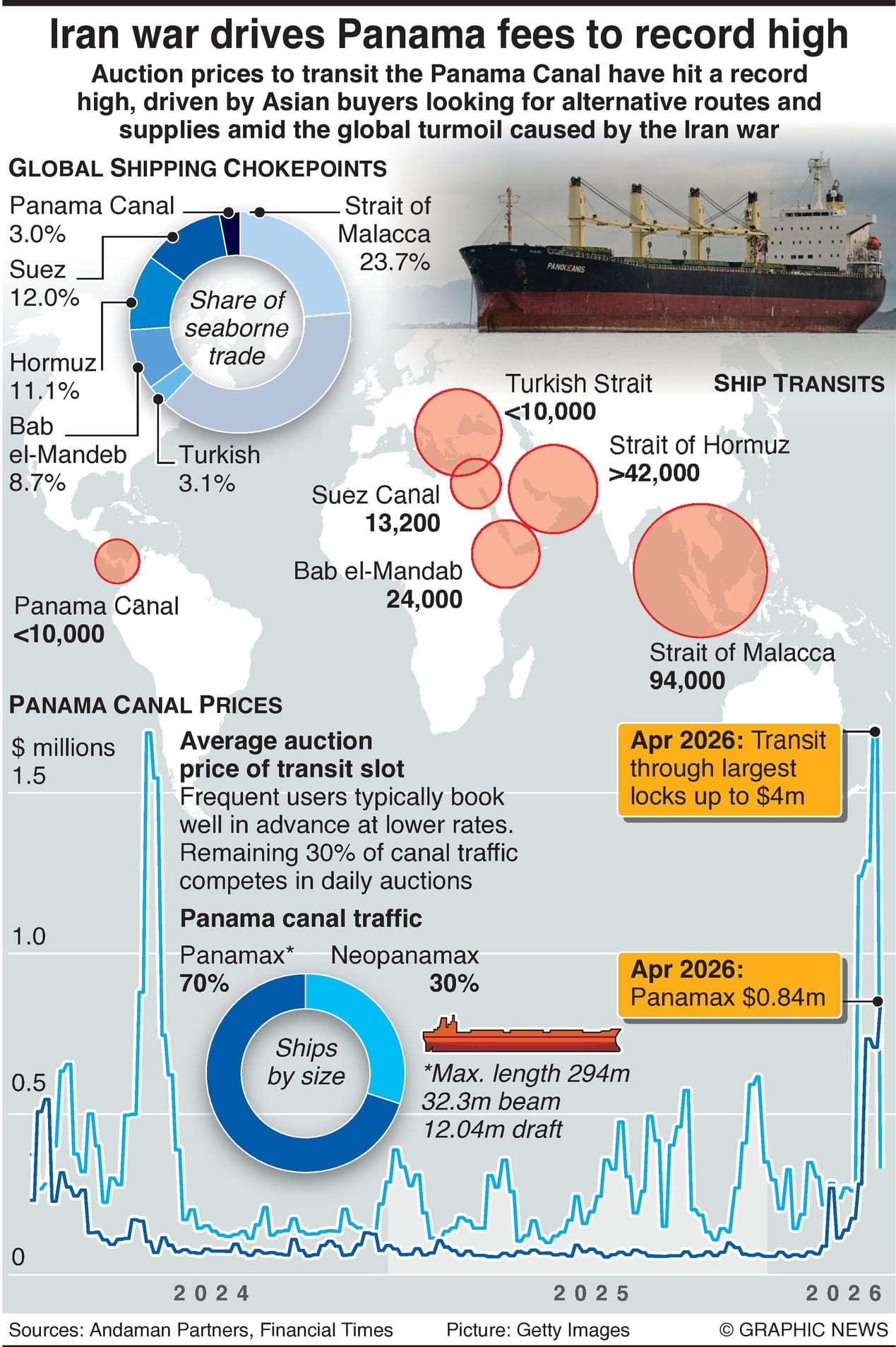
The Panama Canal connects the Pacific and Caribbean Oceans to the Atlantic Ocean and is one of six major chokepoints for global maritime trade. The others are the Strait of Malacca linking the Pacific and Indian Oceans, the Strait of Hormuz linking the Persian Gulf to the Arabian Sea and on to the Indian Ocean, Bab el-Mandeb connecting the Red Sea to the Indian Ocean, the Suez Canal linking the Red Sea to the Mediterranean, and the Turkish Strait between the Black Sea and the Mediterranean. Together they account for almost 70% of global seaborne trade.
The closure of the Strait of Hormuz has disrupted global shipping and left Asian buyers, in particular, suffering from the resulting decline in energy supplies, and many are now turning to U.S. Gulf producers. As the shortest route between the U.S. Gulf and Asia, oil and gas tanker traffic through the canal has surged, with wait times reaching 4.25 days. Cargo diversions and rising freight costs are only adding to their woes.
While frequent users of the Panama Canal typically book transit slots well in advance at lower rates, the remaining 30% of canal traffic competes in daily auctions, driving the spot price up as demand rises. Prices at the largest locks for Neopanamax-size vessels reached $4 million in April.
Measures Being Taken By Global Airlines To Cut Costs
Global air carriers are having to implement cost-cutting measures amid severely elevated jet fuel prices in the wake of the ongoing war between the United States and Iran.
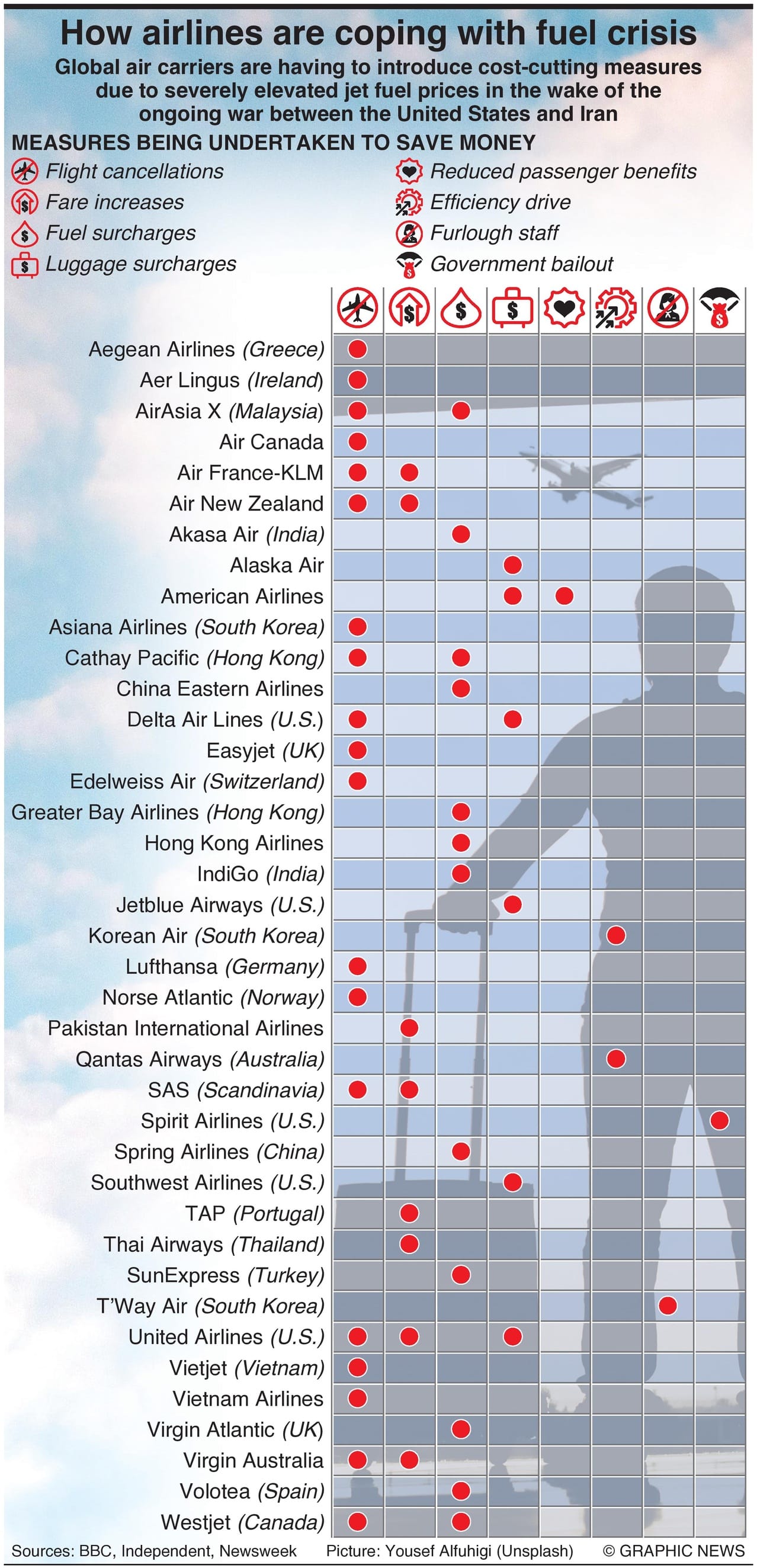
Lufthansa is canceling 20,000 short-haul European flights this summer, citing soaring fuel costs that have rendered the routes unprofitable.
Jet fuel prices have doubled following supply and transport disruptions caused by the U.S.-Israel conflict with Iran. The crisis is rippling across the wider aviation sector, with carriers worldwide trimming schedules and hiking fares to offset costs.
Industry analysts warn passengers to brace for further cancellations and surging ticket prices as the Middle East conflict continues.
The stories and data that matter today — selected by the TIPP Insights editorial team.
Hormuz Tensions Rise Despite Ceasefire Extension
Hormuz Crisis: Trump Orders Navy To Target Mine-Laying Boats
US Boards Iran-Linked Tanker In Escalating Standoff
What Is Driving The US-Iran Naval Standoff
Strait Disruptions Push Asia Toward Russian Crude
Oil Exporters Seek Routes Beyond Hormuz Blockade
What China’s New Climate Rules Mean For Industry
Concerns Rising Over Anthropic’s Mythos AI Tool
Immigration Hits Record High In EU
Why American Airlines Opposes United Merger
Trump Administration Moves To Reclassify Cannabis
Warner Bros. Discovery Shareholders Back Paramount Deal
AI Fuels Rise In Crypto Fraud Cases
DOJ Faces Audit Over Epstein Files Disclosure
What Microsoft’s Buyout Plan Means For Employees
Letters to the editor email: editor-tippinsights@technometrica.com
Subscribe Today And Make A Difference. Consider supporting Independent Journalism by upgrading to a paid subscription or making a donation. Your support helps tippinsights thrive as a reader-supported publication. Contact us to discuss your research or polling needs.
Reach our audience. For sponsorship and advertising opportunities, visit our Partner With Us page.