By Helmut K. Anheier, Project Syndicate
For too long, Germany’s political and corporate elite coasted on the country’s postwar economic and political success story, avoiding difficult but necessary reforms that could have kept extremist populist parties at bay. Now that the barbarians are at the gates, mainstream elites must rethink everything.
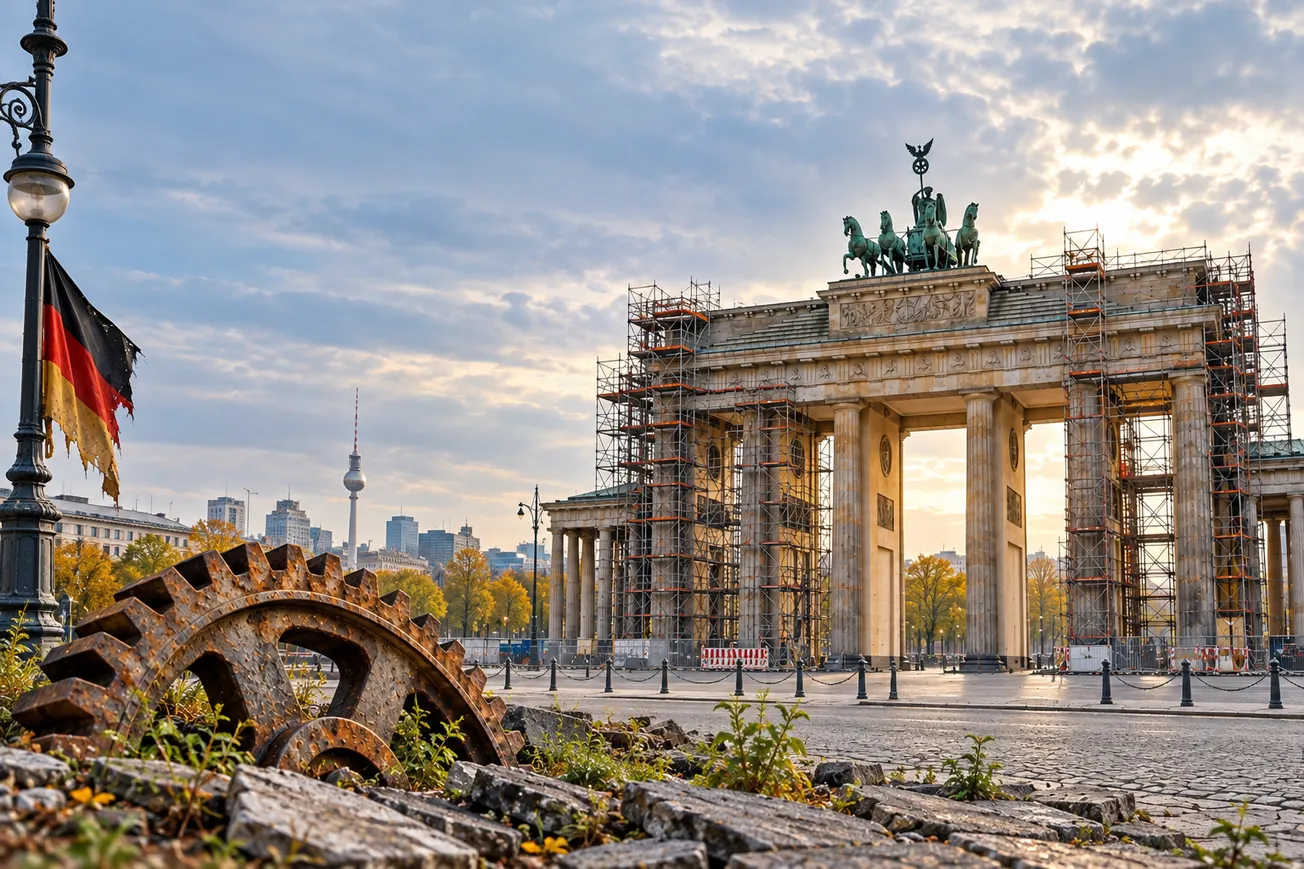
BERLIN—Not so long ago, Germany seemed like it could do no wrong, thanks to its strong economy, excellent infrastructure, and stable political system. Yet now it seems as though Germany can do nothing right. With a sluggish economy and crumbling infrastructure, it is falling behind technologically and succumbing to extremist political parties.
Five factors explain this deep malaise, and all stem from leadership failures. On the economic front, the dynamics that carried the country through the 2008 financial crisis were sacrificed to political complacency. Angela Merkel’s long chancellorship brought no major social and economic reforms, and Olaf Scholz’s attempted reforms were ultimately held back by a dysfunctional coalition government. Now, his successor, Friedrich Merz, is in no better position.
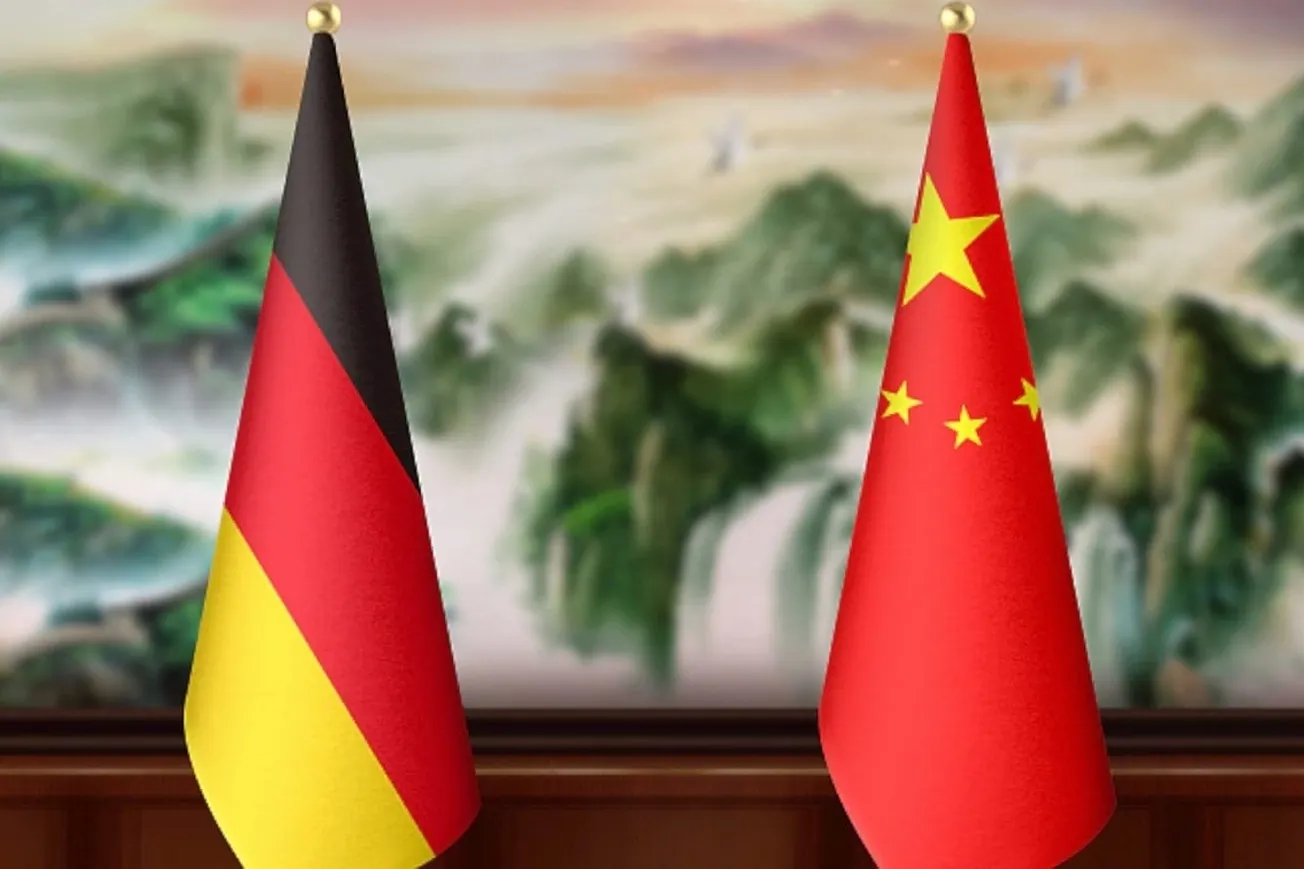
At the same time, Germany’s export-obsessed corporations largely ignored all the opportunities offered by the European single market. Rather than focusing on building economic capacity in Europe, German corporate and political leaders were seduced by the scale of the Chinese export market and by cheap imported energy from Russia. But all that collapsed in 2022 when Russia’s full-scale invasion of Ukraine upended Germany’s naive geoeconomic posture, and the damage has been compounded by US President Donald Trump’s tariffs and war of choice against Iran.
Accompanying these economic missteps were social ones. When hundreds of thousands of refugees and migrants from the Middle East and North Africa arrived in Europe more than a decade ago, Germany responded with the mantra “Wir schaffen das” (“We’ll manage it”), as it did when Ukrainians arrived four years ago. But while Germany has been welcoming to new arrivals, its mixed record of integrating them has left it fragmented, with what amount to parallel societies.
Worse, the population’s demand for robust social benefits ran headlong into the “debt brake” (a hard limit on deficits) that tightened public spending after 2009. As a result, resentments began to grow, especially among lower-income groups, and this trend fed into the kind of anti-immigrant sentiment that populists are always ready to exploit.
Another factor in the current malaise is elite failure. The western German elite, which is still mostly in charge even 35 years after unification, has failed to promote a greater eastern German presence in business and politics, creating an unhealthy political and cultural imbalance. Easterners feel estranged from the West, and Westerners resent having to fund transfers to the East. It is no surprise that the far-right Alternative für Deutschland (AfD) first gained significant electoral traction in the east.
On all these issues, mainstream political parties dropped the ball. The parties of the center (the Christian Democrats, the Social Democrats, the Greens, and the Free Democrats) have governed in various coalitions for nearly a quarter-century but consistently failed to pass major reforms since the labor-market reforms under Chancellor Gerhard Schröder in the early 2000s. They were so complacent that they missed and misread the political sentiments that enabled the success of the AfD, and now also Die Linke (Left Party).
When the AfD first became a serious political contender, the center parties tried to isolate it. And when that did not work, they erected a political firewall (Brandmauer) against cooperation with it. Some even entertained the idea of having the AfD declared unconstitutional. But this led to a political impasse, and the only parties making gains now are the AfD and Die Linke.
Culture is another (albeit more subtle) problem. Germany has no unifying narrative that is remotely equivalent to the American Dream or the French “La Grande Nation.” Even as it took in many more immigrants, its cohesion rested on nothing more than its postwar economic and social success.
Specifically, Germany is a polity held together by what political scientists call output legitimacy: the capacity to guarantee and deliver a high quality of life. This glue holds only under certain conditions—continued success. When the country is facing difficulties and fails to deliver over time, it cannot fall back on British perseverance, Dutch pragmatism, or American tenacity. Instead, there are only grievances and inertia.
To break Germany’s malaise requires four changes, none of them easy, and some of which may come close to political suicide in the interest of the greater good, as Schröder did when pushing through highly unpopular labor-market reforms. On the economic front, Germany must take the potential of the single market seriously and finally embrace the recommendations outlined in former Italian Prime Minister Mario Draghi’s report on European competitiveness. By redirecting its economic and industrial policy accordingly, Germany can assume a leading role in creating single markets for investment and capital and scaling up communication systems and all things digital, thus closing the innovation gap with the United States and China.
In terms of social policy, there is no way that current standards can be maintained. The situation demands a significant shift from consumption (cash payments to households) toward investment in education and health care, which requires a recalibration of the health-care and pension systems. Since many old privileges will have to go, this is the politically riskiest proposal. But given Germany’s demographic and economic projections, no party or coalition government can avoid such reforms.
The same goes for managing immigration, where the best way to integrate recent arrivals or their children is through upward mobility. Germany needs migrants, but it cannot afford to let them languish in low-wage sectors and parallel societies. Stronger achievement-based incentives in education and vocational training will be needed.
At the political level, the mainstream parties must regroup, perhaps by founding one or two new centrist parties. Since the current parties reflect the old Federal Republic, it is not surprising that they are struggling to adjust to a fundamentally changed world. Why not create a conservative party that appeals to moderate voters in both the East and the West? And why not do the same from the center-left? A new start could re-energize the political center in combating left- and right-wing populism.
Finally, Germany needs to reform its federal system. Given that many German states are too small and too financially weak to stand on their own, they should be consolidated, with the total count falling from 16 to around eight.
Fortunately, many of the solutions that Germany needs—from accelerating digitalization and integrating immigrants to building housing and making public agencies more efficient—can be adopted from other European countries. The longstanding obsession with homegrown methods must end. Europe needs a strong, stable Germany, and Germany itself needs a stable Europe.
Helmut K. Anheier, Professor of Sociology at the Hertie School in Berlin, is Adjunct Professor of Public Policy and Social Welfare at UCLA’s Luskin School of Public Affairs.
Loved it, hated it, or somewhere in between — tell us. Grade this article here and help shape what lands in your inbox next.
🧭 Power & Capital · October 16, 2026
Where state power meets the boardroom.
🔷 Tech Giants Donate $92 Million To Trump’s Planned White House Ballroom – Power & Capital Desk, TIPP Insights
🔷 US Imposes Fresh Iran-Related Sanctions On 16 Individuals And 10 Entities – Power & Capital Desk, TIPP Insights
🌍 Global Affairs
The world's flashpoints, in motion.
🟥 Canada Urges Citizens To Avoid All Travel To Saudi Arabia – TIPP News
🟥 Prince Harry And Meghan Receive Cheers During Joint UK Appearance – TIPP News
🏛️ National Affairs
The fights shaping America right now.
🟫 DOJ Sues California Over 20,000 Voters Allegedly Likely To Be Noncitizens – TIPP News
🟫 In One Type Of ‘Blockbuster’ Case, Supreme Court Weighs 1980s Video Privacy Law In Digital Age – Fred Lucas, The Daily Signal
🟫 Former US Gymnastics Coach Sentenced To 90 Years For Recording Children – TIPP News
🟫 Texas Lawmaker Asks Paxton To Investigate Trans Texas Text Campaign – Emily Medeiros, The Daily Signal
🟫 Catholic Bishop Rallies Voters To ‘Confront The Evil’ At Ballot Box – Robert B. Bluey, The Daily Signal
🟫 Documentary Claims Muslims Want America To Be Islamic State – Malia Loock, The Daily Signal
💼 Markets & Business
The deals and tickers making moves.
🟧 Apple And Meta Partner To Run Massive Muse AI Model On Mac Computers – TIPP News
🟧 Six Flags Closes 10 Rides After Fatal Georgia Rollercoaster Accident – TIPP News
🔬 Science & Tech
What's being discovered, built, and launched.
🟪 New Study Warns Doomsday Glacier Could Raise Sea Levels Twice As Much As Estimated – TIPP News
🟪 Strong El Niño Forecast To Bring Stormier Winter To Southern US – TIPP News
🟪 Neanderthal Skeleton Reveals Evidence Of Deadly Spear Attack 75,000 Years Ago – TIPP News
📊 Market Mood · October 16, 2026
How the trading day is setting up.
🟩 Stocks are stabilizing after a turbulent week. U.S. futures are edging higher as Asian and European markets recover from the technology selloff, although concerns about AI valuations persist.
🟧 AI's debt burden is becoming a major market concern. Heavy borrowing by data-center operators, particularly CoreWeave, is raising questions about the financial sustainability of the AI investment boom.
🟦 Treasury yields are easing as Fed rate-hike fears recede. The 10-year yield is around 5.08%, while Fed Chair Kevin Warsh's comments have helped reduce expectations for another rate increase this month.
🟨 Oil remains elevated despite Friday's pullback. Brent is trading around $105 a barrel, with renewed attacks near the Strait of Hormuz keeping Middle East supply risks and inflation concerns in focus.
🗓️ Key Economic Events
On today's U.S. data calendar.
🟧 8:30 a.m. ET — Import Price Index (September)
Forecast: +0.7% m/m | Previous: +0.7% m/m
Import prices are expected to rise again, offering another indication of inflation pressures following this week's hotter-than-expected CPI report.
🟧 9:15 a.m. ET — Industrial Production (September)
Forecast: +0.4% m/m | Previous: 0.0% m/m
Factory, mining and utility output is expected to rebound after August's flat reading, providing a fresh gauge of economic momentum.
🟧 9:15 a.m. ET — Capacity Utilization (September)
Forecast: 76.5% | Previous: 76.3%
A modest increase would suggest improving industrial activity, although utilization remains relatively subdued.
Letters to the editor email: editor-tippinsights@technometrica.com
Subscribe Today And Make A Difference. Consider supporting Independent Journalism by upgrading to a paid subscription or making a donation. Your support helps tippinsights thrive as a reader-supported publication. Contact us to discuss your research or polling needs.
Reach our audience. For sponsorship and advertising opportunities, visit our Partner With Us page.