By Koichi Hamada, Project Syndicate
In 2012, when Japan was dealing with chronic deflation, policymakers were right to embrace monetary easing, including lower interest rates. Today, however, Japan faces the opposite problem: a weak yen, combined with higher interest rates in the US, calls for a much tighter monetary policy.
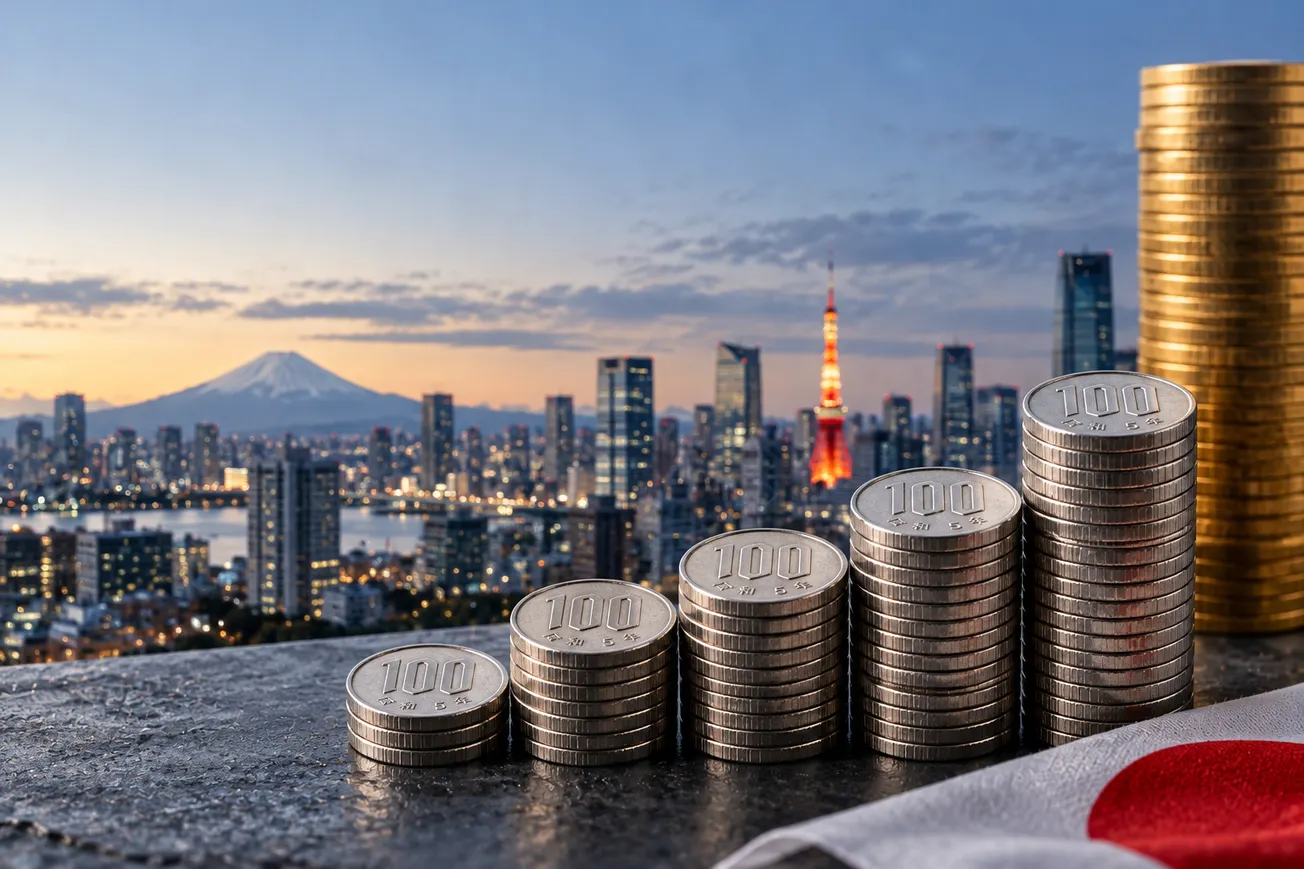
NEW HAVEN—On a recent visit to Sapporo, the city on Japan’s northern island where my parents came from, my wife and I found gentle people, mild autumn days, and excellent food. As tourists who live and work in the United States, we also enjoyed very low prices: lunch at a high-quality restaurant cost only about $20 per person. While that was convenient for us, like so many other tourists who have headed to Japan to take advantage of favorable exchange rates, the cheap yen (yen yasu) has been hard on Japan’s economy.
To understand the pressure Japan is under, it is worth looking at the purchasing-power-parity equilibrium exchange rate—the rate at which a representative basket of goods and services would cost the same across two countries. This month, the OECD reports a PPP equilibrium exchange rate between Japan and the United States of around 93 yen per dollar. That is a far cry from the actual yen-dollar exchange rate, which has been hovering in the 150–160 range.
This means that goods produced in Japan cost much less than goods produced in the US. As a result, Japanese exporters enjoy high demand and strong profit margins, but importers are under severe pressure. The weak yen also hurts Japanese consumers, as it creates strong incentives to raise prices: With imported goods more expensive, domestic producers know that their output will find buyers, and importers might pass their mounting costs on to buyers.
Japan used to have the opposite problem. In the early 1980s, it was a dominant economy experiencing strong growth. But the 1985 Plaza Accord, under which major economies agreed to take coordinated action to strengthen their currencies vis-à-vis the US dollar, changed everything. After the accord was implemented, the PPP exchange rate was higher than the actual exchange rate, reaching almost double in 1995.
The strong yen (yen daka) persisted for decades, contributing to chronic deflation and stagnant growth. During this period, a visit to Tokyo strained tourists’ pocketbooks, Japanese goods found few customers abroad, and Japan’s once-formidable industries struggled. The situation deteriorated further around the 2008 global economic crisis, when the US embraced monetary easing.
In the decades after the Plaza Accord, Bank of Japan (BOJ) governors (with the possible exception of Toshihiko Fukui) consistently failed to loosen monetary policy in line with changing economic conditions. Deflationary pressures intensified.
After returning to power in 2012, Prime Minister Abe Shinzō sought to turn things around with an economic-reform package (I served as an adviser), which came to be known as Abenomics. This package included a recommendation for monetary expansion, which then-BOJ Governor Haruhiko Kuroda embraced.
Now, conditions have changed. After the COVID-19 pandemic, the US experienced a surge in inflation, which forced the US Federal Reserve to abandon monetary expansion and raise interest rates. As the dollar strengthened, and the US-Japan interest-rate differential widened, the yen depreciated in value, and deflationary forces gave way to inflationary pressures.
When circumstances change, so, too, must policy. For the BOJ today, this means pursuing monetary tightening in order to reduce the domestic money supply, and raising the interest rate.
To some extent, Japanese policymakers seem to recognize this. After keeping the short-term interest rate around 1% for some time, the BOJ raised its policy rate to 1.25% last month. This is high for Japan (the highest in 31 years, to be precise). But with the US short-term money market pushing the interest rate close to 4%, and more US rate hikes likely, it is not nearly enough. Speculators continue to exploit the interest-rate differential via the so-called carry trade (borrowing cheaply in yen to invest in higher-yielding assets abroad).
Under the gold standard or a fixed exchange rate, if a major country pursued monetary expansion, another, weaker country might need to reduce its money supply and raise its interest rate. Under a flexible exchange-rate regime, however, an expansion in one country should be met with a (moderate) expansion in another, just as tightening should be met with tightening.
We know that US Treasury Secretary Scott Bessent and Japanese Finance Minister Katayama Satsuki are communicating about fiscal and monetary matters. Ultimately, however, monetary policy must be pursued autonomously, with BOJ Governor Kazuo Ueda doing what is best for Japan’s economy. Under the current circumstances, that means reducing the money supply and raising interest rates more aggressively.
Koichi Hamada, Professor Emeritus at Yale University, was a special adviser to former Japanese Prime Minister Abe Shinzō.
Loved it, hated it, or somewhere in between — tell us. Grade this article here and help shape what lands in your inbox next.
🧭 Power & Capital · October 16, 2026
Where state power meets the boardroom.
🔷 Musk’s Donations Fuel Republican Ad Blitz In Closely Watched Texas Contest – Power & Capital Desk, TIPP Insights
🔷 Elon Musk Settles Two Fraud Lawsuits Linked To Pro-Trump Voter Giveaways – Power & Capital Desk, TIPP Insights
🌍 Global Affairs
The world's flashpoints, in motion.
🟥 Trump Rejects Nuclear Strike As US Weighs New Military Options Against Iran – TIPP News
🟥 Zelensky Seeks European Support Amid US Pressure To Halt Russian Oil Strikes – TIPP News
🟥 Ukraine Warns Starlink Restrictions Could Leave Millions Vulnerable To Russian Attacks – TIPP News
🟥 US Secretary Of State Marco Rubio To Visit World’s Largest Oil Refinery – TIPP News
🟥 Watch: Albanian PM Promises Legal Retribution Following Violent Protests – TIPP Video
🟥 Watch: Foreign Aid Cuts Drive Record High Hunger Levels Across Afghanistan – TIPP Video
🏛️ National Affairs
The fights shaping America right now.
🟫 US Election Officials Miss Key Security Briefing On Russian, Chinese And Iranian Threats – TIPP News
🟫 Trump Allies Push For Hand Counts And Election Security Measures – TIPP News
🟫 Watch: Multiple Brush Fires Break Out Across Southern California – TIPP Video
🟫 One Of America’s Largest Industries Is In Danger, New Documentary Warns – Malia Loock, The Daily Signal
📈 Economy
Prices, policy, and the pressure on your wallet.
🟩 How To Break The German Malaise – Helmut K. Anheier, Project Syndicate
💼 Markets & Business
The deals and tickers making moves.
🟧 Tesla Unveils Long-Delayed Roadster With SpaceX-Inspired Flying Technology – TIPP News
🔬 Science & Tech
What's being discovered, built, and launched.
🟪 Watch: Global Assessment Finds 44% Of Reef-Building Coral Species At Risk – TIPP Video
🟪 China’s R&D Spending Hits $583 Billion As US Research Funding Faces Cuts – TIPP News
Letters to the editor email: editor-tippinsights@technometrica.com
Subscribe Today And Make A Difference. Consider supporting Independent Journalism by upgrading to a paid subscription or making a donation. Your support helps tippinsights thrive as a reader-supported publication. Contact us to discuss your research or polling needs.
Reach our audience. For sponsorship and advertising opportunities, visit our Partner With Us page.