By Nina L. Khrushcheva, Project Syndicate | August 10, 2026
When Vladimir Putin revives Stalin-era repression tactics, he does not do so in service of some lofty ideology or grand project. Rather, he and his security apparatus are seeking to safeguard their own power indefinitely—and, as Russians well know, they will stop at nothing to succeed.
MOSCOW—In the early 1950s, a group of prominent, mostly Jewish doctors from Moscow was accused of plotting to assassinate Soviet leaders on orders from the West. The accused were fired from their jobs, arrested, and tortured. But after Joseph Stalin died in 1953, Lavrenty Beria—one of Stalin’s longest-serving secret police chiefs, who oversaw the People’s Commissariat for Internal Affairs (NKVD) in 1938–45 and spent decades filling the Gulags—called off the investigation. As it turned out, the security services had made the whole thing up.
Today, the Kremlin is following the same playbook. While the 2012 foreign-agent law was initially applied to organizations receiving international funding, its reach has expanded dramatically since Russia’s full-scale invasion of Ukraine in 2022, with the “foreign agent” label slapped on anyone deemed inconvenient.
This label carries a range of penalties, from a ban on holding public office or performing publicly funded work (such as teaching) to disclaimers on social-media accounts. Last month, the Duma approved measures to strip key citizenship rights—including access to bank accounts and consular services (such as passport renewals)—from Russians living abroad who face prosecution at home over political “offenses,” such as failing to comply with foreign-agent legislation. Duma Speaker Vyacheslav Volodin derided those affected as “degenerates and traitors to the motherland.” His choice of words was telling: not dissidents, but “degenerates.”
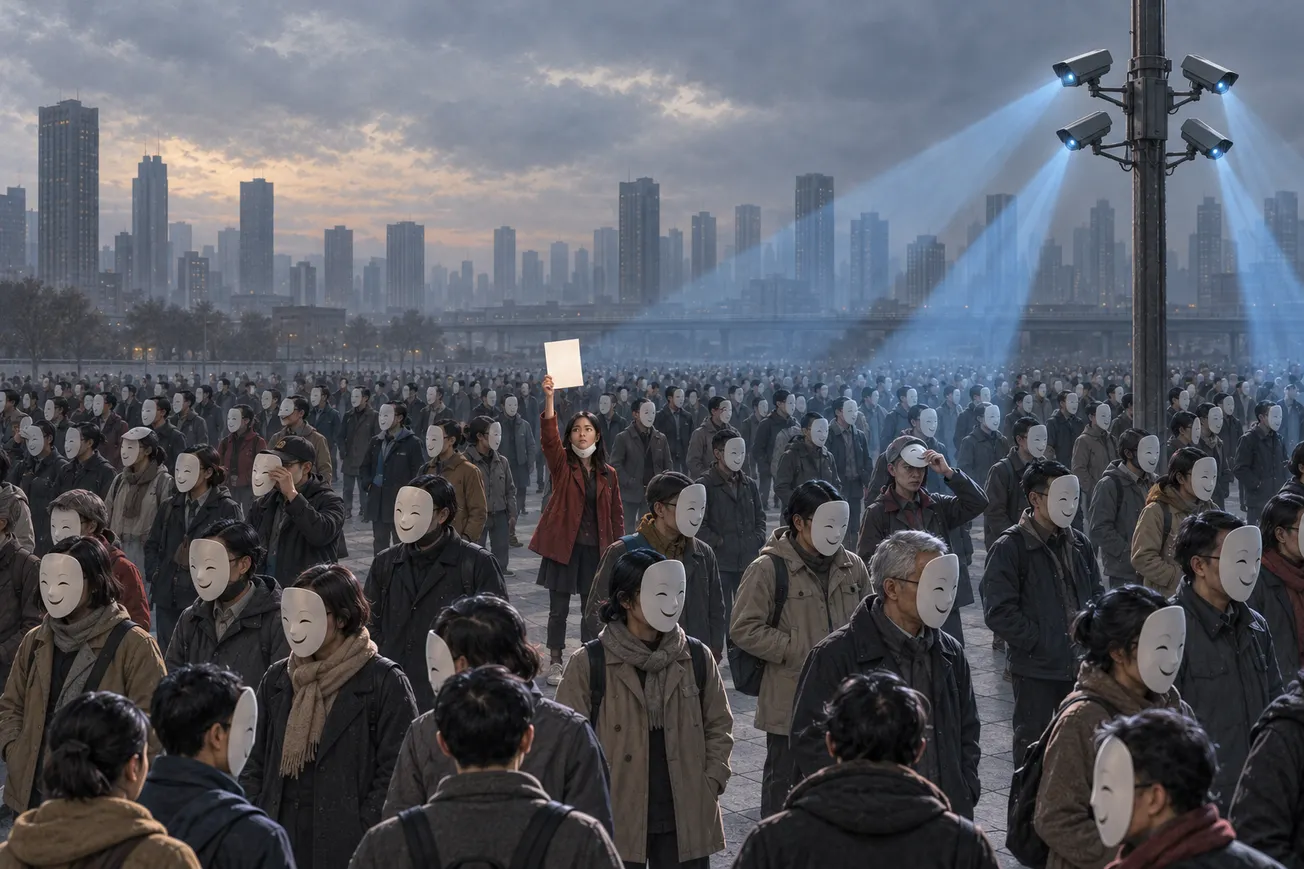
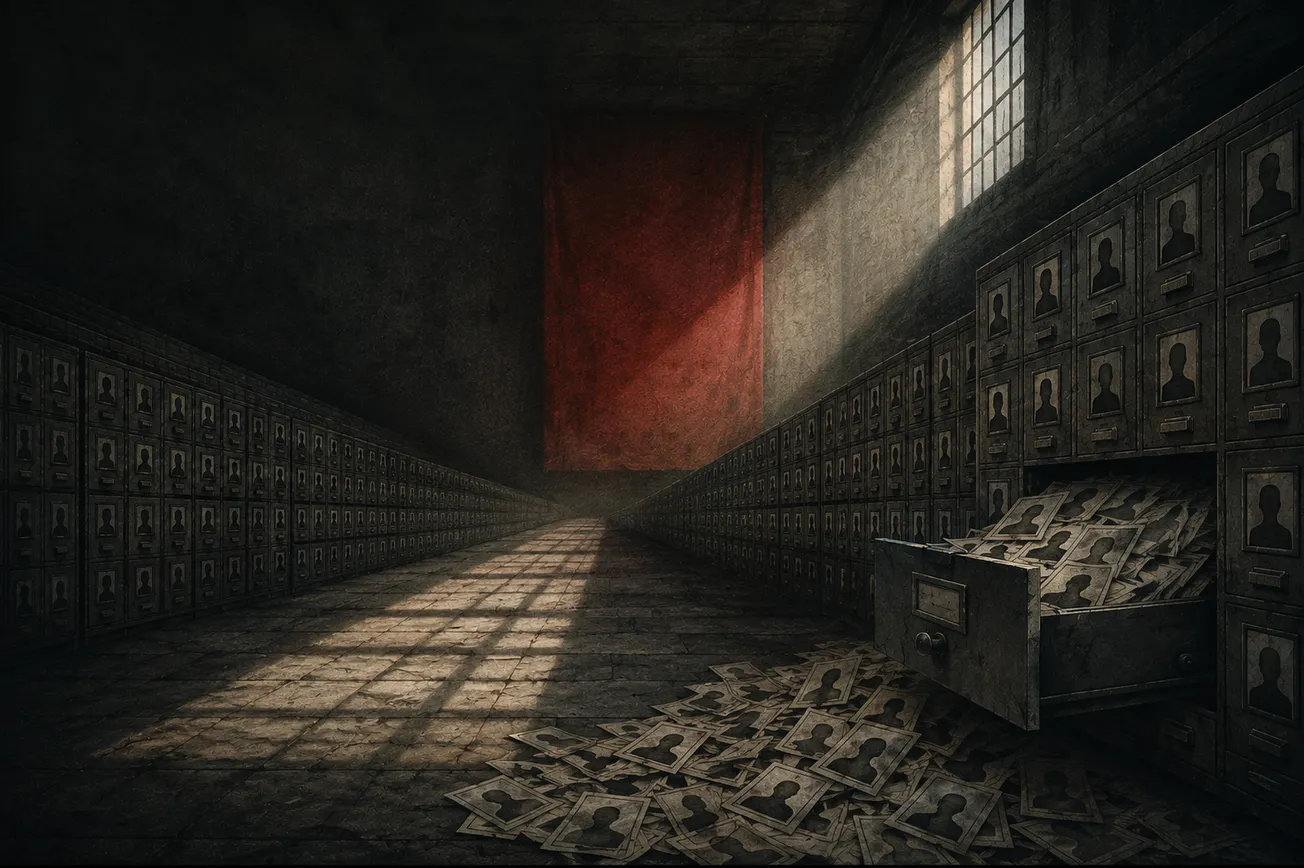
Around the same time, the Ministry of Justice added a new section to its website tracing a long series of supposed anti-state plots, from the 1500s through today, thereby presenting all of Russian history as one long siege by foreign enemies. The 1,200-plus people currently designated as foreign agents are listed, along with a portrait and description of their offenses (here is my entry). In doing so, the Kremlin has left no doubt about the message it wants the foreign-agent designation to send.
The foreign-agent label is just one way Russian President Vladimir Putin’s regime silences dissent. More than 5,600 people (probably many more) are currently facing politically motivated prosecutions in Russia, compared with fewer than 5,000 following Stalin’s death. (This figure continued falling after Nikita Khrushchev delivered his “Secret Speech” denouncing Stalin’s cult of personality.) Putin’s campaign of repression is starting to resemble the Great Terror of 1937.
To be sure, there is a lot about Stalinism that Putin has not quite replicated, beginning with the scale of the Gulag system. But in one respect, Putinism is worse. However distorted Vladimir Lenin’s vision of a workers’ paradise became under Stalin, it remained fundamental to the Soviet system. Today, there is no ideology, no grand project. There is just one man and his security apparatus working out how to safeguard their own power indefinitely.
The Russian author Vladimir Sorokin saw this coming. In his 2006 novel Day of the Oprichnik, Sorokin describes the brazen, violent, and debauched behavior of a state enforcer within a new tsarist-totalitarian Russia of the kind envisioned by nationalists like the political philosopher Aleksandr Dugin. Two decades later—with Putin’s security services having dusted off the playbook of the NKVD (not the KGB, which after Stalin’s death was mild by comparison)—it reads more like nonfiction than satire.
An older work offers further insight into modern Russia. In Mikhail Bulgakov’s The Heart of a Dog, written in 1925, the brilliant surgeon Filipp Filippovich Preobrazhensky turns a stray dog into a crude, aggressive proletarian named Sharikov. Russia has since produced plenty of educated, capable professionals like Preobrazhensky. But nowadays, they are increasingly choosing to behave more like Sharikov.
Dmitry Medvedev, who once served as Russia’s somewhat liberal president (2008–12), praises the Kremlin and spews vulgar insults against its “enemies” on social media. Foreign Minister Sergei Lavrov, who once displayed unwavering professionalism, now discusses diplomatic relations like mafia deals, using colloquial expressions like “patsan skazal—patsan sdelal”(“the guy said, the guy did”). Gulag culture—in which the “guards” are pitted against the “guarded,” and anyone who challenges the norm is silenced, humiliated, and punished—encourages this kind of race to the bottom.
One should not assume that all of Russian society is submitting to Putinism. For starters, Putin’s approval ratings are dropping. While there is a limit to how low these ratings can tumble—the Kremlin-controlled Public Opinion Foundation published a 66% rating early last month, but obediently pushed it back up to 70% the following week—the signal is clear. Even the Levada Center reports that the share of Russians who approve of Putin’s activities has declined from 84% to 74% this year.
Moreover, evidence of covert protest is everywhere. A shopkeeper displays balloons in the yellow and blue of the Ukrainian flag, as if part of an unrelated product promotion. A bookstore sells tote bags emblazoned with 1984, as if it were simply a literary novelty item. A theater stages anti-Stalinist plays, such as Evgeny Schwartz’s The Dragon.
True, there is no mass mobilization against the Ukraine war, even as Ukrainian drones reach targets deep inside Russia, let alone against Putin’s regime. But Russians have endured enough tyranny to know what it means to be at the mercy of security forces that will stop at nothing to maintain control. Even subtle resistance to the Kremlin’s demand for total surrender is enough to enrage its occupants—and bring intensifying repression.
Ultimately, the only exit from Putinism may well be the same as the exit from Stalinism: the leader’s demise. Many Russians hope that, at that point, a Khrushchev-like figure will emerge to denounce the worst of what came before. But Russia might also get a Beria, who was directly responsible for many of the regime’s atrocities.
In such a scenario, Russians must ensure that the limits of totalitarian control are undeniable. Only then will the new leader be motivated to dismantle the systems of repression that are now in place, just as Beria, in the brief period between Stalin’s death and his own downfall, began dismantling the Gulag system he had spent his career building.
Nina L. Khrushcheva, Professor of International Affairs at The New School, is the co-author (with Jeffrey Tayler), most recently, of In Putin’s Footsteps: Searching for the Soul of an Empire Across Russia’s Eleven Time Zones (St. Martin's Press, 2019).
Loved it, hated it, or somewhere in between — tell us. Grade this article here and help shape what lands in your inbox next.
Copyright Project Syndicate
U.S. AI Data Center Pollution
At least 82 gas-burning power plants have been proposed to power data centers, with most already granted permits, potentially releasing as many greenhouse gas emissions as half of all passenger vehicles in the U.S.
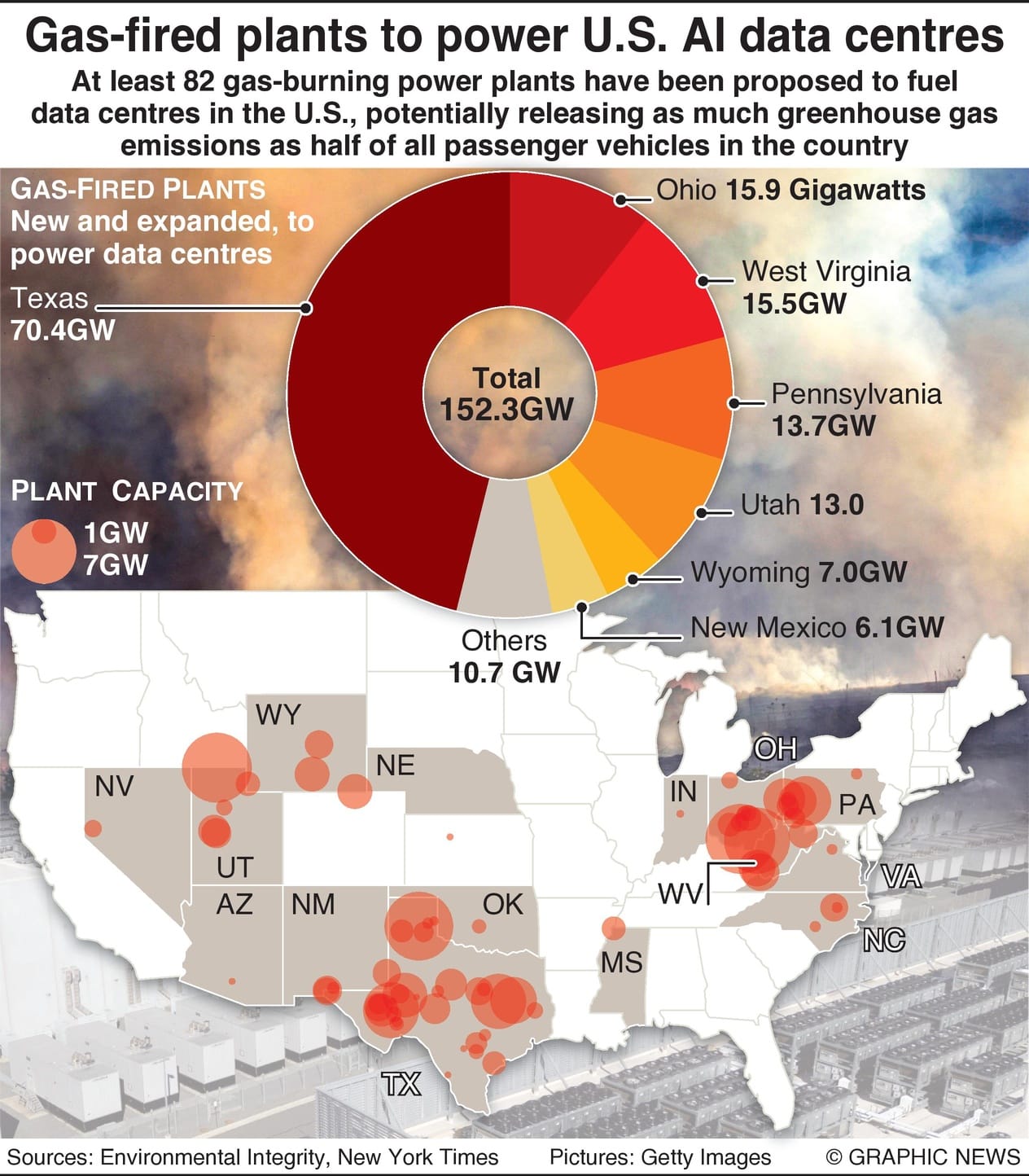
Connecting new data centers to the electrical grid can take years, but the scale of the demand and urgency of the build-out is putting developers under pressure to build their own generation on site.
Many are turning to gas-fired plants, which are receiving fast-track permits from states such as Texas, where 39 of the new plants are located, while the Environmental Protection Agency is proposing to allow developers to start building data centers and power plants before air pollution permits are approved. Data centers have also been allowed to run emergency generators on diesel fuel, resulting in high particulate emissions as well as greenhouse gases.
🧭 Power & Capital · August 10, 2026
Where state power meets the boardroom.
🔷 Sanders Warns AI CEOs To Halt Development – Power & Capital Desk, TIPP Insights
🔷 US Sanctions Cuban Military Officials, Firms Tied To Weapons Procurement – Reuters, The Daily Signal
🔷 FDA Proposal Tightens Rules For ‘Generally Recognized As Safe’ Ingredients – Power & Capital Desk, TIPP Insights
🔷 The FCC And Brendan Carr Should Not Be Picking Winners And Losers – Peter Roff, Issues & Insights
🌍 Global Affairs
The world's flashpoints, in motion.
🟥 Deadliest Ukrainian Attack On Russia In Two Years Kills 13 – TIPP News
🟥 Why Did Netanyahu Reject Trump’s Gaza Peace Plan – TIPP News
🟥 Trump Turns To Economic Pressure As Hormuz Crisis Deepens – TIPP News
🟥 Watch: Taiwan Army Holds Drill In Response To Chinese Landing Operation – TIPP Video
🟥 How Is Beijing Backing Cuba Against Trump Administration Pressure – TIPP News
🟥 The Normalcy Of American Wars – Andrew P. Napolitano, Ron Paul Institute for Peace and Prosperity
🟥 The Ceuta Crisis Is About More Than Migration – Moha Ennaji, Project Syndicate
🟥 UEFA, CONCACAF And AFC Demand FIFA Accountability – TIPP News
🟥 Watch: Extreme Summer Heat Forces Early Night Harvest Spain Winery – TIPP Video
🏛️ National Affairs
The fights shaping America right now.
🟫 U.S. DOJ Relying On Anonymous Israeli Intel Agent To Convict US Resident Of Oct 7 Participation – Max Blumenthal & Michelle Witte, Ron Paul Institute for Peace and Prosperity
🟫 Lawsuit Targets Mamdani’s Pied-à-Terre Tax Rollout – TIPP News
🟫 Mamdani Backtracks On IDs For Marxist Marts – Nicole Huyer, The Daily Signal
🟫 Iran War Is Unfortunately Helping Democratic Socialists And Hurting Republicans – Rep. John J. Duncan Jr., Ron Paul Institute for Peace and Prosperity
🟫 Will Congress Reenact The McCarran Act? – Jacob G. Hornberger, Ron Paul Institute for Peace and Prosperity
🟫 What Happened When Zuckerberg’s Yacht Missed An Alaska Rescue Call – TIPP News
📈 Economy
Prices, policy, and the pressure on your wallet.
🟩 Why Don’t We Keep Buying? (And Buying) – Soham Patil, Mises Wire
💼 Markets & Business
The deals and tickers making moves.
🟧 Intel Seeks $15 Billion As AI Infrastructure Spending Accelerates – TIPP News
🟧 AI Security Concerns Grow As OpenAI Restricts New Model Testing – TIPP News
Letters to the editor email: editor-tippinsights@technometrica.com
Subscribe Today And Make A Difference. Consider supporting Independent Journalism by upgrading to a paid subscription or making a donation. Your support helps tippinsights thrive as a reader-supported publication. Contact us to discuss your research or polling needs.
Reach our audience. For sponsorship and advertising opportunities, visit our Partner With Us page.