By Todd G. Buchholz, Project Syndicate
Emboldened by US President Donald Trump’s war in Iran, Chinese leaders have ramped up their gray-zone coercion against Taiwan in recent months. To avert a Chinese invasion, Taiwan must ensure that other democracies cannot function without it by providing them with more than just semiconductors.
SAN DIEGO—As the US-Iran war threatens to ignite a worldwide energy crisis, another hotspot may come to a boil: Taiwan. During a recent visit to Taipei, I didn’t need to read Mandarin to spot the lead news story every day: another step in China’s campaign to intimidate the island.
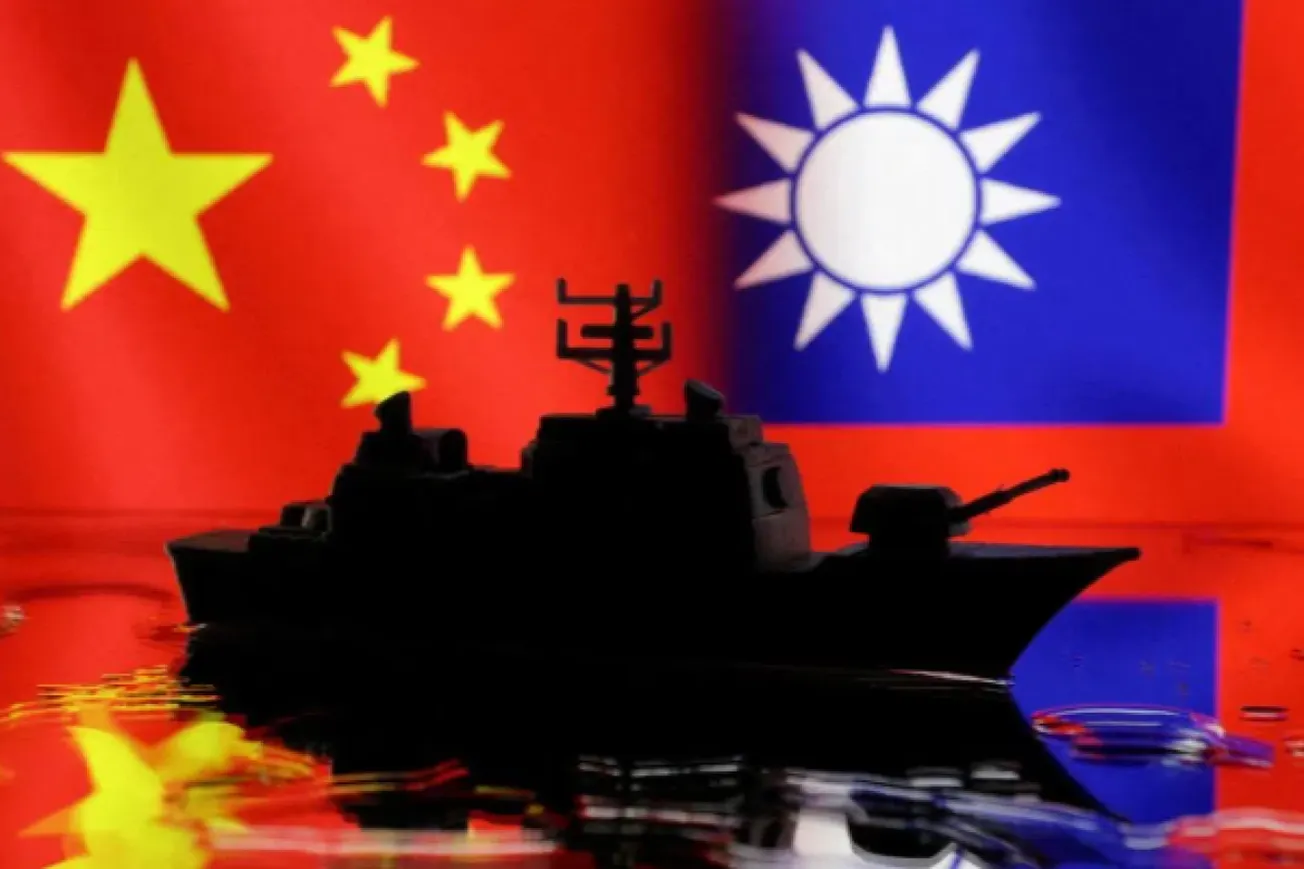
What once would have been deemed a crisis—People’s Liberation Army aircraft crossing the Taiwan Strait’s median line, PLA vessels and surveillance balloons pressing closer, or Chinese authorities interrogating commercial ship captains—has become a daily ritual. For the Chinese government, this is a victory in itself. Constant gray-zone coercion is designed not only to frighten Taiwan but also to numb the rest of the world, making Taiwanese President Lai Ching-te sound like the tiresome boy who cried dragon.
Meanwhile, Chinese President Xi Jinping’s strategists watch Hormuz and study something even more valuable than naval frigates: American decision-making. How quickly does the United States respond to threats and attacks? How much political backlash can President Donald Trump tolerate? And how much economic pain are US allies willing to bear? Every missile fired at Iran provides new information. Iran’s mullahs, scoffing at incoming fire and defying conventional political logic, have inadvertently become China’s defense research assistants.
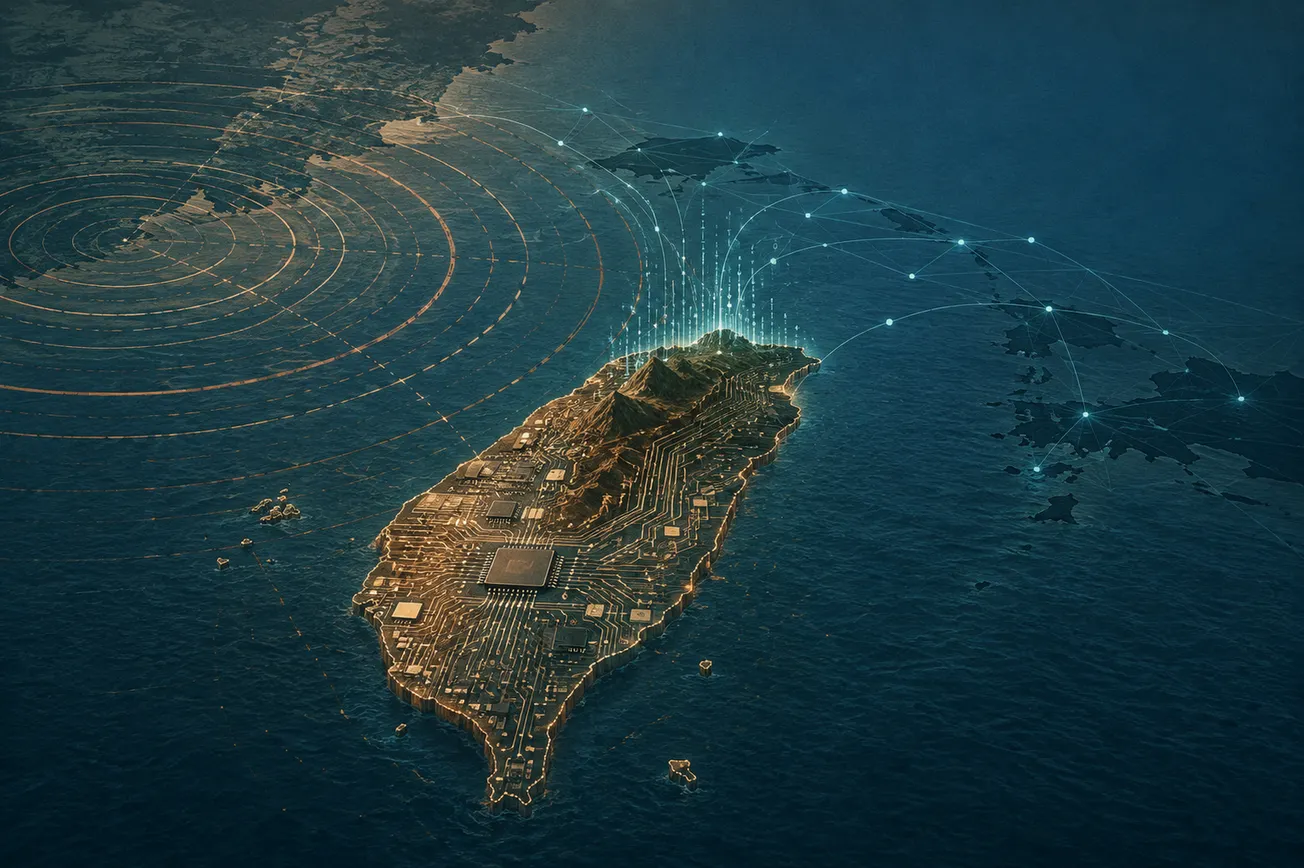
But Taiwan is a different case. It’s too valuable not to be vulnerable. The country dominates in semiconductors, accounting for 92% of the world’s manufacturing capacity for the most advanced chips. If these factories shutter, the tremors will go far beyond Silicon Valley. Modern economies run on semiconductors, much like 19th-century economies depended on coal and whale oil. Without chips from Taiwan, refrigerators would stop cooling, and traffic lights would stop working. We would witness crashes on trading floors and at road intersections.
Decades ago, Kuwait and Saudi Arabia discovered that possessing the world’s most valuable commodity was both a blessing and a glaring vulnerability. Oil made these kingdoms indispensable, putting a target on their backs. In 1990, Iraq’s Saddam Hussein decided he could not resist trying to steal an entire country. Taiwan faces a similar dilemma, because China knows precisely the prize it seeks.
Reining in China’s designs on Taiwan requires a new kind of deterrence. Just as Saudi Arabia is spending trillions of dollars to be known as more than the world’s gas station, Taiwan must diversify. The country needs a second crown jewel to become indispensable to the democratic world. As I have recommended to Taiwanese officials, defense software offers the opportunity.
Future military advantage will depend less on steel than on code: battlefield networking, AI, cybersecurity, logistics, communications, and command-and-control software. While chip fabrication plants can be replicated—Taiwan Semiconductor Manufacturing Company itself is expanding abroad—trusted software ecosystems, engineering talent, institutional knowledge, and decades of collaboration cannot.
Economists call this moving up the value chain. I would also call it moving up the deterrence chain. Taiwanese leaders should call Palmer Luckey of Anduril and Alex Karp of Palantir for advice.
Equally important, Taiwan occupies an unusual position in Asia. Japan and South Korea have spent decades reopening and stitching closed the wounds of occupation. Taiwan is a regional player that neither side resents, making it a trusted intermediary—a rarity in global politics.
Rather than waiting for the US to take the lead, Taiwan should establish a “Committee for the Defense of Freedom.” This would be a practical institution devoted to defense technology and coordinated responses to economic coercion, not a formal military alliance requiring years of treaty negotiations, summit communiqués, and group photos in front of fancy hotels.
Eight centuries ago, the Hanseatic League connected independent cities around the Baltic and North Seas to share information and deter piracy. No emperor ordered them together; shared interests united them. Asian democracies need a 21st-century reboot—not to protect merchant ships from pirates, but to protect free societies from blackmail and invasion.
China has built artificial islands one dredge scoop at a time. Taiwan and its democratic partners can build deterrence in a similar fashion: one software platform, one intelligence agreement, one research partnership at a time.
Iran has been a practice test for the US military, and China’s leaders have been peering over Trump’s shoulder. Taiwan should not wait for the final exam. It should rewrite the syllabus.
Todd G. Buchholz, a former White House director of economic policy under President George H.W. Bush and managing director of the Tiger hedge fund, is the author of New Ideas from Dead Economists (Plume, 2021), The Price of Prosperity (Harper, 2016), and co-author of the musical Glory Ride.
Loved it, hated it, or somewhere in between — tell us. Grade this article here and help shape what lands in your inbox next.
DeepSeek “Death Zone” For AI Development
U.S. chip sanctions have failed to slow AI development in China, with a flurry of new releases and a “DeepSeek death zone” appearing to force new AI models to either beat the Chinese model on price or performance.
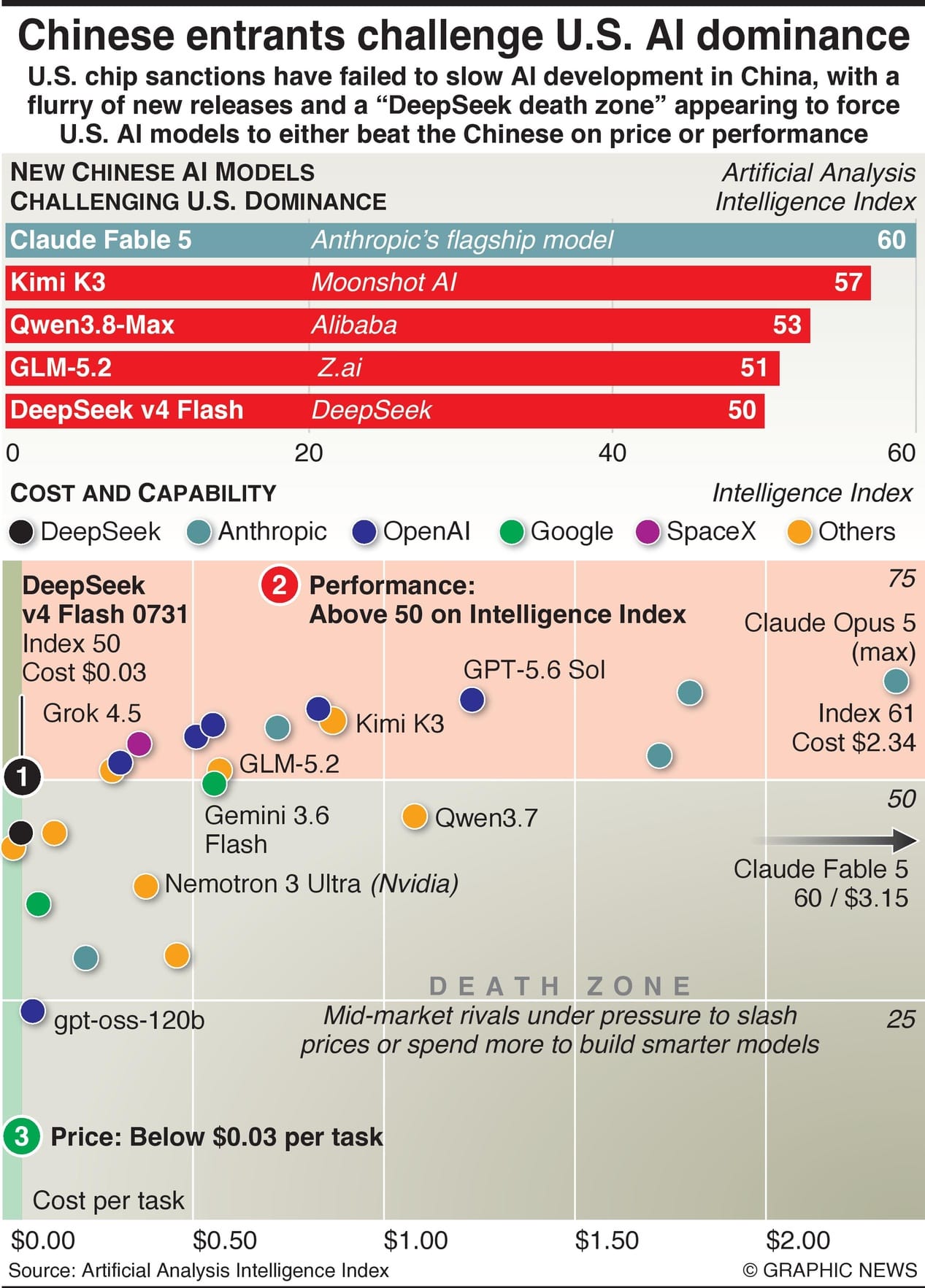
Among the new releases are Moonshot AI’s Kimi K3 and the new Qwen3.8-Max from Alibaba, the company’s biggest ever AI model, said to rival Anthropic's flagship Claude Fable 5 – which had been subject to export controls – in benchmark tests.
DeepSeek, the original disruptor of U.S. dominance, recently launched v4 Flash, setting a new price-to-performance ratio and forcing U.S. AI companies to either cut their prices or spend heavily on development to exceed the performance of their Chinese rivals.
🧭 Power & Capital · August 5, 2026
Where state power meets the boardroom.
🔷 What Led To The $100 Billion Trump Tariff Refunds – Power & Capital Desk, TIPP Insights
🔷 What New Sanctions Has China Imposed Ahead Of The Xi-Trump Summit – Power & Capital Desk, TIPP Insights
🔷 Dominion Pockets Profits During Proposed Sale – Rich Tucker, The Daily Signal
🌍 Global Affairs
The world's flashpoints, in motion.
🟥 Russia Launches Major Air Assault On Kyiv – TIPP News
🟥 Ceuta Invasion Is The Predictable Result Of Spanish Amnesty – Simon Hankinson, The Daily Signal
🟥 SpaceX Rocket Impact Expected To Leave Moon Crater – TIPP News
🏛️ National Affairs
The fights shaping America right now.
🟫 White House Says Secret FBI Probe Against Trump Lacked Evidence – TIPP News
🟫 Fauci Faces Contempt Vote Thursday Following Tense Senate Appearance – Fred Lucas, The Daily Signal
🟫 What Fauci Was Writing While America Lived In Fear – Victor Davis Hanson, The Daily Signal
🟫 What Does Abdul El-Sayed’s Victory Mean For Democrats – TIPP News
🟫 ‘Democrats Want Illegal Aliens To Vote’: Cruz Pushes GOP To Pass SAVE America Act – Virginia Grace McKinnon, The Daily Signal
🟫 Gov. Andy Beshear’s Urgent Blast To McConnell For Neglecting His Duty – Francesca Cella, The Daily Signal
🟫 Trump’s Marine One Flight Under FAA Review After Airport Incident – TIPP News
📈 Economy
Prices, policy, and the pressure on your wallet.
🟩 ADP: Private Employers Added Only 44,000 Jobs In July – TIPP News
🟩 US Job Openings Drop In June, Hiring Increases – Reuters, The Daily Signal
🟩 Why Did Oil Prices Rise After The Red Sea Tanker Attack – TIPP News
🟩 How Are Higher Mortgage Rates Affecting Homebuyers – TIPP News
🟩 The Rebound Holds – Editorial Board, TIPP Insights
💼 Markets & Business
The deals and tickers making moves.
🟧 Google Reshuffles AI Leadership As Jeff Dean Departs – TIPP News
Letters to the editor email: editor-tippinsights@technometrica.com
Subscribe Today And Make A Difference. Consider supporting Independent Journalism by upgrading to a paid subscription or making a donation. Your support helps tippinsights thrive as a reader-supported publication. Contact us to discuss your research or polling needs.
Reach our audience. For sponsorship and advertising opportunities, visit our Partner With Us page.