
Haley Stevens called Abdul El-Sayed on Wednesday to concede the Michigan Senate primary, by which point he had beaten her by fewer than 15,000 votes out of more than 1.5 million cast, and beaten more than $50 million in outside money spent to stop him.
It was a political earthquake, and the foundations it shook were the Democratic Party's own.
In a statement, Stevens congratulated El-Sayed, called him a doctor and a dedicated Michigander, and said she was proud to offer her support as he takes on Mike Rogers in November. The campaign had brought out the full span of views within the party, she said, "and that is why we have primaries."
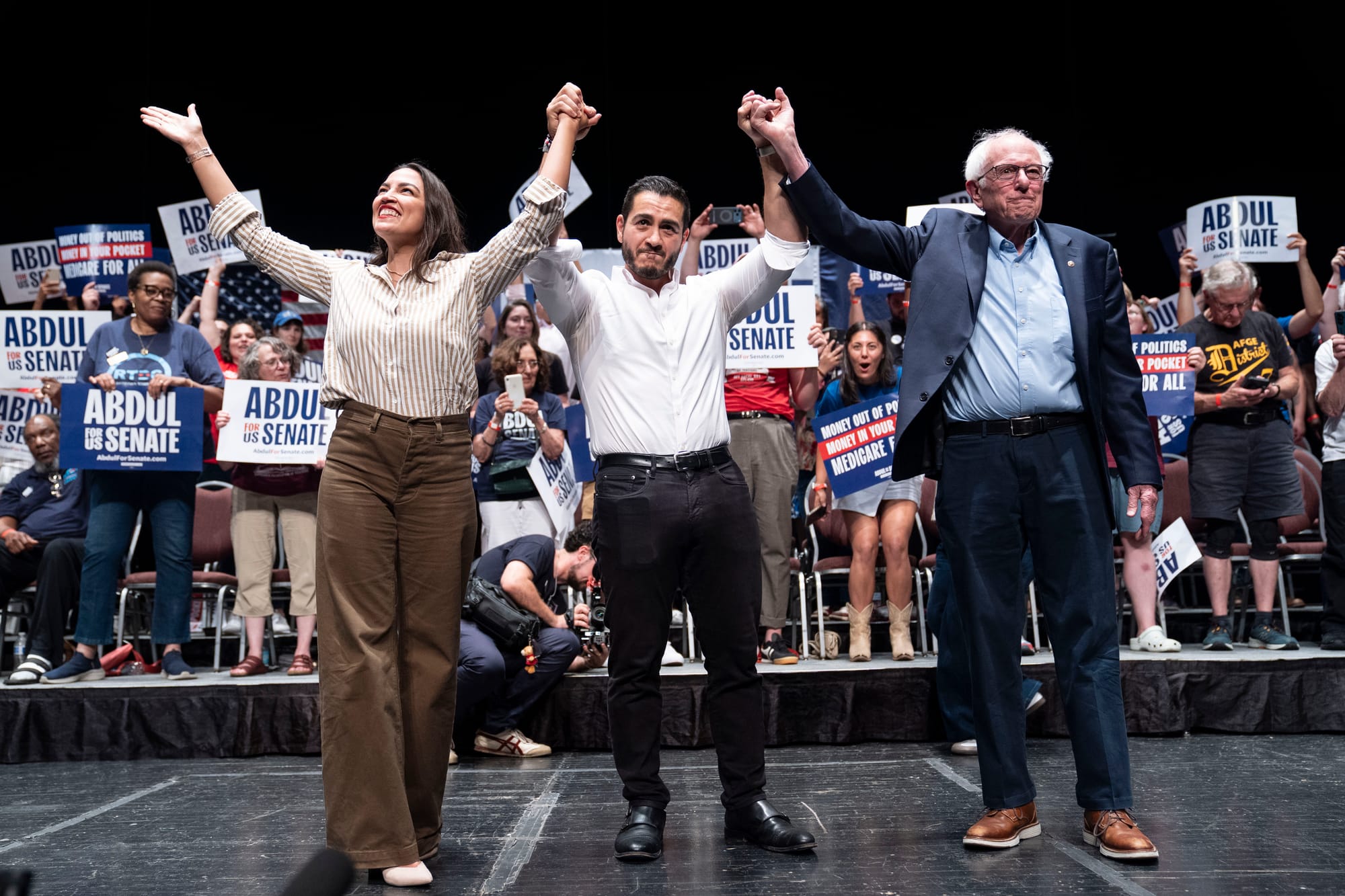
On Meet the Press two days before the primary, Independent Senator Bernie Sanders argued that billionaire-funded super PACs are buying American elections, and that this is why progressives and democratic socialists are winning across the country. He did not mention the other half of the arrangement. The left wing of the Democratic Party increasingly runs under other banners, democratic socialist, Working Families, Sunrise, while standing on the Democratic ballot line to get elected.
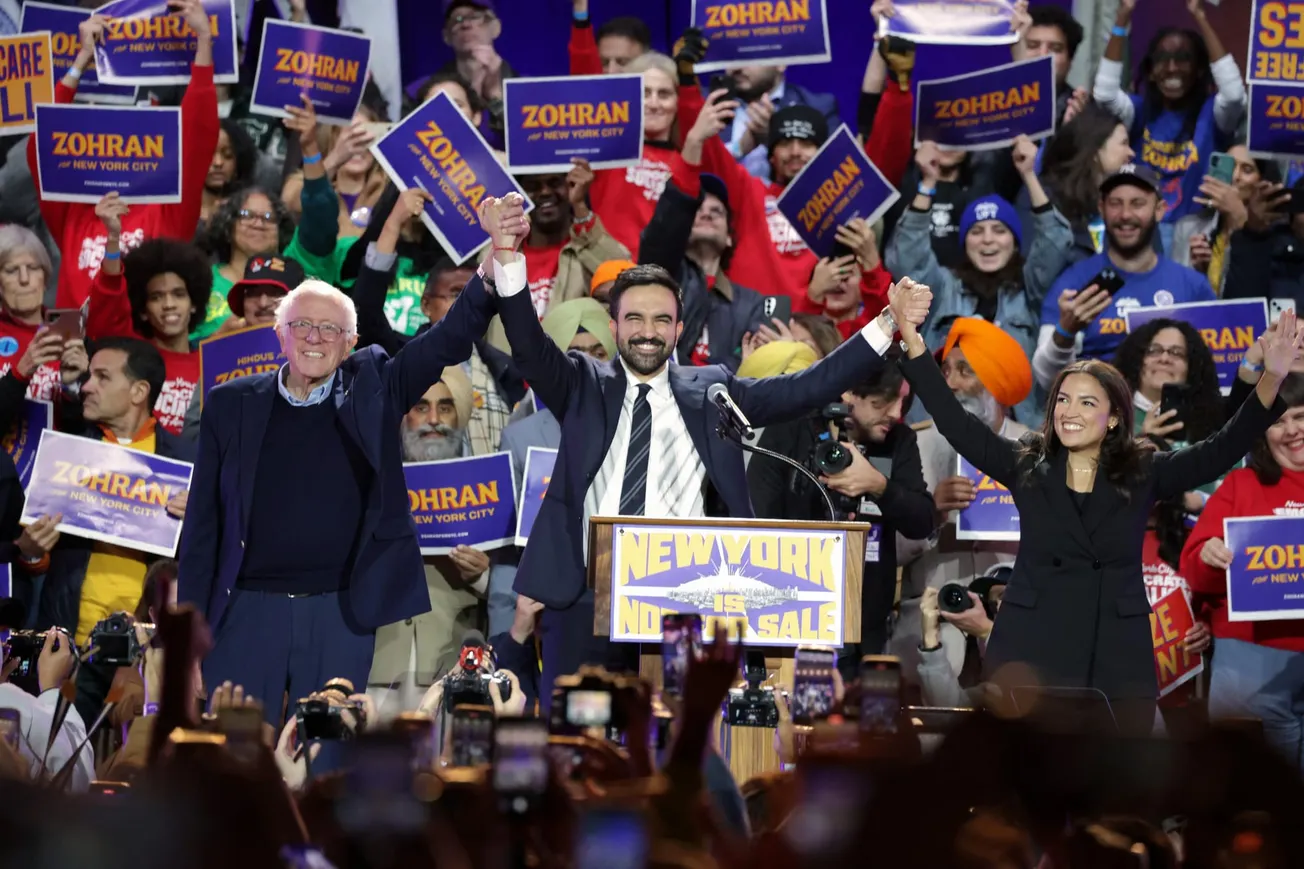
To be sure, this wing of the party has always existed. However, since New York City Mayor Mamdani and other protégés of Bernie won their elections last November, the faction is powering on all cylinders. The relationship is not a matter of inference. When Mamdani was sworn in on New Year's Day, the oath was administered by Bernie Sanders.
Since entering Gracie Mansion, Mamdani has sometimes leveraged his power and his brokering skills even better than Bernie. In June, three New York congressional seats went to the party's socialist wing. Darializa Avila Chevalier unseated five-term incumbent Adriano Espaillat, Brad Lander beat incumbent Dan Goldman, and Claire Valdez took the Brooklyn-Queens seat that Nydia Velázquez is vacating. All three are safe Democratic districts, so all three are effectively headed to Washington already, owing their success to Mamdani and Bernie rather than to the national Democratic Party.
While the New York City mayor was not actively involved in the Michigan elections, Bernie's full support made the race extremely competitive. The money, though, went the other way from what the result suggests. El-Sayed outraised Stevens in direct contributions, roughly $14.5 million to $11.9 million, built on small donors. What he faced was outside money. The American Israel Public Affairs Committee, the pro-Israel lobbying group known as AIPAC, and allied committees spent close to $30 million to stop him, the largest sum the group has ever put into a single race, and federal records show more than $54 million from committees supporting Stevens against about $3.5 million supporting him. AIPAC says it represents Americans who believe a strong U.S.-Israel relationship serves both countries, and rejects the claim that it acts on behalf of a foreign government. "You're not supposed to be able to beat $70 million of outside spending," El-Sayed said the next day.
Joe Manchin, the former West Virginia senator who left the Democratic Party in 2024, made much the same point on Face the Nation on Sunday. Asked about Sanders, he said he respected him and that Bernie has always been who he is, but that he has had to use the Democratic Party to get on the ticket.
America is a two-party system. A candidate who enters a race from within the two parties inherits a structural framework so strong that he can concentrate on raising money and finding a message that appeals to voters. An independent inherits nothing. As Manchin put it on the same program, an independent has to jump through every hoop and gather thousands of signatures, while a Democrat or a Republican pays a fee and is on the ballot. The fact is, one has to be enormously wealthy to run in America as an independent.
The last independent to make real waves nationally was the Texas businessman Ross Perot, who spent millions of dollars to get on the ballot in all 50 states. That was 1992. George Bush Sr. had touched 90 percent approval after the first Gulf War in early 1991, but by the time voters went to the polls he had fallen into the thirties, and the room that opened up was Perot's. He won nearly 19 percent of the popular vote, the best showing by a third-party candidate since Theodore Roosevelt took 27 percent in 1912. Yet he did not carry a single state, and so took no electoral votes at all.
Bernie, one of the smartest political operators alive, understands this very well. So he enters the Democratic primary, wins it, then declines the nomination and runs in November as an independent. Vermont will not let him be both. The party's endorsement he keeps. And the primary victory serves one further purpose: it keeps any other Democrat off the ballot against him.
It is a unique arrangement that the Democrats have tolerated for thirty-five years, and one that no commercial establishment would. Sanders entered the House in 1991 and has held elected office as an independent since 1981. Imagine getting hired by a company, only to set up your own small business outside its walls, peddling a version of its products and services as an independent contractor, often by criticizing the company.
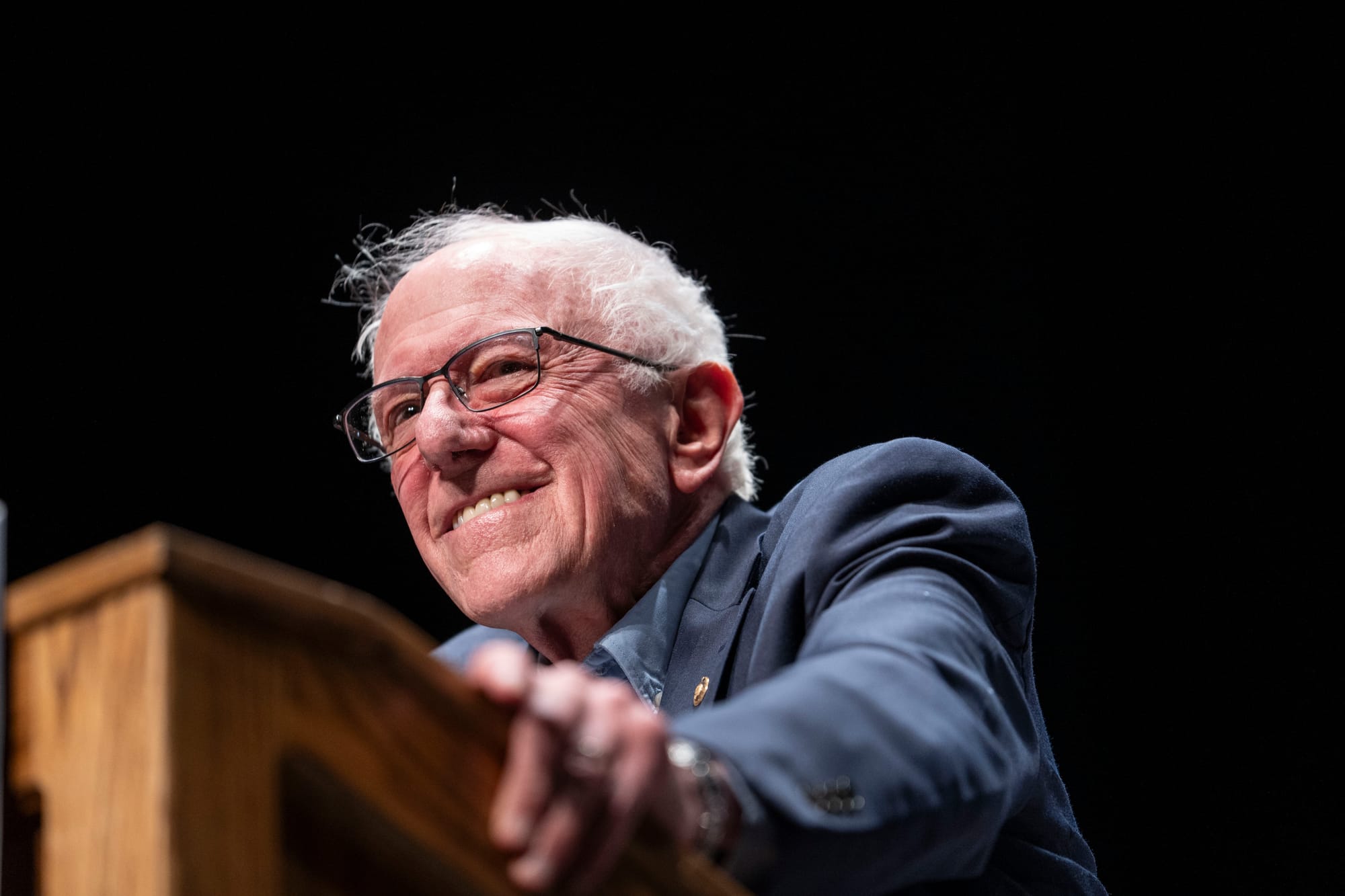
The Michigan race is another Bernie project, and in a deeply purple state where presidential elections have swung back and forth, Trump in 2016, Biden in 2020, Trump again in 2024, it has worked so far. November is the part that has not been tested.
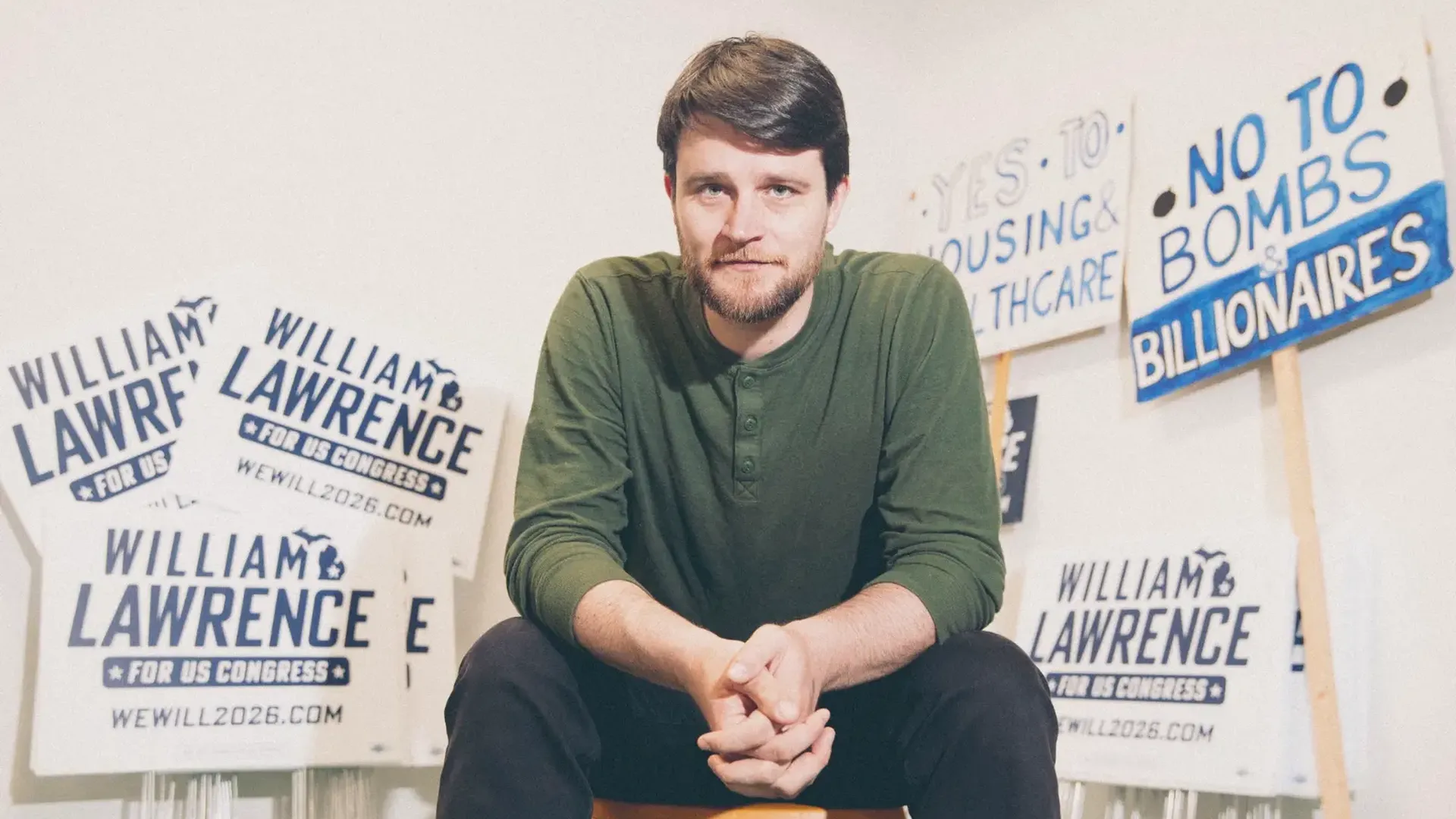
But for the Democratic Party, this is an existential threat. In Michigan, the left made dramatic inroads on Tuesday night. In the 7th Congressional District, William Lawrence, a co-founder of the Sunrise Movement and a member of both the Working Families Party and the Democratic Socialists of America, took 44 percent against a former ambassador to Ukraine and a former Navy SEAL, both establishment-backed. The seat is a genuine toss-up, currently held by Republican Tom Barrett. In the 13th District, Donavan McKinney, a democratic socialist, unseated sitting Representative Shri Thanedar. In New York, winning the primary was the whole job. In Michigan, Lawrence still has to beat a sitting Republican in November.
Ask a person on the street what the Democratic Party stands for, and many will say that they are anti-Trump. The Michigan results show that the electorate needs a lot more. The three congressional candidates who won in New York barely mentioned Trump during their campaigns and instead focused on pocketbook issues that affect voters. The socialists understand that Trump is an issue that can be set aside while focusing on broader topics such as Israel, Medicare for All, and abolishing ICE.
In this sense, the democratic socialists are ahead of the traditional Democratic Party and the liberal media, both of whom are obsessed with Trump.
El-Sayed now faces Mike Rogers, the Republican who lost Michigan's 2024 Senate race to Elissa Slotkin by about 19,000 votes and who ran unopposed this time. The big question in November is whether the socialists, standing on the Democratic ballot line, can win a general election. That would be the true test of an arrangement that has never yet had to win without it.
Loved it, hated it, or somewhere in between — tell us. Grade this article here and help shape what lands in your inbox next.
🧭 Power & Capital · August 7, 2026
Where state power meets the boardroom.
🔷 FCC Says Chinese Robot Restrictions Aim To Boost U.S. Manufacturing
🔷 U.S. Sanctions Cuban Military Firms Over Russia And China Arms Deals
🔷 Federal Judge Allows Utah To Enforce Gambling Laws Against Kalshi
🔷 Palo Alto Networks Faces Chinese Cybersecurity Investigation
🌍 Global Affairs
The world's flashpoints, in motion.
🟥 US Seeks Extradition Of Philippine Church Leader Apollo Quiboloy – TIPP News
🟥 US Military Rules Out White Phosphorus Leak At South Korea Air Base – TIPP News
🟥 Security Alert Halts US Avocado Inspections In Michoacán – TIPP News
🟥 Back In The USSR: Spending Two Weeks In A Real Socialist Country – Patrick Barron, Mises Wire
🏛️ National Affairs
The fights shaping America right now.
🟫 ‘We Walk Fentanyl’: 3rd Whistleblower Emerges In DOJ Probe Of Biden-Era DEA Scandal – Fred Lucas, The Daily Signal
🟫 GAO Audit Says DOGE Overstated Government Savings – TIPP News
🟫 Supreme Court Deals Another Blow To Palestinian Authorities In $656 Million Case – Fred Lucas, The Daily Signal
🟫 EPA’s Medical Sterilizer Rule Put Patient Care At Risk – Trevar Kolodny, The Daily Signal
🟫 Race-Based Hiring Changed Higher Education – Victor Davis Hanson, The Daily Signal
🟫 ‘Aren’t The Same Thing’: Black Congressman Shoots Down Jim Crow 2.0 Claim – Pedro Rodriguez, The Daily Signal
🟫 Texas School Board Keeps Gender-Neutral Dress Code Linked To Former DEI Council – Emily Medeiros, The Daily Signal
🟫 One-Third Of Californians Live Near The Poverty Line. Can Steve Hilton’s Tax Relief Plan Help? – Angelina Delfin, The Daily Signal
🟫 The Problem Of Post-SSRI Sexual Dysfunction – Jennifer Galardi & Gabriella DiPrima, The Daily Signal
🟫 Georgia Notary In Judge’s Disputed Will Case Stripped Of Commission – Johnny Edwards, The Daily Signal
🟫 Get The Flock Out – Joe Thomas, The Daily Signal
🟫 Hunter Wins Florida Python Challenge After Capturing 96 Snakes – TIPP News
📈 Economy
Prices, policy, and the pressure on your wallet.
🟩 US Jobless Claims Rise Slightly As Layoffs Stay Historically Low – TIPP News
🟩 Gold Climbs To Seven-Week High On Weak Jobs Data – TIPP News
🔬 Science & Tech
What's being discovered, built, and launched.
🟪 FDA Approves Moderna’s First mRNA Flu Vaccine – TIPP News
🟪 How Researchers Are Testing Vaccines To Stop Cancer Before It Starts – TIPP News
🟪 Stanford Scientists Use AI To Design Viable Bacteriophages – TIPP News
🟪 Scientists Capture Sharpest-Ever View Of The Sun’s Surface – TIPP News
💼 Markets & Business
The deals and tickers making moves.
🟧 SoftBank Profit Beats Estimates On Intel Investment Gain – TIPP News
🟧 Boeing 737 Max Faces New FAA Safety Inspection Order – TIPP News
🟧 Tech Leaders Claim AI Is Entering A Historic Phase – TIPP News
🟧 $1B Savings Drive Announced By World’s Largest Spirits Maker – TIPP News
📊 Market Mood · August 7, 2026
How the trading day is setting up.
🟩 Markets are cautious ahead of the July jobs report, with investors waiting for the clearest signal yet on whether the labor market is cooling enough to alter the Fed's interest-rate outlook.
🟧 Oil prices are extending their rise as renewed Middle East risks put energy supplies back in focus, adding another layer of uncertainty to the inflation outlook.
🟦 AI remains a powerful support for markets, but investors are increasingly debating valuations after the sector's extraordinary run and looking for earnings to justify further gains.
🟨 Today's employment report is the main event. A weak jobs number could revive hopes for easier Fed policy, while a strong report could reinforce expectations that rates remain elevated.
🗓️ Key Economic Events
On today's U.S. data calendar.
🟧 8:30 a.m. ET — U.S. Employment Report (July)
Nonfarm Payrolls: Forecast: +57,000
Unemployment Rate: Forecast: 4.2%
The month's most important economic release will provide a broad read on hiring and unemployment and could materially shift expectations for the Fed's next move.
🟧 8:30 a.m. ET — Average Hourly Earnings (July)
Forecast: +0.3% m/m | 3.5% y/y
Wage growth will be closely watched for evidence of whether labor-cost pressures are continuing to feed inflation.
Letters to the editor email: editor-tippinsights@technometrica.com
Subscribe Today And Make A Difference. Consider supporting Independent Journalism by upgrading to a paid subscription or making a donation. Your support helps tippinsights thrive as a reader-supported publication. Contact us to discuss your research or polling needs.
Reach our audience. For sponsorship and advertising opportunities, visit our Partner With Us page.