For thirty years, China told the world it wanted a North Korea without nuclear weapons. In Pyongyang this week, Xi Jinping stopped saying so. The disappearance of the word “denuclearization” from China’s account of the summit has become the most widely reported detail of the visit, with most coverage treating it as a diplomatic nuance. It was a surrender, and Xi made it at the worst possible moment.
China accounts for as much as 95 percent of North Korea’s trade and is the only plausible source of large-scale aid for a regime isolated by sanctions. For three decades, Beijing attached one condition to that support: Pyongyang was expected to give up its nuclear weapons. Xi has now abandoned that condition, just as the ally he is embracing prepares to confront the United States.
Rewind to June 2019, the last time Xi stood in Pyongyang. For most of the next seven years, he stayed away as the relationship cooled. Then the strategic landscape changed. Russia invaded Ukraine in February 2022 and went looking for ammunition, and North Korea had it. In June 2024, Russian President Vladimir Putin traveled to Pyongyang and signed a sweeping partnership treaty with North Korean leader Kim Jong Un, reviving a mutual-defense pledge between the two countries. By October 2024, Western officials estimated that more than 10,000 North Korean troops had been deployed to fight near Kursk. In return, Russia supplied energy, food, and military technology, without the conditions Beijing had long imposed. By September 2025, the shift was unmistakable: at a parade in Beijing, Kim stood alongside Putin and Xi as an equal. North Korea, once dependent on China alone, now had two great patrons.
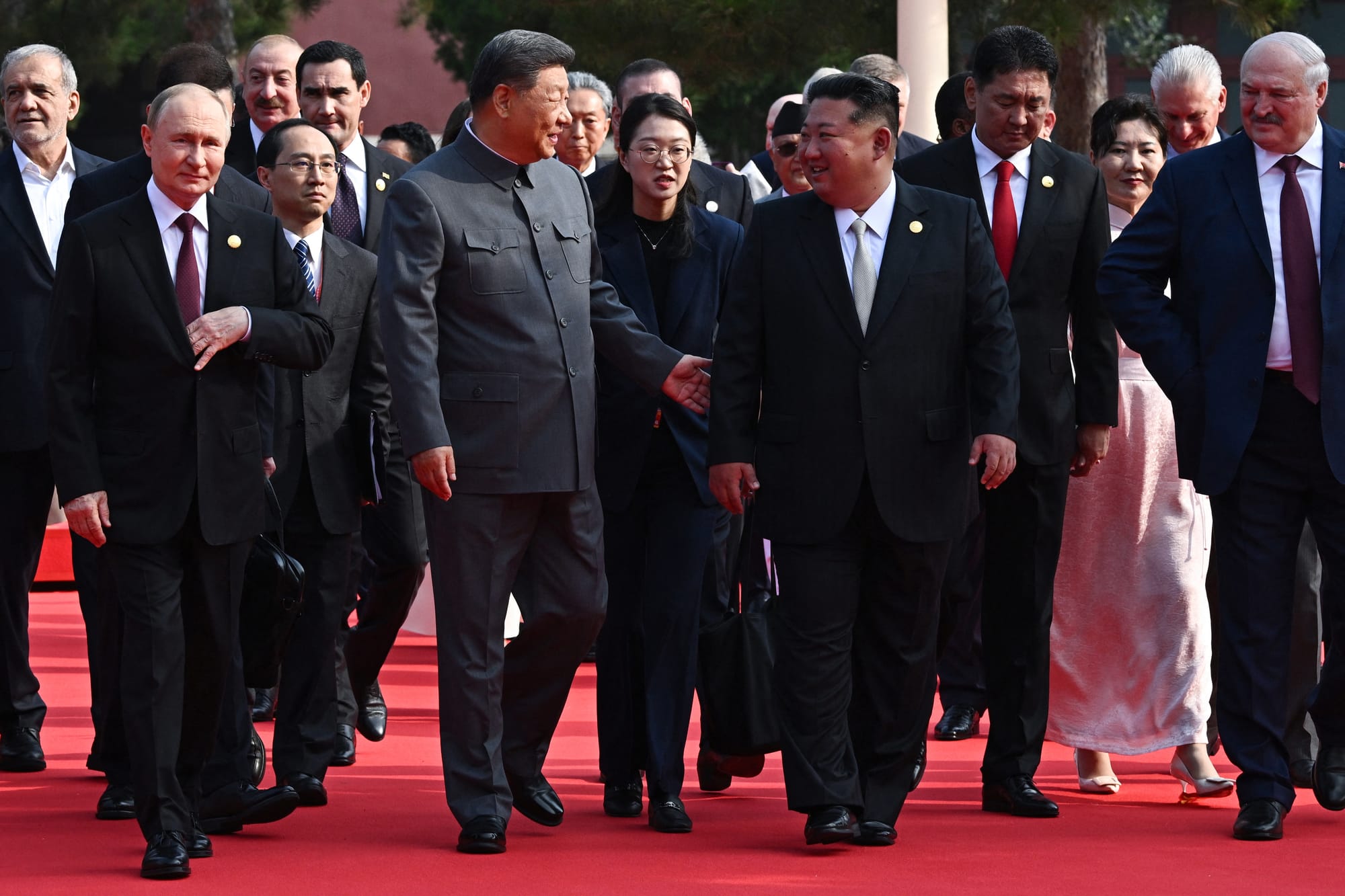
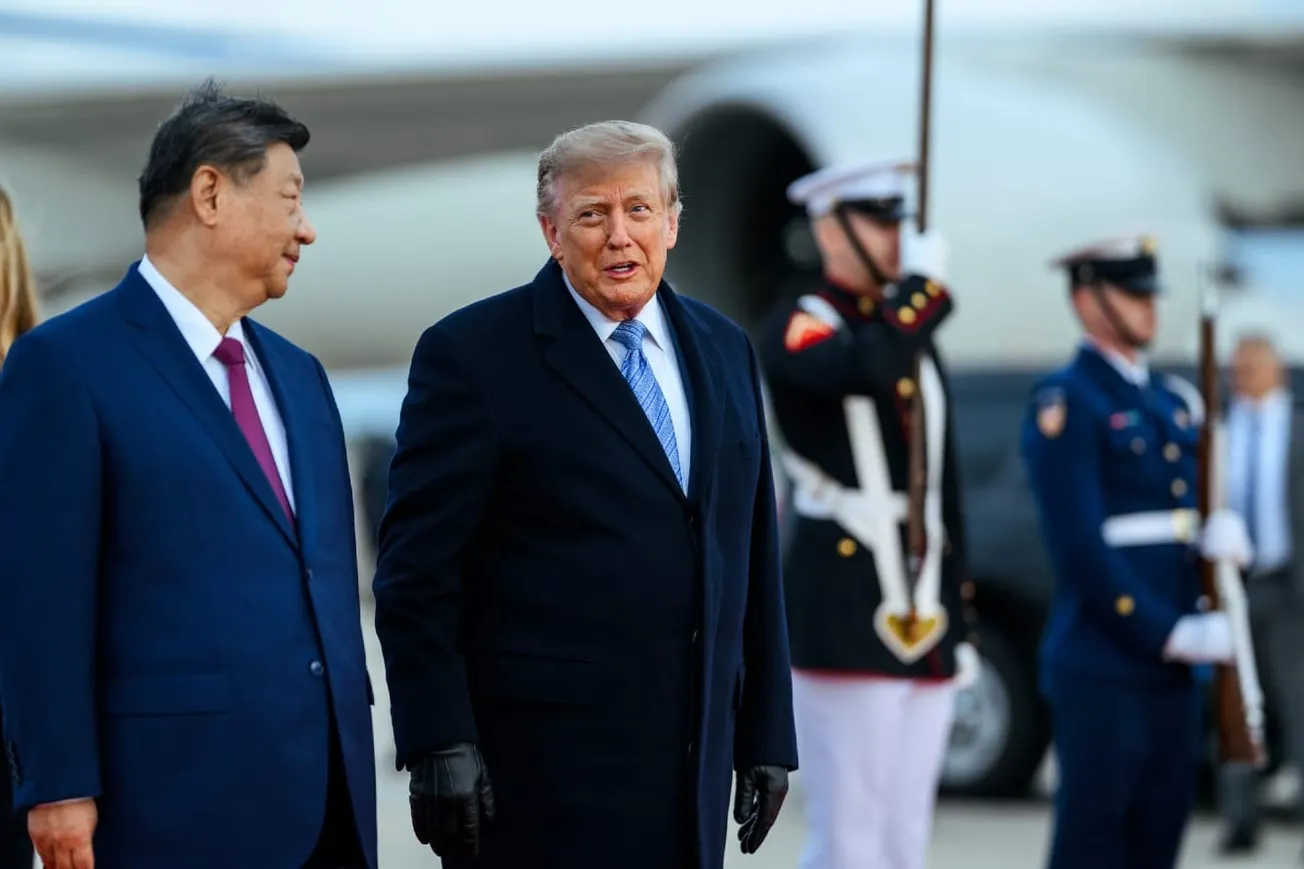
Xi moved to offset the exclusivity he had lost. Foreign Minister Wang Yi was sent to prepare the ground in April 2026, and on June 8, Xi made the trip himself, the first foreign journey of his year, on the 65th anniversary of the 1961 treaty that remains China’s only formal alliance.
For three decades, Beijing's stated position was a denuclearized Korean Peninsula. That language appeared in the official accounts of all five Xi–Kim summits in 2018 and 2019. It disappeared from China's account of the September 2025 meeting. When Xi met Donald Trump in May 2026, Beijing's readout again omitted it, even though the U.S. fact sheet said both sides shared the goal of denuclearization. In June, it vanished a third time. A readout is a summit's veritas, the official version a state signs its name to; Beijing has now signed its oldest demand away. Defenders of Xi argue that this reflects realism: China has accepted a nuclear North Korea it cannot disarm. There is some truth in that. But when a patron abandons the one condition it has long imposed, it is no longer leading the relationship, but following.
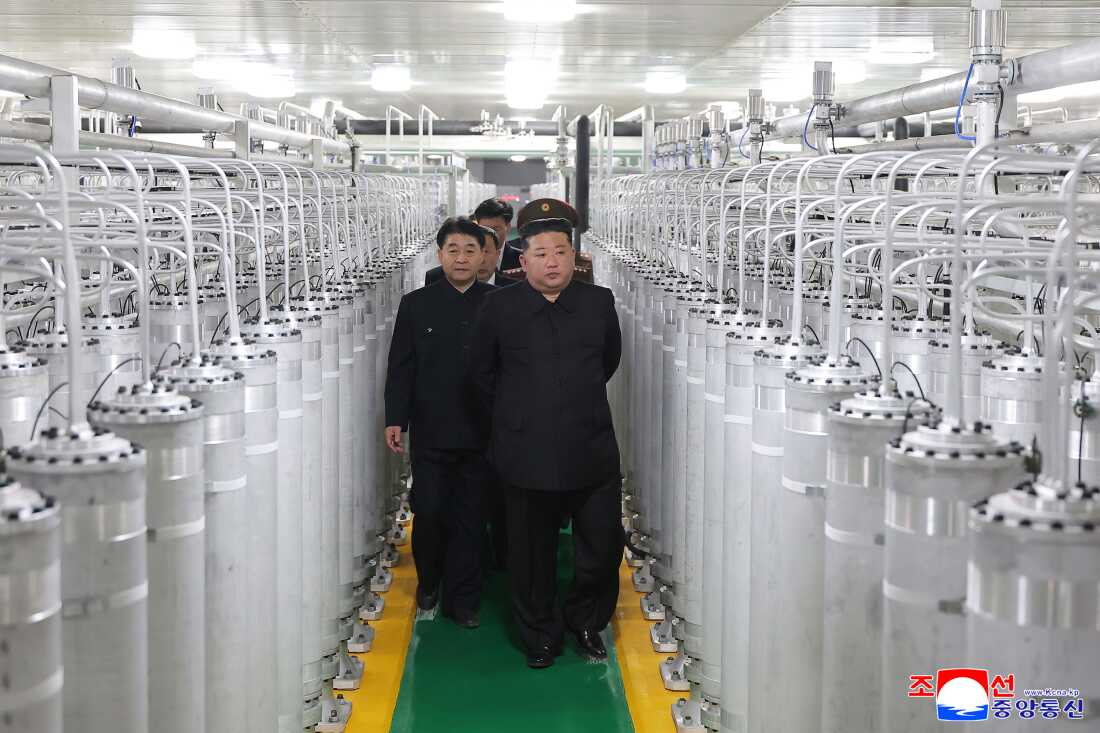
Toward a rival, Xi showed no such forbearance. On June 8, in a signed article for North Korea’s party paper, he warned against the revival of militarism in Japan, a country with no nuclear weapons, its military still constitutionally barred from offensive arms. However, he had nothing to say about the new bomb-fuel plant his host had unveiled five days earlier, with a vow to expand the arsenal at an exponential rate. Military restraint is the demand China presses on Japan and waives for North Korea.
Xi brought pledges on trade, agriculture, technology, and the restoration of flights and rail. Kim offered him a welcome staged for the cameras at Kim Il Sung Square, conceded nothing that mattered, and gave no ground on the weapons. What Xi bought was proximity, where he once held command. Analysts in Seoul read the summit the same way, casting Kim as the leader who entered from strength, courted by two great powers at once.
By surrendering the demand that was also his leverage, Xi gave up the means to restrain Kim, just as Kim turns toward a fight with Washington. Robert Carlin, a former U.S. negotiator with Pyongyang, traces that turn to 2023 and expects it to end in a reckoning. The Korea scholar Jung Pak sees the same drift: Beijing once used its economic leverage to rein in Kim’s provocations, but Kim now shows Xi he is beholden to no one. Kim’s own terms have hardened to match: he will talk only if the United States first accepts North Korea as a nuclear state. He cites the war that killed Iran’s leaders as proof that giving up the weapons would be a mistake. A war between Kim and Washington would draw China in, so Beijing cannot afford one. Yet by dropping that demand, Xi has signaled that China will not press Kim to disarm.
Xi does not control the bloc he has joined. The group now lined up against Washington was built by Russia’s war, not by him, and Kim joined it to serve his own ends. All Xi added in Pyongyang was China’s approval. He leaves Kim free to provoke, certain that the one power able to restrain him has chosen not to.
For thirty years, China demanded a North Korea without nuclear weapons. Xi has surrendered the demand.
🧭 POWER & CAPITAL · June 12, 2026
Where state power meets the boardroom.
🔷 Trump Halts Strikes and Claims an Iran Deal, but Tehran Holds Back: the president says a framework is approved and a signing is days away.
🔷 Stocks Roar Back on Hopes the Iran War Is Ending: a relief rally swept Wall Street and Asia, led by chipmakers.
🔷 Oil Slides as Traders Price In a Hormuz Reopening: crude fell sharply, though the strait stays shut until any deal is signed.
🔷 World Bank Says the Iran War Is Throttling Global Growth: the lender cut its 2026 forecast to the weakest since the pandemic.
🔷 SpaceX Completes the Biggest IPO Ever, Listing Today: the rocket maker raised about 75 billion dollars and debuts on the Nasdaq.
🌍 Global Affairs
The world's flashpoints, in motion.
Trump Cancels Scheduled Iran Strikes, Citing Negotiation Progress – TIPP News
Iran Fighting Intensifies With Congress Divided On War Power Questions – George Caldwell, The Daily Signal
Canada, Terrorist Group, Welcome Alleged Terror-Tied FIFA Referee – Pedro Rodriguez, The Daily Signal
🏛️ National Affairs
The fights shaping America right now.
Victor Davis Hanson: Scott Pelley’s CBS Complaint Backfires – Victor Davis Hanson, The Daily Signal
Trump Calls For ‘Generational’ Military Investment, Voter ID Requirement – Pedro Rodriguez, The Daily Signal
DHS Directs ICE To Deport Noncitizens Who Illegally Vote In US Elections – Fred Lucas, The Daily Signal
Trump Nominates Jay Clayton As Director Of National Intelligence – TIPP News
HHS Secretary Kennedy Urges Rubio To Join CAIR Funding Probe After Chip Roy’s Request – Pedro Rodriguez, The Daily Signal
What Is The ‘8647’ Message Found On The National Mall – TIPP News
The Largest Investment To Combat Child Trafficking Becomes Law – Virginia Grace McKinnon, The Daily Signal
California’s Skid Row Voter Case Proves Trump Right About The SAVE Act – Mehek Cooke, The Daily Signal
Daughters Of The American Revolution To Vote On Definition Of ‘Woman’ Amid Criticism Of Transgender Policy – Tyler O’Neil, The Daily Signal
Platner Cruises To Maine Senate General Election Despite Scandals – George Caldwell, The Daily Signal
JD Vance Chief Of Staff Jacob Reses To Leave White House Role – TIPP News
Virginia State GOP Set To Vote On Radical Democratic Amendments – Austin Ruse, The Daily Signal
Ohio Approves New Photo ID Rules For Mail Voting – TIPP News
Portland Man Sentenced For Assaulting ICE Officer During Protest – TIPP News
Reactions To ‘Teen Takeover’ Forcing Cancelation Of Church Festival In Columbus Suburb – Rebecca Downs, The Daily Signal
Storms Knock Out Power Across Midwest, Snarl Chicago Air Travel – TIPP News
Horse Death Sparks Calls To End Carriage Rides In New York City – TIPP News
U.S. Scientists Confirm Start Of El Niño Climate Pattern – TIPP News
As Summer Begins, Let’s Give Thanks For A Life-Saving American Invention: Air Conditioning – TIPP Insights
📈 Economy
Prices, policy, and the pressure on your wallet.
U.S. Becomes World’s Largest Oil Exporter For Third Straight Month – TIPP News
Appeals Court Allows U.S. To Continue Collecting 10% Tariffs – TIPP News
World Bank Cuts Global Growth Forecast To 2.5% – TIPP News
U.S. Jobless Claims Rise Slightly But Remain Historically Low – TIPP News
Congress Must Use Reconciliation To End The Fed’s Interest On Reserve Payments – Nicole Huyer, The Daily Signal
💼 Markets & Business
The deals and tickers making moves.
SpaceX Plans Orbital AI Computing Test Satellite By Next Year – TIPP News
Spotify Removes 57,000 Podcasts Linked To Illegal Drug Content – TIPP News
More Than 30 Lawsuits Filed Against GKN Aerospace After Chemical Incident – TIPP News
📊 Market Mood · June 12, 2026
How the trading day is setting up.
🟩 Markets were cautious as investors balanced hopes for a breakthrough in U.S.-Iran peace talks against lingering concerns over inflation and AI spending.
🟧 President Donald Trump said a deal with Iran could be finalized within days, raising expectations that the Strait of Hormuz may soon reopen and ease pressure on global energy markets.
🟦 Oil prices slipped below $90 a barrel, but remain well above pre-war levels, leaving investors wary that the energy shock could continue feeding inflation and slowing growth.
🟨 The AI boom entered a new phase as SpaceX prepared for the largest IPO in history, while concerns persisted over the enormous capital required to finance the industry's rapid expansion.
🗓️ Key Economic Events
On today's U.S. data calendar.
No events scheduled.
Letters to the editor email: editor-tippinsights@technometrica.com
Subscribe Today And Make A Difference. Consider supporting Independent Journalism by upgrading to a paid subscription or making a donation. Your support helps tippinsights thrive as a reader-supported publication. Contact us to discuss your research or polling needs.
Reach our audience. For sponsorship and advertising opportunities, visit our Partner With Us page.