Oil prices fell ahead of the G7 summit opening on June 15. On June 12, Reuters reported Brent crude futures settled at $87.33 a barrel, down 3.37%, after falling to their lowest level since early March as traders grew more confident about a U.S.-Iran peace agreement. That gave President Trump something he badly needed at the G7: proof that the pressure was moving his way.
For 30 years, I have worked inside political, military, economic, and public pressure, where events move faster than the systems built to contain them. Governments usually crack long before they collapse on paper. This week's Pressure vs. Pressure starts at Hormuz.
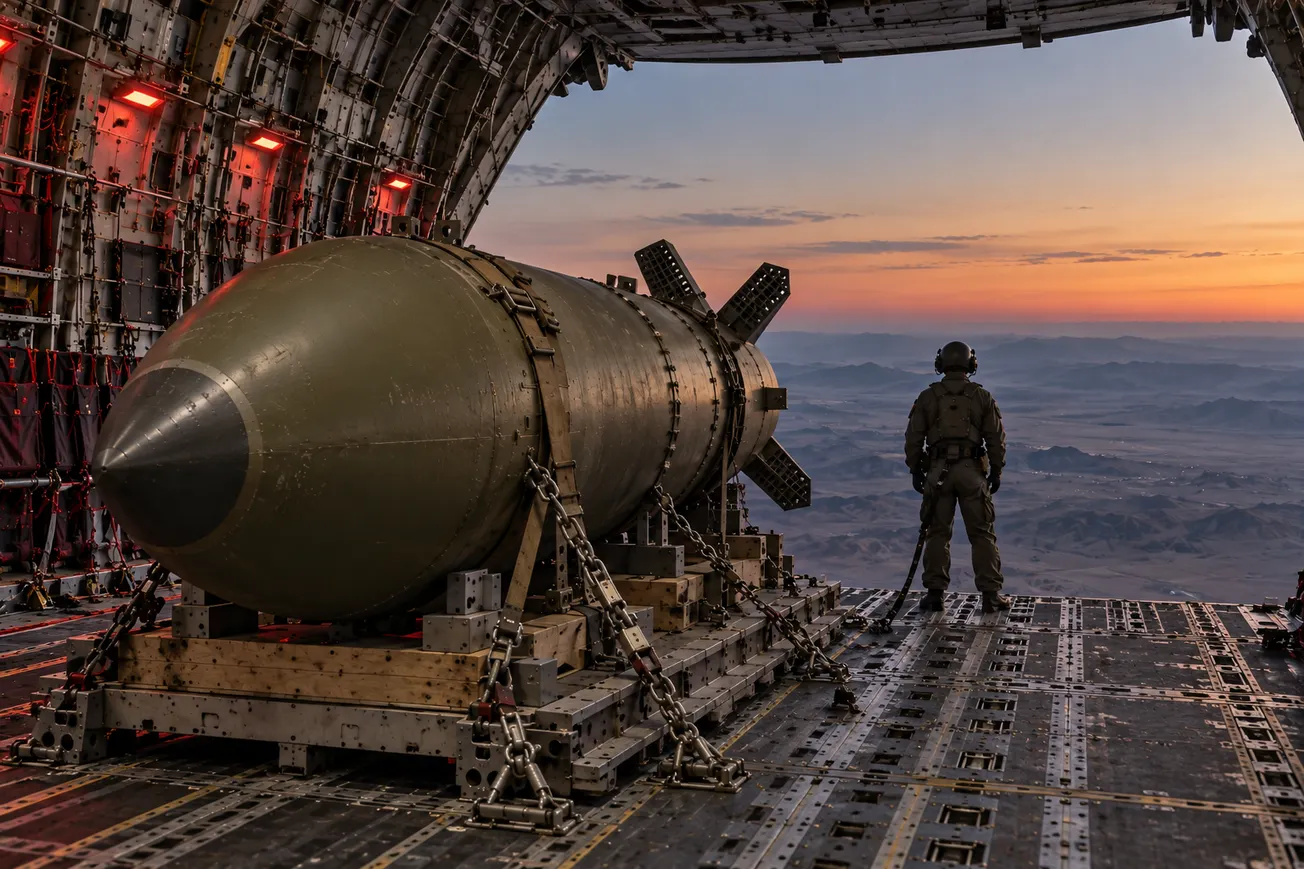
If Hormuz had stayed closed, G7 leaders would have walked in asking why the world's most important energy chokepoint was still blocked. With traffic moving again, Trump can argue American pressure opened the water and turned a crisis into evidence that the campaign worked.
The agreement is best understood as a pressure trade rather than a peace deal. Trump wants proof before relief, Iran wants relief before surrender, and Israel wants pressure to continue until Iran and Hezbollah lose more capability. Those goals collide, and Hormuz measures who has leverage. If ships move, energy prices ease, and inspectors get access, the memorandum has produced results. If Iran delays vessels, charges fees, or intimidates crews, the deal is unfinished.
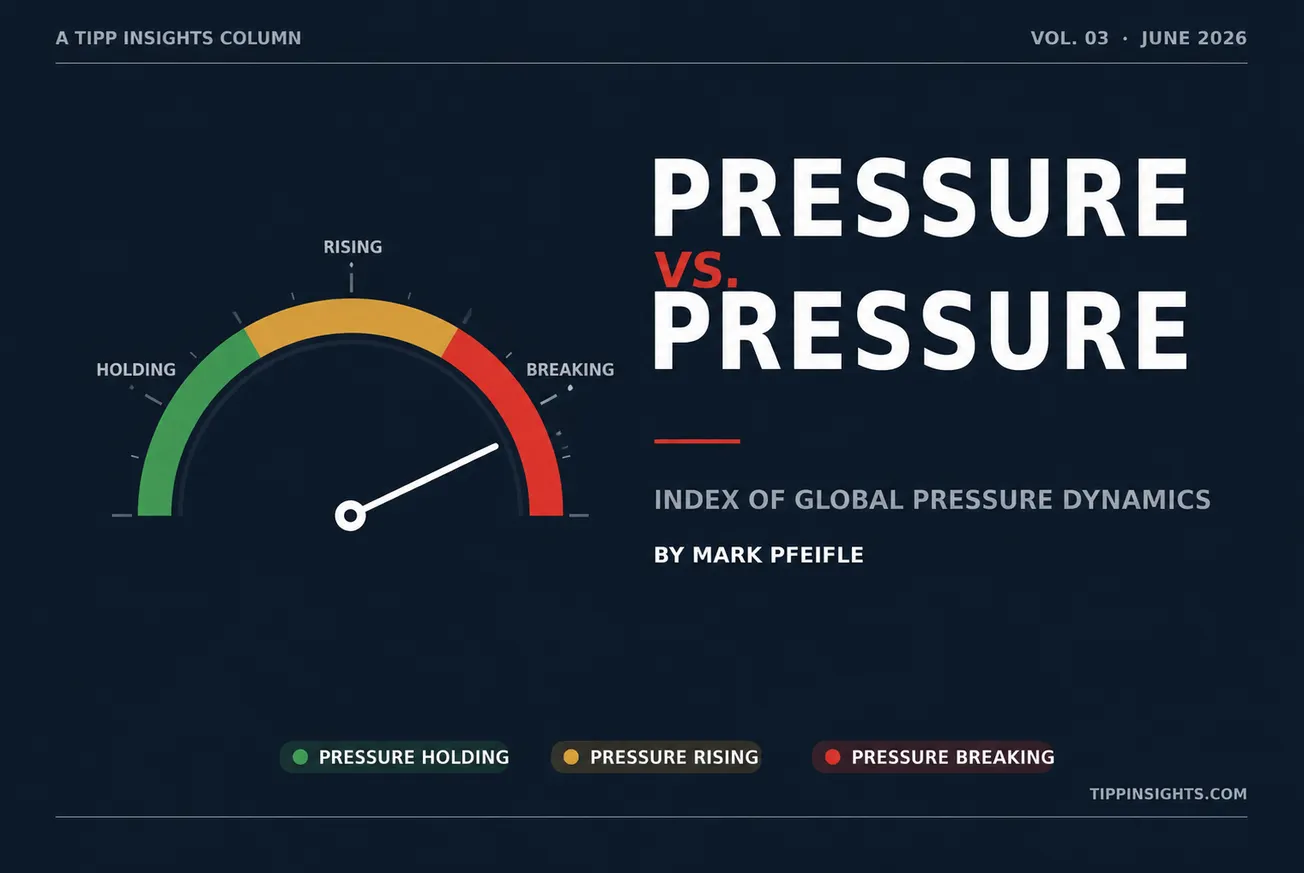
United States: Pressure Steady
Washington has the cleanest demands of the three parties: open the Strait of Hormuz, dilute the uranium, accept inspections, restrain the proxies, and then discuss relief. The United States does not need to trust Iran, only to test Iran, and the money moves only after dilution begins under IAEA supervision.
Trump's advantage is that Iran needs cash, trade, shipping, and reconstruction. Tehran needs to show its own people that resistance produced relief and convince the region that it survived American pressure without folding. That gives Washington leverage so long as Trump does not pay first.
His weakness is speed. He wants the victory lap, lower oil prices, and the G7 photo, and Iran, Israel, Europe, and the markets can all read urgency. A fast deal looks strong if pressure stays on, and weak if Trump needs the signature more than Iran needs the relief.
Congress gives him a second front of pressure. What plays at the G7 still has to clear lawmakers at home.
Trump does not face reelection this year, but his congressional majority does. If oil keeps falling, the Strait of Hormuz stays open, and voters see relief before the midterms, the memorandum helps him politically. If Iran pockets relief and the next crisis arrives before November, the deal becomes a Republican liability.
The first American goal is to make the water usable again rather than to force regime change. Demining, escorting commercial ships, intercepting drones and missiles, enforcing pressure on Iranian ports, and striking threats to commercial traffic are what turn a memorandum into open water. Washington holds leverage, a sequence, and three measurements that matter: ships, dilution, and inspectors.
Iran: Pressure Breaking
Tehran will frame the memorandum as proof of endurance, claiming it stood up to American pressure, survived Israeli attacks, held the Strait of Hormuz, and forced Washington into negotiations. Strong regimes, however, do not need emergency oxygen.
Iran needs money, sanctions relief, oil and ships moving, and reconstruction capital flowing in. It needs the Gulf and the West to treat restraint as something worth buying. Those read less like the demands of a victorious power and more like those of one absorbing pressure faster than it can redistribute it.
For decades, Iran built pressure levers in the form of proxies, missiles, uranium, maritime disruption, and regional intimidation. Tehran learned how to exhaust American administrations and raise the price of every confrontation without fighting a conventional war. Hormuz was the central instrument of that strategy. Threaten one waterway and pressure jumps from the Gulf to grocery bills, gas prices, shipping rates, insurance markets, and political approval numbers. Iran made distant publics pay for a regional war.
Now the same waterway cuts back against Tehran. Relief requires allowing ships to move, investment requires reducing risk, and sanctions relief requires giving up capability before cash arrives. The lever Iran used against the world has become the world's measurement of Iran.
Tehran is not collapsing, and it still has proxies, missiles, and nuclear leverage capable of creating regional pain. But it no longer controls the pressure alone. It used Hormuz to raise the cost of war. Trump is using Hormuz to measure the cost of relief. If Iran gives up capability before cash, Trump wins. If Iran gets cash before capability moves, Tehran has bought time. If Hormuz becomes a toll booth, Iran has turned de-escalation into extortion.
Israel: Pressure Rising
Israel has the hardest political problem of the three. It has not lost Washington, but it has lost automatic patience. The threat from Iran, Hezbollah, Hamas, and the Houthis is understood at this point. What Israel needs now is a plan for the money if Iran gets paid, and an answer to whether Hezbollah gets paid alongside Tehran.
Gaza, Lebanon, Hezbollah, and Iranian money are now Israel's pressure points. If Iran pauses, pockets relief, and sends more money to the same proxies threatening Israel's borders, Israel inherits the risk while Trump claims the diplomatic win.
Americans are asking harder questions. Iraq, Afghanistan, Iran, Gaza, Hezbollah, the Houthis, lost American lives, accumulated debt, higher costs, and no clean end state have changed the way the American public hears Middle East arguments. Support for Israel's security remains, but the willingness to fund an open-ended regional strategy without a path out has narrowed.
Egypt was the warning. Last October, Netanyahu was invited to stand beside Trump and other leaders at the Gaza peace signing, and chose not to attend. Israel had its security arguments; the rest of the world held a ceremony; and the optics traveled. Now the United States and Iran have a memorandum, and Israel is not a party to it. Where Trump wants to turn pressure into a deal, Netanyahu wants to turn it into a defeat for Iran and its proxies.
The agreement will make Trump's year easier if oil falls, the Strait of Hormuz stays open, and voters see relief before the midterms. It makes Netanyahu's year harder. He faces Israeli voters this year and has to explain why Israel should accept a pause that may give Iran money, time, and room to rebuild. He also has to make the case for Gaza, Lebanon, and Iran itself to an American audience that still supports Israeli security but no longer accepts every argument without an end state.
Article 1 of the MoU declares an end to fighting on every front, Lebanon included. Israel did not sign it. Lebanon is where the collision becomes dangerous. Trump wants quiet long enough to turn the memorandum into a result. Netanyahu wants freedom of action long enough to prevent Iran and Hezbollah from using the pause to recover. If Israel holds fire and Iran cheats, Netanyahu will say Washington bought Iran time. If Israel strikes and the memorandum collapses, Trump will say Netanyahu broke the diplomatic track before pressure had a chance to work. Israel is outside the memorandum and still positioned to break it.
The Pressure Map
The United States is steady because it holds the measures that matter: ships in the Strait of Hormuz, uranium dilution under IAEA supervision, and inspectors on the ground.
Iran is breaking because it needs oxygen more than it admits. The memorandum forces Tehran to prove restraint in the same three areas where it has exerted pressure: the Strait of Hormuz, the nuclear program, and the proxy network.
Israel is rising because it wants Iran weakened rather than delayed, and Hezbollah contained rather than quiet for a news cycle. The American preference is for diplomatic space; the Israeli preference is for freedom of action.
Two other powers sit on the same map. Russia is rising because higher energy prices helped Moscow while Hormuz dominated world attention, and if the memorandum holds, pressure swings back to Ukraine's deep strikes, Russian war casualties, and a strained Russian economy. China is breaking because its economy needs Gulf energy, and it also buys heavily from Iran. If Hormuz tightens again, pressure runs from Iranian waters straight into Chinese factories.
The memorandum works only if Iran loses capability before it gains cash. If uranium moves, inspectors enter, Hormuz stays open, and Hezbollah stays quiet, Trump can argue that pressure produced a result. If Iran gets relief first, Israel will need a plan for the proxy money, and the next crisis will already be financed. Pressure exposes reality before politicians admit it. Hormuz will tell us who won.
Mark Pfeifle is a member of the TIPP Insights Editorial Board. He runs the crisis management firm Off the Record Strategies. He served as deputy national security adviser for strategic communications and global outreach at the White House from 2007 to 2009.
🌍 Global Affairs
The world's flashpoints, in motion.
🟦 Trump And Iran Sign Memorandum To Begin Ending Conflict – TIPP News
🟦 U.S. Officials Outline 14-Point Draft Deal With Iran – TIPP News
🟦 Trump Urges Netanyahu To Take A Softer Approach in Lebanon – TIPP News
🟦 UN Warns Hunger Crisis Will Worsen In 13 Global Hotspots – TIPP News
🟦 How Many Children Are At Risk From Climate Change Worldwide? – TIPP News
🟦 Oldest Known Plague Outbreak Discovered In Ancient Siberia – TIPP News
🟦 5,000-Year-Old Structure May Predate Stonehenge By Centuries – TIPP News
🏛️ National Affairs
The fights shaping America right now.
🟥 Justice Department Moves To End Teamsters Federal Oversight – TIPP News
🟥 Feds Indict 15 Antifa Members For Conspiring To Injure Federal Officers – Pedro Rodriguez, The Daily Signal
🟥 Why Did Donald Trump Settle His Lawsuit Against Mary Trump? – TIPP News
🟥 Second Suspect Arrested In Toledo Festival Mass Shooting – TIPP News
🟥 How Did Investigators Solve The Gilgo Beach Serial Murder Case? – TIPP News
🟥 California ‘Basically’ Decriminalized Voter Fraud, Top Federal Prosecutor Warns – Mehek Cooke, The Daily Signal
🟥 Link To Fani Willis Leads To Federal Judge Recusal In Georgia Voter Rolls Case – Fred Lucas, The Daily Signal
🟥 California Received 80% Of Funds For Illegal Immigrant Households While Americans Faced Stricter Rules – Angelina Delfin, The Daily Signal
🟥 Thune: Intelligence Director Confirmation Could Break The FISA Deadlock – Virginia Grace McKinnon, The Daily Signal
🟥 This New Swing State Ballot Measure Could Change Voting In 2028 – Virginia Grace McKinnon, The Daily Signal
🟥 Alaska’s ‘Sham’ Dan Sullivan Booted From Primary Election Ballot – Francesca Cella, The Daily Signal
🟥 GAO Launches Probe Into Social Media Fraud Playbooks Amid Federal Crackdown – Fred Lucas, The Daily Signal
🟥 Karen Bass’ Brother Joins Spencer Pratt In Lawsuit Against Los Angeles – Angelina Delfin, The Daily Signal
🟥 Eastern Washington Wildfire Forces Thousands To Evacuate – TIPP News
🟥 Richmond Hosts The National Speech And Debate Tournament – Rich Tucker, The Daily Signal
📈 Economy
Prices, policy, and the pressure on your wallet.
🟩 Federal Reserve Holds Interest Rates Steady At Warsh’s First Meeting – TIPP News
🟩 U.S. Pending Home Sales Reach Six-Month High In May – TIPP News
📊 Market Mood · June 18, 2026
How the trading day is setting up.
🟩 Markets looked set to recover after Wednesday’s selloff as investors welcomed the formal signing of a U.S.-Iran peace agreement and continued declines in oil prices.
🟧 The Fed struck a more hawkish tone than expected. Chair Kevin Warsh kept rates unchanged but signaled that fighting inflation has become the central bank’s overriding priority.
🟦 Oil prices fell toward pre-war levels as the agreement paved the way for the reopening of the Strait of Hormuz and the eventual return of Iranian energy exports to global markets.
🟨 Investors remain focused on the economic aftermath of the AI boom, with rising infrastructure costs and funding needs prompting scrutiny across the technology sector, while Apple warned that higher chip costs could lead to price increases.
🗓️ Key Economic Events
On today's U.S. data calendar.
🟧 8:30 a.m. ET — Philadelphia Fed Manufacturing Index (June)
Forecast: 9.8 vs. -0.4 previous. A sharp rebound would suggest manufacturing activity is recovering as energy market disruptions begin to ease.
🟧 8:30 a.m. ET — Initial Jobless Claims
Forecast: 225K vs. 229K previous. Labor market conditions remain a key focus as investors assess whether economic growth is slowing enough to reduce inflation pressures without triggering a broader downturn.
Letters to the editor email: editor-tippinsights@technometrica.com
Subscribe Today And Make A Difference. Consider supporting Independent Journalism by upgrading to a paid subscription or making a donation. Your support helps tippinsights thrive as a reader-supported publication. Contact us to discuss your research or polling needs.
Reach our audience. For sponsorship and advertising opportunities, visit our Partner With Us page.