
By Miao Yanliang, Project Syndicate
In China, AI-driven productivity gains will most likely be in non-tradable services, which could push down relative prices and put downward pressure on the renminbi’s real exchange rate. To ensure that this does not also mean lower income and weaker demand, policymakers should ensure that the productivity dividend is broadly shared.
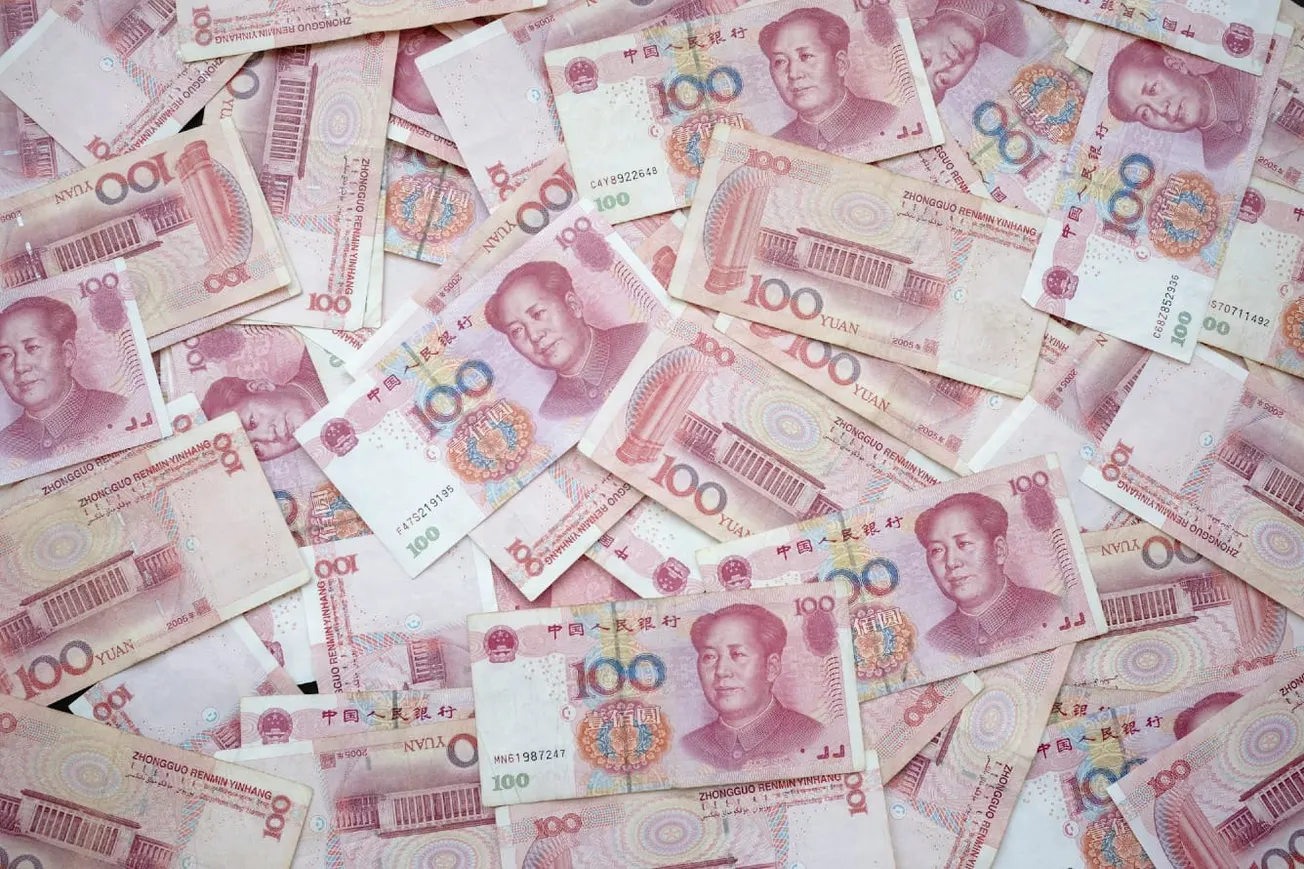
BEIJING—The renminbi has staged a notable recovery against the dollar since the second half of 2025, prompting renewed discussion about how much further it can rise.
Some link currency appreciation to productivity gains in China’s tradable sectors, including electric vehicles, renewable energy equipment, and shipbuilding. To explain why an increase in manufacturing productivity would affect the exchange rate, they point to a phenomenon known as the Balassa-Samuelson effect.
The logic is straightforward. More productive factories can compete more successfully in global markets and pay higher wages. Because workers are mobile across sectors, wages in local restaurants, schools, and hospitals also rise. If productivity in these services does not keep pace, providers must raise prices to accommodate higher wages. A haircut in China becomes more expensive relative to one elsewhere (after taking the exchange rate into account), even though the barber has not improved in any way. This is a real exchange-rate appreciation, and it can happen through a stronger renminbi, higher domestic prices, or both.
We have seen this before. Postwar Germany and Japan experienced episodes of sustained currency appreciation as their productivity converged toward US levels. China itself experienced a similar dynamic between 2005 and 2013, when the renminbi appreciated by roughly 35% against the dollar.
But that does not necessarily mean that a new wave of AI-driven productivity gains will cause the renminbi to appreciate even faster. AI may raise productivity precisely where the traditional Balassa-Samuelson mechanism assumes it will lag: non-tradable services.
Previous technological revolutions favored activities that could be mechanized, standardized, or scaled. The ICT revolution transformed finance, telecommunications, and e-commerce, making many services more tradable. But health care, education, and other local services remained largely dependent on human time and judgment. In Chinese public hospitals, for example, patient consultations per physician per day slipped from 7.5 in 2014 to 7.2 in 2024.
These are precisely the kinds of activities that generative AI can assist with, helping doctors, teachers, and other professionals process information and analyze data. If productivity rises in local services, their unit costs may fall rather than rise.
Local services differ from manufacturing in another important way. A more efficient car factory can sell more vehicles abroad. A more efficient hospital cannot easily export more consultations. The productivity dividend is largely trapped at home, where it is more likely to show up in lower prices. Food delivery offers a simple illustration: better algorithms allow riders to complete more orders per hour, but a more efficient delivery network in Beijing cannot deliver dinner in New York.
This can be understood as a reverse Balassa-Samuelson effect. Instead of rising manufacturing productivity pushing up the relative price of services, productivity gains in non-tradable services will push down relative prices, creating real depreciation pressure or offsetting some of the pressure for real appreciation.
The effect could be particularly strong in China. Many of the country’s most AI-exposed sectors, such as education, health care, accommodation, food services, and retail, are locally oriented. By contrast, the most highly exposed sectors in the United States include information, finance, and professional services, which became more tradable during the ICT revolution. Advances in AI capabilities have no bearing on these structural differences.
China’s market structure could amplify the effect. Health care and education operate under significant price guidance, while restaurants, retail, and delivery services are subject to intense competition. This may increase the likelihood that productivity gains are passed through as lower prices rather than higher profit margins, which would strengthen the reverse Balassa-Samuelson effect and put further downward pressure on the real exchange rate.
The macroeconomic implications go beyond the exchange rate. China is already navigating low inflation and weak domestic demand. If lower prices for services create enough additional demand, productivity gains can translate into higher volumes, employment, and nominal income. But if demand is relatively inelastic, prices may fall faster than volumes rise, adding to disinflationary pressure and weakening nominal income even as real productivity improves.
If AI-driven labor substitution weighs on employment and household incomes, it could reinforce this dynamic by making demand even less responsive to lower prices, potentially creating a cycle of falling prices, lower income, and softer demand. Under this scenario, a positive productivity shock could make disinflation more persistent.
How can policymakers mitigate these effects? Productivity gains are a positive development, so the answer is certainly not to slow AI adoption. The priority should instead be to ensure that the productivity dividend is broadly shared.
In the short run, exchange-rate flexibility can help absorb some of the relative price adjustment. Over time, opening services markets may allow lower costs to boost demand and activity, while making more services tradable could turn productivity gains into exports and income. Stronger household purchasing power and a shift from price competition to quality and value creation could translate AI-driven productivity gains into better services and higher incomes rather than simply lower prices.
AI could very well spark the next productivity revolution, but it need not have the same effect on the exchange rate as the last one.
Miao Yanliang, a former chief economist for China’s State Administration of Foreign Exchange, is Senior Managing Director and Chief Strategist at China International Capital Corporation.
Loved it, hated it, or somewhere in between — tell us. Grade this article here and help shape what lands in your inbox next.
🌍 Global Affairs
The world's flashpoints, in motion.
🟥 Trump’s Other War – Ron Paul, Ron Paul Institute for Peace and Prosperity
🟥 Rubio Says Suspected Plague Death In Russia Is Not Cause For Alarm – TIPP News
🟥 Brazil Election Heads To Runoff Between Lula And Flávio Bolsonaro – TIPP News
🟥 Who Is The U.S. Marine Accused In The Okinawa Woman’s Death – TIPP News
🟥 American Soul-Searching After The Iraq Withdrawal – Jacob G. Hornberger, Ron Paul Institute for Peace and Prosperity
🟥 The Rise And…Rise Of ‘Color Revolutions’ – Kit Klarenberg, Ron Paul Institute for Peace and Prosperity
🏛️ National Affairs
The fights shaping America right now.
🟫 Epstein Files Whistleblower Simon Andriesz Dies By Suicide At 57 – TIPP News
🟫 Former House Speaker Dennis Hastert Dies At 84 – TIPP News
🟫 Supreme Court Rejects Appeal Over Michigan School’s ‘Let’s Go Brandon’ Sweatshirt Ban – TIPP News
🟫 Supreme Court To Hear Arguments In More Illegal Immigration, Religious Freedom Cases – Fred Lucas, The Daily Signal
🟫 Trump Census Proposal Could Boost Political Power Of Some Citizen-Heavy Swing States At Cost To Largest States – Fred Lucas, The Daily Signal
🟫 Labor Secretary Confirmed As Senate’s Last Act Before 6-Week Recess – Virginia Grace McKinnon, The Daily Signal
🟫 Husted’s Ratepayer Protection Act Bill On Data Centers Fails In Senate – Rebecca Downs, The Daily Signal
🟫 PEN America Reports Nearly 12,000 School Book Bans In Record Year – TIPP News
🟫 Soldiers Wounded In Iranian Drone Strike Say Military Medical System Failed Them – TIPP News
🟫 Hilton vs. Becerra: Top 3 Moments From The California Governor Debate – Angelina Delfin, The Daily Signal
🟫 Election Betting On The Rise Ahead Of Midterms: Experts Weigh In – Rebecca Buis, The Daily Signal
🟫 Florida Man Accused Of Tracking Woman And Posting Private Information On TikTok – TIPP News
🔬 Science & Tech
What's being discovered, built, and launched.
🟪 Pennsylvania Reports More Than 1,000 Measles Cases Across 39 Counties – TIPP News
🟪 Doctors Warn About Energy Drink Risks For Children And Teens – TIPP News
📊 Market Mood · October 6, 2026
How the trading day is setting up.
🟩 Stocks are getting some relief this morning. U.S. futures are higher as Treasury yields retreat from multi-year highs and oil prices fall, while Monday’s AI-driven rally pushed the Nasdaq to another record. Reuters
🟦 AI remains the market’s strongest engine. Nvidia and Microsoft helped lead Monday’s advance, and expectations for another strong earnings season are reinforcing confidence in continued AI investment. Reuters
🟧 The bond market is still the key vulnerability. The 30-year Treasury yield touched 5.70% Monday, its highest since 2002, before easing this morning, as heavy government and corporate borrowing continues to test investor demand. Reuters
🟨 Oil has dropped below $100, with Brent around $99 as improving Middle East exports and the G7 release of emergency reserves ease immediate supply concerns. Geopolitical risks remain, but lower crude offers welcome inflation relief.
🗓️ Key Economic Events
On today's U.S. data calendar.
🟧 8:30 a.m. ET — U.S. Trade Balance (August)
Forecast: -$100.8B | Previous: -$88.6B
The deficit is expected to widen substantially, providing a fresh read on trade flows and their contribution to third-quarter growth
Letters to the editor email: editor-tippinsights@technometrica.com
Subscribe Today And Make A Difference. Consider supporting Independent Journalism by upgrading to a paid subscription or making a donation. Your support helps tippinsights thrive as a reader-supported publication. Contact us to discuss your research or polling needs.
Reach our audience. For sponsorship and advertising opportunities, visit our Partner With Us page.