First in a three-part series on Xi Jinping's year of pressure on Japan. How Beijing tried to break Japan's new prime minister, why China, not Japan, is the one boxed in, and who the campaign was really performed for.
In late May, at Asia’s main security forum in Singapore, China’s delegation warned the world that Japan was sliding back toward militarism. Japan’s defense minister rose to answer. He observed that one country in the hall kept a vast nuclear arsenal and a fleet of strategic bombers, that Japan kept neither, and asked why Japan was the one wearing the label. The exchange marked a relationship at its lowest point in years, and exposed something Beijing still refuses to see.
Xi Jinping set out to break a weak prime minister and now faces a stronger one rearming against him.
A year of Chinese pressure against Japan indicts Xi’s judgment. He started the fight; Sanae Takaichi, Japan’s first female prime minister, only gained from it.
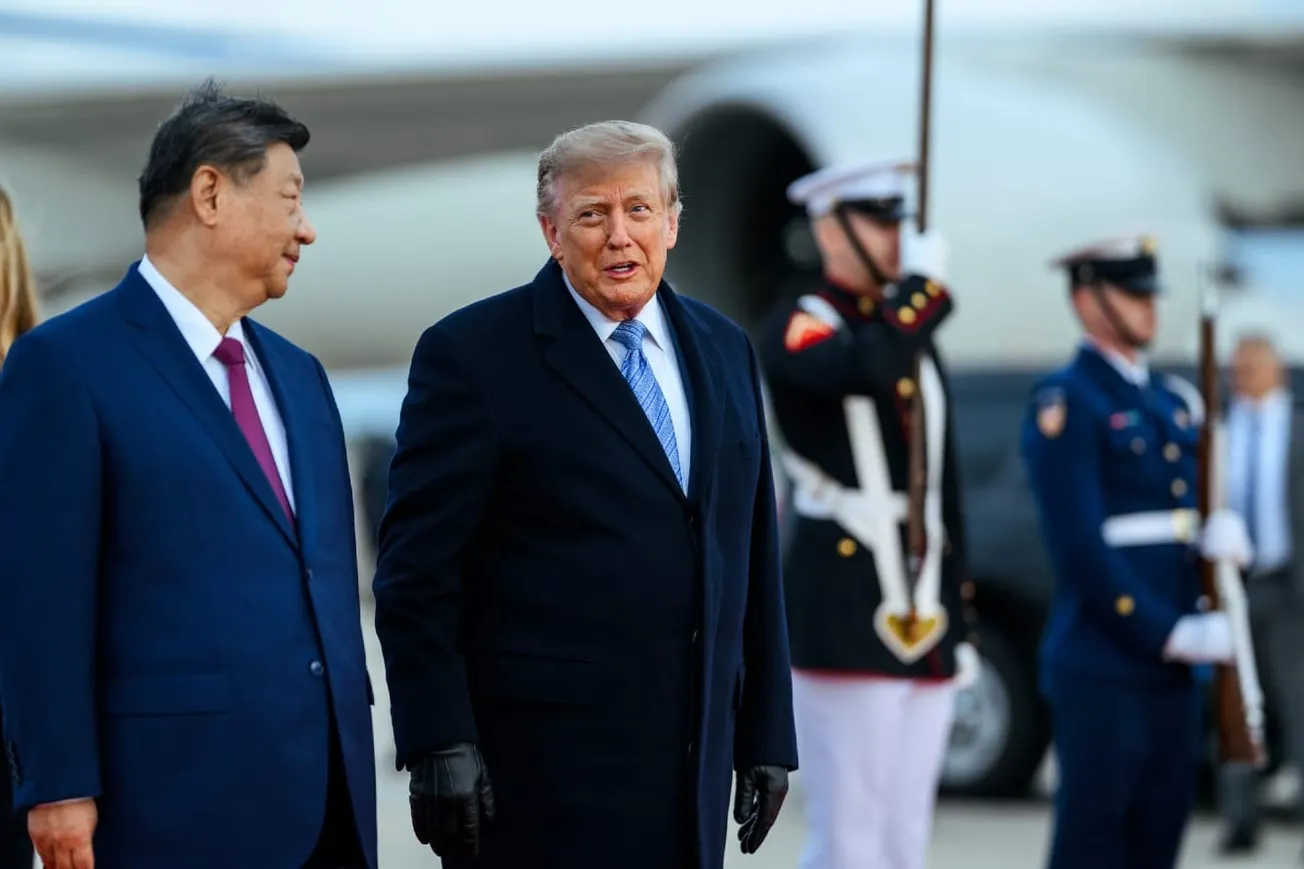
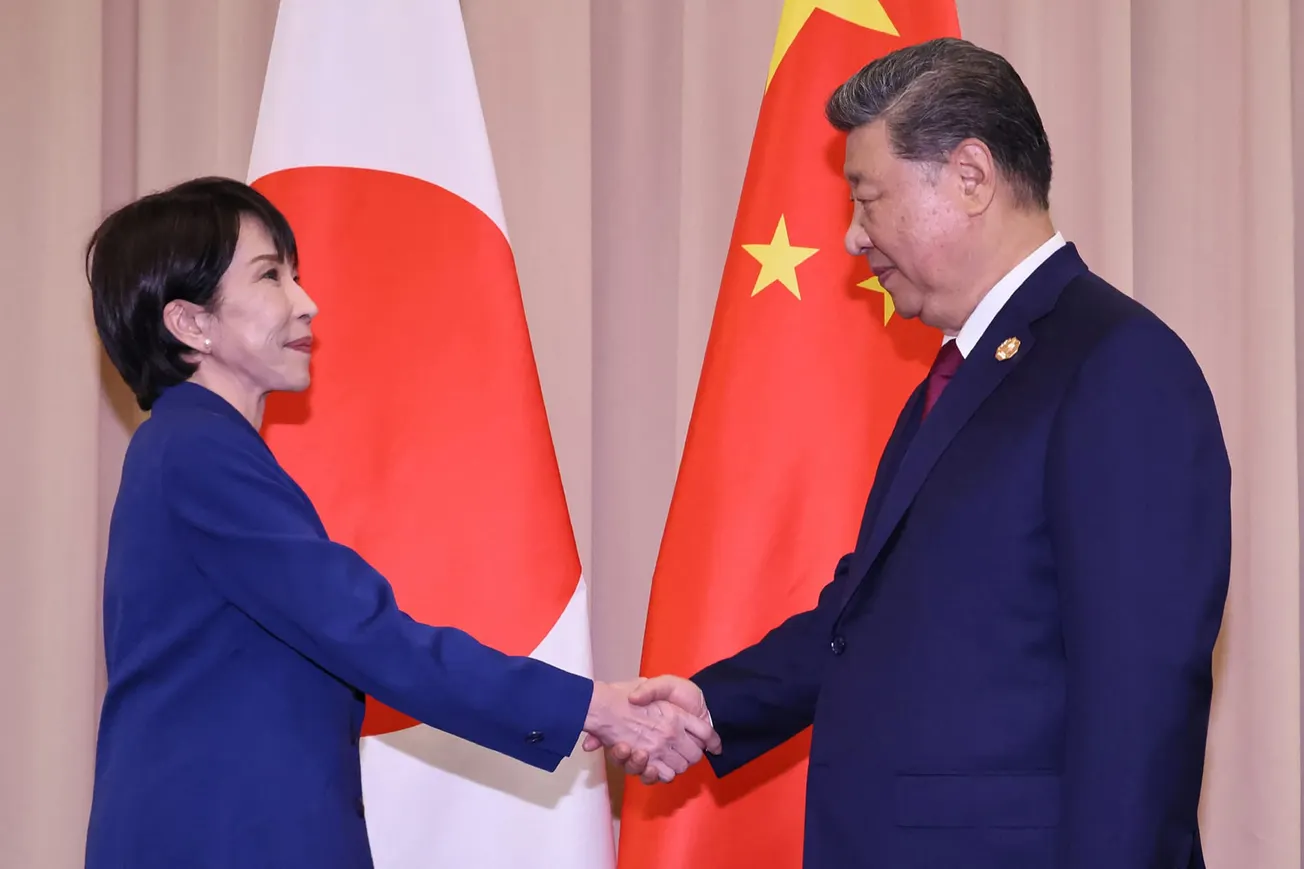
Rewind to October. Takaichi had just won the leadership of the Liberal Democratic Party, the conservative bloc that has governed Japan for most of the postwar era. Within hours, Komeito, the party’s coalition partner of a quarter century, walked out. She took office without a guaranteed majority, the most exposed Japanese leader in years. On October 31, she shook hands with Xi at an Asia-Pacific summit in South Korea, their last civil contact before the freeze. To Beijing, she looked like a stopgap worth toppling early, before she could set roots.
On November 7, Takaichi gave them their opening. Asked in parliament about a Chinese attack on Taiwan, she said it could amount to a “survival-threatening situation” for Japan, language that under Japanese law can unlock collective self-defense. It was a genuine break. For decades Tokyo had kept its position on Taiwan deliberately vague, much as Washington has long kept its own strategic ambiguity about whether it would defend the island. No sitting prime minister had stated it so directly. She crossed a line her predecessors had guarded, and serious observers in Tokyo said as much.
China retaliated within days, and the measures kept coming. Chinese state outlets revived memories of Japan’s wartime atrocities. Authorities told Chinese tourists to stay away, suspended seafood imports, and scrapped cultural events, and pushed airlines to cut flights to Japan. The Chinese consul-general in Osaka posted on X that he would “cut off that dirty neck,” apparently Takaichi’s, and would not hesitate to do it, then deleted the post. Relations sank to their worst in decades.
She called a snap election. Barely three months in office and polling near 70 percent, she put her mandate to a vote before a freshly merged opposition could organize. She ran as the steady hand against an external threat, and Beijing had spent the previous month proving that threat was real. When the votes landed on February 8, the LDP took 316 of the 465 lower-house seats, up from 198. The opposition bloc that had formed to stop her collapsed from 167 seats to 49.
A leader Beijing wanted gone now holds the biggest single-party majority in Japan’s postwar history. In April, for the first time in a decade, her government downgraded China in Japan’s official diplomatic record to “an important neighbor,” a step down from one of Japan’s most important relationships. She is spending the rest of that mandate on the one project China most wanted to bury: revising Article 9, the clause written under the U.S. occupation in 1946 that renounces war and bars Japan from using force to settle disputes. That clause has constrained Japan’s military for nearly eighty years, an arrangement Beijing has every reason to like. Giving the Self-Defense Forces explicit standing in the constitution is the very remilitarization Beijing claims to fear. The revision is not done. It needs two-thirds of both chambers, and the upper house does not vote again until 2028. But it is within reach for the first time, and the crisis that put it there was made in Beijing.
China did not win this election for Takaichi. Analysts credit the landslide to her personal popularity, a promised tax cut, and an opposition that collapsed in a botched merger. But the standoff with Beijing helped: it lifted her approval in the months that followed and gave her a national-security issue to run on. Xi created the crisis, and Takaichi used it.
Xi had tried this before, with Taiwan. For years China used military drills and threats to turn Taiwanese voters against the pro-independence Democratic Progressive Party. It failed; the party stayed in power. Pressuring a democracy’s voters tends to backfire, and Xi made the same mistake with Japan.
Xi misjudged the country. He bet that economic pain would split Japan’s business lobby and its voters from a weak new prime minister, and few advisers in Beijing had the standing to tell him otherwise. The pressure hardened Japan behind her instead.
Xi wanted a weaker, more compliant Japan. He got a stronger one that pushes back. The militarism China’s delegation denounced in Singapore is his own creation.
Next: the boxed-in giant, and why the map most Americans carry is upside down.
The TIPP Off
What you should be reading right now
Global Affairs
A World Without The U.N. Is A Better Place – Editorial Board, Issues & Insights
Suicide, Canadian Style – Editorial Board, Issues & Insights
Canada Shows The Gruesome Side Of Socialized Healthcare – Editorial Board, Issues & Insights
IAEA Says Iran’s Nuclear Program Largely Unchanged Since War Began – TIPP News
Five Eyes Flags Chinese Recruiting Efforts On LinkedIn – TIPP News
Nearly 40 Ships Leave Persian Gulf With U.S. Navy Coordination – TIPP News
Beware The Neo-Primes – Joseph Solis-Mullen, Mises Wire
Henry Nowak’s Death Exposed Britain’s Two-Tier Justice System – Jarrett Stepman, The Daily Signal
Ruto Defends U.S.-Backed Ebola Facility As Construction Accelerates – TIPP News
National Affairs
Midterm Voters: Are You Better Off Than You Were Four Years Ago? – Editorial Board, Issues & Insights
IN BED WITH NEO-NAZI: New Indictment Exposes Leftist Group’s Scandalous Relationships With White Nationalists – Tyler O’Neil, The Daily Signal
Meet The ‘Wicked Witch Of Woke’ And The ‘Queen Of DEI’ Looking To Take Key GOP Seats – Virginia Grace McKinnon, The Daily Signal
New Jersey Governor Blames Out-Of-State Agitators For Inflaming Newark ICE Detention Protests – Karen Freifeld, The Daily Signal
5 Things To Know About The Senate Hearing On Transgender ‘Medicine,’ Chloe Cole’s Testimony – Tyler O’Neil, The Daily Signal
California Vote Counting Draws Criticism From Trump – TIPP News
House Backs New Russia Sanctions And Billions For Ukraine – TIPP News
Senate Rejects Early Effort To Restrict $1.8 Billion Trump Fund – TIPP News
SEAN SPICER: How Trump’s Wilderness Years Made Trump 2.0 Successful – Bradley Devlin, The Daily Signal
Supreme Court Upholds FCC Enforcement Powers In Telecom Case – TIPP News
Collins, Dooley Spar During Debate – Kim Jarrett, The Daily Signal
Justice Clarence Thomas, Harry Jaffa, And The Declaration Of Independence – Wanjiru Njoya, Mises Wire
Economy
Trump Unveils $700 Million Plan To Support U.S. Coal Industry – TIPP News
Crazy Wealth Tax Proposals In California And New York City – Vincent Cook, Mises Wire
Markets & Business
SpaceX IPO Could Make Elon Musk The World’s First Trillionaire – TIPP News
California City Votes To Ban Data Centers In Landmark Measure – TIPP News
📊 Market Mood — Friday, June 5, 2026
🟩 Markets turned cautious as renewed tensions in the Middle East and fading momentum in the AI trade weighed on sentiment.
🟧 Hopes for a U.S.-Iran peace deal dimmed after Hezbollah rejected a U.S.-brokered Israel-Lebanon ceasefire, complicating broader regional negotiations.
🟦 Oil prices remained elevated despite a modest pullback, keeping inflation concerns alive as the Strait of Hormuz stayed largely closed to commercial shipping.
🟨 Investors turned their attention to the May jobs report, looking for clues on labor market strength and the Fed’s next move as interest-rate expectations continue to shift.
🗓️ Key Economic Events — Friday, June 5, 2026
🟧 8:30 a.m. ET — Nonfarm Payrolls (May)
Forecast: +85K vs. +115K previous. This is the market's most important labor report and will shape expectations for growth, inflation, and Fed policy in the months ahead.
🟧 8:30 a.m. ET — Unemployment Rate (May)
Forecast: 4.3% vs. 4.3% previous. Investors will watch for signs that the labor market is either stabilizing or beginning to soften.
🟧 8:30 a.m. ET — Average Hourly Earnings (May)
Forecast: +0.3% vs. +0.2% previous. Wage growth remains a key inflation indicator and could influence expectations for future interest-rate decisions.
Letters to the editor email: editor-tippinsights@technometrica.com
Subscribe Today And Make A Difference. Consider supporting Independent Journalism by upgrading to a paid subscription or making a donation. Your support helps tippinsights thrive as a reader-supported publication. Contact us to discuss your research or polling needs.
Reach our audience. For sponsorship and advertising opportunities, visit our Partner With Us page.