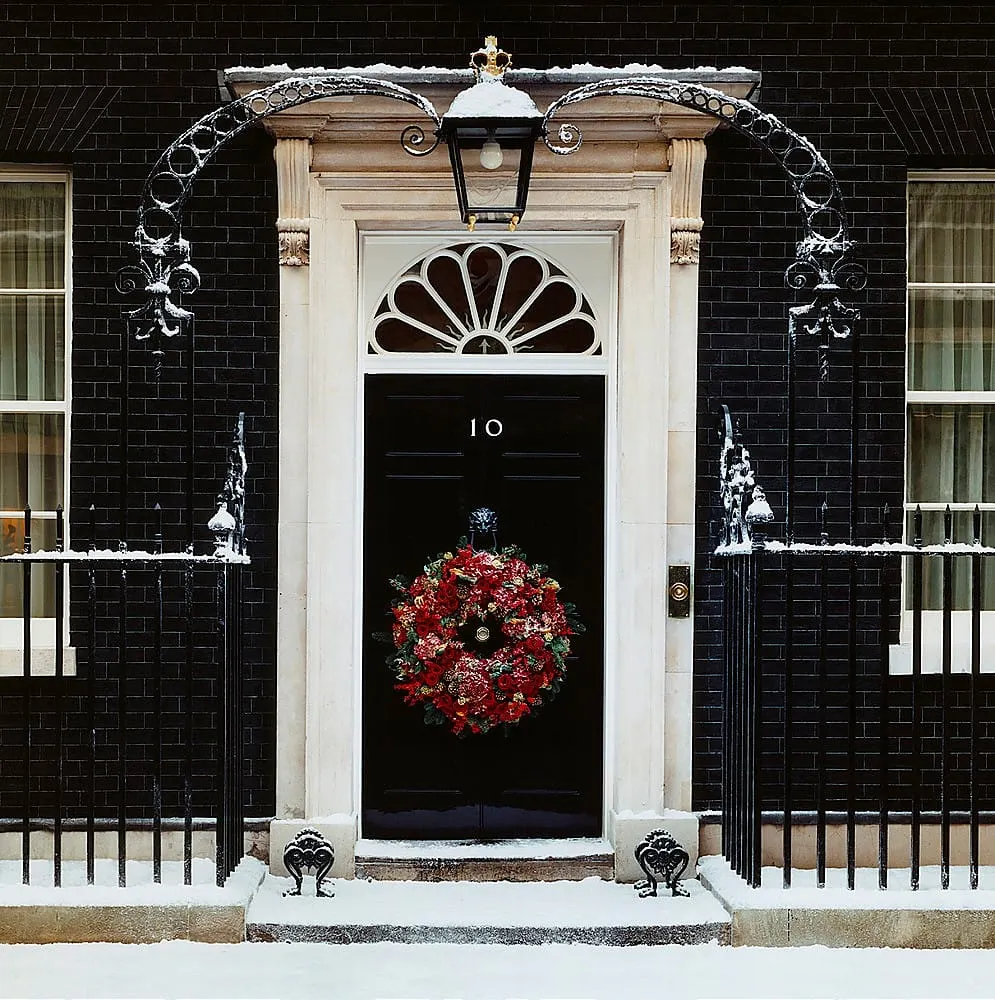
Keir Starmer is to step down as British prime minister, extending a decade of political turmoil that has seen six UK leaders depart since the country voted to leave the European Union in 2016.
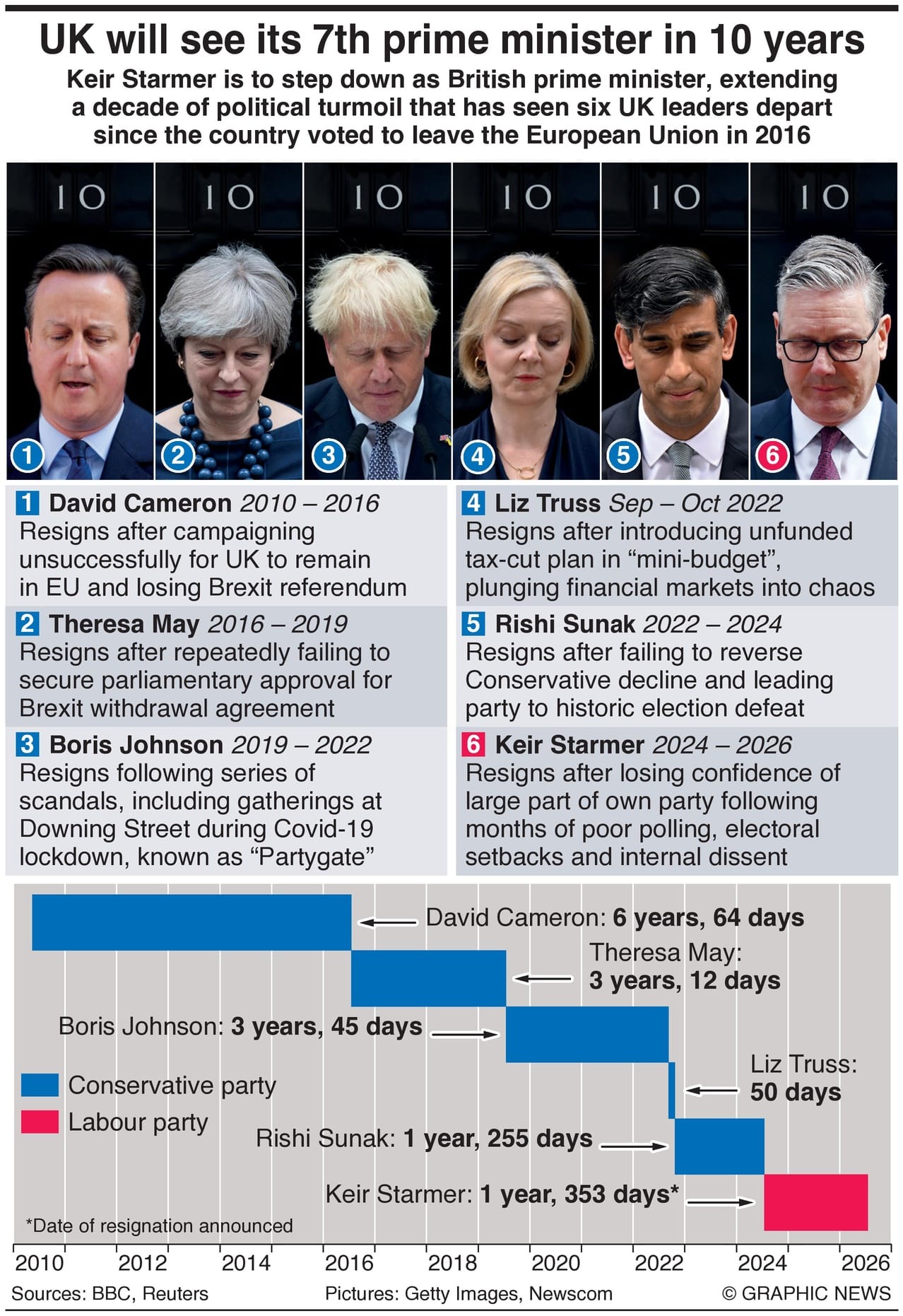
Starmer said he would resign as Labor leader after weeks of mounting pressure from within his party, following poor poll ratings, electoral setbacks, and growing unrest among Labor MPs. He will remain the prime minister until a successor is chosen.
Since David Cameron quit after losing the 2016 Brexit referendum, Britain has been led by Theresa May, Boris Johnson, Liz Truss, Rishi Sunak, and Starmer, with a seventh prime minister now set to take office.
Attention has already turned to Andy Burnham, the former Greater Manchester mayor and newly elected Labor MP, who is widely seen as the frontrunner to succeed Starmer.
Starmer said he would ask Labor's National Executive Committee to open leadership nominations on July 9, with the process beginning before Parliament's summer recess and a new leader expected before MPs return in September.
Right-Wing Candidate Wins Colombia Election
Colombian right-wing candidate Abelardo de la Espriella has clinched a narrow victory in Sunday’s presidential election, according to an initial ballot count.
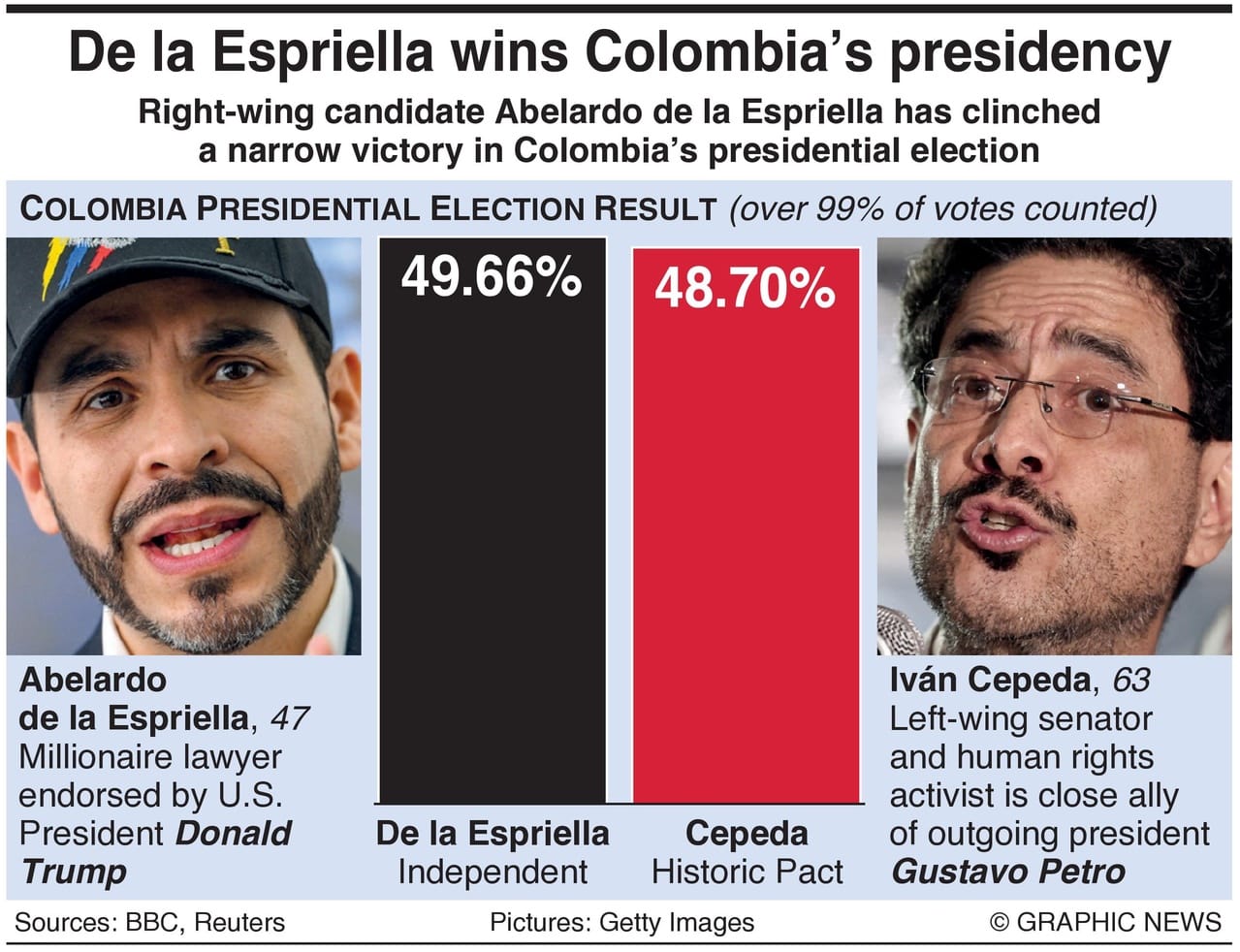
De la Espriella, who was endorsed by U.S. President Donald Trump, has pledged a military crackdown on illegal armed groups, drug trafficking, and crime.
He appeared to defeat left-wing Iván Cepeda, a close ally of outgoing president Gustavo Petro. With over 99% of votes counted, de la Espriella had won nearly 49.7% of the vote, while Cepeda won 48.7%, according to an initial count of the runoff election, the BBC said.
Europe Facing Prolonged Heat Dome
A “heat dome” developing over western and central Europe could engulf the continent in a long-lasting heatwave, triggering red alerts in France, Spain, Italy, and the UK as June temperatures break historical records
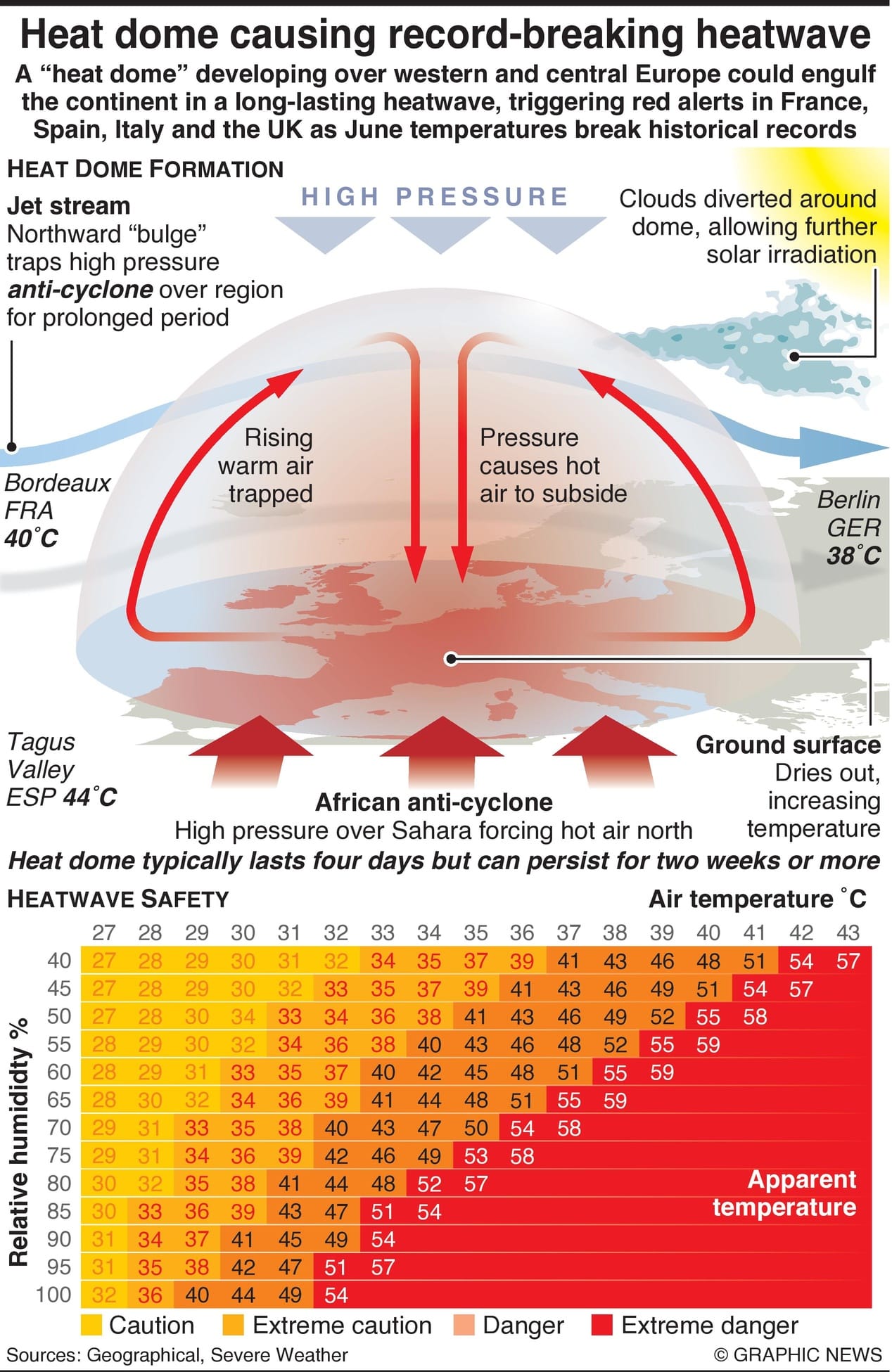
High pressure over the Sahara Desert – a so-called African anti-cyclone – is forcing hot air north, where it is trapped by a northward loop in the jet stream, allowing heat to build up.
Climate change has heated Europe nearly twice as fast as the global average, and the presence of a heat dome - a warm, dry air mass hanging over western and central Europe - has coincided with high levels of intense solar radiation that have driven temperatures even higher.
🌍 Global Affairs
The world's flashpoints, in motion.
🟦 What Was Agreed In The First Round Of Iran-US Talks – TIPP News
🟦 UK Prime Minister Keir Starmer Announces Resignation As Labour Leader – TIPP News
🟦 Trump Says UK Prime Minister Resigning In Wake Of Damning Rape Gang Report – Harold Hutchison, Daily Caller News Foundation
🟦 Belfast Is Burning, And The Media Won’t Say Why – Josh Hammer, The Daily Signal
🟦 Why JD Vance Says U.S.-Iran Negotiations Are Advancing – TIPP News
🟦 Why Did Strait Of Hormuz Shipping Slow Over The Weekend – TIPP News
🟦 Iranian Oil Trade Gets Temporary U.S. Approval Through August – TIPP News
🟦 Trump Ally Edges Ahead In Colombia Presidential Vote – TIPP News
🟦 NATO 3.0 And Shifts In Force Posture And Funding – Wilson Beaver & Elizabeth Krajc, The Daily Signal
🟦 Tail Wags Dog – Martin Sieff, Ron Paul Institute for Peace and Prosperity
🏛️ National Affairs
The fights shaping America right now.
🟥 Further Reflections On The Reflecting Pool – Editorial Board, Issues & Insights
🟥 Data Center Critics Have Water On The Brain – Editorial Board, Issues & Insights
🟥 Biden Seeks To Block Disclosure Of Sensitive Interview Tapes – TIPP News
🟥 Ossoff’s Anti-Second Amendment Record Stands Out As Gun Manufacturers Migrate To Georgia – Pedro Rodriguez, The Daily Signal
🟥 Newsom’s 911 Debacle – Bruce Bialosky, The Daily Signal
🟥 JD Vance’s Chicken Coop Is About More Than Just Chickens – Mollie Engelhart, The Daily Signal
🟥 New World Screwworm Outbreak Raises Alarm Across Southern US – TIPP News
🟥 America At 250: The Roots Of America’s Greatness – Victor Joecks, The Daily Signal
📈 Economy
Prices, policy, and the pressure on your wallet.
🟩 Alan Greenspan, Architect Of Modern U.S. Monetary Policy, Passes Away – TIPP News
🟩 Progressives Inequality Arguments Reaching The Green Light – Conner McEleney, Mises Wire
🟩 Institutional Closure: Why Managed Directivism Breeds Its Own Collapse – Luc Lelièvre, Mises Wire
🟩 From Scholasticism To Enlightenment Liberalism – Vincent Cook, Mises Wire
💼 Markets & Business
The deals and tickers making moves.
🟧 Elon Musk’s SpaceX Launches Bond Sale After Record-Breaking IPO – TIPP News
🟧 WhatsApp Gets New CEO As Meta Backs India’s Cred With Fresh Funding – TIPP News
🟧 How Chevron Will Supply Energy To Microsoft’s Texas Data Center – TIPP News
Letters to the editor email: editor-tippinsights@technometrica.com
Subscribe Today And Make A Difference. Consider supporting Independent Journalism by upgrading to a paid subscription or making a donation. Your support helps tippinsights thrive as a reader-supported publication. Contact us to discuss your research or polling needs.
Reach our audience. For sponsorship and advertising opportunities, visit our Partner With Us page.