
By Stephen S. Roach, Project Syndicate | July 24, 2026
The pro-China camp continues to tout Hong Kong’s resilience, recently pointing to the fact that the city has reclaimed its position as the global IPO leader. But conveniently left out of this narrative is that resilience has come to depend on the direct intervention of the Chinese authorities.
NEW HAVEN—Hong Kong deserves credit for putting up a fight. In the nearly two and a half years since I expressed the apparently controversial opinion that Hong Kong is “over,” the city’s boosters have orchestrated a determined campaign to prove otherwise.
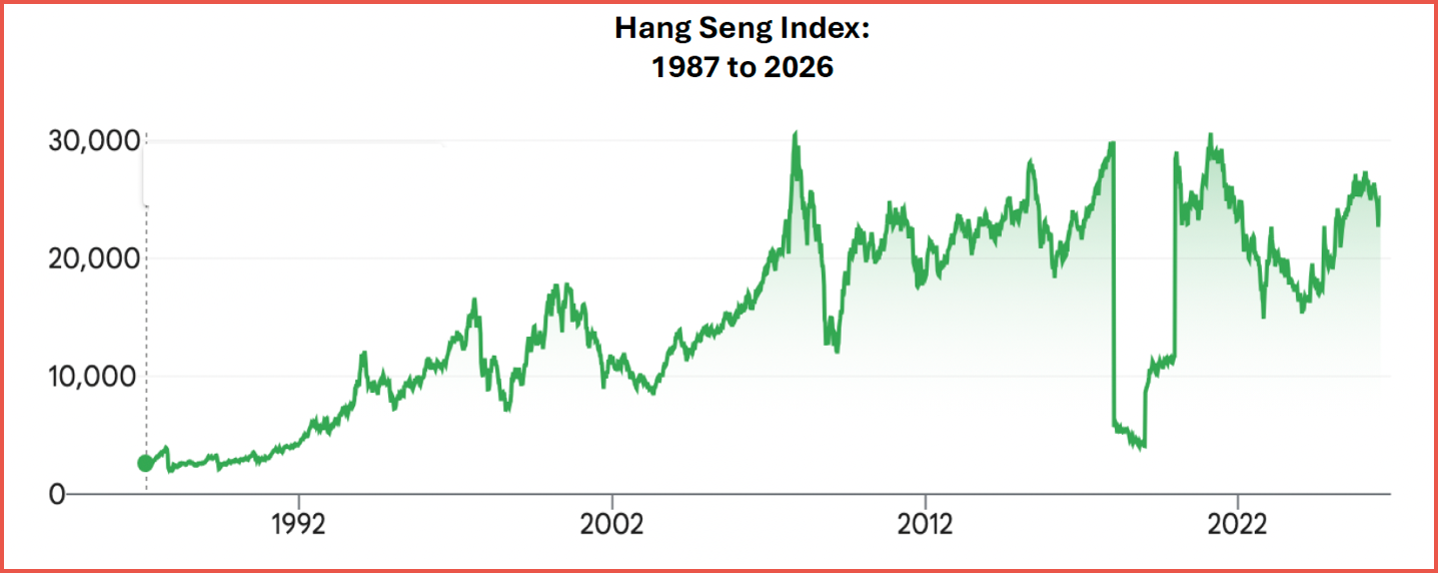
At first glance, this heroic defense seems to have some merit. Hong Kong’s economy has been relatively resilient, and a resurgence of the Hang Seng Index has erased memories of the 2018–20 collapse stemming from political turmoil. Moreover, the city has reclaimed its position as the global IPO leader, giving it bragging rights as Asia’s premier financial center. Paul Chan, Hong Kong’s financial secretary, and other leading government officials consistently sing its praises.
Beneath the surface, however, the story is very different. Beijing’s hostile takeover following the pro-democracy demonstrations of 2019–20 has transformed Hong Kong into just another big Chinese city. Today, its Mandarin name, Xiānggǎng (香港,“fragrant harbor”), which celebrates the city’s pre-colonial Chinese heritage, seems more apt than Hong Kong, a phonetic translation from Cantonese, the city’s long dominant dialect.
This dramatic transformation into Xiānggǎng is the real story. Hong Kong’s defenders are in denial about this new chameleon-like identity, instead viewing it as another example of the city’s inherent resilience. Nice try.
IPO leadership, long the most precious jewel in the city’s financial-services crown, is a glaring case in point. But the city’s return to the top spot in 2025 was driven by listings of mainland Chinese companies such as CATL, Luxshare Precision, Z.ai, Momenta, and Montage Technology. They account for a significant share of recent funds raised. Hong Kong is less a thriving global IPO market than a major platform for Chinese issuers.
The rule of law, long regarded as one of Hong Kong’s greatest institutional advantages, has been severely compromised. In 2020, China bypassed the Hong Kong legislature and imposed a sweeping national security law. Four years later, Hong Kong’s lawmakers rushed through Article 23, an expansion of the 2020 security law that integrated China’s national security framework into the city’s legal system. These changes have stifled open debate, resulted in new arrests and harsh sentences for previously imprisoned activists, led to closures of independent bookstores, and destroyed any semblance of a free press.
Moreover, six foreign judges have resigned from Hong Kong’s Court of Final Appeal, calling the independence of the city’s highest judicial authority into serious question. Among the departures was Jonathan Sumption, one of England’s most brilliant jurists, who warned in the Financial Times that a Mainland strain of “judicial ‘patriotism’” was poisoning the city’s legal system.
Lastly, there are the people. While Hong Kongers remain proud of their heritage, and the city’s overall population has held steady at around 7.5 million since 2020, there has been a dramatic shift in the composition of the workforce. The Hong Kong government does not publish official emigration statistics by nationality, but research points to a significant outflow of expats, including many mid- and senior-level professionals, since 2020, followed by a surge of Chinese workers from the mainland. Walking the streets of Hong Kong today, one is just as likely to hear Mandarin as Cantonese.
Taken together, this represents a fundamental transformation in Hong Kong’s character. The city’s stunning outward appearance remains. But that hardly justifies the tales of competitive innovation that the pro-China camp spins. Conveniently left out of this narrative is that this resilience has been largely made in China, not in Hong Kong. China’s stock-market stimulus of September 2024, for example, propelled equity markets upward, unleashing a torrent of Chinese IPOs that were consciously steered to Hong Kong’s sophisticated equity-distribution platform. And now the PRC’s “national team” is attempting to do it again.
It is obvious that Hong Kong’s economic performance is closely correlated with China’s. Thus, sluggish Chinese GDP growth, which slid even further below target to 4.3% in the second quarter of 2026, will undoubtedly weigh down Hong Kong’s growth.
The Hong Kong government seems to think that Chinese-style central planning offers new hope for its economy and recently launched its first five-year plan. But, as China is painfully learning, such plans can often over-promise and under-deliver. This suggests that until there is a meaningful test of the downside—for the economy or the equity market—any conclusions drawn about Hong Kong’s resilience are premature.
To some extent, I have become a lightning rod in the “Hong Kong is over” debate. Hong Kong and Chinese officials are quick to pounce on my comments. Local journalists often ask if I am ready to admit that I was wrong (particularly after I conceded that a managed stock market has risen more than I had expected). Just the other day, a leading reporter messaged me: “‘Hong Kong is over’ seems over. What would you say about it?” Well, let me be clear: the Hong Kong of old is, indeed, over. Go to Xiānggǎng and see for yourself.
Stephen S. Roach, a faculty member at Yale University and former chairman of Morgan Stanley Asia, is the author of Unbalanced: The Codependency of America and China (Yale University Press, 2014) and Accidental Conflict: America, China, and the Clash of False Narratives (Yale University Press, 2022).
Loved it, hated it, or somewhere in between — tell us. Grade this article here and help shape what lands in your inbox next.
Copyright Project Syndicate
🧭 Power & Capital · July 24, 2026
Where state power meets the boardroom.
🔷 Global Trade Partners Challenge Trump's Latest Tariff Move
🔷 Tech Giants Oppose Restrictions On Open-Weight AI
🔷 Does Apple Support Chemical ‘Transition’ For Minors? Shareholders Want To Know
🌍 Global Affairs
The world's flashpoints, in motion.
🟥 What Did Trump Say About A Possible Strike On Iran – TIPP News
🟥 Russian Attack Triggers Major Power Outage In Northern Ukraine – TIPP News
🟥 Watch: Russian Retailer's Warehouse On Fire After Ukraine Drone Strikes – TIPP Videos
🟥 Watch: Ebola Spreading Fast, African Docs Call For International Help – TIPP Videos
🟥 Why Iran Won’t Change – Pegah Banihashemi, Project Syndicate
🏛️ National Affairs
The fights shaping America right now.
🟫 Watch: Like To Be Next President, Says Trump – TIPP Videos
🟫 Ossoff Launches Epstein Ad Against Collins In Heated Senate Race – Rebecca Buis, The Daily Signal
🟫 ‘Completely Unacceptable’: Karoline Leavitt’s Message To New Jersey After Noncitizen Voters Exposed – Elizabeth Troutman Mitchell, The Daily Signal
🟫 Pentagon Faces Questions Over Iran War Casualty Figures – TIPP News
🟫 Texas Wants English To Be The Common Language Of Citizenship – Lauren Washburn, The Daily Signal
🟫 Nine States Report Growing Cyclospora Cases – TIPP News
🟫 Measles Surge Breaks US Record For Second Straight Year – TIPP News
🟫 Sophie Cunningham’s Pointed Defense Of Women’s Sports – Al Perrotta, The Daily Signal
📈 Economy
Prices, policy, and the pressure on your wallet.
🟩 Iran War Drains America's Strategic Oil Reserve – TIPP News
🟩 Hegseth Says American Troops Need $67 Billion To Recover From Iran War – Virginia Grace McKinnon, The Daily Signal
🟩 From Spoiled Sons Of Liberty To Surveillance Leviathan: America’s Six Republics And The Myth Of Eternal Union – Joseph Russo, Mises Wire
💼 Markets & Business
The deals and tickers making moves.
🟧 Paramount+ Prepares New Features Ahead Of WBD Merger – TIPP News
🟧 What Caused Volkswagen's Profits To Drop In The Second Quarter – TIPP News
🟧 Top AI Researchers Fear AI Could Enable Deadly Diseases – TIPP News
🟧 Which AI Model Helped Contain The Hugging Face Security Incident – TIPP News
Letters to the editor email: editor-tippinsights@technometrica.com
Subscribe Today And Make A Difference. Consider supporting Independent Journalism by upgrading to a paid subscription or making a donation. Your support helps tippinsights thrive as a reader-supported publication. Contact us to discuss your research or polling needs.
Reach our audience. For sponsorship and advertising opportunities, visit our Partner With Us page.