
European Commission President Ursula von der Leyen's offer to make Canada an "associate member" of the world's most powerful trading bloc could pull Ottawa deeper into Europe's markets. But Brussels has not yet said what that would actually mean.
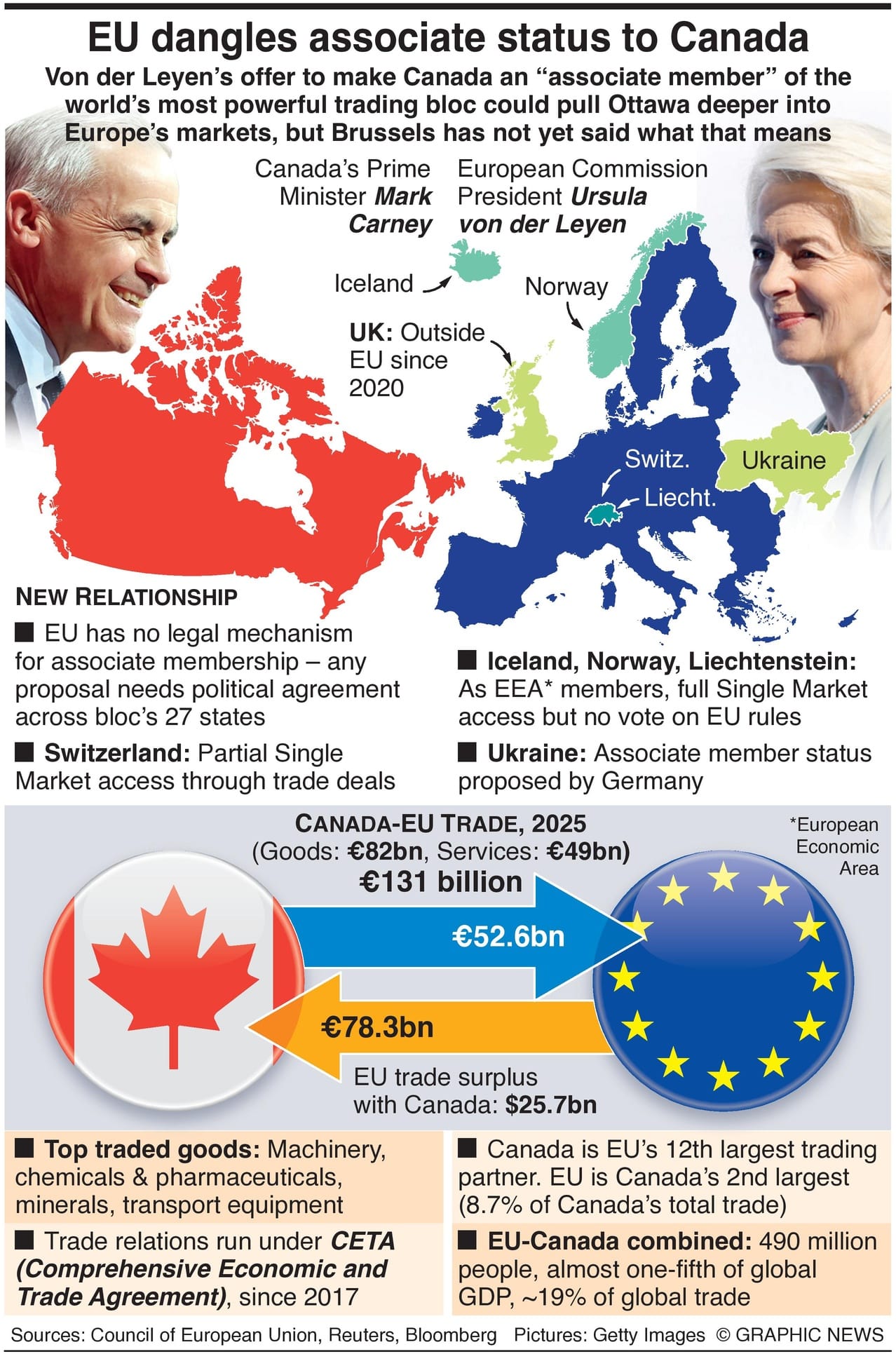
That's because the EU has no legal mechanism for associate membership. Any such proposal would need political agreement across all 27 member states before it could move forward.
If it happens, it wouldn't be unprecedented in spirit, though every existing arrangement looks different. Switzerland has partial access to the Single Market through a patchwork of trade deals. Iceland, Norway, and Liechtenstein, as members of the European Economic Area, get full access to the Single Market but have no vote on the rules they must follow.
Ukraine has been offered a similar associate status by Germany, as an interim step toward full membership. The UK, by contrast, walked away from it all, leaving the EU in 2020.
Canada's case is different again: it was never part of the bloc to begin with. Trade between the two sides already runs deep, governed since 2017 by CETA, the Comprehensive Economic and Trade Agreement. Machinery, chemicals, pharmaceuticals, minerals, and transport equipment top the list of goods traded. Canada is the EU's 12th-largest trading partner, while the EU is Canada's second-largest trading partner, accounting for 8.7% of Canada's total trade. Together, the two economies represent 490 million people, almost a fifth of global GDP, and roughly 19% of global trade.
Who Is Houthi Leader, Abdul-Malik Al-Houthi?
Abdul Malik al-Houthi has led the Iran-aligned Yemeni Houthi militant sweep through the country’s Red Sea coastline and cemented their control of the Bab al-Mandab strait, tightening their grip on Saudi oil exports.
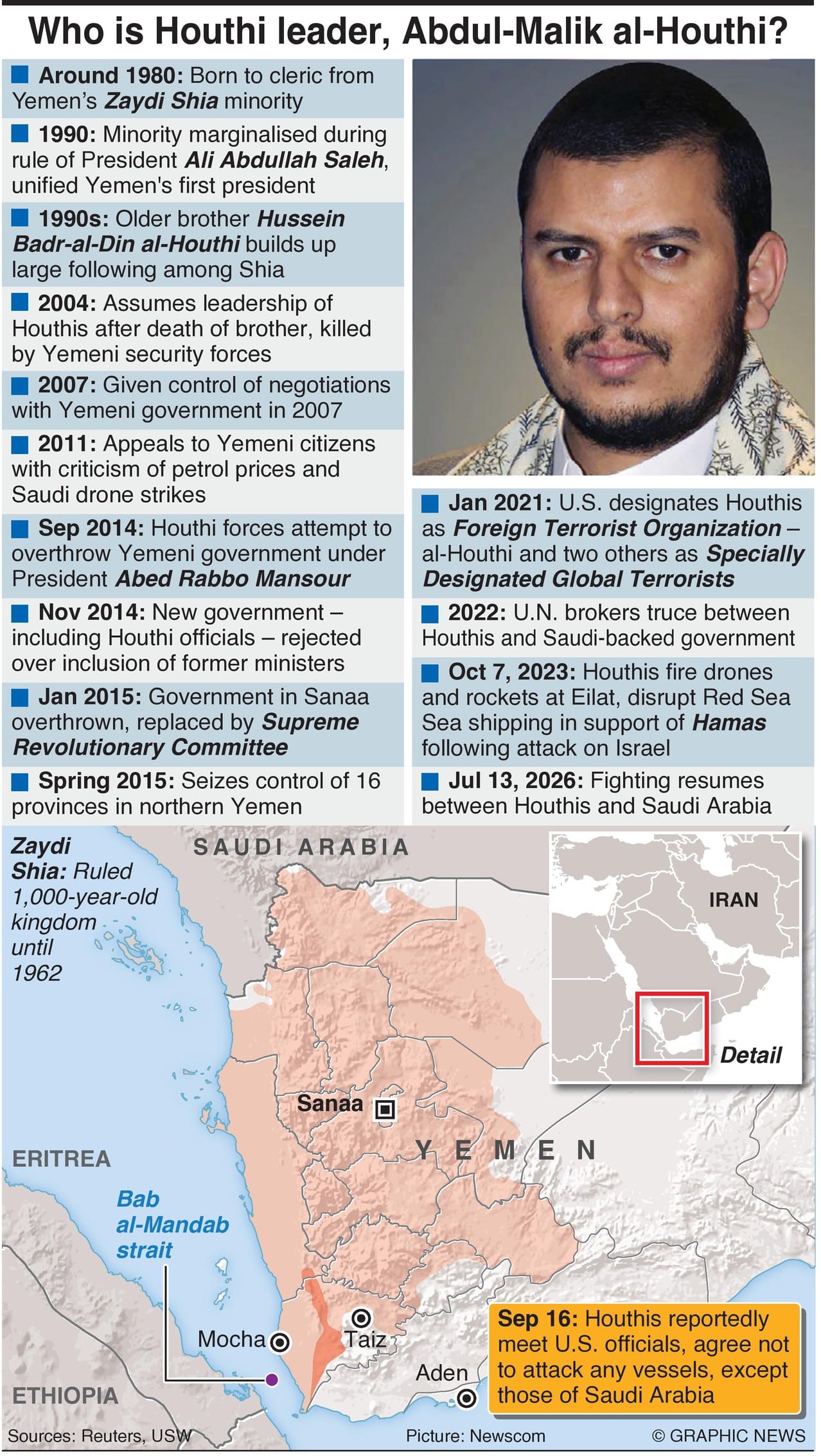
al-Houthi was born in the 1980’s into Yemen’s Zaydi Shia minority, who had ruled the 1,000-year-old kingdom until 1962, but were marginalized during the rule of President Ali Abdullah Saleh, unified Yemen's first president.
His brother Hussein Badr-al-Din al-Houthi built up a large following among Yemen’s Shia but was killed by security forces in 2004, at which point Abdul Malik assumed control of the rebel group. His appeal to Yemeni citizens more widely came with his criticism of rising petrol prices and Saudi drone strikes.
Drone Incursions Sow Chaos Along NATO’s Northern Border
Military drones straying into the airspace of Finland and the Baltic States are stoking concerns that the war in Ukraine is spilling over into NATO’s northern borders with Russia.
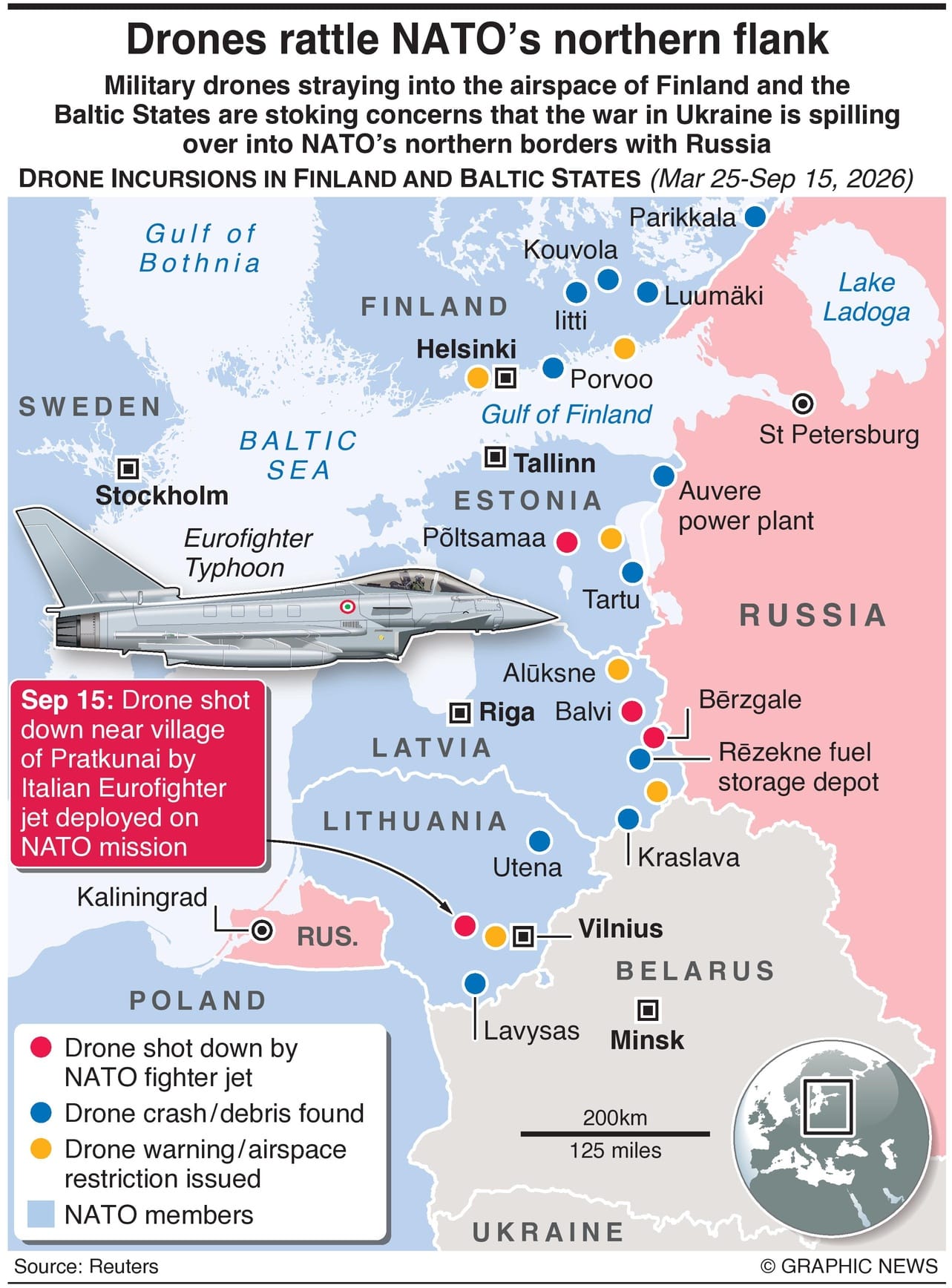
As Ukraine attacks Russian Baltic Sea oil shipping ports, some of its drones have missed their targets and led to security warnings in neighboring countries.
In the latest incident, NATO fighter jets shot down a drone that entered Lithuanian airspace on Tuesday, the day after the head of the alliance said strikes close to its territory would only increase its support for Ukraine in the war against Russia’s full-scale invasion.
Military officials in Lithuania, a NATO member, said the incident marked the first time that a drone had been shot down in its airspace. Authorities didn’t comment on the drone’s origin or purpose, saying further investigation was needed, but two senior officials said the device was likely carrying explosives.
Trans-Pacific Cable To Bypass South China Sea
A new Thailand-US Submarine Cable System (THUS) is intended to bypass the South China Sea “and other routes that carry security risks” as Washington seeks to expand its own secure digital infrastructure.
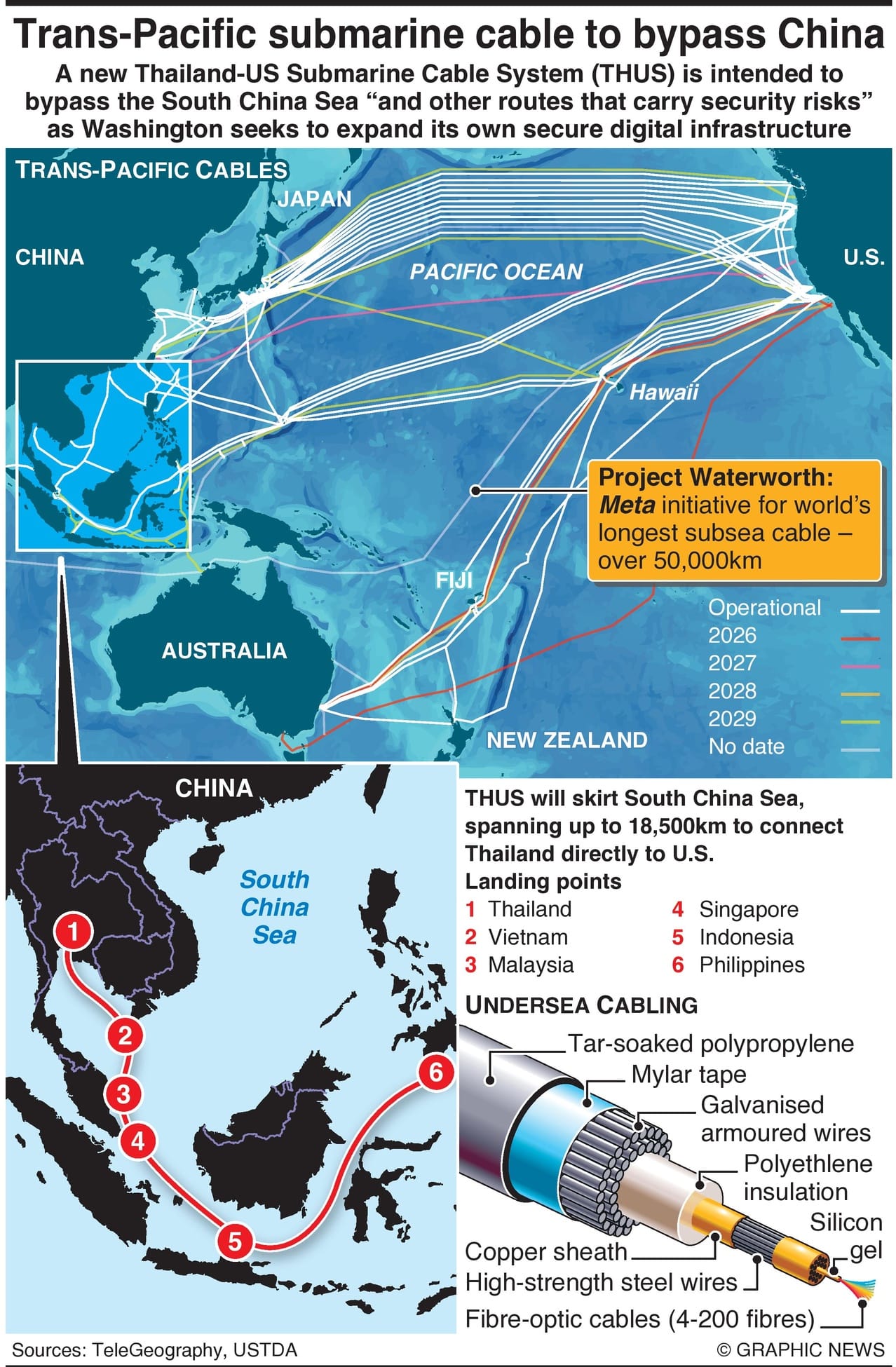
The U.S. Trade and Development Agency announced funding for a feasibility study on a new trans-Pacific submarine cable linking Thailand, Vietnam, Malaysia, Singapore, Indonesia and the Philippines with the U.S., as it seeks to expand its role in laying subsea cables, which carry most international internet traffic.
The proposed cable could span up to 18,500 km and would skirt around the South China Sea, where Beijing’s territorial claims have complicated efforts to lay new cables and where China is deemed a potential threat.
The U.S. is facing growing competition from China, with the Indo-Pacific an increasingly important region. Over 20 trans-Pacific cables are expected to be built between 2022 and 2030.
🧭 Power & Capital · September 17, 2026
Where state power meets the boardroom.
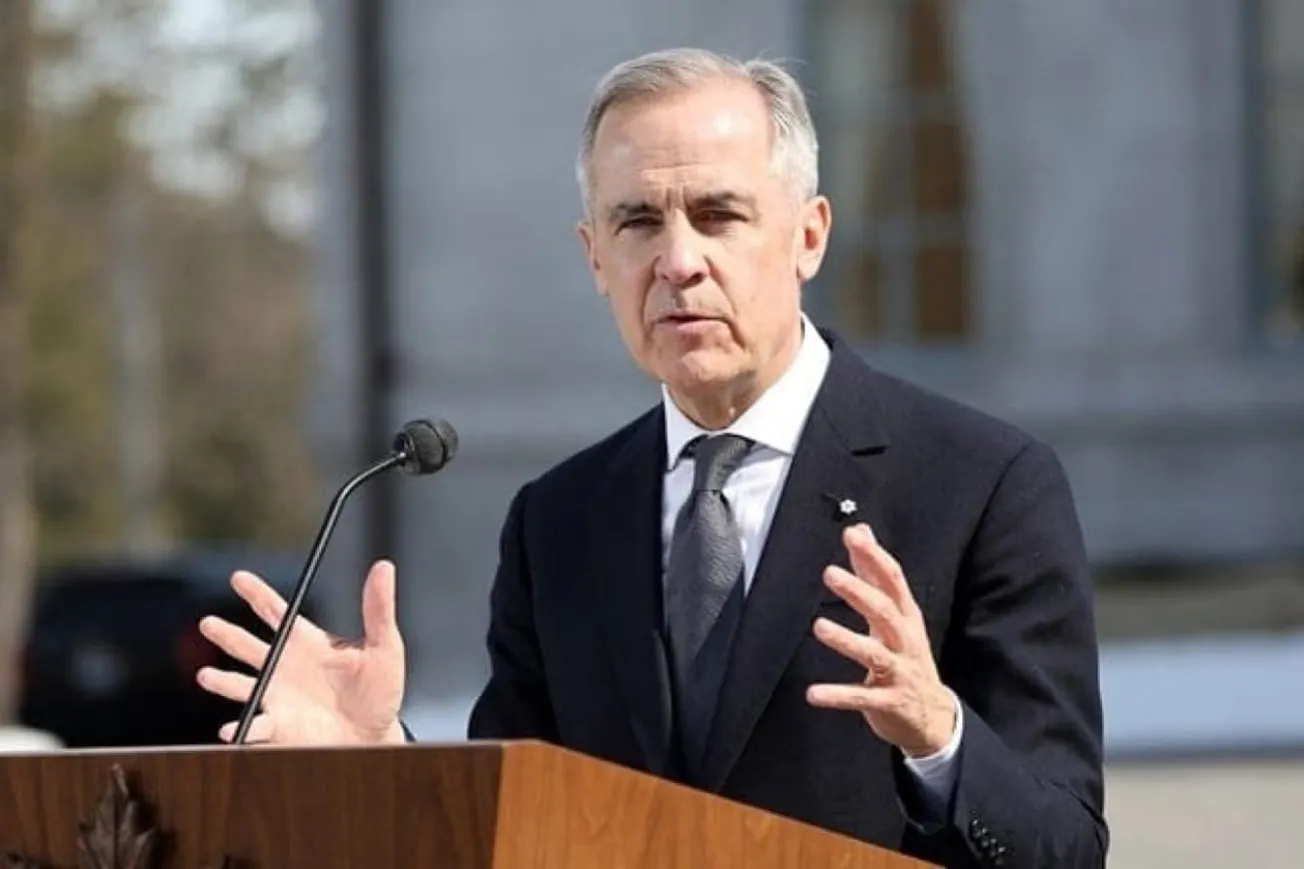
🔷 Mark Carney Defends Closer Canada-EU Ties Amid Trump Tensions
🔷 Tokenized Stocks Move Closer To US Markets Under New SEC Pathway
🌍 Global Affairs
The world's flashpoints, in motion.
🟥 UN Investigators Say US Iran Strikes Killed Over 150 Civilians – TIPP News
🟥 Saudi-Houthi Clashes Escalate As Trump Eyes Iran Deal – TIPP News
🟥 Saudi F-15 Allegedly Shot Down As Houthi Offensive Expands – TIPP News
🟥 Watch: Iran War Ending Soon, Gas Prices Will Come Tumbling Down, Says Trump – TIPP Video
🏛️ National Affairs
The fights shaping America right now.
🟫 House Approves Russia And Iran Sanctions Package – TIPP News
🟫 Watch: Minneapolis Police Bodycam Footage Shows Officers Wounded In Mass Shooting – TIPP Video
🟫 States Coordinate Ahead Of Possible ICE Operations Near Polls – TIPP News
🟫 Kamala Harris Stays Noncommittal As 2028 Democratic Field Takes Shape – TIPP News
🟫 After Millions In Federal Benefits, Watchdog Pushes Senate Probe Of NYC Hospital And ‘Rural’ Designation – Fred Lucas, The Daily Signal
🟫 The United States Leading The World On Pro-Life, Pro-Family – Virginia Grace McKinnon, The Daily Signal
🟫 Robert Kraft Speaks Out After Macklemore-Sheeran Tour Controversy – TIPP News
📈 Economy
Prices, policy, and the pressure on your wallet.
🟩 About Those $5,000 Checks … – Editorial Board, Issues & Insights
🟩 Mortgage Rates Hit 14-Month High As Housing Market Struggles – TIPP News
🟩 Cheap Airfares Shrink As Airlines Respond To Higher Fuel Costs – TIPP News
🟩 Poverty Feasts On Anti-Poverty Sentiment – Adnan Alabbar, Mises Wire
💼 Markets & Business
The deals and tickers making moves.
🟧 Boeing's 737 Max Ramp-Up Hits Turbulence, Stock Sinks – TIPP News
Letters to the editor email: editor-tippinsights@technometrica.com
Subscribe Today And Make A Difference. Consider supporting Independent Journalism by upgrading to a paid subscription or making a donation. Your support helps tippinsights thrive as a reader-supported publication. Contact us to discuss your research or polling needs.
Reach our audience. For sponsorship and advertising opportunities, visit our Partner With Us page.