By Ulrike Malmendier, Project Syndicate | Sep 22, 2026
As its growth model runs out of road, Germany must decide whether to defend aging industries or enable new ones to emerge. To translate its research excellence into globally competitive companies, it needs deeper capital markets and a genuine European single market in which promising startups can grow.
BERLIN—Germany’s economy in recent years has been battered by the COVID-19 pandemic, Russia’s invasion of Ukraine and the resulting energy crisis, the erosion of German manufacturers’ competitiveness vis-à-vis China, and a sharp rise in inflation. Together, these shocks have compounded the challenges posed by climate change and demographic shifts, dampening confidence among businesses and consumers alike. Little wonder that Germany’s predicament is often described as a “polycrisis.”
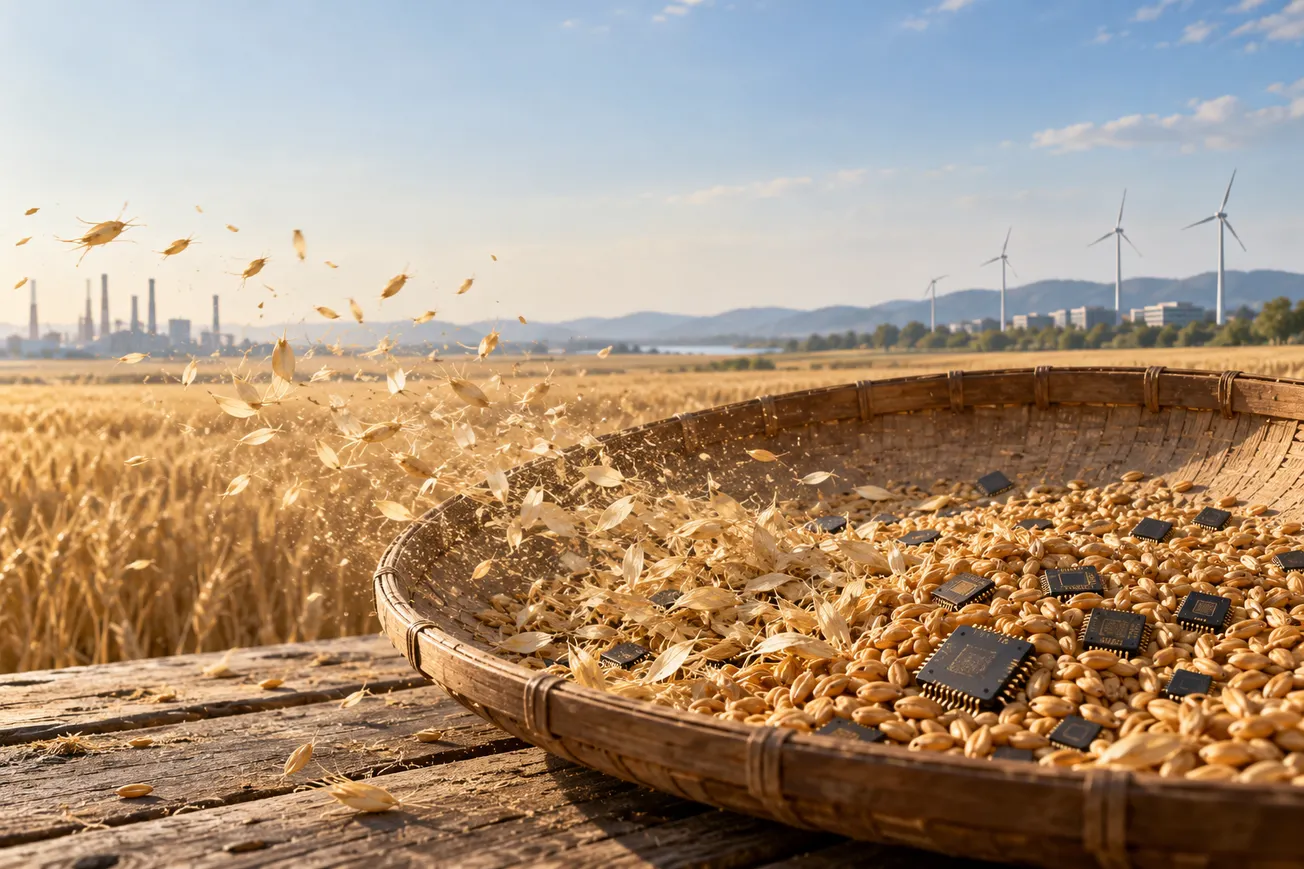
With the far-right Alternative für Deutschland’s resounding victories in both Saxony-Anhalt and Mecklenburg-Western Pomerania and the far-left Die Linke’s success in the Berlin state election, there is a growing fear that this polycrisis may become a political crisis. Before that happens, Germany’s leaders should recognize that a crisis can also be an opportunity. The ancient Greek krísis (κρίσις) refers to a moment of decision, while its root, krínein (κρίνειν), means “to separate” or “to sift.” In agriculture, as Homer sang in The Iliad, it is when the wheat is separated from the chaff.
As it happens, wheat, which accounts for nearly half of Germany’s grain acreage, is a good place to start considering how Germany can emerge from its crises stronger, rather than falling further behind. Domestic production currently exceeds domestic requirements, and yields are exceptionally high, thanks to favorable growing conditions and highly skilled farmers. On average, German farmers harvest roughly twice as many metric tons per hectare as their American counterparts.
But German wheat farmers are under growing pressure, squeezed by rising fertilizer and fuel costs as well as recurring droughts. Their predicament illustrates a broader economic problem: even highly productive technologies, no matter how well they are optimized, eventually reach the limits of what they can deliver.
The engines of economic growth have changed repeatedly over the centuries. Two hundred years ago, mining and heavy industry began to displace agriculture as the principal drivers of growth. A century later, manufacturing—particularly chemicals and electrical engineering—moved to the forefront. Today, services are increasingly taking their place. While Germany has lagged behind other developed countries in shifting to a service-based economy, that transition has accelerated in recent years, as the country is currently losing around 15,000 industrial jobs a month.
From the Industrial Revolution to AI, innovation and disruption have continually replaced old sources of growth with new ones. The question is what Germany must do to compete in the industries that will drive the next era of global growth. Two key priorities stand out.
First, Germany must acknowledge that its economic weakness is not simply the result of the polycrisis. Some of today’s problems reflect its past accomplishments, which fostered rigidity and made it harder to adapt to a changing global economy.
As economists have long observed, economic incumbents are often the last to recognize when the foundations of their success have begun to erode. Germany’s automotive industry is a case in point. After spending decades perfecting some of the world’s most advanced fuel-injection technologies, it was slow to adapt as demand shifted from internal-combustion engines toward electric vehicles.
To be sure, Germany does not lack the technology or talent to lead this transformation. At a time when securing the supply of semiconductors is becoming as important as securing wheat supplies, German engineers are developing groundbreaking technologies such as graphene-based chips with photonic interfaces that consume less energy and transmit data faster. The country also continues to boast outstanding scientists, supported by a robust research infrastructure.
Herein lies Europe’s innovation paradox: Germany and its European neighbors produce world-class research but struggle to turn scientific breakthroughs into companies that can compete on a global scale, particularly against firms from the US and, increasingly, China.
One major obstacle is the lack of deep capital markets. While Germany has made significant progress in developing a vibrant startup culture and narrowing the gap with the US in the early stages of company formation, it still lacks the venture capital needed for promising firms to expand and compete globally. This is largely due to the limited role of funded pension plans, which provide vast pools of long-term investment capital in countries like the US. Recent reforms that encourage Germans to invest more of their retirement savings in capital markets are therefore a welcome step.
The second priority is to make Europe a genuine single market for innovative companies. Germany will retain high-growth firms only if they can treat all of Europe as their home market. A company should be able to incorporate easily, enter neighboring markets without navigating an entirely new bureaucracy, and complete an exit without unnecessary legal hurdles.
Europe remains far from achieving this goal. With the notable exception of Estonia, starting and expanding a company still involves too many bureaucratic hurdles. Permits take too long, administrative procedures are cumbersome, and firms seeking to operate across borders must contend with a patchwork of national rules.
The European Commission’s proposed “28th regime,” known as “EU Inc.,” is intended to address this problem. Rather than requiring companies to navigate 27 national corporate-law regimes, EU Inc. would create a single, optional set of rules under which companies could choose to operate, making it easier to incorporate, raise capital, scale, and do business across the European Union.
Done right, such a regime could be disruptive in the best sense of the word, giving European entrepreneurs a home market in which they could scale quickly—something their American and Chinese competitors largely take for granted. Regrettably, the Commission’s proposal has fallen far short of that ideal, and the compromises currently under discussion risk weakening it further.
As Germany confronts its moment of krísis, whether it ends up among the wheat or the chaff of tomorrow’s global economy remains an open question. The outcome will depend on its ability, as well as that of its European partners, to cast aside outdated structures and create the conditions for new growth engines to emerge.
Ulrike Malmendier, a member of the German Council of Economic Experts, is Professor of Finance and Economics at the University of California, Berkeley.
Loved it, hated it, or somewhere in between — tell us. Grade this article here and help shape what lands in your inbox next.
🧭 Power & Capital · September 22, 2026
Where state power meets the boardroom.
🔷 Australia And US Investigate F-35 Parts Diversion To Hong Kong
🌍 Global Affairs
The world's flashpoints, in motion.
🟥 Trump Says Iran Faces Choice Between Deal And Destruction – TIPP News
🟥 Iran Signals Possible Hormuz Reopening Amid Global Oil Disruption – TIPP News
🟥 Iran Faces Airline Shutdown Threat As Gulf Security Concerns Rise – TIPP News
🟥 Trump Signs Greenland Security Deal Expanding US Military Access – TIPP News
🏛️ National Affairs
The fights shaping America right now.
🟫 Anything Goes – Editorial Board, TIPP Insights
🟫 Trump Bans Three Major News Outlets From The White House, Says More To Follow – Elizabeth Troutman Mitchell, The Daily Signal
🟫 Media Outlets Sue White House For Revoking Credentials – Elizabeth Troutman Mitchell, The Daily Signal
🟫 Utah Republican Seeks Subpoenas For Trump Jr. And Hunter Biden – TIPP News
🟫 Why Is Kamala Harris Campaigning For Abdul El-Sayed In Michigan – TIPP News
🟫 Covert Pentagon Propagandists Are Tracking Anti-War Americans, Skirting The Law – Wyatt Reed, Ron Paul Institute for Peace and Prosperity
🟫 Flock Safety Faces New Questions After Lawmakers Spot Alleged ‘History’ Of Contradictions – Fred Lucas, The Daily Signal
🟫 More Threats To The Freedom Of Speech – Andrew P. Napolitano, Ron Paul Institute for Peace and Prosperity
🟫 The Constitution Can’t Protect You If You Don’t Protect It – John W. & Nisha Whitehead, Ron Paul Institute for Peace and Prosperity
🟫 Ben Cline Earns Backing To Lead Largest Republican Caucus In Congress – Virginia Grace McKinnon, The Daily Signal
🟫 Valadao Has Survived California’s Toughest Races. Now He Faces A Progressive Challenger—And A Newly Redrawn District. – Angelina Delfin, The Daily Signal
🟫 3 Different Mechanisms Left-Wing Groups Use To Influence AI – Tyler O’Neil, The Daily Signal
🟫 Actor Hayden Panettiere’s Cause Of Death Revealed By Coroner – TIPP News
📈 Economy
Prices, policy, and the pressure on your wallet.
🟩 Treasury Yields Ease Ahead Of Fresh Federal Reserve Comments – TIPP News
🟩 The K-Shaped Economy Is Not In Your Imagination – Michael Matulef, Mises Wire
🟩 Taylor Made: Union At All Costs – David Gordon, Mises Wire
💼 Markets & Business
The deals and tickers making moves.
🟧 How AI Could Begin Building Better Versions Of Itself – TIPP News
Letters to the editor email: editor-tippinsights@technometrica.com
Subscribe Today And Make A Difference. Consider supporting Independent Journalism by upgrading to a paid subscription or making a donation. Your support helps tippinsights thrive as a reader-supported publication. Contact us to discuss your research or polling needs.
Reach our audience. For sponsorship and advertising opportunities, visit our Partner With Us page.