Mike Collins had a cigarette in his mouth, a Rolodex card in his hand and a wide grin on his face.
“Call him.”
The card had the name of a public information officer at the Washington, D.C., police department. Mike told me the officer knew where to find a team of mules.
It was June 1999. Al Gore was launching his presidential campaign in Carthage, Tennessee. At the Republican National Committee, we were trying to make sure Republicans produced a different picture.
Gore had talked about his hard-scrabble youth, plowing the steep hillsides of Tennessee with a team of mules. He had also grown up, for part of his childhood, in the Westin Fairfax Hotel on D.C.’s Embassy Row while his father served in Congress.
Wait, Mike made us call it the “tony” Westin Fairfax.
“Make him sound even more out of touch,” he said.
I posed as the ultimate Al Gore super fan, told the hotel staff I was planning a nice event in his honor, and rented the “tony” hotel’s top floor where the Gore family had lived.
We hauled in an old Cray supercomputer weighing more than 5,000 pounds for a joke.
“This is the actual computer Gore used to invent the internet,” RNC Chairman Jim Nicholson said as we swung open the door to one of the suites.
The D.C. police officer led me to a Maryland farmer, Hank Scoggins, and his team of mules. That was the key to wrecking Gore’s announcement: Nicholson riding up Massachusetts Avenue in a wagon pulled by actual mules.
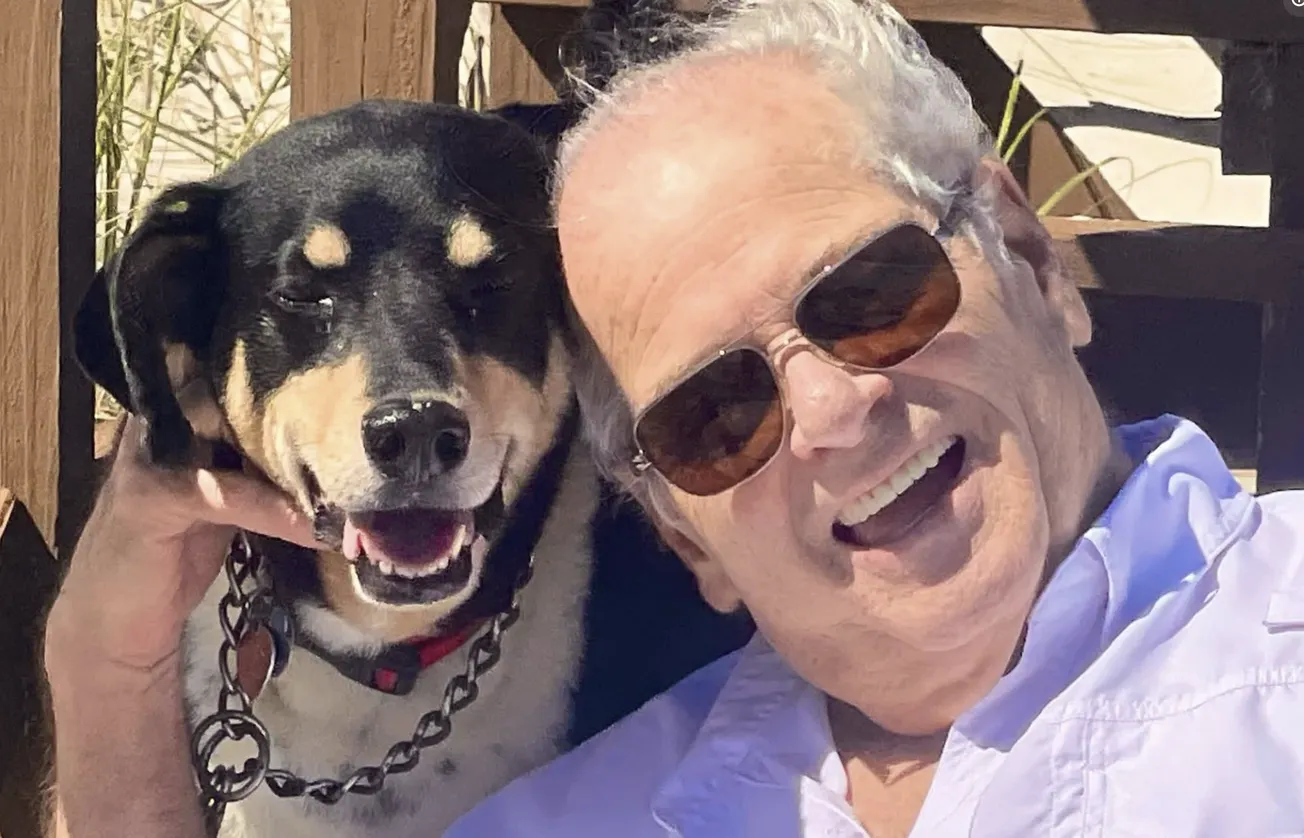
Mike Collins, my friend, mentor and the best writer I ever worked closely with, died this month at 72. He was a reporter, prosecutor, political strategist, Republican National Committee spokesman and, for decades, the guy people called when they needed the words to be better.
I learned too late that he had spent about 100 days in the hospital.
I never got to say goodbye.
Mike was not the kind of mentor who sat you down and delivered life advice. He gave you an assignment.
Figure out how to get a mule team up Embassy Row.
Get the billboard up across from Gore’s campaign headquarters in Nashville.
Or take an obscure policy subject nobody cared about and make it readable.
I could give Mike 700 words on a fisheries management issue and get back a clean argument built around the Magnuson-Stevens Act. Boom. A column in The Hill that a normal person might actually finish reading.
After Mike died, his friend Roseann Wentworth told me Mike was dyslexic when it came to numbers.
He'd see a seven and stare at it. He had tried to become a tax attorney. Numbers weren't his thing.
But a word? That was another story. So he turned to writing. Boy, did he ever. And he was funny.
Every time Mike and I talked, we laughed. Every single time. Even when we were dealing with difficult clients, impossible deadlines or subjects neither of us wanted to discuss.
He could take a line I thought was good, punch it up, then come back with something funnier and smarter.
At the RNC, Mike was invariably trapped in traffic, or at least that was his excuse. He would roll into a morning meeting late, carrying armfuls of newspaper clippings, yellow notebook pages and notes from reporters that fell all around him.
He always had three ideas for the next news cycle. And an excuse for being late. Usually, the ideas were right. The excuse, rarely.
Reporters from The Washington Post, The New York Times, Associated Press, CNN, ABC, NBC and USA Today weren't our enemies just because they didn't work for Fox News.
We called or emailed them hourly. They did not have to agree with us. They knew we made news.
A mule team on Massachusetts Avenue forced its way into a television package. A billboard irritated Gore’s presidential campaign every morning when staff drove to work. Eighteen tracks of Al Gore’s own words were burned onto a CD and mailed to talk-radio hosts.
And Mike could sit down and write the 700 words that might change somebody's mind.
Today, newspapers are vanishing. Northwestern University's Medill School of Journalism reported this month that 170 American newspapers closed or merged in the past year. Nearly three every week. Forty-seven million Americans live in counties with limited or no access to local news.
In 1968, the average presidential candidate sound bite on network television lasted 42.3 seconds. By 1988, it had fallen to 9.8 seconds. Today's political clips often run seven to nine seconds.
On Facebook's mobile News Feed, researchers found people spent an average of 1.7 seconds with a piece of content before moving on.
Our problems got worse. Our attention spans got shorter. We have seven-second arguments about problems that took decades to create.
Try explaining how to keep Social Security solvent, fix America's immigration system or end a war in seven seconds. Outrage fits perfectly.
Mike spent much of his career helping Republicans win elections. He worked the Republican National Convention in Tampa in 2012 and made Florida his home.
Then came Donald Trump. The former Republican National Committee spokesman attended a No Kings rally against him. His politics changed. His appetite for argument did not.
Trump understands the new communications world. A personal insult or a few seconds of confrontation travel farther than a carefully constructed argument.
Hello, Instagram Reels. Hello, TikTok influencers who couldn't write their way out of a paper bag.
AI can produce 700 words about fisheries management in seconds.
Mike knew which words deserved to survive. He found the joke. He knew when a line needed one more turn.
Mike also introduced me to Raghavan Mayur, the editor of TIPP Insights. I would not be writing here if it were not for Mike. In fact, I might not be writing at all if it were not for Mike Collins.
Mike wrote hundreds of thousands of words for candidates, committees, clients, causes and friends. The one thing Mike never wrote was his own obituary.
I know exactly what would happen if I sent him this draft.
He would call.
“It’s a start, Pfeifle.”
Pause.
“But it needs a major rewrite.”
Then he would give it the Collins touch. Lines would be cut. Made shorter. Made funnier. A line I thought was good would disappear completely.
And we would laugh.
Sorry, buddy.
You’re somewhere better now.
This will have to do.
Mark Pfeifle, a member of the TIPP Insights Editorial Board, served as deputy national security adviser for strategic communications and global outreach at the White House from 2007 to 2009. He runs the crisis management firm Off the Record Strategies.
🧭 Power & Capital · October 26, 2026
Where state power meets the boardroom.
🔷Why Trump’s Oil And Gas Investments Have Gained Millions During The Iran War – Power & Capital Desk, TIPP Insights
🌍 Global Affairs
The world's flashpoints, in motion.
🟥 Trump Weighs Major Iran Offensive As US Forces Prepare For Action – TIPP News
🟥 Trump Says Decision Time Is Near On Iran Conflict – TIPP News
🟥 Saudi Arabia, Turkey And Pakistan Hold Talks With Iran Amid War Fears – TIPP News
🟥 Lula Wins Historic Fourth Term As Bolsonaro Rejects Brazil Election Result – TIPP News
🟥 Serbia’s Ruling Party Loses Ground After Two Years Of Student Protests – TIPP News
🟥 The Section 1245 File – Mark Pfeifle, TIPP Insights
🟥 Watch: At Least 24 Killed In Bus Crash On Dangerous Stretch Of Kenya Highway – TIPP Video
🟥 Watch: Endangered Apes Trafficked Into India From Southeast Asia – TIPP Video
🏛️ National Affairs
The fights shaping America right now.
🟫 DOJ Survey Reports Sharp Drop In Violent Crime Across America – TIPP News
📈 Economy
Prices, policy, and the pressure on your wallet.
🟩 Saudi Oil Threats Keep Markets On Edge As Prices Slide – TIPP News
🟩 Condo Prices Fall Across US As Rising Fees Threaten Affordability – TIPP News
💼 Markets & Business
The deals and tickers making moves.
🟧 Elon Musk Secures $40 Billion Financing For SpaceX’s AI Expansion – TIPP News
🟧 Anthropic Files For Nasdaq IPO Despite $80.7 Billion First-Half Loss – TIPP News
🟧 Microsoft Offers Voluntary Buyouts To 60,000 Employees Amid AI Spending Surge – TIPP News
🟧 Investors Pour Billions Into Defense Startups Amid Global Tensions – TIPP News
Letters to the editor email: editor-tippinsights@technometrica.com
Subscribe Today And Make A Difference. Consider supporting Independent Journalism by upgrading to a paid subscription or making a donation. Your support helps tippinsights thrive as a reader-supported publication. Contact us to discuss your research or polling needs.
Reach our audience. For sponsorship and advertising opportunities, visit our Partner With Us page.