
By Harold James, Project Syndicate | August 21, 2026
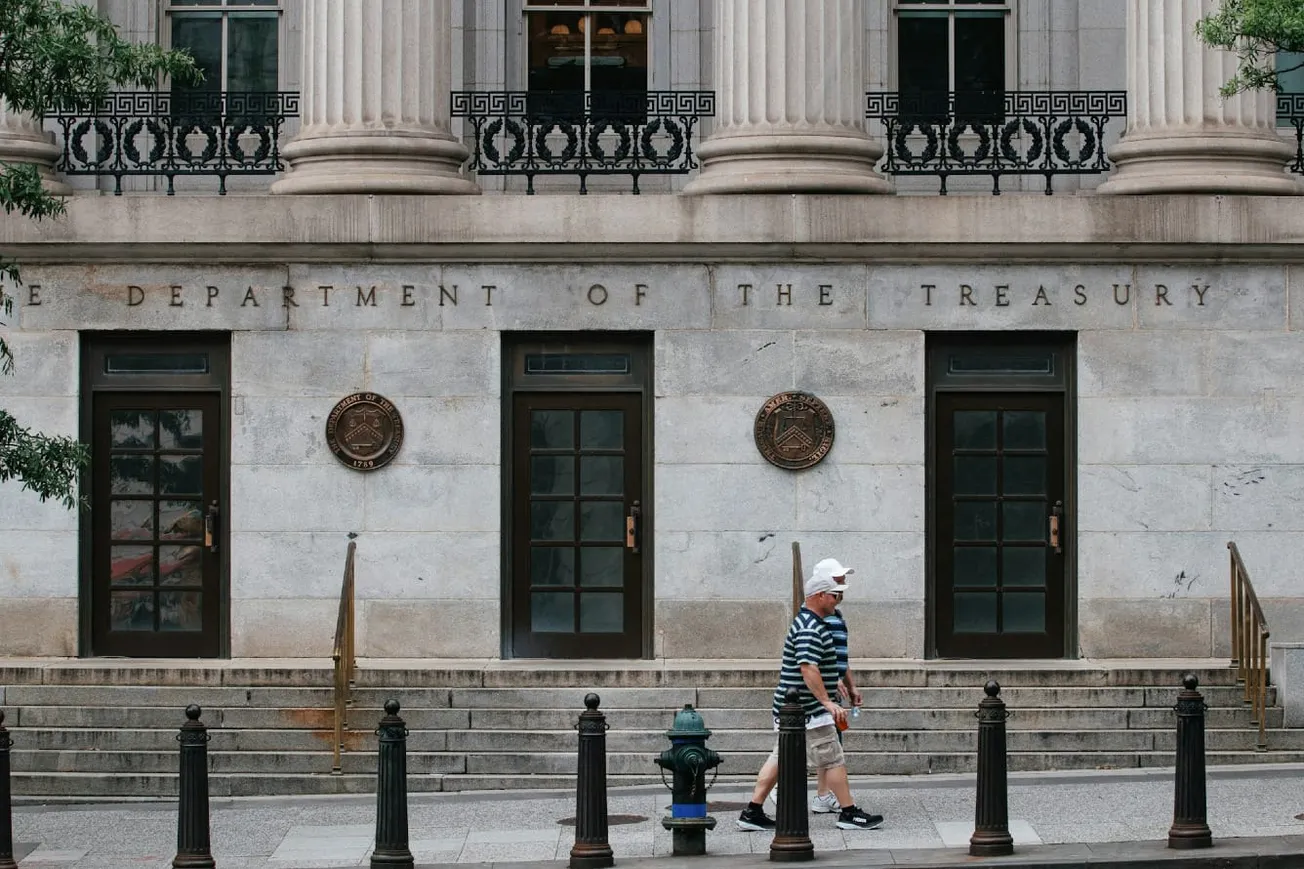
The puzzle of why the Trump administration is so concerned with a falling yen has historical parallels not to the 1930s or the 1980s, but to the 1960s, when US officials feared that a crisis elsewhere could spread to America. With US bond yields spiking, Treasury Secretary Scott Bessent is getting desperate.
PRINCETON—In a Reuters photo from late July, US Treasury Secretary Scott Bessent can be seen holding a to-do list with just one item: purchase $5–10 billion worth of yen. As he explained soon thereafter, invoking the famous phrase that then-European Central Bank President Mario Draghi used to save the euro in 2012, the Trump administration will do “whatever it takes” to prop up the Japanese currency.
Bessent’s public rationale for this surprise intervention was that the yen is undervalued, and that the US does not want to see a round of currency wars in which countries try to prop up their exports by undervaluing their currencies. Such conflicts do carry a powerful historical echo, given their role in destroying the world economy and threatening international peace in the 1930s. The victorious Allied powers organized the 1944 Bretton Woods Conference precisely to prevent the kind of protectionism and currency wars that had produced World War II.
But currency wars did return in the 1980s, when a surging dollar led Americans to believe that the yen (along with Germany’s Deutsche Mark) was undervalued. These suspicions then generated much academic research into whether currency interventions are effective. The overwhelming consensus was that they are not. A single intervention might move the markets for a short time, but in the longer run, economic fundamentals will reassert themselves and market pressures will return. The only enduring solution is to alter existing policy regimes.
Both in the 1980s and now, a Japanese effort to address underlying fundamentals would involve higher interest rates and perhaps also a fiscal contraction, with the US simultaneously lowering interest rates and issuing less debt (implying its own fiscal contraction). But neither side is likely to undertake such measures. Japanese Prime Minister Sanae Takaichi has made it clear that she thinks interest rates are high enough; and barring a dramatic economic downturn, lower US rates would only fuel stock-market exuberance and inflation concerns.
Exactly as economic theory would suggest, the yen has already started to fall again since its immediate post-intervention surge. More and more interventions will be needed to achieve Bessent’s desired exchange-rate effect, but markets will treat them with increasing skepticism. Since everyone knows how interventions play out, they are typically reserved for dramatic market situations. Not since the Fukushima disaster in 2011 has the US sold yen, and not since the height of the 1997–98 Asian financial crisis has it bought yen.
In any case, fears of currency and trade wars probably do not reflect the Trump administration’s real motive, considering that it has been openly following the 1930s playbook on tariffs. Nor should we believe Trump’s own explanation: that propping up the yen is a “signal of friendship” to a country that has “been very good to us, with the exception, of course, of Pearl Harbor.” Usually, the president’s measure of “friendship” is the trade balance—on the assumption that countries with a surplus must be taking advantage of the US. Yet US goods exports to Japan in 2025 totaled roughly $82.1 billion, while imports from Japan reached $149.8 billion.
For his part, Bessent has rather oddly mentioned other undervalued currencies alongside the yen, including the South Korean won and the Chinese renminbi. But if he cares about these currencies, too, he should support a big international currency reordering—a reworking of Bretton Woods. In reality, Bessent and Trump’s only genuine motive is to help the United States. In its August intervention, the US Treasury sold euros rather than dollars because it wanted to make clear that it would not approve of Japan (or anyone else) offloading US Treasuries.
The puzzle of why the US is so concerned with a falling yen has historical parallels not to the 1930s or the 1980s, but to the 1960s. At the time, the Bretton Woods fixed-exchange-rate regime, designed to prevent currency wars that could become real wars, was under increasing strain. Claims on the dollar were building up as a consequence of US military spending and investment abroad, but the country that was most vulnerable was the United Kingdom. Fearing a domino effect in which a financial crisis in the UK could trigger an attack on the dollar, US officials came to see the British pound as their “outer perimeter defense.”
The yen is playing the same role today. Japan’s government debt-to-GDP ratio is 248%, which looks like the limit to how much government spending is possible. The US figure is 122%, and bond yields have been rising throughout the summer, reflecting investors’ reluctance to purchase more government debt, the lure of AI investment, and America’s deteriorating fiscal situation (which was not helped by having to repay large sums collected for tariffs that have since been struck down).
Higher borrowing costs make life harder for the government (US debt service in 2025 consumed more of the budget than defense expenditure). They also raise mortgage, auto-loan, and credit-card rates, making voters more likely to turn against incumbents.
Seeing the writing on the wall, Bessent has already taken an even bigger gamble, intervening in bond markets to drive down the most politically sensitive long-term rates. But doing that requires more short-term issuance, which will push up the money supply and inflation. When markets realize how desperate the current and subsequent governments are, long-term rates will rise again, and Bessent’s bond excursion will have proven futile. It may already be happening: Following an initial boost to bond prices, a reversal appears to be underway.
Bessent wants to make debt look safe and cheap once more, but he is unlikely to succeed. He pursued a similar ploy late last year to weaken the Iranian currency, explaining that this would produce regime change without boots on the ground. Will people in countries that see the US as a menace consider a similar strategy and launch an attack on the yen and the dollar? One can think of worse ways to bring about regime change in Washington.
Harold James, Professor of History and International Affairs at Princeton University, is the author, most recently, of Seven Crashes: The Economic Crises That Shaped Globalization (Yale University Press, 2023).
Loved it, hated it, or somewhere in between — tell us. Grade this article here and help shape what lands in your inbox next.
Copyright Project Syndicate
🔗 Further Reading
Deeper on what you just read.
🟨 Why US Bond Markets Are Trembling – Jim O'Neill, Project Syndicate
🟨 Bessent: Treasury Buyback Could Exceed Announced $4 Billion – TIPP News
🟨 US National Debt Surpasses $40 Trillion For First Time– TIPP News
🟨 Bitcoin Surges Above $75,000 As Crypto Market Rebounds – TIPP News
🧭 Power & Capital · August 21, 2026
Where state power meets the boardroom.
🔷 Watch: Ensuring America Remains Undisputed Leader In Prediction Markets Also, Says Trump – TIPP Video
🌍 Global Affairs
The world's flashpoints, in motion.
🟥 More Than 100 Wounded In Russian Strike On Ukrainian Shopping Center – TIPP News
🟥 Iran Claims Military Production Survived Heavy Strikes – TIPP News
🟥 Hundreds Of Millions Of Barrels Move Through Contested Hormuz – TIPP News
🟥 Russian Drone Threat Prompts Romanian F-16 Response – TIPP News
🟥 Study Warns China Could Face Major Drone Shortfall In War – TIPP News
🟥 Watch: Tunisians Protest Power And Water Shortages – TIPP Video
🟥 Watch: Japanese Men Shave Hair To Deal With Summer Heat – TIPP Video
🏛️ National Affairs
The fights shaping America right now.
🟫 Trump’s New FDA Nominee Draws Early MAHA Praise, Calls For Action On Abortion Pill – Virginia Grace McKinnon, The Daily Signal
🟫 Minnesota Escalates Fight With Abbott Over ICE Agent Accused In Shooting – Emily Medeiros, The Daily Signal
🟫 Minnesota Man Once Praised As ‘Outstanding Refugee’ Now Faces Charges In Alleged Medicaid Fraud Case – Ireland Owens, Daily Caller News Foundation
🟫 Darline Graham Debate Performance Shakes Trump-Backed Senate Campaign – TIPP News
🟫 California Bucks National Trend As Voter ID Initiative Faces Uphill Fight – Fred Lucas, The Daily Signal
🟫 The Flock Camera Backlash Is A Very Good Sign – Connor O’Keeffe, Mises Wire
🟫 Cancer Vaccine Breakthrough Raises Hope For Broader Tumor Treatment – TIPP News
📈 Economy
Prices, policy, and the pressure on your wallet.
🟩 US Weekly Jobless Claims Dip In Latest Week – Reuters, The Daily Signal
🟩 Why Are Oil Prices Rising As U.S. Pressure On Iran Intensifies – TIPP News
🟩 The Myth Of The China Shock – Michael R. Strain, Project Syndicate
💼 Markets & Business
The deals and tickers making moves.
🟧 Bitcoin Surges Above $75,000 As Crypto Market Rebounds – TIPP News
🟧 AI Job Cuts Put CEOs Under Pressure To Change Their Message – TIPP News
Letters to the editor email: editor-tippinsights@technometrica.com
Subscribe Today And Make A Difference. Consider supporting Independent Journalism by upgrading to a paid subscription or making a donation. Your support helps tippinsights thrive as a reader-supported publication. Contact us to discuss your research or polling needs.
Reach our audience. For sponsorship and advertising opportunities, visit our Partner With Us page.