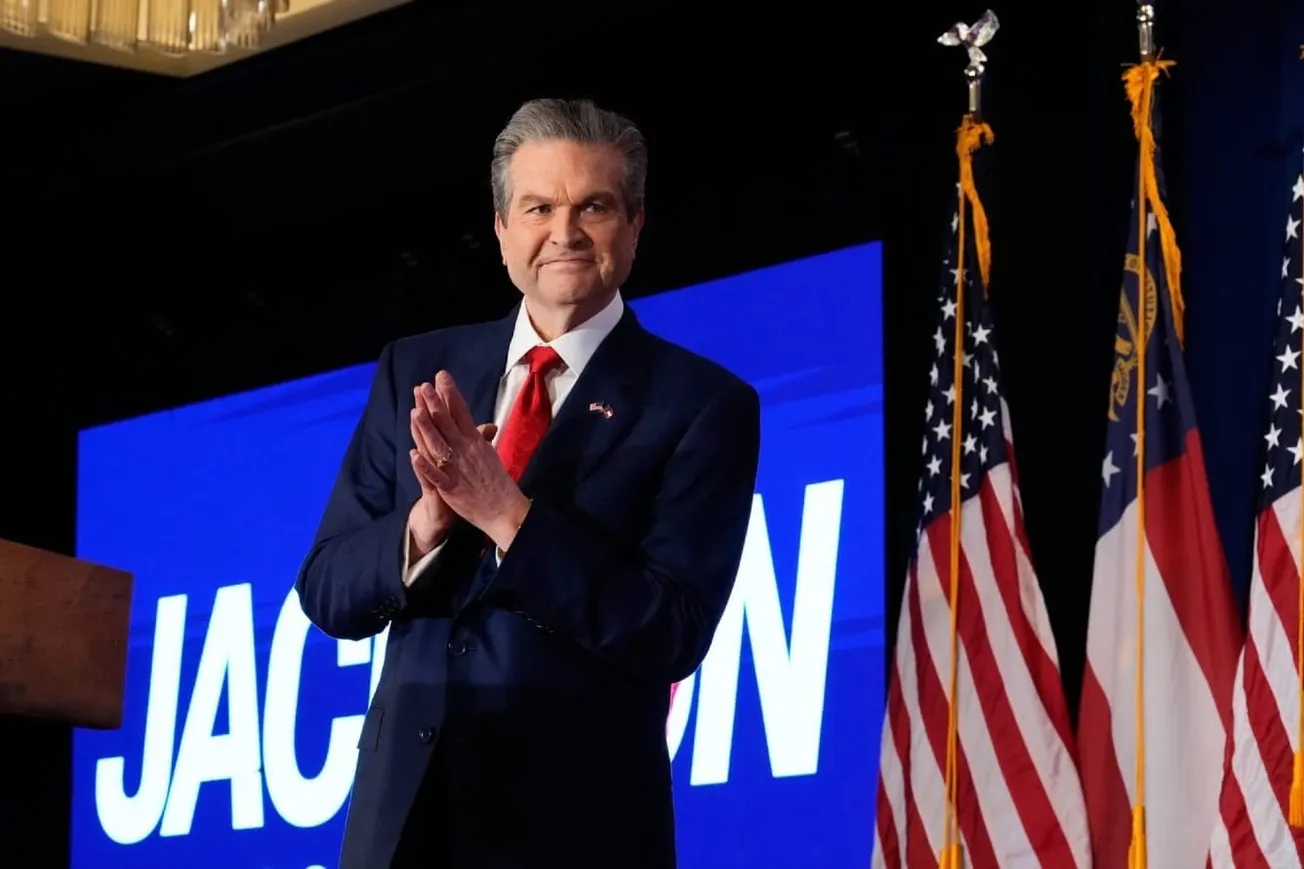

Dr. Abdul El-Sayed, who won last Tuesday's Michigan Democratic Senate primary, was the lead guest on NBC's Meet the Press on Sunday.
For Americans nationwide, this was the first opportunity to see and hear him speak about a midterm contest against Republican Mike Rogers – one that could prove among the most consequential this fall. Control of the Senate could depend on Michigan, given that many safe Republican states in recent elections, including Maine, Ohio, and Texas, could be competitive this time around.
The first impression we got was that El-Sayed is an extraordinarily gifted person on television. Even though Kristen Welker was not probing enough, he spoke with clarity and purpose before the softball nature of some of Welker's questions helped him pivot to his aggressive stance against Israel.
Dr. El-Sayed, the first Muslim candidate who could potentially be elected to the United States Senate, did not know how to calibrate his positions.
Early on in the interview, El-Sayed responded to a question about former President Obama, with whom he spoke after the primary. Obama carried Michigan twice, in 2008 and 2012, only to see it fall to President Trump in 2016 when Hillary ran. So it made sense for him to be excited that someone who also won two statewide races and carried Michigan could potentially campaign with him.
But his responses were full of contrasts. Trying to appeal to the Muslim voters that propelled him to victory, he voluntarily mentioned the former president's full name, Barack Hussein Obama. As best we can tell, Obama used his full name only during important ceremonies, such as taking the oath of office in 2008 and 2012. No Democrat has ever mentioned his full name in casual conversation for fear of reminding voters that Obama indeed was born to a Muslim father, mindful of America's unease about Islamic Jihad following the 9/11 attacks.
Yet, when Welker played a clip (marker 12:52) of Michigan Republicans spelling out his full name in a campaign commercial, El-Sayed immediately castigated the GOP for using his full name.
Welker: I want to give you an opportunity to see some of the other attacks against you. This is an ad by the Republican Party. Take a look.
GOP Ad: Abdulrahman Mohamed El-Sayed is the most radical candidate in America. El-Sayed pledged support for the leader of the Muslim Brotherhood, a dedicated foreign terrorist group.
Welker: Radical, dangerous, how do you respond?
El-Sayed: We always knew they were going to go here. I mean, notice how they chose to use my full name; it echoes exactly what they did against President Obama.
Welker did not question El-Sayed about his use of Obama's full name, which was precisely what he had done just five minutes earlier.
Welker next questioned him about his Medicare-for-All positions. Healthcare has been a topic of national conversation since President Clinton appointed then-First Lady Hillary to lead a White House task force, but nothing came of it due to resistance in Congress. American history will show that President Obama enacted the most significant change to the American healthcare system.
The Obamacare law, which he and then-House Speaker Nancy Pelosi forced through a reluctant Washington, was brilliantly dubbed the Affordable Care Act, but it has been anything but. El-Sayed went on a long rant, correctly, about how healthcare was no longer affordable. For a person who claimed that he was a capitalist and not a socialist, it was odd that El-Sayed never once mentioned the root causes of the debacle that American healthcare is today.
And Kristen Welker played along, never once challenging him with a simple question: If Medicare for All is so important for you, how can you welcome the support of an architect of America's modern healthcare mess?
Despite repeated questioning, El-Sayed would not commit to not raising taxes on middle-income earners, even those earning Michigan's median salary of $80,000. All he would say is that under his proposals, people, instead of paying healthcare premiums, would pour more money into Medicare through FICA taxes and get guaranteed healthcare in return.
Welker: Just to be very clear, you're describing this tradeoff. You are effectively acknowledging that people making less than a million dollars could see their taxes go up. I just want to be very clear. Is that a yes?
El-Sayed: I'm saying that we would be paying for healthcare in a different way. Instead of paying a health insurance company whose CEO makes $20 million, I would much rather pay for durable healthcare into a government ....if I'm trading paying a CEO to make more money or paying a government to guarantee a government to guarantee me healthcare, I'm picking the latter, and I'm picking the latter every time.
El-Sayed's position can never win popular support in a purple state like Michigan. Millions of workers in Michigan's factories already have access to world-class healthcare through aggressive collective bargaining contracts negotiated by their union bosses with companies, often under the threat of a strike. Why would these workers give those up and pay more to fund Medicare?
Then, the conversation turned to Israel. El-Sayed took pains to paint himself as having grown up in Jewish communities. He employed the standard defense used by liberals who criticize Israel by saying that there's a difference between the Israeli government and the citizens of Israel. What liberals fail to note is that in the only democracy in the Middle East, the Israeli government's actions are deemed to carry the majority support of its citizenry until the next election.
El-Sayed resorted to the usual attacks, insisting that Israel engaged in genocide. He never once criticized Hamas for initiating attacks on 10/07, raping and murdering innocent civilians, and using Gazans as human shields by hiding its military cache of weapons underneath Gaza's streets, hospitals, and schools.
El-Sayed never committed to sending any aid to Israel unless both Palestine and Israel enacted peace through a two-state solution, which is such a distant dream. Holding aid hostage to a peace that may never come is an extremely radical position for any American politician to hold.
Just ask John Fetterman, the Democratic senator from Pennsylvania, who firmly insisted in his interview with Jon Stewart last week that all Democrats must support Israel unilaterally to help destroy Hamas, Hezbollah, and the murderous Iranian regime, which killed 30,000 of its own citizens in January. In Fetterman's words, supporting Israel translates to defending America and the rest of the world.
We doubt if Michiganders would want to send someone with El-Sayed's views to the United States Senate.
Loved it, hated it, or somewhere in between — tell us. Grade this article here and help shape what lands in your inbox next.
🧭 Power & Capital · August 11, 2026
Where state power meets the boardroom.
🔷 Tipping The Scales: How Washington Pays Megafarms To Beat Family Farms – Connor Semelsberger & Katelynn Healy, The Daily Signal
🌍 Global Affairs
The world's flashpoints, in motion.
🟥 Trump Pushes Iran For Compensation Amid War Reparations Dispute – TIPP News
🟥 America Reaps What Trump Sows: The Price Of Policing The Globe – John W. & Nisha Whitehead, Ron Paul Institute for Peace and Prosperity
🟥 Another Strange Week In Trumpland – Philip Giraldi, Ron Paul Institute for Peace and Prosperity
🟥 When Death Is Cheaper Than Care: Mutual Aid For The Developing World – Constantine Taurai, Mises Wire
🏛️ National Affairs
The fights shaping America right now.
🟫 Senate Confirms Todd Blanche As Attorney General In 50-49 Vote – TIPP News
🟫 ‘All He Had To Do Was Tell The Truth’: Senate Committee Votes To Hold Fauci In Contempt Of Congress – Fred Lucas, The Daily Signal
🟫 US Revokes 175,000-Plus Visas Under Trump Administration – TIPP News
🟫 Why Is Trump Moving To Reduce Routine Childhood Vaccines – TIPP News
🟫 ‘Citizens Have Lost Confidence’: NJ Lawmaker Cites Sherrill Support To Demand Voter ID Law In Response To Noncitizen Registration Debacle – Fred Lucas, The Daily Signal
🟫 Jewish Dems Split From El-Sayed Over Islamic Terrorism Concerns – Pedro Rodriguez, The Daily Signal
🟫 Is NewsGuard Censoring Children’s Education? New AI Tool Raises Concerns – Karly Tucker, The Daily Signal
🟫 Here’s Something Trump Should Be Eager To Import – Editorial Board, Issues & Insights
🟫 July Was The Hottest Month Ever Recorded In The US – TIPP News
🟫 Trump Says Contractor Error Behind Reflecting Pool Damage – TIPP News
🟫 The WNBA Is At War With Its Biggest Stars – Victor Davis Hanson, The Daily Signal
🟫 Trial Begins For Man Accused Of Orchestrating Tupac’s Murder – TIPP News
🟫 Jackie, Beloved Big Bear Valley Bald Eagle, Dies After Rescue – TIPP News
📈 Economy
Prices, policy, and the pressure on your wallet.
🟩 Which Risks Are Emerging As The US Oil Reserve Hits A 1983 Low – TIPP News
💼 Markets & Business
The deals and tickers making moves.
🟧 Nvidia Backs $500 Billion AI Infrastructure Funding Push – TIPP News
🟧 Meta Launches Muse Glimmer As Zuckerberg Pushes Open-Weight AI – TIPP News
🟧 What Does Sergey Brin’s Return Mean For Google’s Gemini – TIPP News
🟧 Taylor Farms Pulls Jalapeño Products From Stores In 26 States – TIPP News
📊 Market Mood · August 11, 2026
How the trading day is setting up.
🟧 Markets are cautious as a deadlock in U.S.-Iran negotiations pushes oil higher and renews concerns about disruptions through the Strait of Hormuz. Brent has risen about 5% over the past two sessions, returning energy-driven inflation risk to the forefront.
🟩 Equities nevertheless remain close to record highs, supported by a strong earnings season and continued enthusiasm around AI. Roughly 90% of S&P 500 companies have now reported, helping investors look past some of the geopolitical uncertainty.
🟦 The softer July labor market has reduced expectations for an imminent Fed hike, but rising energy prices complicate the picture and leave markets divided over the September policy decision.
🟨 Investors are largely in a holding pattern ahead of Wednesday's CPI report, which could determine whether cooling employment or renewed inflation pressures carry more weight with the Fed.
🗓️ Key Economic Events
On today's U.S. data calendar.
🟧 No major U.S. economic reports are scheduled today. The week's major releases begin with CPI tomorrow at 8:30 a.m. ET, followed by PPI Thursday at 8:30 a.m. ET.
Letters to the editor email: editor-tippinsights@technometrica.com
Subscribe Today And Make A Difference. Consider supporting Independent Journalism by upgrading to a paid subscription or making a donation. Your support helps tippinsights thrive as a reader-supported publication. Contact us to discuss your research or polling needs.
Reach our audience. For sponsorship and advertising opportunities, visit our Partner With Us page.