Congress has fifty-eight days to turn a regulation into a law, and the Senate should spend them doing it.
The Connected Vehicle Security Act cleared the Senate Commerce Committee on July 22 by voice vote, with no senator objecting. It would write into permanent statute a Commerce Department rule that has done more to keep Chinese cars off American roads than any tariff ever levied on them. A rule is not a law and can be narrowed by whoever runs the Commerce Department, or softened at a negotiating table. President Xi Jinping arrives in Washington on September 24. The bill should be law before he lands.
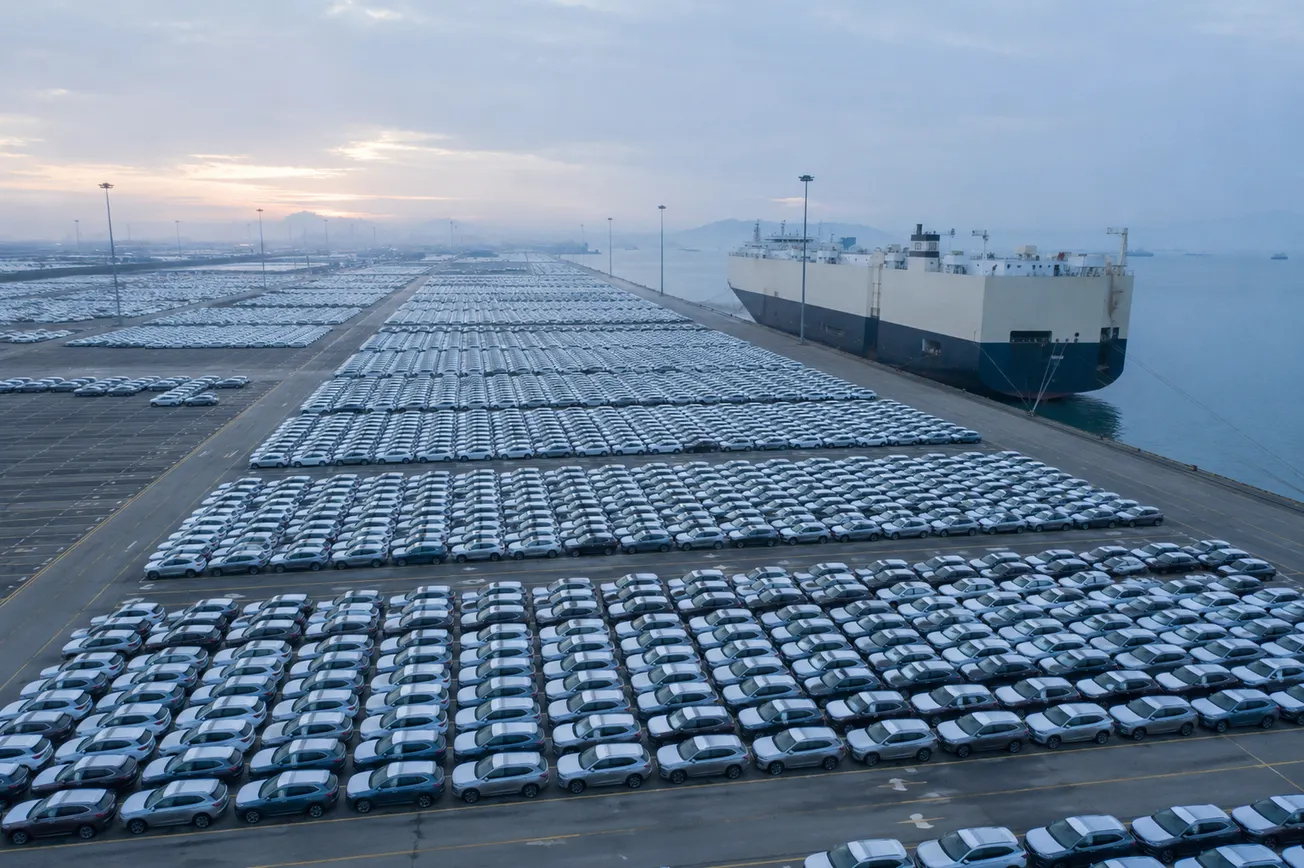
In June, China exported about 905,000 passenger cars, up 80 percent from a year earlier, while domestic passenger car sales slumped 26 percent. S&P Global Ratings sees passenger car exports rising 30 to 50 percent in 2026, while AlixPartners has said total vehicle exports could reach about 10 million this year, from roughly 7 million in 2025.
Expanding into overseas markets has become necessary to survive. Chinese factories build more cars than China's weak economy can consume, and the surplus has to be sold somewhere.
Brussels imposed tariffs on Chinese electric vehicles in 2024, protecting an industry that was already in trouble. Stellantis, the French-Italian group behind Jeep, Peugeot, Fiat and Opel, wrote down 22 billion euros on its electric vehicle business after conceding it had overestimated demand. Its Cassino plant in Italy built 2,916 cars in the first quarter, down 37.4 percent. European car factories average roughly half capacity. Squeezed by tariffs and a shrinking market at home, BYD, China's largest automaker, opened talks to buy Europe's idle capacity.
Canada offers a closer lesson.
Rewind to January. Prime Minister Mark Carney met Xi in Beijing and agreed to admit 49,000 Chinese electric vehicles a year at a 6.1 percent tariff, down from 100 percent, in exchange for relief on Canadian canola exports. The quota took effect March 1 and rises 6.5 percent a year.
The 49,000-car import quota is shared by all Chinese automakers. Yet BYD plans to open twenty branded dealerships across Canada, an investment that makes sense only if the quota is eventually expanded. Analysts are watching whether Canada could become the gateway into the U.S. market, where tariffs have kept Chinese vehicles out. It also serves as the learning ground for the larger U.S. market.
Cars are the new front; aviation is the older one. Walk into a regional airport, and you will find a Cirrus on the tarmac, the largest maker of piston-powered general aviation aircraft in the United States. A subsidiary of the Aviation Industry Corporation of China, the state aerospace and defense conglomerate, has owned the company since 2011. Representative Pat Harrigan of North Carolina, who introduced a bill on July 16 to force federal review of such deals, says AVIC builds fighter jets and drones for the People's Liberation Army, and counts more than twenty Chinese acquisitions, investments or joint ventures in American general aviation since 2005. For two decades, no federal review covered these sales. The trend has begun to turn with AVIC agreeing in June to sell Continental Aerospace Technologies to an American private equity firm for roughly $535 million, subject to closing.
The tariff mechanism asks where a car is built. The Connected Vehicle Rule asks who owns the manufacturer and who writes the software. In its final days, the Biden administration finalized it through the Commerce Department's Bureau of Industry and Security, the agency that enforces export controls, barring vehicles from manufacturers owned or controlled by China or Russia. Software restrictions take effect with the 2027 model year, hardware in 2030. The Trump administration retained the rule, and last month it was used for the first time.
Polestar, a Swedish electric brand majority owned by China's Geely, builds the Polestar 3 in South Carolina. It was denied authorization to sell 2027 model-year vehicles anyway. Volvo, owned by the same parent, went through the same review and was cleared.
The Connected Vehicle Rule is already changing corporate behavior. Senator Bernie Moreno (R-OH) told the committee that Waymo, Google's self-driving unit, had been discussing China-sourced vehicle platforms with Geely and has now committed to looking at a Detroit-based manufacturer instead.
The bill would ban sales by any automaker that is more than 15 percent Chinese-owned. That would affect Mercedes-Benz, whose Chinese shareholders together hold close to 20 percent, even though it builds vehicles in Alabama and South Carolina. Ted Cruz (R-TX), who chairs the Senate Commerce Committee, said the provision would prevent the bill from passing the full Senate. Moreno responded that Mercedes would have until 2030 to comply and could apply for a waiver. Both senators voted for the bill. The provision needs to be rewritten, but that is a relatively minor fix.
The President has said he will discuss artificial intelligence with Xi in September. Cars have not been mentioned. This board has argued before that summits with Beijing tend to reward the guest. A statute would take the rule off the negotiating table.
The Senate has the votes and the calendar. Fix the clause and pass the bill before Xi lands.
Loved it, hated it, or somewhere in between — tell us. Grade this article here and help shape what lands in your inbox next.
🧭 Power & Capital · July 28, 2026
Where state power meets the boardroom.
🔷 Why The US Treasury Removed 84 Names From Its Sanctions List
🔷 FCC To Unleash An Economic Boom, Thanks To Trump Tax Bill
🔷 US Senate Begins Voting On Trump's DNI Nominee Jay Clayton
🌍 Global Affairs
The world's flashpoints, in motion.
🟥 Trump Says Military Action Remains An Option If Iran Talks Fail – TIPP News
🟥 The American Presidency and Perpetual War – Andrew P. Napolitano, Ron Paul Institute for Peace and Prosperity
🟥 What Sparked The Latest US-China AI Dispute – TIPP News
🟥 US And France Clash At UN Over Human Rights Dispute – TIPP News
🟥 Southern Delta Aquariids And Alpha Capricornids Light Up Night Skies – TIPP News
🏛️ National Affairs
The fights shaping America right now.
🟫 President Trump Sparked The Counterrevolution To End The Destruction Of America – Victor Davis Hanson, The Daily Signal
🟫 A Rotten Place To Start A Business – Editorial Board, Issues & Insights
🟫 Trump Administration Asks Supreme Court To Reinstate Mail Voting Order – TIPP News
🟫 HHS Restores Individual-Based Civil Rights, Says It Will No Longer ‘Sort People by Race’ – Fred Lucas, The Daily Signal
🟫 New Jersey’s Noncitizen Voting ‘Glitch’ Exposes Massive Election Integrity Crisis – Jarrett Stepman, The Daily Signal
🟫 Requiring Citizenship To Vote Is A Call To Common Sense: Will It Fall On Deaf Ears? – Elizabeth Schlueter & Don Palmer, The Daily Signal
🟫 The Congressional Budget Office, Like The Rest Of Washington, Is Not Perfect – Daniel Kowalski, Ethan Scroggins & Christopher Lynch, The Daily Signal
🟫 ICE Extends Texas Detention Center Contract Despite Closure Calls – TIPP News
🟫 Trial Begins for Massachusetts Mother Accused Of Killing Three Children – TIPP News
🟫 Second Shooting Incident This Year Near U.S. Consulate Under Investigation – TIPP News
🟫 Tornado Tears Through Wisconsin, Leaving Widespread Damage – TIPP News
🟫 MAHA Must Prepare For The Future of Medicine – Jennifer Galardi & Matthew Lallinger, The Daily Signal
📈 Economy
Prices, policy, and the pressure on your wallet.
🟩 US Business Investment Rises As AI Spending Drives Capital Goods Orders – TIPP News
🟩 Yes, Democratic Socialists Want Soviet-Style Control of Capital – William L. Anderson, Mises Wire
🟩 The Anti-Slavery Advocates Of Disunion – Joshua Mawhorter, Mises Wire
💼 Markets & Business
The deals and tickers making moves.
🟧 FDA Recalls Nearly 19 Million Eggs Over Salmonella Outbreak – TIPP News
📊 Market Mood · July 28, 2026
How the trading day is setting up.
🟩 Markets are treading carefully as investors await the Federal Reserve's policy meeting and a wave of earnings from Microsoft, Meta, Apple, and Amazon later this week.
🟧 The AI rally faces a pivotal test as Wall Street looks for evidence that years of heavy investment are translating into faster revenue growth and stronger profits.
🟦 Treasury yields remain firm while oil prices hover near recent highs, keeping inflation concerns alive even as markets expect the Fed to leave interest rates unchanged.
🟨 This week's combination of Big Tech earnings, the Fed decision, and key labor market data could determine whether stocks resume their rally or enter a period of consolidation.
🗓️ Key Economic Events
On today's U.S. data calendar.
🟧 10:00 a.m. ET — Consumer Confidence Index (July)
Forecast: 99.5 | Previous: 98.4
Consumer confidence offers an important read on household sentiment and spending, which drive the majority of U.S. economic activity.
🟧 10:00 a.m. ET — JOLTS Job Openings (June)
Forecast: 7.45 million | Previous: 7.60 million
The Fed closely watches job openings as a measure of labor demand and potential wage pressures.
Letters to the editor email: editor-tippinsights@technometrica.com
Subscribe Today And Make A Difference. Consider supporting Independent Journalism by upgrading to a paid subscription or making a donation. Your support helps tippinsights thrive as a reader-supported publication. Contact us to discuss your research or polling needs.
Reach our audience. For sponsorship and advertising opportunities, visit our Partner With Us page.