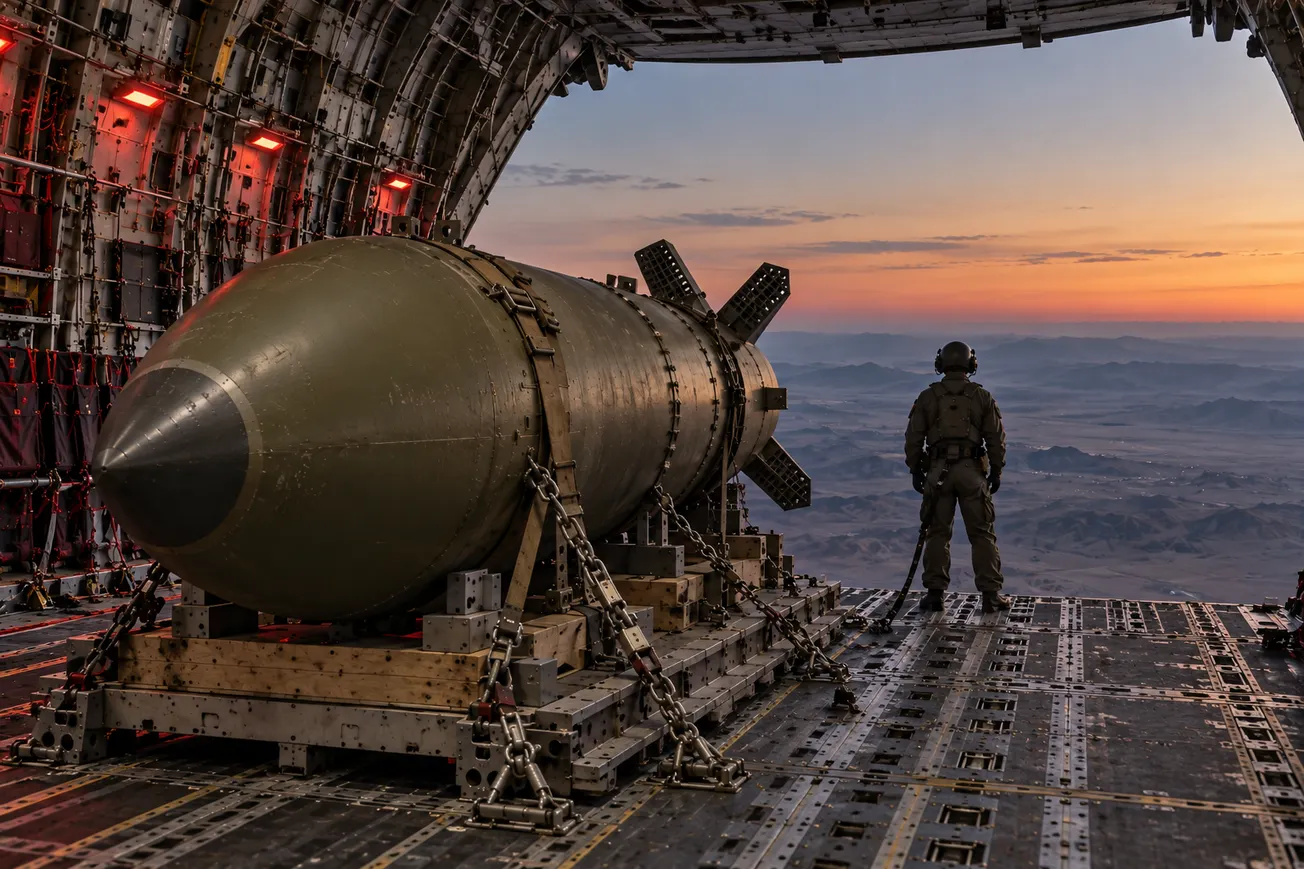
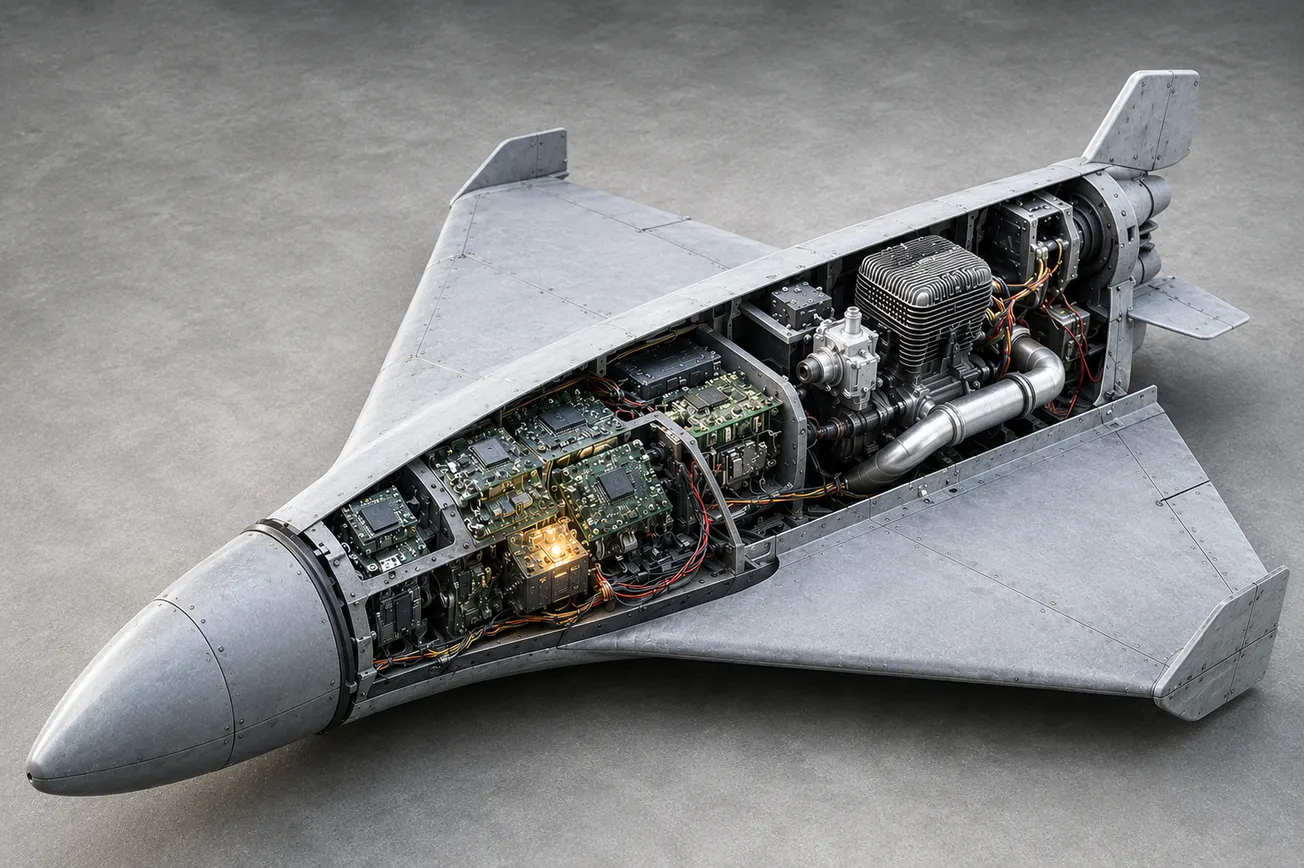
Early Tuesday, a U.S. Army Apache helicopter patrolling near the Strait of Hormuz went down off the coast of Oman. Both crew members came out alive, pulled from the sea by an unmanned American boat in the first drone rescue in the U.S. military’s history. President Trump blamed Iran for shooting it down, and by Tuesday evening, American forces had struck back, in what Central Command called a proportional response to Iranian aggression, though it said the cause was still under investigation. Officials called it an Iranian drone, and one account named the model: a Shahed.
The Shahed carries an Iranian label and an Iranian design, but much of what lets it fly and steer to a target does not come from Iran. Its supply chain runs through China.
A Chinese foreign ministry spokeswoman this spring called her country “a responsible major country” that honors its international obligations, brushing aside a report that China had agreed to arm Iran. The evidence says otherwise.
At the end of September, the United Nations reimposed its arms embargo on Iran, which Beijing called illegitimate and carried on as though it did not exist.
On May 6, the Wall Street Journal produced the receipts, showing Chinese companies are shipping engines, microchips, and other drone parts to Iran and Russia in huge numbers, documented in China’s own customs records. The Shahed-136 is an Iranian drone, but the engine that flies it began as a German design and is now sold by a Chinese firm, which advertises it with a photograph of the Iranian drone it powers. China supplies more than the engine. In 2021, it gave Iran access to BeiDou, its own version of GPS, which experts believe now guides the drones to their targets. And last year, American sanctions targeted Chinese firms supplying the gyroscopes that keep them on course. Conflict Armament Research, a British group that traces weapons recovered from war zones, has studied the drones downed in Ukraine and the Gulf and repeatedly found Chinese parts inside.
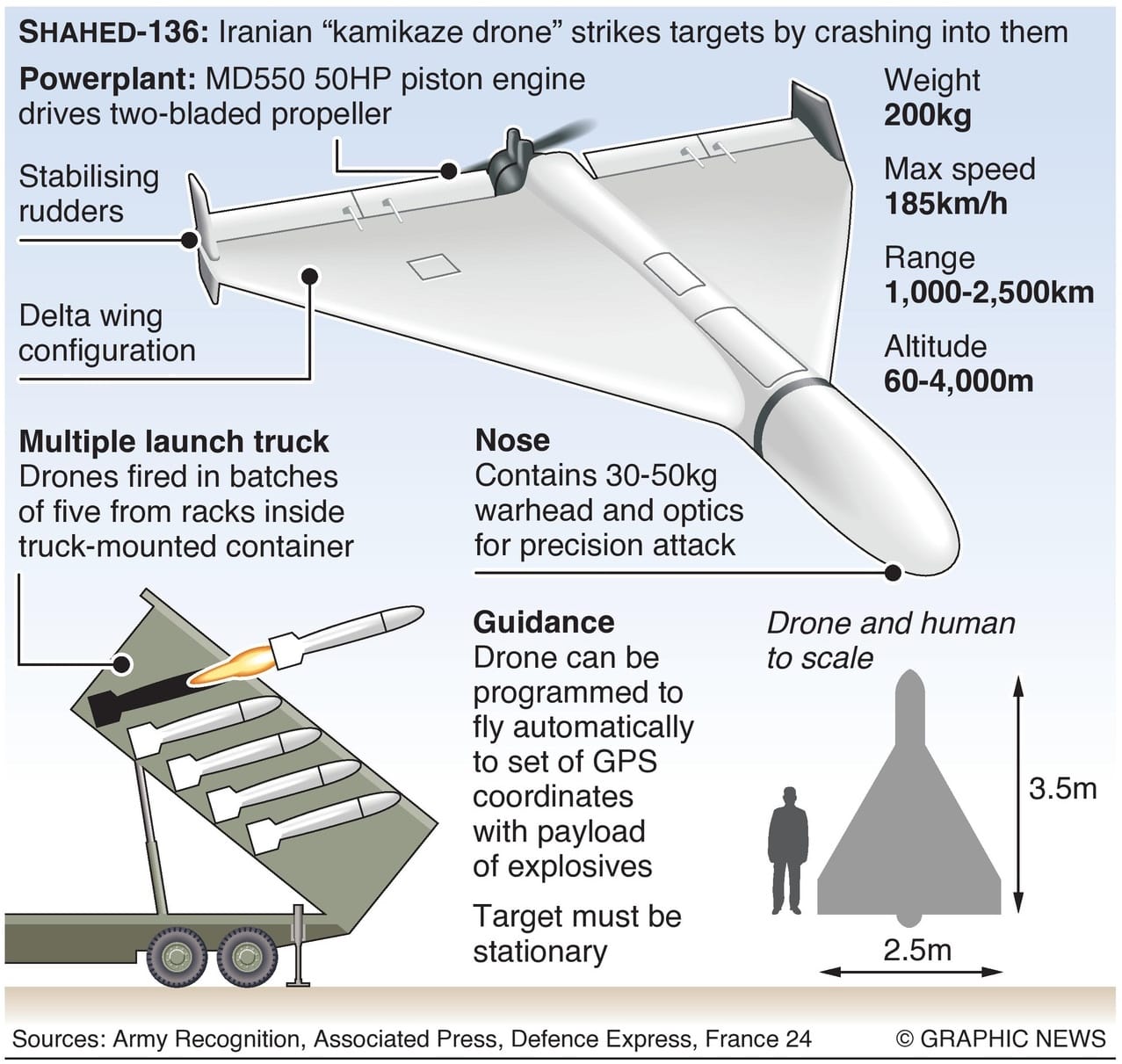
A teardown of a downed Shahed-136 found that roughly four-fifths of its electronics originated in the United States, barred from sale to Iran but reaching it anyway. A U.S. Treasury investigation found that nearly all of those Western parts are routed through registered distributors in mainland China and Hong Kong before reaching Iranian and Russian assembly lines. When Washington blacklists the front companies, they rename themselves and continue doing business as usual. Even last month, the Treasury added more Chinese and Hong Kong firms from already-sanctioned networks.
At first, the shippers hid what they were doing, mislabeling cargo and running payments through shell companies. By this spring, according to the same reporting, they had stopped hiding and were selling drone parts openly. A former U.S. sanctions official said Beijing had “turned a blind eye” even after its role was exposed repeatedly. China defends the trade rather than denying it. A spokesman for its embassy in Washington called the cooperation with Iran “reasonable and legal.”
Beijing is also getting a free lesson from the war by learning how advanced air defenses hold up when cheap drones swarm them. By studying this war, China hopes to sharpen the same cheap-drone tactics it would use in any fight over Taiwan, whose defenses look much like the ones now being tested over the Gulf.
Beijing helped arm this war, and it helps pay for it too. China buys roughly half of Iran’s oil exports, through front companies in Hong Kong and the Gulf, and that money keeps the regime fighting. When Washington asked Xi for the one thing that would bite, a pause in those purchases, he refused. Beijing offered words about keeping the Strait of Hormuz open and did nothing that cost it anything. Worse, it may be doing the opposite: despite Beijing’s denials, reports have emerged of negotiations to sell Iran a supersonic anti-ship missile designed to sink aircraft carriers, though the public record at this stage shows only talks, not a completed sale.
A country that calls itself responsible does not arm a war it says it wants ended. Beijing is the quartermaster of this one, and it is already studying it for the one that may come.
🧭 POWER & CAPITAL · June 10, 2026
Where state power meets the boardroom.
🔷 U.S. Strikes Iran After Apache Downing, Shattering the Truce: Washington hits sites near Hormuz overnight and Tehran answers against Gulf states.
🔷 Oil's Brief Retreat Ends as the Hormuz War Reignites: the overnight strikes revive the supply-shock premium just as crude had eased.
🔷 Stocks Slide Into a Two-Front Test of Nerves: a chip-led selloff meets the Gulf escalation and today's inflation data.
🔷 Inflation Print Looms as the Oil Shock Returns: May CPI, due this morning, is expected at its highest in nearly three years.
🔷 SpaceX Heads for a Record Debut Into a Risk-Off Tape: Friday's listing chases a 1.77-trillion-dollar valuation amid the turmoil.
Global Affairs
U.S. Launches Retaliatory Strikes On Iran After Helicopter Incident – TIPP News
Xi’s Silence On North Korea’s Nuclear Program Draws Attention – TIPP News
UK and Allies Sanction Networks Linked To West Bank Settler Violence – TIPP News
Cuba Envoy Says U.S. Sanctions Are Pretext For Intervention – TIPP News
U.S. Urges Europe To Tighten Ebola Travel Restrictions – TIPP News
What Does The Kenya Ebola Dispute Reveal About U.S.-Africa Relations – TIPP News
Autocracy Is Fueling Mexico’s Fiscal Deterioration – Guillermo Ortiz, Project Syndicate
Indian PM Modi To visit France, Slovakia From June 13-18 – TIPP News
National Affairs
House Votes To Terminate Iran War, While Preparing To Vote To Ramp Up The Ukraine War – Adam Dick, Ron Paul Institute for Peace and Prosperity
House Advances Bill To Fund Trump’s Immigration Agenda – TIPP News
Top Pro-Life Group Will Give Lawmakers Failing Grade If They Don’t Extend Planned Parenthood Defund – Elizabeth Troutman Mitchell, The Daily Signal
Progressive Candidate Graham Platner Secures Senate Bid – TIPP News
NASA Unveils Artemis III Crew For Next Phase Of Moon Program – TIPP News
New Screwworm Cases Raise Concerns In Texas And New Mexico – TIPP News
FDA Approves First New Sunscreen Ingredient In More Than Two Decades – TIPP News
Ancient Mammoth DNA Discovered In 700,000-Year-Old Squirrel Droppings – TIPP News
Charles Lee: The Alternative “George Washington” You’ve Probably Never Heard Of – Joshua Mawhorter, Mises Wire
Markets & Business
Anthropic Launches Public Version Of Fable 5 With Safety Restriction – TIPP News
Meta Seeks Court Action Against NSO Group Over WhatsApp Violations – TIPP News
Why Does China Unicom Oppose The FCC’s Proposed Telecom Restrictions – TIPP News
📊 Market Mood · June 10, 2026
How the trading day is setting up.
🟩 Markets turned defensive as renewed U.S.-Iran military exchanges and another selloff in technology stocks weighed on investor sentiment.
🟧 The AI trade faced fresh scrutiny, with weakness spreading across semiconductor stocks and investors questioning whether the enormous spending required for AI infrastructure can be sustained.
🟦 All eyes are on today’s CPI report, which could determine whether the Fed keeps rates higher for longer or signals a path toward easing. A hotter reading would reinforce expectations of another rate hike.
🟨 Oil prices remained elevated as fighting threatened efforts to reopen the Strait of Hormuz, keeping inflation risks and geopolitical uncertainty firmly in the market’s focus.
🗓️ Key Economic Events
On today's U.S. data calendar.
🟧 8:30 a.m. ET — Consumer Price Index (CPI) (May)
Month-over-month: Forecast +0.5% vs. +0.6% previous
Year-over-year: Forecast +4.2% vs. +3.8% previous. This is the day's marquee report and will shape expectations for the Fed's next interest-rate move.
🟧 8:30 a.m. ET — Core CPI (May)
Forecast: +0.3% vs. +0.4% previous. Excluding food and energy, this measure provides a clearer view of underlying inflation trends and is closely watched by policymakers.
🟧 10:30 a.m. ET — Crude Oil Inventories
Forecast: -3.0M barrels vs. -7.974M previous. Energy markets remain highly sensitive to supply data as Middle East tensions continue to influence oil prices.
🟧 1:00 p.m. ET — 10-Year Treasury Note Auction
Previous yield: 4.468%. Investor demand at the auction will offer another read on inflation expectations and the outlook for long-term interest rates.
Letters to the editor email: editor-tippinsights@technometrica.com
Subscribe Today And Make A Difference. Consider supporting Independent Journalism by upgrading to a paid subscription or making a donation. Your support helps tippinsights thrive as a reader-supported publication. Contact us to discuss your research or polling needs.
Reach our audience. For sponsorship and advertising opportunities, visit our Partner With Us page.