By Stephen S. Roach, Project Syndicate | June 26, 2026
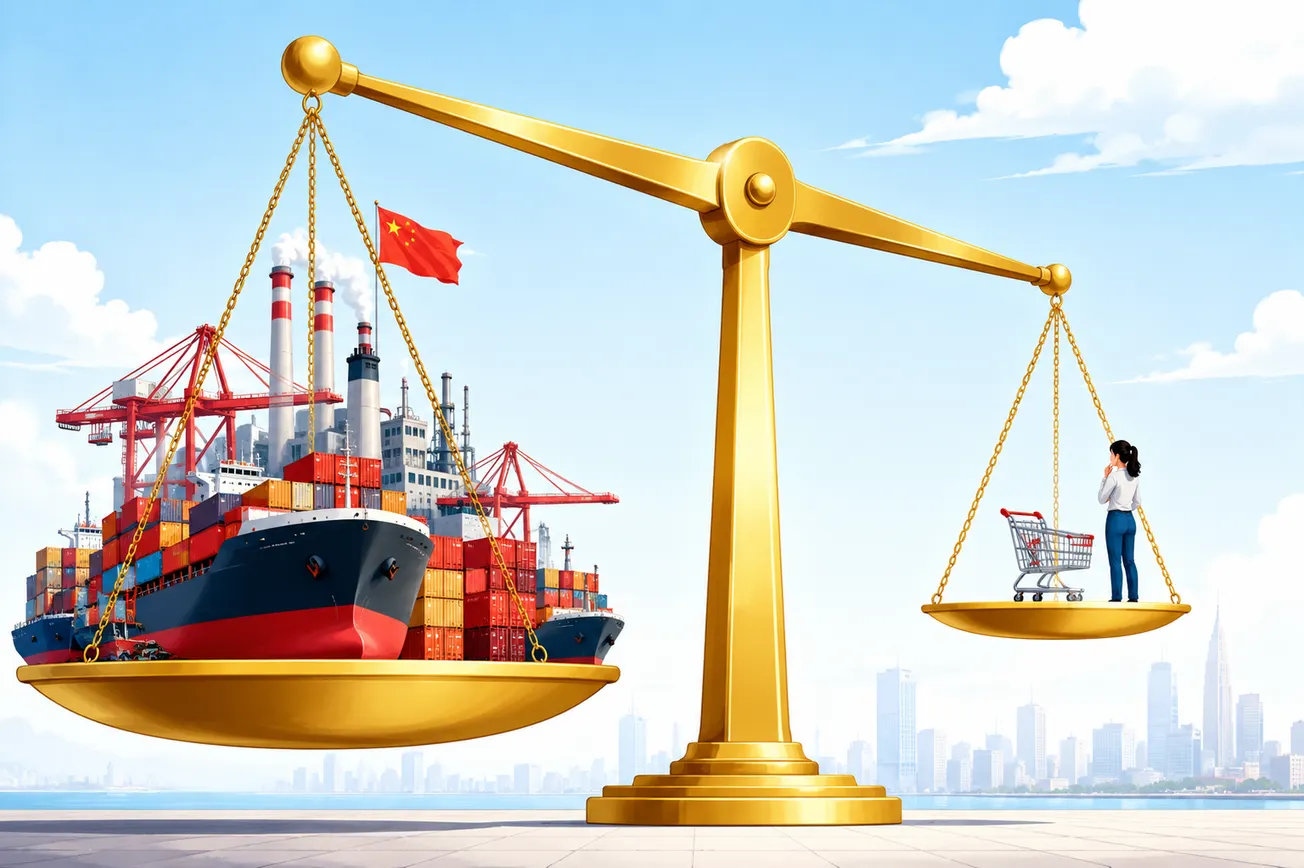
When China’s leaders first acknowledged the need to rebalance the economy nearly two decades ago, it seemed like a matter of when, not if. But with the household consumption share of Chinese GDP remaining stubbornly low, officials’ promises to boost domestic demand have lost all credibility.
NEW HAVEN—China’s efforts to rebalance its economy have been an abject failure. Nearly two decades after former Premier Wen Jiabao bemoaned the Chinese economy’s excessive dependence on investment- and export-led growth, the problem has gone from bad to worse. The lack of meaningful consumer-led rebalancing implies increased reliance on these time-worn sources of economic activity, raising critical questions for China and the rest of the world.
As the first Western economist to stress China’s perspective on the need for such rebalancing, I am especially disappointed to write these words. I remember sitting in a Beijing meeting room in March 2007, watching Wen’s press conference following the conclusion of the National People’s Congress. There was a small group of us in attendance, including some senior Chinese officials, when Wen uttered his now-famous critique of China’s economic structure. While seemingly strong on the surface, he cautioned, the economy was becoming increasingly “unstable, unbalanced, uncoordinated, and unsustainable.”
There was an audible gasp from the Chinese officials present in the room, who translated the premier’s remarks and underscored their significance, presaging a vigorous debate in the country’s policy community. I went back to my hotel room and wrote my first piece on China’s rebalancing imperative, which became the basis for my testimony before the US Senate Finance Committee nearly two weeks later.
I stressed China’s newfound sense of urgency to shift its development model from investment and exports to consumer-led growth. I underscored the other structural changes this shift would entail: moving from manufacturing to services, and from excess saving to saving absorption, which would lower the current-account surplus and fund a larger social safety net. I took Wen’s “four uns,” as I later dubbed them, as an important signal from the Chinese leadership of its readiness to do what was necessary to rebalance the economy. I was convinced that it was a matter of when, not if.
But it’s high time to face reality. China’s retail sales fell 0.6% year on year in May 2026, an unexpected drop following an anemic 0.2% increase in April, and the first monthly decline in three and a half years. Meanwhile, the latest reading of household consumption as a share of GDP is just 39.9%—virtually identical to the 2005 level (39.8%), which Wen had in hand when lamenting the “four uns” in early 2007. Given that the latest reading is from 2024, and that Chinese consumption showed continued weakness in 2025 and early 2026, there is good reason to believe that the economy’s current proportion of consumption has fallen below Wen’s 2005 benchmark.
Several explanations for this outcome have been put forward: a protracted property crisis, the low share of household income, post-COVID scarring, demographic shifts, and high youth unemployment. My favorite explanation has long been an inadequate social safety net, which boosts fear-driven precautionary saving, that, in turn, inhibits discretionary consumption. While all these factors could very well be at work, excess precautionary saving is, in my view, the most important longer-term structural impediment to Chinese consumer demand.
Whatever the explanation, these developments have not gone unnoticed by senior Chinese leaders. President Xi Jinping recently emphasized the strategic importance of boosting domestic demand, which Premier Li Qiang’s March 2026 “work report” also stressed. Unfortunately, this has been trotted out as a priority so often over the past two decades that it has lost all credibility. While it is encouraging that China’s State Council recently relaxed some hukou restrictions, making migrant workers’ access to social insurance more portable, much more is needed to reduce household insecurity and end the cycle of overpromising and underdelivering.
Some dismiss the failure of China’s consumer-led rebalancing as a statistical mirage, especially because it purportedly excludes government support for “social transfers in kind” like education, health care, cultural amenities, and subsidized food. While there may be some technical validity to this claim, it does not change the bottom line: household consumption as a share of Chinese GDP—whether adjusted or unadjusted—is no higher today than it was when Wen Jiabao first drew attention to the issue.
This inertia has two worrying implications. First, the Chinese people remain on the outside looking in. The state, state-owned enterprises, and private companies continue to reap a disproportionate share of the fruits of Chinese economic development. This calls into question the prospects for the continued growth of the middle class, long seen as the aspirational beneficiary of prosperity in the People’s Republic of China.
Second, subpar consumption suggests that China will continue to rely on exports and investment to drive growth, especially the technology-led “new quality productive forces” that Xi Jinping continues to underscore. Yes, China set a lower GDP growth target of 4.5–5% for 2026, roughly half the spectacular 9.3% growth trajectory from 1980 to 2020. But with China’s share of world GDP (in terms of purchasing power parity) nearly ten times bigger than it was in 1980, its exports now have a far greater impact on global GDP. By some estimates, China’s share of global manufacturing (in terms of value added) will rise from around 30% today to an astonishing 45% by 2030. The rest of the world is unlikely to be receptive to such an outcome, broadening the prospects of anti-China protectionism, from the United States to Europe.
Wen Jiabao may be China’s forgotten premier, but the contradiction he highlighted in 2007—growth without rebalancing—remains the country’s greatest macroeconomic challenge. I have warned about this for years. And now, amid all the talk of China’s global ascendancy, the country’s failure to address its rebalancing imperatives could well end up being its Achilles’ heel.
Stephen S. Roach, a faculty member at Yale University and former chairman of Morgan Stanley Asia, is the author of Unbalanced: The Codependency of America and China (Yale University Press, 2014) and Accidental Conflict: America, China, and the Clash of False Narratives (Yale University Press, 2022).
Loved it, hated it, or somewhere in between — tell us. Grade this article here and help shape what lands in your inbox next.
Copyright Project Syndicate
📉 THE CHINA FILES · June 26, 2026
Xi's China is contracting at home and overreaching abroad. The TIPP editorial board tracks the decline, one front at a time.
THE SUMMIT THEATER
🔹 Mr. President, Don't Go to China: Beijing is funding a regime that is killing American troops. A state visit now rewards the patron.
🔹 The Handshake in Beijing: The summit is just a photograph, unless Trump forces Xi to move on Iran.
🔹 The 25th Visit: The price column is still blank.
🔹 To Be Continued: Trump asked Xi for the only thing that mattered. Xi said no.
🔹 Xi's Reelection Theater: Every concession since Busan was for one photograph. The photograph was for his fourth term.
BANKROLLING THE AXIS
🔹 The Quartermaster: The drone that downed an American helicopter is Iranian. Its supply chain is not.
🔹 The Denuclearization Surrender: China's demand that North Korea disarm was also its leverage. Xi gave up both, just as Kim turns to confront Washington.
TAIWAN AND A HOLLOW ARMY
🔹 The Boxed-In Giant: On the map that decides a war over Taiwan, China is the trapped one, and Xi tightened the trap himself.
🔹 Xi's Question: Taiwan?
🔹 Ambiguity Top and Bottom: Xi asked whether America would defend Taiwan. The President preserves the ambiguity by design; the public, by indecision.
🔹 The Death Sentence: Xi is purging the men he handpicked. The army he is left with cannot fight the war he keeps threatening.
🔹 One Child, One Soldier: The demographic curse haunting Xi.
THE JAPAN MISFIRE
🔹 The Home Front: Xi staged a year of pressure on Japan for an audience at home, and lost the one abroad.
🔹 The Backfire: A year of Chinese pressure left Japan's new prime minister stronger than it found her.
THE PENETRATION OF AMERICA
🔹 The American Kill Line: The viral Chinese meme that explains everything wrong with Beijing's reading of America.
🔹 Inside the Wire: Americans want China out of the land, the supply chain, and the phone. The agreement is broad, and it is defensive.
CHINA IN DECLINE
🔹 The Pig Doesn't Lie: The pig the Party once promised would stay cheap now costs more to raise than it sells for.
🔹 Xi’s Lost Decade: A real estate bust the size of Japan’s, not yet halfway through. Xi holds the one tool that could break the spiral, and won’t use it..
👉 The full China dossier, with new dispatches as the story breaks. Subscribe to TIPP Insights →
🧭 Power & Capital · June 26, 2026
Where state power meets the boardroom.
🔷 Congressional Epstein Investigation Calls Billionaire Leon Black – Power & Capital Desk, TIPP Insights
🔷 Congress Seeks Cooperation From Former Biden Lawyer In ActBlue Probe – Power & Capital Desk, TIPP Insights
🔷 When Will OpenAI Go Public? IPO Timeline Still Unclear – Power & Capital Desk, TIPP Insights
🔷 Polymarket’s U.S. Exchange Drives Billion-Dollar Revenue Run Rate – Power & Capital Desk, TIPP Insights
🌍 Global Affairs
The world's flashpoints, in motion.
🟥 UN Pauses Hormuz Evacuations After Vessel Is Struck – TIPP News
🟥 Cargo Ship Attack Raises Fresh Doubts Over Strait Of Hormuz Recovery – TIPP News
🟥 Thousands Feared Dead After 2 Major Earthquakes Strike Venezuela – Vivian Sequera & Mayela Armas, The Daily Signal
🟥 Iran Wants A Deal With Us ‘Very Badly’: President Trump – TIPP Videos
🟥 Light Aircraft Reportedly Strikes Beijing’s Highest Building – TIPP News
🏛️ National Affairs
The fights shaping America right now.
🟫 Ex-National Security Adviser John Bolton Reaches Plea Deal – TIPP News
🟫 Russiagate Prosecutor Calls Audible On ‘Grand Conspiracy’ – Paul Sperry, TIPP Insights
🟫 Leon Black Claims Jeffrey Epstein Misled Him Out Of $60 Million – TIPP News
🟫 Haitians, Syrians Face Legal Uncertainty After Supreme Court Ruling – TIPP News
🟫 Supreme Court Rules On Temporary Protected Status For Syrians, Haitians – Tyler O’Neil & Fred Lucas, The Daily Signal
🟫 Is Mamdani Taking Over The Country? – George Caldwell, The Daily Signal
🟫 Why Is Texas Requiring Bible Stories In Public Schools – TIPP News
🟫 Do I Look like A “Radical Left Lunatic” Vandal? – James Bovard, Mises Wire
📈 Economy
Prices, policy, and the pressure on your wallet.
🟩 Lies, Damn Lies, And The History Of Capitalism – Wanjiru Njoya, Mises Wire
🟩 The Public Choice Problem Of AI Rights – Jimmy Alfonso Licon, Mises Wire
💼 Markets & Business
The deals and tickers making moves.
🟧 Why Is Volkswagen Planning 100,000 Job Cuts – TIPP News
Letters to the editor email: editor-tippinsights@technometrica.com
Subscribe Today And Make A Difference. Consider supporting Independent Journalism by upgrading to a paid subscription or making a donation. Your support helps tippinsights thrive as a reader-supported publication. Contact us to discuss your research or polling needs.
Reach our audience. For sponsorship and advertising opportunities, visit our Partner With Us page.