By Ian Bremmer, Project Syndicate | September 8, 2026
The competition between the United States and China to develop AI and deploy it globally poses the biggest threat to the two countries’ currently constructive relations. Without an ongoing AI dialogue to avoid escalation, a return to the zero-sum conflict that rattled both sides last year cannot be ruled out.
NEW YORK—Just three months after US President Donald Trump returned to the White House in 2025, he launched a new trade war with China. It didn’t go well. Immediately after he announced a 34% duty on all Chinese imports, China signaled that it was ready to play hardball with a matching 34% tariff on all US goods and immediate export controls on seven rare-earth elements and the rare-earth magnets used in many 21st-century consumer products and military technologies.
After another quick round of back-and-forth retaliation, Trump backed down, and the two sides met in Geneva to declare a truce. Six months later, that truce was extended, and it remains in force today as Trump and President Xi Jinping prepare for their summit later this month.
Both sides have (for now) recognized that confrontation would badly damage both economies. Pragmatism became the new rule for the world’s most important bilateral relationship. US and Chinese officials have since looked for and found ways to work together more constructively on trade and investment, as well as engaging in more frequent, higher-level military-to-military communications. To keep relations on track, the Trump administration has delayed new defense packages for Taiwan, allowed restrictions on commerce with Hong Kong to lapse, and scaled back the periodic US naval patrols that are meant to assert freedom of navigation in the South China Sea.
The big question for a world now plagued by two major wars and another barrage of Trump-generated trade conflicts is how long these US-Chinese guardrails will hold. On a positive note, the current détente depends on a balance of coercive leverage that should last, in most areas, for at least the next several years.
The US will continue to reduce its direct reliance on Chinese goods imports, but it will remain vulnerable to China’s control over processed critical minerals and intermediate goods. China will continue to reduce its foreign dependencies and redirect exports toward the Global South, but it will still be vulnerable to US financial sanctions and some technology export controls.
To be sure, the US and Chinese leadership won’t suddenly decide to trust one another. Since neither is prepared to lower its guard, there are still many things that could go wrong. A major flare-up over US sanctions on Iran, Chinese support for Russia, or a miscalculation over Taiwan could raise pressure in both capitals for a more confrontational approach. But as long as the US and China continue to read the balance of leverage correctly and avoid domestic pressure for escalation, the occasional diplomatic, trade, or security skirmish can remain contained in the interest of stability.
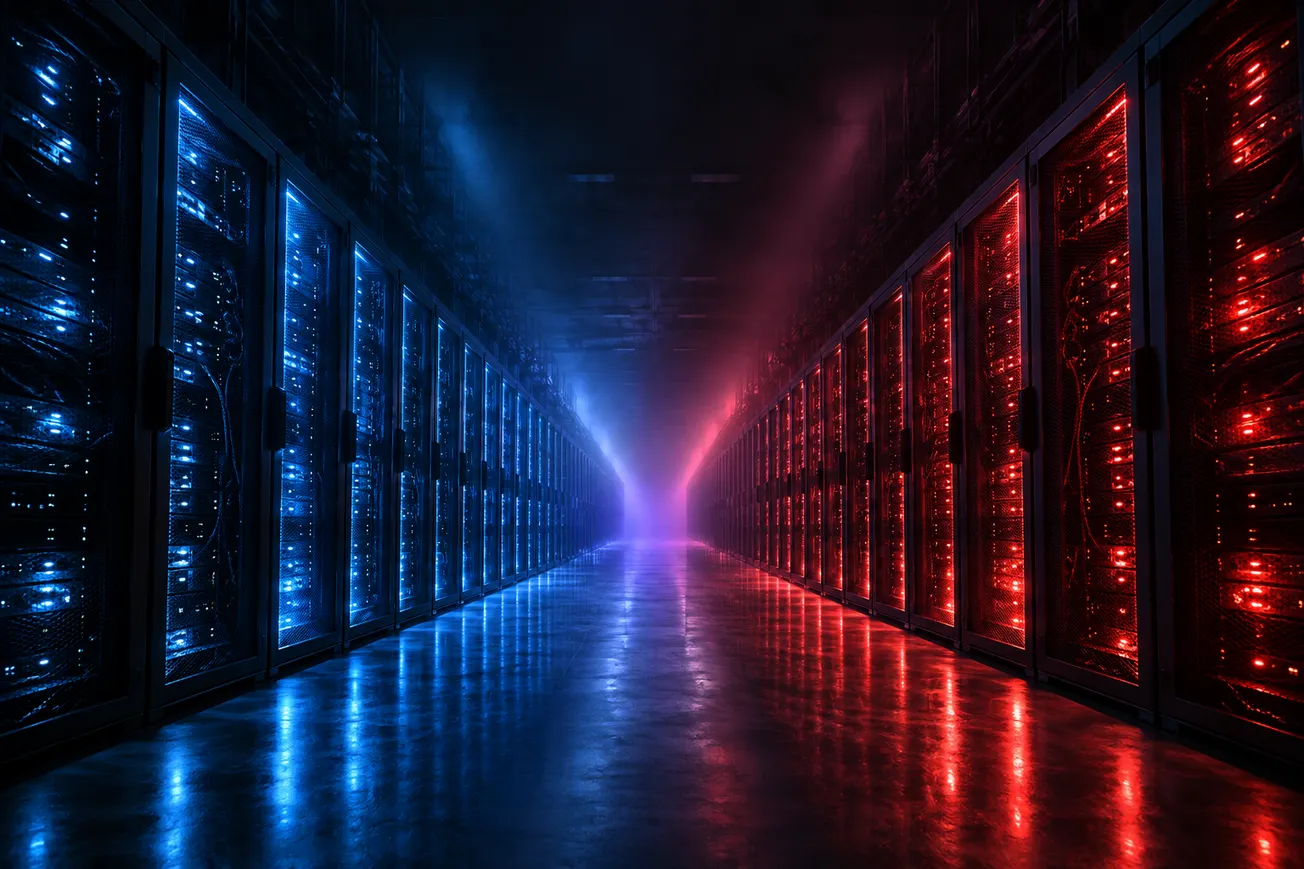
There is a dangerous wildcard, though. AI and the lack of international governance over its development and use are already creating risks, within both the US and China and around the world. And given that the US and China now lead in AI innovation by some distance, competition between the two in this sector poses the biggest threat to their currently constructive relations.
This race is now marked by both fast-advancing Chinese capabilities and the sudden rise of new national-security risks for both countries. China’s decision to focus on inexpensive, open-source models will make AI at scale accessible to consumers and industrial users in the West and across the Global South. But the US intelligence and defense community will not welcome such competitive pressure (and data collection). Moreover, Chinese models bring some of the same cyber and biotech risks as their American counterparts; but unlike Anthropic or OpenAI, Chinese companies won’t respond to US government concerns and demands.
That is why the US will respond in the coming months with significant restrictions on Chinese access to US models and limits on US access to Chinese open-weight models. Trump will also try to use US political leverage to pressure other countries to adopt American, rather than Chinese, AI. If the US and China fail to manage this struggle, we can expect a sharp acceleration in the decoupling of advanced technologies between the two countries.
We are already seeing this trend in other areas. In July, the US banned the import of foreign-made humanoid robots—a move obviously aimed at China, which has a substantial technological and pricing lead over its American competitors. Trump has also now imposed up to 100% tariffs on drones, targeting Chinese-made models, in particular, on national-security grounds.
In short, the Sino-American AI arms race is already well underway. The question now is whether Trump and Xi can use their White House summit this month to lay the groundwork for an ongoing AI dialogue designed to avoid a future of accelerating, opaque, and potentially zero-sum conflict.
If they fail, the two sides may feel that confrontation has become inevitable, and not just regarding AI. It is not hard to imagine a renewed trade conflict and heightened security tensions quickly bringing down the guardrails the two sides have built over the past 16 months. The AI race makes such an outcome all the more difficult to avoid.
Ian Bremmer, Founder and President of Eurasia Group and GZERO Media, is a member of the Executive Committee of the UN High-level Advisory Body on Artificial Intelligence.
Loved it, hated it, or somewhere in between — tell us. Grade this article here and help shape what lands in your inbox next.
🔗 Further Reading
Deeper on what you just read.
🟥 Silicon, Not Software, Will Decide the AI Race – Antonin Bergeaud and Robin Rivaton, Project Syndicate
🟥 AI Race Heats Up As China Challenges U.S. Leadership – TIPP News
🟥 AI Is Reviving Chinese Marxist Economics – Yanis Varoufakis, Project Syndicate
🟥 China’s Biggest Weakness On AI – Carl Benedikt, Project Syndicate
🟥 The Innovation Mirage: Why DeepSeek and Kimi 3 Do Not Settle the Question of Chinese Technological Supremacy – Lipton Matthews, Mises Wire
🟥 China’s Fighter Jet Experts Urge Caution Over AI-Generated Intelligence – TIPP News
🟥 American Businesses Can’t Get Enough Of China’s AI – TIPP News
🟥 Xi Unveils Global South AI Initiative Amid U.S. Rivalry – TIPP News
🟥 Zuckerberg Warns Against Blocking Chinese AI – TIPP News
🟥 Bessent Targets Alleged Chinese AI Intellectual Property Theft – TIPP News
🧭 Power & Capital · September 9, 2026
Where state power meets the boardroom.
🔷 US Imposes New Sanctions On Iran’s Aviation Sector – Power & Capital Desk, TIPP Insights
🔷 Canada’s Retaliatory Tariffs Take Effect As US Trade Talks Stall – Reuters, The Daily Signal
🔷 Trump Administration Announces $1.9 Billion Loan For Iowa Nuclear Plant Restart – Power & Capital Desk, TIPP Insights
🌍 Global Affairs
The world's flashpoints, in motion.
🟥 Iran Says It Seized Advanced U.S. Underwater Drone Near Strait Of Hormuz – TIPP News
🟥 Trump Seeks Quick End To Ukraine War And Restoration Of US-Russia Ties – TIPP News
🟥 Seoul Dispatches Team To UAE As It Reviews Possible Hormuz Deployment – TIPP News
🟥 Greek Zoo Welcomes Three Sumatran Tiger Cubs In Global Conservation Effort – TIPP News
🏛️ National Affairs
The fights shaping America right now.
🟫 Sen. Tafoya? Minnesota Polling Shows A Dead Heat – Steve Cortes, The Daily Signal
🟫 That Vote’s Gotta Hurt – Editorial Board, Issues & Insights
🟫 Trump Marks 25th Anniversary Of 9/11 With Tribute To Fallen Heroes – TIPP News
🟫 25 Years After 9/11, Americans Fear More Terrorist Attacks On U.S. Coming: I&I/TIPP Poll – Terry Jones, TIPP Insights
🟫 FIRST OF ITS KIND: Civil Rights Division Tests Novel Use Of Education Law To Combat Gender Secrecy Policies – Tyler O’Neil, The Daily Signal
🟫 FDA Inspections Declined For Years Before Cyclospora Outbreak, Analysis Finds – TIPP News
🟫 House Ed Committee Investigates How AI Affects College Admissions – Elizabeth Troutman Mitchell, The Daily Signal
🟫 Virginia Baseball Teams Eye Playoffs – Rich Tucker, The Daily Signal
📈 Economy
Prices, policy, and the pressure on your wallet.
🟩 Tourism Without A Ceiling – Editorial Board, TIPP Insights
🟩 The Boom They Never Saw Coming – Larry Kudlow, Fox Business
🟩 Americans Kept Flying Despite Iran War, Economic Jitters As Trump Pushed Air Travel Overhaul – Jack McGeever, Daily Caller News Foundation
🟩 Ben Bernanke Didn’t Prevent A Depression. He Prevented A Recovery – William L. Anderson, Mises Wire
🟩 Inflation Destroys Family Well-Being – Angelo Monaco, Mises Wire
💼 Markets & Business
The deals and tickers making moves.
🟧 Boston Scientific Warns Cyberattack Will Hurt 2026 Sales And Profits – TIPP News
🟧 Novartis Cholesterol Drug Fails Trial, Raising Questions For Rivals – TIPP News
🟧 Apple’s Foldable iPhone Faces Tough Competition From China – TIPP News
🔬 Science & Tech
What's being discovered, built, and launched.
🟪 OpenAI Says AI Model Solved Famous Navier-Stokes Mathematics Problem – TIPP News
🟪 Study Links Nearly 1.7 Million Deaths To Second-Hand Smoke Exposure – TIPP News
🟪 OpenAI Scientist Calls For Caution As AI Intelligence Accelerates – TIPP News
📊 Market Mood · September 9, 2026
How the trading day is setting up.
🟥 Oil is closing in on $100 a barrel. Brent is around $99 after Iran struck a U.S. base in Jordan and ships near the Strait of Hormuz, while Houthi attacks on Saudi cities broaden the Middle East conflict and intensify inflation fears.
🟧 Stocks remain cautious as the energy shock collides with the rate outlook. U.S. futures are little changed, while elevated oil prices and bond yields are making investors reluctant to add risk ahead of crucial inflation data.
🟦 The yen continues its remarkable rally, approaching a seven-month high as traders position for a Bank of Japan rate hike and unwind yen-funded trades. The currency has gained roughly 4% over the past five sessions.
🟨 Inflation is now the market's central question. PPI arrives Thursday and CPI Friday, with markets nearly evenly divided over whether the Fed will raise rates next week.
🗓️ Key Economic Events
On today's U.S. data calendar.
No major U.S. economic reports are scheduled today. The important data begin tomorrow with PPI, followed by CPI on Friday.
Letters to the editor email: editor-tippinsights@technometrica.com
Subscribe Today And Make A Difference. Consider supporting Independent Journalism by upgrading to a paid subscription or making a donation. Your support helps tippinsights thrive as a reader-supported publication. Contact us to discuss your research or polling needs.
Reach our audience. For sponsorship and advertising opportunities, visit our Partner With Us page.