Federal Reserve Chair Kevin Warsh told Congress on Tuesday that five years of high inflation would be a thing of the past. A consumer price report released hours earlier showed inflation falling. It tracked an index the Fed does not target, and the drop in energy prices behind it had begun to reverse the day before he testified.
The Bureau of Labor Statistics reported on Tuesday morning that consumer prices fell 0.4% in June, pulling annual inflation down to 3.5% from 4.2% in May. Cheaper gasoline drove most of the decline. Core CPI, which excludes food and energy, was unchanged on the month and ran at 2.6% over the year, down from 2.9%.
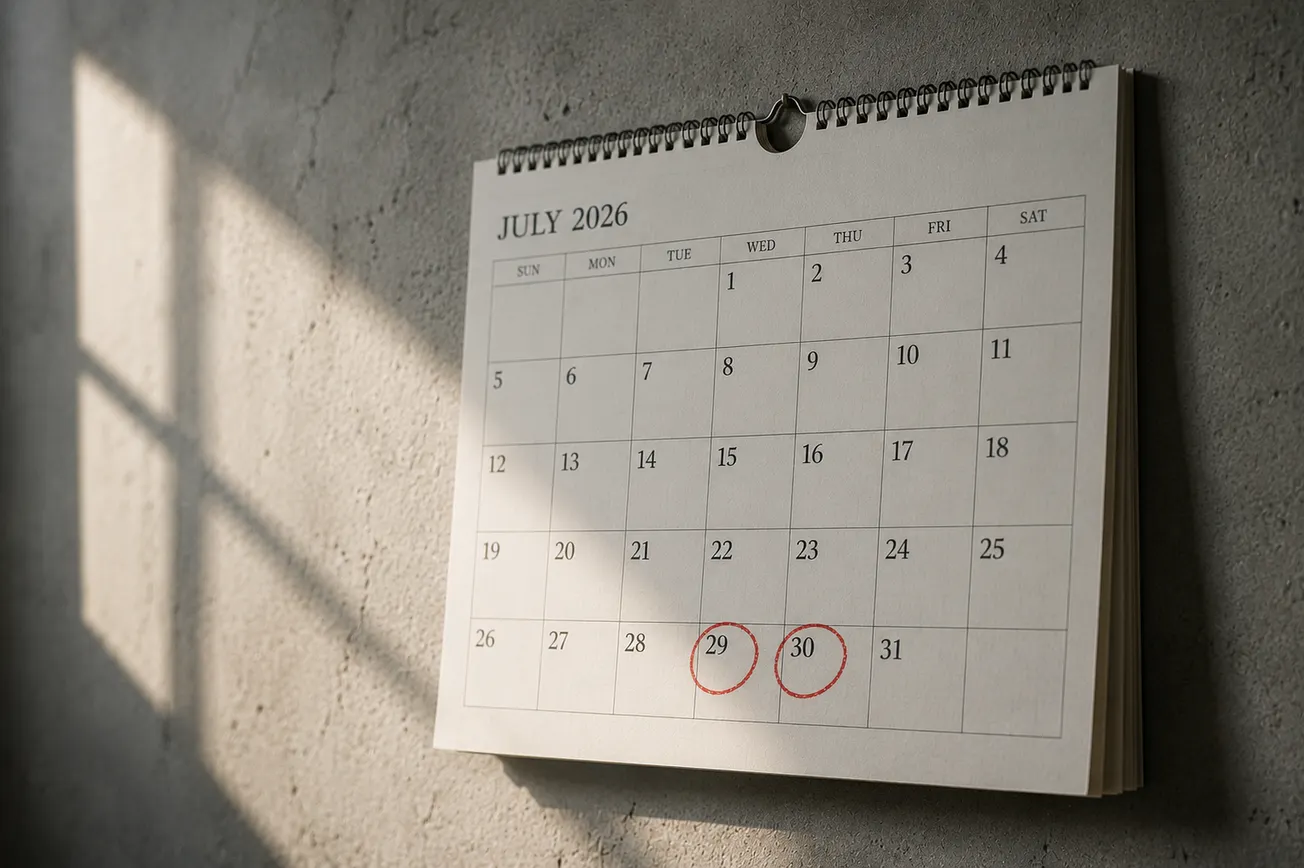
The Fed does not set its 2% target against the consumer price index. It targets the personal consumption expenditures index, which is running higher. Headline PCE reached 4.1% in May, the highest since April 2023. Core PCE was 3.4%, the highest since October 2023. The June PCE figures are due on July 30. The Federal Open Market Committee meets on July 28 and 29. The committee will set rates without having seen June’s reading on the measure its own target uses. The most recent figure available to it is May’s three-year high.
The June decline was driven by energy. Oil and pump prices climbed after the United States attacked Iran on Feb. 28, and inflation reached a three-year high in May. In June, an interim agreement to end the conflict allowed tankers to resume passage through the Strait of Hormuz, which carries about a fifth of global oil flows, and crude slipped back to roughly its pre-war level.
The agreement collapsed. President Trump said the ceasefire was over. Iran attacked a container ship in the strait over the weekend, setting it ablaze and leaving a crew member missing, and the United States responded with several waves of strikes. By Monday, the day before Warsh testified, fighting over the waterway had entered a second week. Brent crude rose 4.7% to $79.59 per barrel, and U.S. crude rose 4.8% to $74.85 per barrel. Tehran says the strait is closed. U.S. Central Command says Iran does not control it. Gas prices have risen over the past week.
Fed officials generally look through energy swings driven by supply. The minutes of Warsh’s first meeting as chair, released last week, show a committee divided over whether inflation will stay elevated or cool once the Iran war winds down. The war has not wound down.
Warsh did not indicate what any of this means for rates. He would not be drawn on the July 28-29 meeting. He did not submit a forecast to the projections released after the June meeting, which ended June 17. Eighteen of the Fed’s 19 policymakers submitted one. He reasons that a published forecast can lock officials into an approach that is harder to abandon if the economy turns. He has said forward guidance is not a business the Fed should be in.
Warsh called the run of above-target inflation a tax on the American people and businesses and said the Fed plans to get rid of it. Doing so, he told lawmakers, requires a change of regime in policy and fresh scrutiny of the central bank’s practices. He repeated his view, first offered at his confirmation hearing, that inflation is a “choice” on the Fed’s part. Officials in previous years were too reluctant to act aggressively, he said, and consumers paid for it in a prolonged run of price increases.
Warsh named the flexible average inflation targeting framework the Fed adopted in 2020, which tolerated above-target inflation after periods of lower prices, as a mistake. The Fed was not the first central bank to ask for a little more inflation and end up with a lot more, he said.
Warsh has appointed five task forces to review the Fed’s communications, its balance sheet policies, the economic data it relies on, productivity and jobs, and its inflation frameworks. Their charge, he said, is to start from first principles, ask hard questions, and propose next steps for policymakers. They will report first to the 19 members of the Federal Open Market Committee, and Warsh said findings would be shared publicly at intervals before the end of the year.
Warsh described economic activity as expanding at a solid pace. He called business investment the most striking feature of the economy right now, driven by data center construction and demand for AI equipment and software. Equipment investment grew about 8% in the year through the first quarter, and high-tech spending grew close to 25%. He brushed off concerns about major job losses, calling AI a productivity booster and saying history suggests it creates more work than it destroys.
That investment is also a source of inflation. Demand for memory chips and processors from Alphabet, Microsoft, Amazon, and Meta Platforms has driven semiconductor prices higher, feeding through to the cost of laptops, tablets, and video game consoles. Joseph Brusuelas, chief economist at RSM, has listed the AI buildout alongside tariffs, services inflation, and defense spending as reasons core inflation will not fall easily even as energy prices drop. The International Monetary Fund cut its 2026 global growth forecast to 3% last week, citing the energy shock from the Iran war, and said the same investment boom was partly offsetting the damage.
Warsh said the labor market looks broadly stable, with job creation keeping pace with the workforce, low unemployment, few layoffs, and solid nominal wage growth. Jobless claims fell by 2,000 to 215,000 in the week to July 4, and layoffs remain historically low. Employers added 57,000 jobs in June, less than half the previous month’s total and a sign that companies remain cautious.
Warsh said housing continues to lag. Existing home sales fell 2.4% in June from May, to a seasonally adjusted annual rate of 4.09 million, below the 4.21 million pace economists expected. The median sales price rose 1.8% from a year earlier to $440,600, the highest on records going back to 1999 and a 36th consecutive month of annual increases. Pressed on housing, Warsh said the Fed would not intervene on behalf of any single sector, and he gave the same answer when another lawmaker raised agriculture. He acknowledged that high rates can hurt struggling homeowners but said the Fed would lose credibility if it moved outside its remit.
Democrats spent much of their time on the Fed’s independence. Rep. Nydia Velázquez of New York asked Warsh whether he works for President Trump. Warsh said the Fed is an independent central bank and that it is honored to be one, while allowing that there is a lot of politics outside its four walls. Rep. Gregory Meeks asked what he would do if the president publicly pressured him to pursue a different course. Warsh said the Supreme Court had settled the question of the Fed’s independence in the conduct of monetary policy, and that he would continue to do his job.
Ranking Member Maxine Waters pressed Warsh on conflicts of interest and on officials profiting from the crypto industry they help oversee, with the CLARITY Act in its final stretch of negotiation. Warsh said conduct outside the Federal Reserve is not his jurisdiction, though he hopes to combat corruption and insider trading within it. He said it is Congress’ job, not the Fed’s, to write crypto rules. Warsh served as a Fed governor during the 2008 financial crisis and said he still has the scars. He supported the Fed’s response at the time before resigning over further rounds of asset purchases, and he described quantitative easing as a tool for dire emergencies only.
Governor Christopher Waller said on Monday that another hot inflation reading would force policymakers to consider raising rates in the near term. John Williams, president of the Federal Reserve Bank of New York, said last week that the Fed could avoid a rise if core inflation held at a monthly pace of 0.2% for the rest of the year. Of the 18 policymakers who submitted forecasts last month, half backed a rise by the end of the year and half backed holding or cutting.
Warsh testifies before the Senate Banking Committee on Wednesday.
This report includes material from the Associated Press, CNBC, PBS NewsHour and CNN, and from the Federal Reserve's published testimony and Bureau of Economic Analysis data.
Loved it, hated it, or somewhere in between — tell us. Grade this article here and help shape what lands in your inbox next.
🧭 Power & Capital · July 15, 2026
Where state power meets the boardroom.
🔷 Senators Unveil Bipartisan Russia Sanctions Bill Honoring Lindsey Graham
🔷 Wisconsin Board Finds Probable Cause In Musk Election Case
🔷 U.S. Expands Sanctions On Cuba's Tourism Sector
🌍 Global Affairs
The world's flashpoints, in motion.
🟥 U.S. Launches New Strikes On Iran Ahead Of Naval Blockade – TIPP News
🟥 Russian Strikes Push Ukraine Civilian Death Toll To New High – TIPP News
🟥 Trump Says U.S. Investigating Possible Iranian Drones In Cuba – TIPP News
🟥 What was Discussed During The Trump-Iraq White House Meeting – TIPP News
🟥 Israeli Cabinet Allocates $434 Million For Settlement Expansion – TIPP News
🟥 Why Is The Discovery Of Sugar In Space Important? – TIPP News
🏛️ National Affairs
The fights shaping America right now.
🟫 ICE Suspends Most Traffic Enforcement Following Deadly Incidents – TIPP News
🟫 Trump To Address Election Integrity In Primetime Speech – TIPP News
🟫 Darline Graham Sworn In to Complete Late Brother's Senate Term – TIPP News
🟫 How Would Permanent Daylight Saving Time Affect Americans – TIPP News
💼 Markets & Business
The deals and tickers making moves.
🟧 Taco Bell Investigated In Multistate Cyclospora Outbreak – TIPP News
🟧 Lawsuit Accuses Meta Of Using AI To Target Disabled Workers – TIPP News
🟧 Apple Wins Dismissal Of iCloud Child Abuse Material Lawsuit – TIPP News
🟧 Frontier Airlines To Introduce Starlink In-Flight Wi-Fi – TIPP News
📊 Market Mood · July 15, 2026
How the trading day is setting up.
🟩 Markets are regaining confidence after cooler-than-expected inflation data eased concerns about another near-term Fed rate hike, lifting technology shares and improving overall risk appetite.
🟧 Geopolitical risks remain elevated as renewed U.S.-Iran tensions push oil prices higher, reminding investors that energy markets remain vulnerable despite recent progress on inflation.
🟦 The AI rally is finding renewed support after upbeat results and guidance from ASML reinforced expectations for continued semiconductor demand, boosting chip stocks globally.
🟨 Investors are now looking to wholesale inflation data, the Fed's Beige Book, and another round of corporate earnings to gauge whether the market's recent optimism can continue.
🗓️ Key Economic Events
On today's U.S. data calendar.
🟧 8:30 a.m. ET — Producer Price Index (PPI) (June)
Forecast: +0.1% m/m | Previous: +1.1% m/m
Wholesale inflation will show whether pricing pressures are easing after Tuesday's softer CPI report and could influence expectations for future Fed policy.
🟧 8:30 a.m. ET — Empire State Manufacturing Index (July)
Forecast: 5.0 | Previous: 5.7
One of the first readings on July business activity, offering an early look at manufacturing conditions and business confidence.
🟧 2:00 p.m. ET — Federal Reserve Beige Book
The Fed's survey of regional economic conditions will be closely watched for signs of inflation, labor market trends, and business activity ahead of the central bank's next policy meeting.
Letters to the editor email: editor-tippinsights@technometrica.com
Subscribe Today And Make A Difference. Consider supporting Independent Journalism by upgrading to a paid subscription or making a donation. Your support helps tippinsights thrive as a reader-supported publication. Contact us to discuss your research or polling needs.
Reach our audience. For sponsorship and advertising opportunities, visit our Partner With Us page.